Pentagon Proposes Massive Investment in Next-Generation AI-Driven Polygraph Technology

The United States Department of Defense (DoD) has signaled a significant shift in its internal security strategy, earmarking $30.3 million over the next five fiscal years for the development of a sophisticated, artificial intelligence-enhanced lie detection program. Detailed in a recent budget justification document, the initiative, currently referred to as “Polygraph+” or “Polygraph Next,” represents an ambitious attempt to modernize the government’s credibility assessment framework. By integrating machine learning algorithms with “standoff sensing”—a technology capable of monitoring physiological responses from a distance without physical attachment—the Pentagon aims to bolster its vetting processes and curb internal security breaches.
This financial commitment, first identified in documents supporting the Fiscal Year 2027 defense budget, arrives at a critical juncture for the Department of Defense. Under the leadership of Secretary Pete Hegseth, the Pentagon has grappled with an uptick in unauthorized disclosures of classified information. In September 2026, the department intensified its internal scrutiny, subjecting roughly 50 high-ranking officers on the Joint Staff to polygraph examinations following media reports regarding the depletion of critical US munitions stockpiles amid the ongoing conflict with Iran. This move underscored a mounting pressure within the executive branch to fortify the integrity of its workforce and plug persistent intelligence leaks.
A Century of Scientific Skepticism
The push for “Polygraph Next” is not the first time the federal government has sought to leverage technology to secure its secrets, but it faces a legacy of profound scientific skepticism. The traditional polygraph, invented in the 1920s, relies on the measurement of autonomic nervous system responses—specifically blood pressure, pulse, respiration, and galvanic skin response. These metrics are analyzed by examiners who compare physiological spikes against baseline questions, such as “Is the sky blue?” versus target inquiries like “Have you ever disclosed classified information?”
Despite its widespread use in government hiring and security clearances, the device’s reliability has been the subject of intense debate for decades. In 1983, the Congressional Office of Technology Assessment issued a landmark report concluding that there was insufficient scientific evidence to support the use of polygraphs for employee screening. Twenty years later, the National Research Council (NRC) echoed these findings, characterizing the polygraph’s efficacy as “weak at best.” Critics argue that the fundamental problem is biological: there is no universal physiological signal that reliably distinguishes truth from deception. As Sophie van der Zee, an associate professor at Erasmus University in Rotterdam who specializes in deception studies, notes, the absence of a “Pinocchio’s nose”—a consistent, detectable telltale sign—renders the pursuit of a perfect lie detector elusive.
Technological Evolution: From Sensors to Algorithms
The proposed Polygraph+ program represents a departure from traditional, contact-based methods. The Defense Counterintelligence and Security Agency (DCSA), tasked with overseeing federal background checks and insider threat detection, is looking toward “multi-modal” sensing. This involves the fusion of various data streams to create a composite “deception score.”
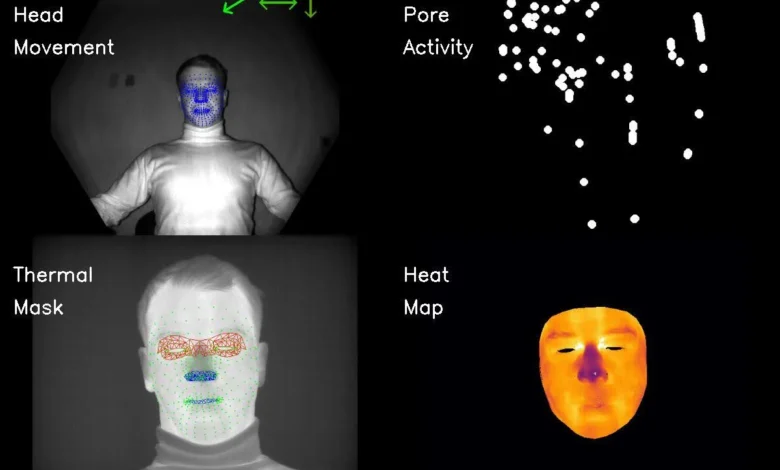
The DoD’s Defense Innovation Unit (DIU) provided a glimpse into this potential future in 2023 when it initiated a search for private sector prototypes. Two companies emerged as frontrunners: Presage Technologies and Altec Research. Presage Technologies has developed capabilities to measure heart and breathing rates through standard video cameras, while Altec Research has showcased non-contact sensors capable of tracking subtle indicators such as facial skin temperature, pore activity, and involuntary head movements.
Proponents of this approach argue that AI can identify complex, non-linear patterns in physiological data that escape human observation. By combining thermal imaging, voice stress analysis, and ocular tracking, the system seeks to monitor three primary domains of cognitive stress: physiological arousal, cognitive load, and the conscious effort required to maintain a deceptive narrative. However, experts like van der Zee caution that while combining these methods may increase the difficulty of gaming the system, it does not solve the underlying issue of accuracy.

Challenges in Scaling and Implementation
The implementation of Polygraph+ on a national security scale presents significant logistical and ethical hurdles. The DoD manages a workforce of approximately 2.8 million personnel. Even if a hypothetical system were 95% accurate, the sheer volume of tests could result in thousands of false positives. Given that polygraph results are largely inadmissible in criminal courts due to their questionable scientific validity, the use of such tools in administrative contexts raises questions about due process and the potential for wrongful termination or career stagnation.
Furthermore, the history of “countermeasures” poses a persistent threat to the integrity of any lie detection system. Subjects trained in physiological regulation can often manipulate the results by artificially inflating their responses to control questions. Beyond this, the subjective nature of examiner interpretation has been frequently criticized, with studies suggesting that individuals from minority groups or those with high baseline anxiety are disproportionately flagged as deceptive. Kyri Kotsoglou of Northumbria Law School characterizes the current Pentagon effort as a “misguided effort to reduce the complex to something that is tangible,” warning that the integration of AI might merely layer new levels of unverified automation onto an inherently flawed scientific foundation.
The Role of Deterrence in National Security
Perhaps the most significant, albeit controversial, function of the polygraph is its role as a psychological deterrent. Experts suggest that the primary utility of these machines is not the data they produce, but the atmosphere of surveillance they cultivate. When employees believe that a machine can objectively discern their honesty, they are statistically more likely to confess to discrepancies or refrain from unauthorized activities.
“It is being used as a threat, to intimidate and force people to confess to things, as opposed to anything that is actually getting valid information,” suggests Marion Oswald, a professor of law who has collaborated on extensive research regarding polygraph usage in judicial systems. If the government’s goal is to prevent leaks, the deployment of Polygraph+ may function more as a psychological hurdle than a technical solution. The effectiveness of this deterrent, however, remains fragile; it hinges entirely on the subject’s belief in the technology’s infallibility. Should that faith erode, the psychological leverage of the polygraph evaporates.
The Path Forward: Oversight and Ethics
As the DCSA moves forward with its budget request, the program faces the dual pressures of Congressional oversight and the skepticism of the academic community. The project has not yet received final authorization, and the lack of transparency regarding the specific algorithms being employed has fueled concerns about “black box” decision-making in security clearances.
The failure of previous attempts—such as the EU-funded iBorderCtrl program and the US military’s AVATAR project, both of which combined multi-modal biometrics before being quietly shuttered—serves as a cautionary tale for the Pentagon. These programs were often plagued by high error rates and the inability to prove their findings in real-world environments.
For the Department of Defense, the challenge is to determine whether the $30.3 million investment will result in a breakthrough in human-machine interface or simply perpetuate a cycle of ineffective, costly surveillance. As the Pentagon balances the urgent need to protect sensitive intelligence against the rights and morale of its personnel, the debate over the future of the polygraph highlights a fundamental tension: the desire for an objective, technical solution to the inherently human problem of trust. Until a scientifically validated method emerges, the “Polygraph Next” program remains a controversial experiment, testing the limits of technology in the high-stakes theater of national security.