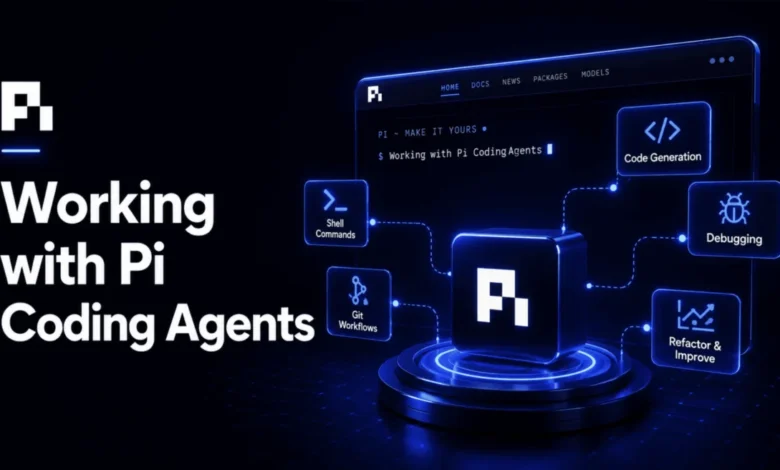
The landscape of artificial intelligence-driven software development has undergone a rapid transformation, shifting from simple code completion to autonomous agents capable of managing entire repositories. While dominant players like Claude Code and Cursor have prioritized feature-heavy environments—incorporating sub-agent orchestration, integrated development environments (IDEs), and complex planning modes—a new movement has emerged that challenges this "more is more" philosophy. At the center of this movement is Pi, a coding agent that has gained significant traction by deliberately refusing to build the very features its competitors use as selling points. Developed by Mario Zechner and later acquired by Armin Ronacher’s Earendil Inc., Pi positions itself not as a rival to existing IDE-based agents, but as a "minimalist harness" designed for developers who demand total transparency and control over their AI context.
A Structural Shift in Agent Design
The inception of Pi can be traced back to a structural critique of mainstream coding agents. In late 2025, Mario Zechner, the developer renowned for creating the libGDX framework, published a foundational essay detailing the systemic issues within existing AI coding tools. Zechner argued that mainstream harnesses often inject massive amounts of invisible context, change their behavioral logic between updates without documentation, and provide developers with limited visibility into what information the underlying model actually receives. This lack of transparency, according to Zechner, leads to "context drift" and unpredictable costs.
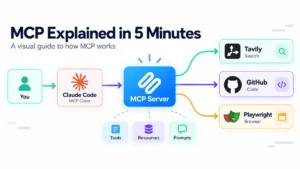
Pi was built as a direct response to these frustrations. Rather than a feature-complete product with a fixed operational mode, Pi is a small core loop surrounded by extension points. This philosophy of "radical minimalism" is reflected in its documentation, which, in an unusual marketing move, leads with a list of what the tool refuses to do. It does not support Model Context Protocol (MCP) out of the box, it lacks sub-agent management, it has no built-in "plan mode," and it eschews the permission popups that characterize most agentic workflows. By stripping away these layers, Pi aims to provide a predictable, low-latency environment where the developer remains the primary architect of the agent’s behavior.
The Chronology of Pi: From Independent Project to Earendil Acquisition
The project’s ascent from a niche developer tool to a major industry player occurred with remarkable speed. Following Zechner’s initial release in November 2025, the project caught the attention of Armin Ronacher, the creator of the Flask web framework and Jinja2 templating engine. In January 2026, Ronacher published a technical endorsement, famously describing Pi as a "harness rebellion." He argued that the industry was trending toward overly complex abstractions that hindered senior developers more than they helped.
By March 2026, Ronacher’s company, Earendil Inc., officially acquired the Pi project. The acquisition was notable for its commitment to open-source principles. Under the governance of RFC 0015, Earendil committed to keeping the core of Pi under the MIT license, while developing a "Fair Source" layer and a companion cloud platform known as Lefos. This open-core structure was designed to ensure that the developer community could continue to contribute to the tool’s foundation while providing a sustainable path for enterprise-grade features and hosting. As of the second quarter of 2026, the Pi GitHub repository has surpassed 70,000 stars, signaling a massive shift in developer sentiment toward minimalist, terminal-centric tools.
Technical Specifications: The Power of the Four Tools
The current stable release, version 0.80.3, confirms Pi’s commitment to its restricted toolset. While other agents may ship with dozens of specialized functions, Pi’s native capabilities are limited to four primary tools: read, write, edit, and bash. This minimalism is a calculated technical decision based on token efficiency.
Industry data suggests that comparable coding agents often utilize system prompts ranging from 7,000 to 10,000 tokens before a user even enters a query. Because these instructions are sent with every API call, the recurring cost and latency are significant. In contrast, Pi’s system prompt is engineered to stay under 1,000 tokens. The developers argue that modern frontier models—having been extensively trained on agentic tasks through reinforcement learning—already understand how to act as a coding assistant. Therefore, a smaller prompt leaves more of the model’s context budget available for actual project code and complex reasoning.
Pi also introduces a non-linear approach to session management. Unlike the standard chat-log format found in most AI interfaces, Pi stores sessions as trees. The /tree command allows developers to navigate back to any point in a conversation and branch into a new direction. This is particularly useful for exploratory programming, where a developer might want to test two different architectural approaches without losing the context of either.
The Extension Ecosystem: Building Custom Guardrails
The primary criticism of Pi’s minimalism is the absence of safety features. For instance, the tool does not natively prevent a model from executing destructive commands like rm -rf or forced git pushes. However, Pi’s architecture is designed so that these "missing" features can be implemented as TypeScript extensions.

By utilizing the pi.on("tool_call", ...) hook, developers can create custom permission gates. A typical extension might use regular expressions to scan incoming bash commands for risky patterns. If a dangerous command is detected, the extension can trigger a ctx.ui.confirm prompt, effectively pausing the agent until the human operator provides explicit consent. This "build-your-own-safety" model allows teams to tailor guardrails to their specific threat models rather than relying on a one-size-fits-all solution provided by a vendor.
Furthermore, the extension API allows for the registration of custom tools. Using the pi.registerTool function and TypeBox for schema validation, developers can add domain-specific capabilities—such as specialized word counters, database query tools, or internal API connectors—that the model can invoke as naturally as the built-in read or write commands.
Supporting Data and Provider Versatility
One of Pi’s strongest selling points is its provider-agnostic nature. While many agents are tightly coupled with specific models or providers, Pi supports over 15 different backends. These include industry leaders such as Anthropic, OpenAI, and Google Gemini, as well as specialized high-throughput providers like Groq and Cerebras.
For organizations concerned with data privacy, Pi’s support for local models via Ollama is a critical feature. This allows for fully air-gapped coding assistance, where no code leaves the local machine. The ability to switch models mid-session via the /model command further empowers developers to use the most cost-effective or capable model for a specific sub-task—for example, using a smaller model for simple edits and switching to a frontier model like Claude 3.5 Sonnet or GPT-5 for complex debugging.
Industry Implications: Minimalism vs. Autonomy
The rise of Pi reflects a broader debate within the software engineering community regarding the future of AI. On one side are "fully autonomous" agents designed to replace the developer for routine tasks. On the other side are "augmented" tools like Pi, which view the AI as a highly capable terminal utility that serves the developer.
The "Fair Source" model adopted by Earendil Inc. through RFC 0015 also represents a middle ground in the software licensing wars. By reserving certain layers for paid or restricted use while keeping the core MIT-licensed, Pi is attempting to avoid the pitfalls of "vulture" open source—where cloud providers monetize a project without contributing back—while maintaining the community trust necessary for a developer tool to succeed.
However, the cost of this minimalism is a higher barrier to entry. Teams that require "out-of-the-box" sub-agents or automated planning reviews may find Pi’s lack of infrastructure a hindrance. As independent reviews have noted, Pi is a tool for developers who are willing to read source code and write their own extensions to solve edge cases. For those who prefer a managed, unattended experience, the lack of built-in safety rails may be a deal-breaker.
Final Analysis and Future Outlook
Pi Coding Agent is more than just a software tool; it is a statement on the necessity of transparency in the age of generative AI. By prioritizing a small context footprint, a tree-based session model, and a robust extension API, Pi has carved out a significant niche among senior developers and terminal-focused engineers.
The success of the project over the next year will likely depend on the growth of its extension library and the adoption of the Lefos cloud platform. If the community continues to build and share extensions for the features Pi "refuses" to include, the tool could become the standard harness for bespoke AI workflows. Conversely, if mainstream competitors manage to reduce their token overhead and increase transparency, Pi may remain a specialized tool for the minimalist elite.
Ultimately, Pi’s greatest contribution to the field may be its honesty. By documenting what it is not, it forces developers to consider what they actually need from an AI agent. For those who value control over convenience, Pi offers a powerful, uncluttered path forward in the increasingly crowded world of AI-assisted development.