The Virtual Wall Failure: How Billions in Surveillance Tech Fails to Prevent Humanitarian Crisis at the Southern Border

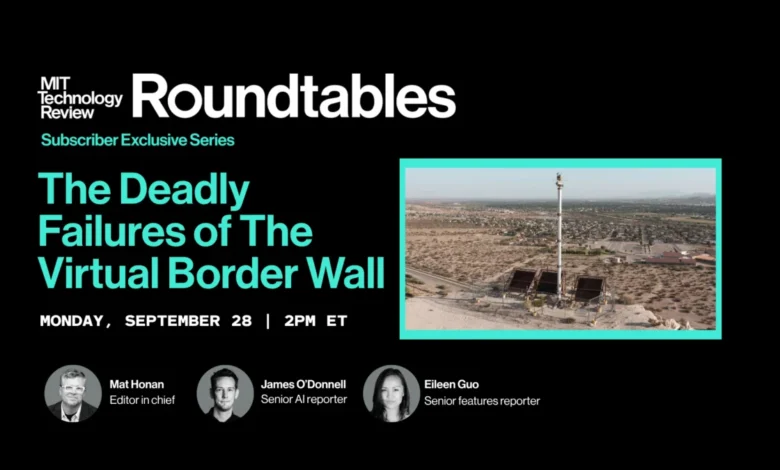
For over two decades, the United States government has invested billions of dollars into a high-tech strategy designed to secure the southern border through a "virtual wall" of surveillance towers. Proponents of this initiative, spearheaded by the Department of Homeland Security (DHS) and Customs and Border Protection (CBP), argued that integrating radar, infrared cameras, and artificial intelligence would create an impenetrable network, allowing for real-time detection and rapid response to unauthorized crossings. However, a comprehensive investigation by MIT Technology Review has cast significant doubt on these claims, revealing a systematic failure that has left thousands of people to die in the borderlands, often under the very gaze of the technology intended to monitor them.
The findings document more than a thousand instances where individuals traversed areas covered by these surveillance systems without being intercepted by border authorities. In many cases, these individuals perished from heat exhaustion, dehydration, or injury, their movements captured by the high-resolution lenses of towers that were meant to act as a lifeline. This discrepancy between the intended function of the virtual wall and the stark reality on the ground highlights a profound humanitarian crisis that remains largely obscured by the technical promises of the surveillance apparatus.
The Evolution of the Virtual Wall: A Twenty-Five Year Chronology
The origins of the virtual wall can be traced back to the post-9/11 security climate, which prioritized technological solutions to border management. In 2005, the DHS launched the Secure Border Initiative (SBI), which included the ill-fated SBInet program. This initial effort sought to deploy a massive array of cameras and sensors. By 2011, the project was officially canceled after ballooning costs and technical glitches rendered it largely ineffective.
Undeterred, the government shifted strategies, focusing on smaller, more modular surveillance towers. Throughout the 2010s and into the 2020s, the deployment of Integrated Fixed Towers (IFT) and Remote Video Surveillance Systems (RVSS) became the standard. These systems were marketed as more agile and better suited to the rugged, remote terrain of the desert southwest.
The most recent phase of this technological evolution involves the integration of Artificial Intelligence (AI) and machine learning. These AI-powered towers are designed to automatically distinguish between wildlife, local residents, and unauthorized border crossers, theoretically reducing the workload for human operators and decreasing response times. Despite the integration of these advanced algorithms, the investigation by MIT Technology Review found that the transition to AI has not fundamentally resolved the systemic failures that have plagued the virtual wall for years.
Data-Driven Disconnect: Surveillance vs. Reality
To understand the scope of these failures, it is necessary to examine the data surrounding border apprehensions and mortality rates. While the US government frequently touts the number of "encounters" and "detects" as a metric of success, this data rarely accounts for the human cost of the technology’s limitations.
Analysis of the terrain indicates that the virtual wall is primarily designed to facilitate "consequence delivery systems"—a framework that relies on the apprehension of individuals to trigger legal processing. However, when the technology fails to facilitate a prompt response, it often serves only to track a person’s trajectory toward a preventable death.
According to non-profit organizations working in the borderlands, the number of recovered remains has surged in tandem with the expansion of surveillance infrastructure. The geographic placement of these towers often forces migrants into more dangerous, unmonitored corridors—a phenomenon known as the "funnel effect." By securing high-traffic areas, the government has inadvertently incentivized travel through more treacherous wilderness, where surveillance coverage is sparse and rescue operations are logistically difficult.
Official Responses and Technical Limitations
The Department of Homeland Security maintains that surveillance technology is an essential tool for situational awareness. In public statements, CBP officials have noted that the technology allows agents to allocate limited personnel more efficiently, focusing on areas where activity is highest. However, the agency has historically struggled to provide clear metrics on how the virtual wall directly impacts the reduction of migrant deaths.
Critics, including civil rights advocates and technology ethicists, argue that the reliance on autonomous surveillance creates a "false sense of security." The systems are prone to technical limitations, such as signal interference in remote mountainous regions, maintenance backlogs, and the inherent difficulty of distinguishing individuals in extreme weather conditions.
Furthermore, the data generated by these towers is often siloed. Information captured by a camera may not reach the relevant ground units in time to initiate a rescue, or the data may be misinterpreted by automated systems. In one documented instance, an AI-powered tower detected a group of individuals, but due to a lag in data processing and a lack of available nearby agents, no intervention occurred for several hours—a delay that proved fatal for members of the group.
Broader Impact and Ethical Implications
The implications of these findings extend far beyond the technical failures of a specific security program. They raise fundamental questions about the ethics of "techno-solutionism"—the belief that complex social and political problems can be solved through the application of technology.
By prioritizing a surveillance-first approach, the U.S. government has effectively replaced humanitarian intervention with a digital monitor. When the system functions as a passive observer of death, it challenges the moral standing of the entire border management strategy. The investigation underscores that technology is not a neutral actor; its deployment has direct, life-altering consequences for the individuals it monitors.
Moreover, the financial burden of these programs is substantial. The billions spent on the virtual wall could, according to policy analysts, be redirected toward more effective, human-centric strategies, such as improving the processing capacity at legal ports of entry, investing in humanitarian rescue initiatives, or addressing the root causes of migration. Instead, the current model continues to pour funding into hardware that has proven, over twenty-five years, to be an incomplete solution at best and a contributor to mortality at worst.
Future Outlook and Policy Considerations
As the debate over border security continues to dominate the national political discourse, the focus is increasingly shifting toward accountability. If the virtual wall cannot guarantee the security of the border, nor the safety of those attempting to cross it, the rationale for its continued expansion becomes increasingly difficult to justify.
Moving forward, stakeholders are calling for:
- Increased Transparency: The government should provide public access to data regarding the performance of surveillance systems and their role in both apprehensions and reported fatalities.
- Human-in-the-Loop Safeguards: Any AI system deployed in border security must prioritize human oversight and mandatory intervention protocols when distress is detected.
- Independent Oversight: An external audit of the virtual wall’s effectiveness is required to determine whether the program should be maintained, modified, or decommissioned in favor of more humane alternatives.
The investigation into the virtual wall serves as a sobering reminder that technology, when divorced from humanitarian consideration, can perpetuate the very crises it claims to mitigate. The challenge for policymakers will be to reconcile the stated objectives of border security with the moral imperative to prevent loss of life in the borderlands. As the technology continues to evolve, the demand for accountability will only grow, forcing a reckoning with a system that has watched for years but failed to act.
In conclusion, the virtual wall remains a testament to a reliance on technological intervention that lacks the necessary humanitarian infrastructure. The evidence provided by the MIT Technology Review investigation is a critical starting point for a broader national conversation about what the United States values in its border policy: the cold efficiency of surveillance, or the preservation of human life. Until these systems are fundamentally restructured to prioritize safety and humanitarian aid, they will continue to document, rather than prevent, the tragedies unfolding in the shadows of the border towers.
Related posts: