Transforming Traditional Python Applications into Autonomous AI Agents Using the OpenAI Agents SDK

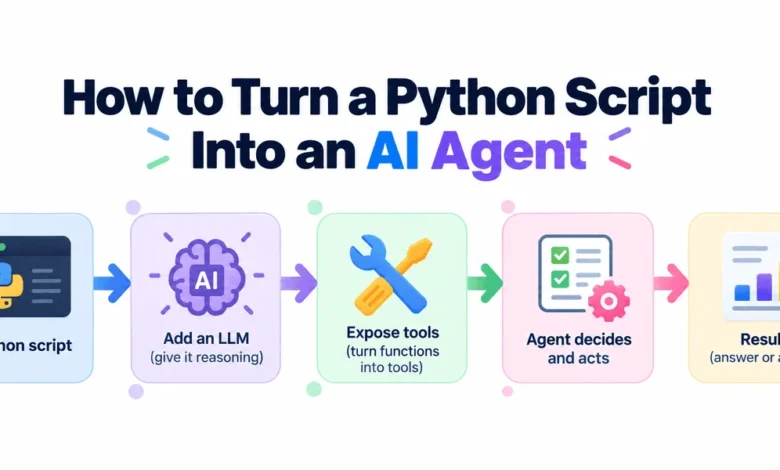
The rapid evolution of artificial intelligence has shifted the paradigm of software engineering from rigid, deterministic scripting to dynamic, agentic orchestration. For developers looking to integrate AI into existing systems, a common misconception is that legacy codebases must be entirely rewritten to leverage large language models. However, recent developments in agentic frameworks demonstrate that standard Python functions can be seamlessly exposed as tools, allowing an LLM to govern execution flows, determine argument inputs, and synthesize outputs without altering core application logic.
This architectural shift is exemplified by the introduction and adoption of tools like the OpenAI Agents SDK. By bridging the gap between deterministic programming and probabilistic reasoning, developers can transition from static automation to intelligent, goal-driven systems that scale efficiently across diverse operational environments.
The Limitations of Deterministic Scripting in Modern Workflows
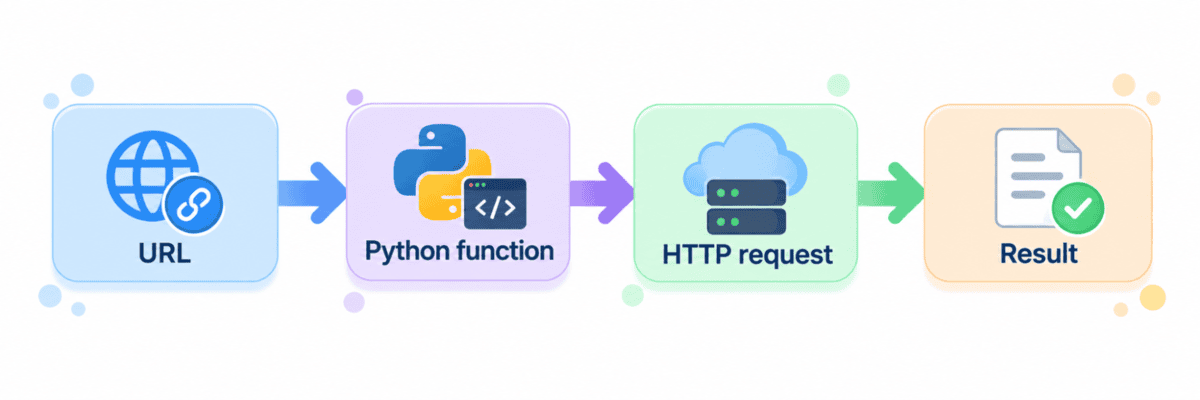
Traditional software engineering relies heavily on procedural control flow. A typical Python script executes tasks in a strictly linear, predetermined sequence. For instance, consider a standard utility script designed to monitor website availability and measure HTTP response times.
from time import perf_counter
import requests

def check_website(url: str) -> str:
    start = perf_counter()
    try:
        response = requests.get(url, timeout=10)
        latency = perf_counter() - start
        return (
            f"urln"
            f"Status: response.status_coden"
            f"Response time: latency:.2fs"
        )
    except requests.RequestException as error:
        return f"urlnError: error"

print(check_website("https://www.python.org"))
While this script reliably executes its programmed instructions—sending an HTTP request, capturing status codes, and calculating latency—it lacks adaptability. If an operator needs to analyze five distinct websites, compare their respective network latencies, filter out unhealthy endpoints, and generate a comparative summary, custom logic must be explicitly written into the code to handle every potential condition, loop, and edge case.
As enterprise systems grow more complex, maintaining hardcoded workflows for dynamic queries becomes increasingly resource-intensive. This operational bottleneck has driven the demand for agentic frameworks capable of interpreting high-level user goals and autonomously determining the necessary programmatic steps to achieve them.
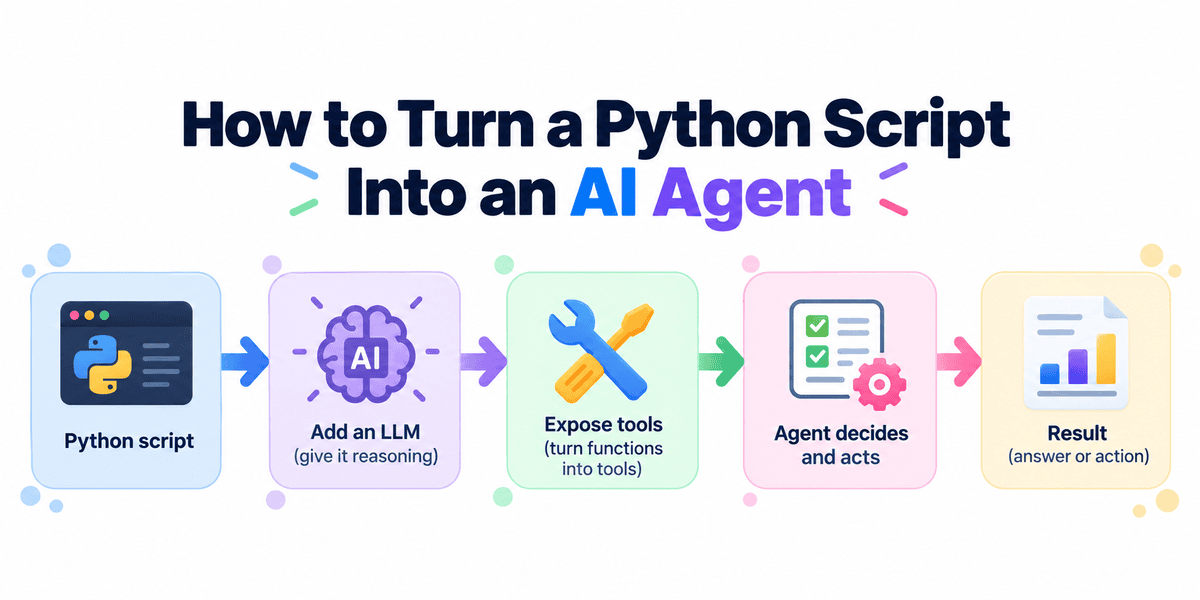
Evolution of Agentic Frameworks and the OpenAI Agents SDK
The concept of autonomous agents has evolved from theoretical multi-agent systems in academic research to practical, production-ready frameworks deployed across enterprise architectures. Early implementations required developers to manually construct complex JSON schemas, handle tool-calling loops, and manage state transitions between the model and local execution environments.
To alleviate this engineering overhead, platforms have introduced specialized software development kits designed specifically for agent orchestration. The OpenAI Agents SDK provides a lightweight, modular runtime that abstracts away the underlying complexities of session management, tracing, handoffs, and tool execution.
By utilizing these SDKs, developers can focus on writing domain-specific functions while delegating decision-making processes to the language model. The framework automatically translates standard Python function signatures and docstrings into the structured schemas required by modern LLMs, establishing a frictionless bridge between natural language instructions and deterministic code execution.
Implementing the Transformation: A Step-by-Step Methodology
Transitioning a conventional Python function into an AI-driven tool requires minimal modification to the underlying codebase. The process relies on decorators provided by agentic SDKs to expose functions to the model’s runtime environment.
Project Initialization and Dependencies
Before integrating tool definitions, developers must establish the project environment and install the required dependencies. Using modern Python package managers like uv or traditional tools like pip, the setup process is streamlined:
mkdir website-agent
cd website-agent

uv init
uv add openai-agents requests
Alternatively, standard pip installations achieve the same configuration:
pip install openai-agents requestsAuthentication is subsequently handled by securely exporting the required API credentials into the environment:
export OPENAI_API_KEY="your-api-key"Exposing Python Functions as Agent Tools
The core mechanism of this integration involves decorating existing utility functions. By applying the @function_tool decorator, the developer signals to the SDK that the function is available for autonomous invocation by the LLM.
from time import perf_counter
import requests
from agents import function_tool

@function_tool
def check_website(url: str) -> str:
   """Check a website's HTTP status and response time."""
   start = perf_counter()
   try:
       response = requests.get(url, timeout=10)
       latency = perf_counter() - start
       return (
           f"URL: urln"
           f"Status: response.status_coden"
           f"Response time: latency:.2fs"
       )
   except requests.RequestException as error:
       return f"URL: urlnError: error"
In this implementation, the OpenAI Agents SDK automatically reads the function name, type hints, and docstring to generate the precise JSON schema expected by the model. This eliminates the need for manual schema authoring and maintenance.
Instantiating and Executing the Agent
Once the tool is defined, it is incorporated into an Agent instance alongside behavioral instructions and model specifications. The runtime environment—managed via a Runner utility—coordinates the communication loop between the model and the local functions.
from agents import Agent, Runner

agent = Agent(
   name="Website Monitor",
   model="gpt-5.6-luna",
   instructions="""
   Monitor websites using the available tool.
   Compare results and explain problems clearly.
   """,
   tools=[check_website],
)

result = Runner.run_sync(
   agent,
   "Check python.org, github.com, and openai.com. "
   "Which one has the slowest response?"
)

print(result.final_output)
Upon execution, the model evaluates the natural language prompt, determines that it requires data from multiple URLs, invokes the check_website tool iteratively with the appropriate arguments, processes the returned metrics, and formats a comprehensive comparative analysis.
Mechanics of the Agentic Decision Loop
Understanding the internal execution flow is critical for optimizing agentic applications. Unlike traditional procedural scripts where every branch is anticipated and coded, an agentic loop operates dynamically through a continuous feedback cycle between the language model and the execution runtime.
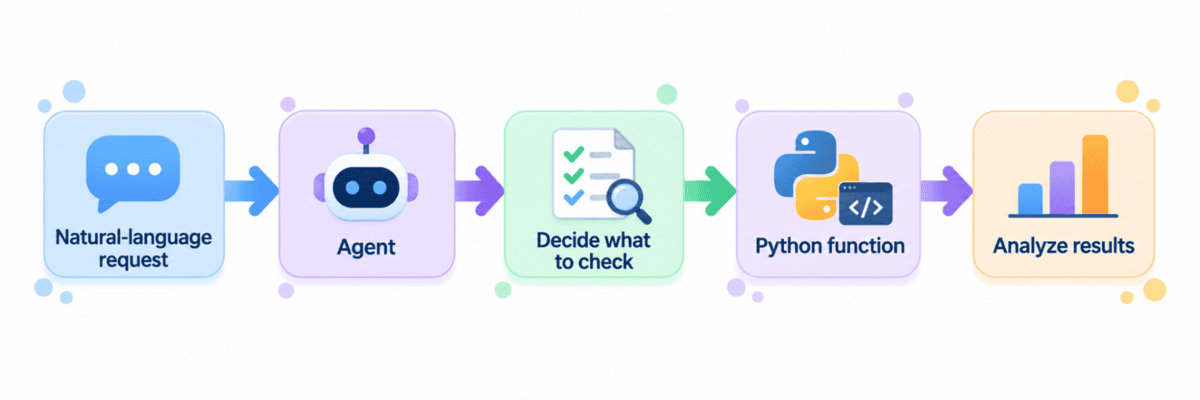
- Intent Interpretation: The agent receives a high-level goal or query from the user via the runner interface.
- Tool Selection: The model analyzes its available tools—parsed from decorated Python functions—and selects the appropriate utility required to advance toward the goal.
- Parameter Generation: The model synthesizes the necessary arguments based on the context of the query and executes the function call.
- Output Evaluation: The execution environment captures the return value of the Python function and feeds it back into the model’s context window.
- Iteration or Termination: Based on the new data, the model determines whether additional tool calls are necessary or if it possesses sufficient information to formulate a final response.
This iterative orchestration shifts the architectural burden from hardcoded logic trees to contextual reasoning, allowing applications to handle ambiguous inputs, multi-step dependencies, and unforeseen edge cases gracefully.
Industry Implications and Economic Viability
The convergence of lightweight agent SDKs and increasingly cost-effective, high-performance language models—such as GPT-5.6 Luna—has significant implications for enterprise software development. Historically, running complex multi-step agent architectures at scale introduced prohibitive computational overhead and latency.
Recent efficiency gains in model inference and optimized runtime environments have dramatically lowered the barrier to entry. Organizations across various sectors are adopting agentic automation to modernize legacy scripts, streamline internal tooling, and build sophisticated workflows without re-architecting entire software systems.
By treating existing Python scripts as modular capabilities rather than isolated scripts, engineering teams can extend the lifespan of their legacy codebases while introducing advanced natural language understanding and orchestration layers. This hybrid approach preserves the speed and determinism of compiled or interpreted code while harnessing the adaptive problem-solving capabilities of modern artificial intelligence.