Ecommerce Innovation Accelerates: New Tools Launch for Limited Releases, AI-Powered Marketing, and Streamlined Payments


The ecommerce landscape is experiencing a surge of innovation as service providers roll out a wave of new tools and features designed to empower merchants. This week’s roundup highlights significant advancements in release-based selling, expedited delivery options, secure payment solutions, sophisticated social commerce management, seamless cross-border transactions, automated marketing strategies, and enhanced loyalty programs. These developments signal a concerted effort across the industry to equip online businesses with the capabilities needed to thrive in an increasingly competitive and dynamic digital marketplace.
Evolving Sales Strategies: Mastering Limited Releases and Drops
Squarespace Enhances Limited Release and Drop Selling Capabilities
Squarespace, a prominent website-building and hosting platform, has launched a suite of tools specifically engineered to support merchants engaged in selling limited-release items and product drops. This strategic enhancement aims to capitalize on the growing trend of exclusive product launches, which often drive significant customer engagement and sales spikes. The new features include visually appealing badges and targeted email campaigns designed to build anticipation among consumers before a product becomes available.
A key component of this update is the "Reserved Cart" functionality, which allows shoppers to hold selected items in their cart for a defined period, accompanied by a countdown timer to create a sense of urgency. This feature is particularly valuable for managing high-demand products where inventory is scarce. Additionally, Squarespace has introduced quantity limits per release, enabling merchants to control how many items a single customer can purchase, thus promoting broader accessibility and preventing bulk buying. To further streamline the purchasing process, the platform now offers Mini Cart, Express Checkout, and Pay Links, which facilitate more direct and efficient transaction experiences for consumers. These additions are expected to help Squarespace merchants better replicate the excitement and exclusivity often associated with physical retail drop events within their online stores.
Analysis: The introduction of these specialized tools by Squarespace underscores a broader market shift towards experiential commerce. Limited releases and drops not only drive immediate sales but also foster brand loyalty and create a sense of community around a brand. By providing merchants with the infrastructure to manage these events effectively, Squarespace is positioning itself as a strong contender for businesses looking to leverage scarcity and anticipation as a core sales strategy.
AI Revolutionizes Business Operations for Small Merchants
Bluehost Expands AI Business Platform with Agentic Solutions
Bluehost, a well-established hosting provider, has significantly expanded its artificial intelligence offerings with a new suite of agentic solutions tailored for small businesses. This expansion marks a strategic move to democratize advanced AI capabilities, making them accessible and user-friendly for entrepreneurs who may lack extensive technical expertise. The AI platform is designed to automate a wide range of critical business functions.
The new agentic solutions can autonomously build websites, establish and manage online stores, capture leads through intelligent interactions, provide instant customer support by answering queries, and even book appointments. This integrated approach aims to reduce the operational burden on small business owners, allowing them to focus on core business growth. Beyond the existing AI Site, Store, and Front Desk tools, Bluehost’s enhanced suite now includes a domain name generator to simplify branding, advanced content and copywriting tools powered by AI, dedicated AI agent hosting, an intuitive agent builder interface, and access to multiple leading AI models. This comprehensive toolkit is intended to empower small businesses to compete more effectively by leveraging cutting-edge technology for efficiency and customer engagement.
Background Context: The rapid evolution of AI technology has presented both opportunities and challenges for small businesses. While AI promises significant gains in productivity and customer service, the complexity and cost of implementation have historically been barriers. Bluehost’s initiative addresses this gap by bundling powerful AI tools into an accessible platform, lowering the entry barrier for AI adoption among small and medium-sized enterprises (SMEs).
Bridging the Gap: Faster Deliveries and Expanded Market Access
DoorDash Integrates with Shopify for On-Demand Local Delivery
DoorDash, a leading food and grocery delivery platform, has announced a direct integration with Shopify, enabling U.S. Shopify merchants to seamlessly offer on-demand local delivery through the DoorDash marketplace. This collaboration is set to transform the local commerce landscape by connecting brick-and-mortar businesses with a vast network of delivery drivers, enhancing their reach and customer convenience.

The integration, available via the Shopify App Store, simplifies the process for U.S. Shopify merchants with a physical retail presence. By enabling a new sales channel, these businesses can now add their product catalog to the DoorDash marketplace without the need for separate onboarding procedures, manual catalog uploads, or disruptions to their existing operational workflows. The system is designed for real-time synchronization: merchants manage their product catalog directly within Shopify, and these updates are reflected instantly on DoorDash. This streamlined approach allows businesses to quickly tap into DoorDash’s extensive customer base and delivery infrastructure, offering customers the convenience of receiving local goods rapidly.
Analysis: This partnership signifies a significant step towards omnichannel fulfillment for small and medium-sized retailers. By leveraging DoorDash’s established logistics network, Shopify merchants can now offer a competitive delivery experience that rivals larger online retailers. The real-time synchronization is crucial, ensuring inventory accuracy and a smooth customer experience, which is paramount for building trust and repeat business.
Instacart Acquires Arpalus to Enhance Real-Time Grocery Shelf Intelligence
Instacart, a prominent e-commerce grocery platform, has acquired Arpalus, a company specializing in video shelf-intelligence technology. This strategic acquisition is aimed at significantly advancing Instacart’s ability to monitor and manage real-time product availability and placement on grocery store shelves across the United States. The integration of Arpalus’s technology is expected to provide unparalleled visibility into the in-store retail environment.
Arpalus’s innovative technology transforms a simple video scan of a store shelf into an accurate, real-time representation of inventory levels and product positioning. This system is designed to operate on virtually any device equipped with a smartphone camera or other visual capture capabilities. Furthermore, the technology will be extended to Instacart’s proprietary Caper Carts, which are advanced shopping carts equipped with external cameras that navigate grocery store aisles. This integration will allow for continuous, real-time updates of on-shelf inventory as the carts move through the store, providing immediate insights into stock status and merchandising effectiveness.
Implications: The acquisition of Arpalus by Instacart has profound implications for the grocery retail sector. For brands and retailers, it offers a powerful tool for ensuring product availability, optimizing shelf space, and gaining a competitive edge through data-driven merchandising decisions. For consumers, it promises a more reliable shopping experience, with reduced instances of stockouts and better product visibility. This move solidifies Instacart’s position as a leader in leveraging technology to bridge the gap between online and in-store grocery shopping.
Social Commerce and Advertising Automation
TikTok Shop Explores Managed Services for Merchant Success
TikTok Shop, the e-commerce arm of the popular social media platform, is currently testing a managed services program within the United States. This pilot initiative aims to elevate the performance of its merchants by offering a more hands-on approach to managing their online storefronts and sales strategies on the platform. The program represents TikTok’s commitment to fostering a robust and successful seller ecosystem.
TikTok is actively seeking participants for this pilot program, which will involve the platform taking over comprehensive oversight of various aspects of a merchant’s TikTok Shop business. This includes managing marketing efforts, implementing automated advertising campaigns and A/B testing through its GMV Max tool, optimizing product listings for maximum visibility and conversion, facilitating the recruitment of relevant content creators, and generating AI-driven video content to enhance product promotion. The goal is to provide merchants with expert management and strategic guidance to maximize their sales and engagement on TikTok.
Analysis: By piloting a managed services program, TikTok Shop is demonstrating a sophisticated understanding of the challenges faced by merchants, particularly those new to social commerce. Offering comprehensive management services can significantly lower the barrier to entry and accelerate growth for sellers, while also allowing TikTok to exert greater control over the quality and effectiveness of the shopping experience on its platform. This could lead to increased GMV (Gross Merchandise Volume) and a more curated marketplace.
Shirofune Integrates with Walmart Connect for Automated Retail Media Campaigns
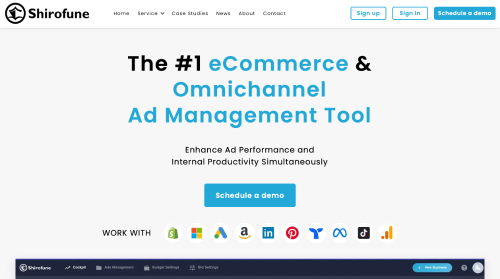
Shirofune, a leading digital advertising automation platform, has announced a significant integration with Walmart Connect, the retail media advertising arm of Walmart. This collaboration enables advertisers and agencies to connect their Walmart Connect campaigns directly to Shirofune, allowing for centralized management alongside other major advertising channels such as search, social media, and other retail media networks.

The integration empowers businesses to manage their advertising efforts across multiple platforms from a single dashboard. Shirofune’s automation engine is designed to optimize campaign performance by dynamically adjusting budgets and bids in real-time based on campaign results. It also facilitates the management of campaigns for multiple clients, streamlining day-to-day advertising operations and improving efficiency. This move is particularly beneficial for brands looking to leverage Walmart’s vast customer base and shopping data through its Connect platform, while simultaneously integrating these efforts into their broader digital advertising strategies.
Background Context: Retail media networks have seen exponential growth in recent years, offering brands a unique opportunity to reach consumers at the point of purchase. Walmart Connect is a major player in this space, and integrating with automation platforms like Shirofune allows for more sophisticated campaign management and optimization, driving better ROI for advertisers.
Streamlining Payments and Financial Operations
Spreedly Launches Standalone Payment Vault for Enhanced Merchant Control
Spreedly, an open payments provider, has introduced a new standalone "vault" designed to enable merchants to securely store and retain control over their payment credentials. This development addresses a growing need for merchants to manage sensitive payment data with greater autonomy and flexibility, especially as the payments landscape becomes more complex.
The Spreedly vault allows merchants to store payment information securely, offering them greater control and optionality in their payment processing strategies. Merchants can continue to operate with a single payment provider in each region while still benefiting from the enhanced data control offered by the vault. This flexibility allows businesses to build their own payment orchestration layers on top of portable payment credentials or adopt Spreedly’s orchestration capabilities without requiring a complete overhaul of their existing payment infrastructure. This solution is particularly valuable for businesses looking to reduce reliance on a single payment gateway and build more resilient, adaptable payment systems.
Analysis: In an era where data security and payment flexibility are paramount, Spreedly’s standalone vault is a significant advancement. It empowers merchants to take greater ownership of their customer payment data, which can lead to improved security, reduced vendor lock-in, and the ability to optimize payment routing for cost savings and better acceptance rates. This aligns with a broader trend of merchants seeking more control over their entire commerce stack.
Mastercard Expands Agentic AI for Retailers and Financial Institutions in the U.K.
Mastercard is expanding its Agent Suite, powered by Pronto, into the United Kingdom. This initiative aims to equip U.K. retailers and financial institutions with advanced agentic AI capabilities to enhance customer interactions and streamline financial processes. The expansion signifies Mastercard’s commitment to driving AI adoption within the financial and retail sectors.
Through Pronto, U.K. businesses will be able to test and refine how their products and services are discoverable by AI agents. This includes evaluating the scalability of payment experiences to ensure consumer trust, assessing the effectiveness of their dispute resolution plans in an AI-driven environment, and optimizing various other AI-integrated operational aspects. The platform provides a sandbox for businesses to understand and prepare for the growing role of AI agents in commerce and financial services, ensuring they can effectively engage with customers through these new channels.
Implications: The rollout of agentic AI tools by Mastercard in the U.K. suggests a future where AI agents play a significant role in customer engagement and transaction processing. Retailers and financial institutions that embrace these technologies can expect to see improvements in efficiency, customer satisfaction, and the ability to offer more personalized and seamless experiences. The focus on trust and scalability is crucial for the widespread adoption of AI in sensitive financial and retail transactions.
FinXP and Buckzy Partner for Real-Time Cross-Border Payments
FinXP, a European payment infrastructure provider, has joined forces with Buckzy Payments, a global cross-border embedded finance platform. This partnership is set to enhance real-time cross-border payment capabilities, leveraging stablecoin infrastructure to facilitate faster and more efficient international transactions.
The collaboration merges FinXP’s regulated European payment infrastructure with Buckzy’s extensive international payment network. By utilizing stablecoin infrastructure, the partnership aims to enable seamless and rapid movement of funds across borders. Eligible Buckzy clients will gain access to FinXP’s Single Euro Payments Area (SEPA) capabilities, streamlining payments within Europe. Conversely, FinXP clients will benefit from Buckzy’s global banking network and its expertise in stablecoin-based transactions. This synergy is expected to create a more robust and agile cross-border payment ecosystem.
Analysis: The increasing demand for faster and more cost-effective international payments makes this partnership highly relevant. By combining traditional regulated infrastructure with the innovation of stablecoin technology, FinXP and Buckzy are addressing key pain points in global commerce, such as high fees and slow settlement times. This could significantly benefit businesses engaged in international trade, enabling them to operate more efficiently.
PayPal Launches "Pay in 30 Days" for U.K. Shoppers
PayPal has introduced a new payment option, "Pay in 30 Days," for its extensive customer base in the United Kingdom. This offering provides millions of U.K. consumers with increased flexibility by allowing them to complete purchases and defer full payment for up to 30 days, with no added interest or fees.
The "Pay in 30 Days" feature integrates seamlessly into the existing PayPal checkout experience, requiring no new integration for merchants. This means businesses that already accept PayPal can offer this buy-now-pay-later (BNPL) option to their U.K. customers without any additional technical setup. The service is designed to offer a simple, fee-free way for shoppers to manage their purchases, providing them with the freedom to buy now and pay later without incurring extra costs. This move by PayPal aims to enhance the shopping experience for U.K. consumers and support merchants by potentially increasing conversion rates and average order values.
Implications: The introduction of "Pay in 30 Days" by PayPal positions the company as a significant player in the evolving BNPL market. By offering a no-interest, no-fee model for a 30-day deferral, PayPal is providing a consumer-friendly alternative to some existing BNPL services. For merchants, this could translate into increased sales as consumers are empowered with greater payment flexibility. However, it also highlights the ongoing trend of shifting payment terms and the increasing importance of offering diverse payment options to meet consumer preferences.
Enhancing Marketing, Fulfillment, and Loyalty
Dotdigital Launches AI-Powered Loyalty Platform Amidst Consumer Disconnect
Dotdigital, a customer experience platform, has launched an AI-powered loyalty platform designed to help marketers build, manage, and optimize customer loyalty programs. This initiative comes at a time when new research indicates a significant disconnect between brands and consumers, with only 15% of consumers reporting that brand marketing feels relevant to them.
The new platform aims to address this "loyalty crisis" by enabling marketers to create more engaging and personalized loyalty experiences. Key features include flexible points earning systems, tiered membership levels, streamlined rewards management, comprehensive analytics dashboards, and native integrations with Dotdigital’s existing marketing tools and Shopify. By leveraging AI, the platform can help identify customer preferences and behaviors, allowing for more targeted and relevant loyalty initiatives. This can lead to increased customer retention, higher lifetime value, and a stronger emotional connection between brands and their customers.
Analysis: The timing of Dotdigital’s AI-powered loyalty platform launch is critical. With consumers feeling that marketing is increasingly irrelevant, businesses are looking for more effective ways to foster loyalty. AI offers a powerful solution by enabling hyper-personalization at scale. By integrating loyalty program management with broader customer experience tools, Dotdigital is providing a holistic approach to customer engagement and retention, which is essential for long-term business success.
TikTok Shop Tests Managed Services for Merchant Success
TikTok Shop is piloting a new managed services program in the U.S. designed to enhance the performance of its sellers. This initiative aims to provide merchants with comprehensive support, overseeing key aspects of their operations on the platform. The program includes marketing strategy, automated advertising and testing via the GMV Max tool, product listing optimization, creator recruitment, and AI-generated video content creation. This move signifies TikTok’s commitment to fostering a robust seller ecosystem and improving the overall shopping experience for users.

Analysis: By offering managed services, TikTok Shop is aiming to reduce the operational burden on merchants and ensure a higher standard of presentation and promotion for products sold on its platform. This could lead to increased sales for participating merchants and a more curated, high-quality shopping environment for consumers, ultimately benefiting TikTok’s e-commerce growth strategy.
Bluehost Expands AI Business Platform with New Agentic Solutions
Bluehost, a web hosting provider, has introduced an expanded AI business platform featuring agentic solutions tailored for small businesses. These AI agents are capable of building websites, running online stores, capturing leads, answering customer questions, and booking appointments. The suite also includes a domain name generator, content and copywriting tools, AI agent hosting, an agent builder, and access to multiple AI models, empowering small businesses to automate and enhance their operations.
Analysis: Bluehost’s move to offer agentic AI solutions democratizes access to advanced automation for small businesses. By simplifying the implementation and management of AI, the platform can help entrepreneurs save time, reduce costs, and improve customer service, enabling them to compete more effectively in the digital marketplace.
Cytronic Secures $13.5 Million for Automated E-commerce Fulfillment
Cytronic, a fulfillment-as-a-service provider, has successfully raised $13.5 million in seed funding. The capital injection will be used to advance the development of its robotic fulfillment tools. Initially, Cytronic is focusing on direct-to-consumer, small-parcel fulfillment for sectors including apparel, beauty products, accessories, and household goods. The funding round was led by Slow Ventures.
Analysis: The substantial seed funding for Cytronic underscores the growing demand for automation in e-commerce fulfillment. As online sales continue to rise, the need for efficient, scalable, and cost-effective warehousing and logistics solutions becomes increasingly critical. Robotic fulfillment offers a path to address labor shortages, improve accuracy, and speed up delivery times, making it a key area of investment for the future of e-commerce logistics.
Commercetools Launches Modular Commerce Offerings for Enterprise Modernization
Commercetools, an autonomous commerce developer, has released standalone modular offerings for cart, order management, and product catalog functionalities. These new components, including "Core Commerce" for cart and order management, and "Product Catalog" for product modeling and inventory management, are designed to allow enterprises to modernize their e-commerce infrastructure without undertaking a complete replatforming.
Analysis: The trend towards composable commerce, where businesses can select and integrate best-of-breed solutions for specific functions, is gaining momentum. Commercetools’ modular approach caters to this trend by allowing large enterprises to incrementally update their systems, addressing specific needs like cart functionality or product catalog management without the risks and costs associated with a full system overhaul. This agility is crucial for businesses needing to adapt quickly to market changes.
Katana Introduces Predictive Inventory Intelligence with New Components
Katana, a multichannel inventory management platform, has announced a significant shift towards predictive inventory intelligence with the release of four new components. These include Katana MCP, which integrates inventory operations with AI assistants like Claude and ChatGPT; AI Replenishment, a demand forecasting and procurement tool; Assisted Import for spreadsheet data mapping; and Custom Fields for defining unique business records.

Analysis: Predictive inventory management is a critical advancement for e-commerce businesses. By leveraging AI and demand forecasting, Katana’s new components can help merchants avoid stockouts, reduce excess inventory, and optimize procurement processes. This not only improves efficiency but also directly impacts profitability by minimizing carrying costs and lost sales opportunities. The integration with AI assistants further streamlines workflows for users.
Cross-Border and Payment Innovations
Flute Partners with Jaris to Provide Working Capital and Instant Payouts
Flute, a payments platform, has partnered with Jaris, an embedded finance service, to offer merchants working capital and instant payout solutions. Merchants can apply for working capital directly through their Flute dashboard, with Jaris handling the approval process. The instant payout feature allows merchants to receive funds from their daily sales immediately, including on weekends and holidays, addressing a critical need for cash flow management.
Analysis: Access to working capital and timely payouts are vital for the operational health of many e-commerce businesses. Flute’s partnership with Jaris directly addresses these needs by embedding financial services into the payment workflow. This can significantly improve a merchant’s ability to manage inventory, invest in marketing, and meet operational expenses, fostering greater financial stability and growth potential.
Sprinklr Introduces Real-Time AI Customer Engagement Enhancements
Sprinklr has upgraded its customer experience management platform with new real-time AI features. These enhancements include Voice AI, MCP integration, ViralMoment video analytics, and LLM Insights, which helps brands understand their perception across generative AI outputs. Additionally, Sprinklr Copilot can now create and optimize social posts and campaigns, further automating content management.
Analysis: The continuous evolution of AI in customer experience management is crucial for brands to stay ahead. Sprinklr’s focus on real-time AI engagement, from understanding brand perception in AI-generated content to automating social media content creation, reflects the increasing sophistication required to connect with customers in today’s digital environment. These tools enable brands to be more responsive, data-driven, and efficient in their customer outreach.
Concluding Remarks
The latest wave of service updates across the e-commerce ecosystem demonstrates a clear trend towards greater automation, enhanced customer experiences, and more sophisticated data utilization. From enabling specialized sales strategies like limited releases to leveraging AI for operational efficiency and personalized marketing, these innovations are empowering merchants to navigate the complexities of online retail with greater agility and effectiveness. The ongoing developments in payment processing, fulfillment, and loyalty programs further underscore the industry’s commitment to providing businesses with the comprehensive tools necessary for sustained growth and success in the digital economy.
Related posts: