The Power of Conversation: New Data Reveals Replying to Comments Boosts Facebook Engagement by 9.5%

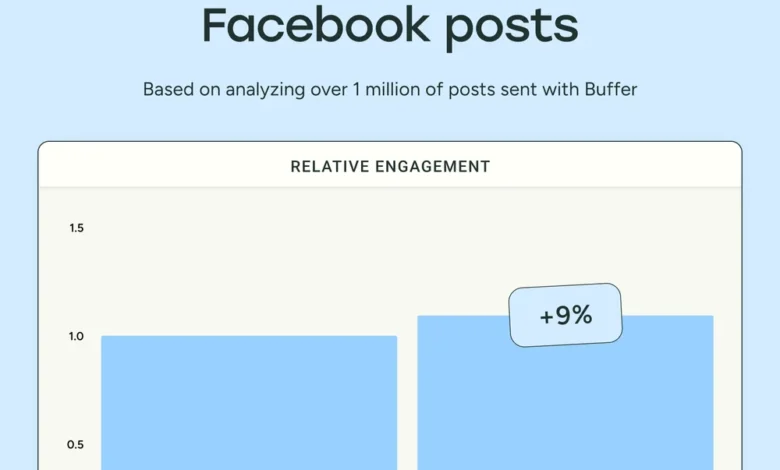
A groundbreaking study analyzing over one million Facebook posts has uncovered a statistically significant correlation between creator replies to comments and increased post reactions, indicating a 9.5% lift in engagement on average. This finding, derived from extensive research by Buffer’s senior data scientist Julian Winternheimer, offers a crucial insight for content creators, small businesses, and marketers striving to optimize their reach on the social media giant. While the percentage increase might appear modest compared to newer platforms, its consistency across a vast dataset underscores its importance on a mature and widely-used platform like Facebook.
Unpacking the Engagement Enigma on Facebook
Facebook, with its colossal user base exceeding three billion monthly active users, remains an undeniable force in the digital landscape. For many creators and businesses, it represents a primary avenue for audience discovery and community building. However, navigating its ever-evolving algorithm to achieve consistent content performance has long been a challenge. The platform’s sheer scale often means individual creators struggle to cut through the noise, making every potential engagement advantage highly sought after.
The curiosity surrounding effective engagement strategies prompted Buffer’s investigation. The core question was straightforward: could actively responding to comments meaningfully enhance a post’s visibility and interaction metrics? The short answer, as the data now firmly suggests, is yes, with important nuances that warrant closer examination.
The 9.5% increase in reactions on posts where creators engaged with comments, while not as dramatic as the 42% lift observed on Threads or 30% on LinkedIn in the same cross-platform study, represents a significant gain on a platform known for its broad and often passive engagement patterns. This consistent single-digit improvement, observed across hundreds of thousands of diverse Facebook profiles, cannot be dismissed. It points to an underlying algorithmic preference for active, conversational content.
The Method Behind the Metrics: A Deep Dive into Data Analysis
To arrive at these precise conclusions, Buffer’s senior data scientist, Julian Winternheimer, employed a sophisticated analytical methodology designed to overcome inherent biases in social media data. The study encompassed approximately one million Facebook posts that garnered at least one comment, spanning a wide array of account sizes and content niches.
Crucially, the analysis moved beyond simple comparisons between different Facebook Pages. Instead of asking, "Do Facebook Pages that reply get more engagement than pages that don’t?" which could be skewed by factors like audience size or content quality, the study posed a more refined question: "Does this specific Facebook Page perform better when it replies versus when it doesn’t?"
This was achieved through a fixed-effects regression model. This statistical approach holds constant various unique characteristics of each account, such as audience size, niche, geographical location, and posting frequency. By establishing a baseline for each account’s typical performance, the model effectively isolated the impact of replying to comments, allowing for a more accurate assessment of its influence on engagement. All other confounding variables were "baked into the baseline," ensuring a true apples-to-apples comparison of an account’s performance under different conditions.
To further validate the findings, a Z-score analysis was conducted as a secondary check. This method measured how far above or below "normal" each post performed for its specific account. The congruence of results from both the fixed-effects model and the Z-score analysis significantly bolsters confidence in the study’s conclusions, indicating a robust and reliable pattern. The statistical significance of the effect (p < 0.001) further underscores that these findings are not merely due to random chance.
It is important to note the scope and limitations of the study. While a strong correlation was identified, the analysis does not definitively establish causation. It is plausible that posts that naturally perform well and attract more comments might also motivate creators to reply more frequently. However, the consistent pattern across multiple platforms, with varying degrees of lift, suggests a more systemic relationship between creator engagement and algorithmic favorability. Furthermore, the dataset specifically measured "reactions" (likes, loves, hahas, etc.) rather than total engagement to avoid circularity, ensuring that the metric being tested (comments) did not artificially inflate the engagement measure.
Key Findings and Nuances on Facebook
The fixed-effects model, which analyzed over one million posts across 97,427 Facebook profiles, revealed that posts with replied-to comments garnered approximately 9.5% more reactions on average. This figure, though seemingly modest in isolation, gains considerable weight when considering Facebook’s immense scale and maturity as a platform.
The Z-score analysis provided further affirmation, indicating that approximately 53.8% of Facebook Pages experienced improved performance when they actively replied to comments. This implies that posts featuring creator responses consistently hovered above an account’s usual performance level, whereas posts lacking such interaction tended to remain at baseline. This "slimmer majority" compared to Instagram (63%) or LinkedIn (83%) reflects Facebook’s more diverse and established engagement dynamics, where a multitude of factors influence content visibility.
An interesting point of clarification from the study addresses a potential misinterpretation of raw data. A superficial glance at median numbers might initially suggest the opposite trend, with posts without replied-to comments showing slightly higher median reactions (22) than those with replies (16). However, as Julian Winternheimer meticulously explained, this raw comparison is misleading because it indiscriminately mixes Facebook Pages of vastly different sizes and activity levels. Once the fixed-effects model controlled for these disparities, comparing each account against its own historical performance, the positive impact of replies became evident. This highlights the critical importance of rigorous statistical analysis in uncovering true trends amidst complex datasets.
Facebook’s Algorithmic Imperatives: Why Replies Matter
Facebook operates on an algorithm that prioritizes "meaningful interactions," a cornerstone of its content distribution strategy. Comments, particularly those that spark back-and-forth exchanges, serve as powerful signals to the algorithm that a post is generating genuine discussion and community engagement, rather than just passive consumption. When a creator actively replies, they are not merely acknowledging a comment; they are initiating or sustaining a conversation thread, which is precisely what the algorithm seeks to promote.
Several factors contribute to why creator replies likely translate into higher reaction rates and extended visibility:
-
Extended Visibility: Each reply effectively refreshes a post’s activity in the feed. This ongoing interaction signals to the algorithm that the content remains relevant and engaging. It can potentially resurface the post for the commenter’s connections or for other users who have previously interacted with the page, prolonging its organic reach.
-
Relationship Signals: Facebook’s algorithm actively tracks and values interaction history between accounts. Consistent replies from a Page to its followers build a stronger "relationship signal." Over time, this cumulative micro-engagement can lead to the platform being more inclined to show future posts from that Page to those engaged followers, fostering a loyal and active audience.
-
Social Proof and Authenticity: An active comment section, especially one where the creator or brand is visibly participating, provides significant social proof. It signals to potential new viewers that there is a real, responsive entity behind the Page. This human element can encourage others to stop scrolling, engage with the content, and leave their own reactions or comments, knowing they might receive a response. In an increasingly automated digital landscape, genuine human interaction stands out.
The 9.5% lift, when viewed through the lens of Facebook’s colossal user base, translates into a substantial increase in overall reach and engagement for many. Even a small percentage gain on a platform with billions of interactions daily can mean thousands, if not millions, more impressions over time. Furthermore, unlike tactics that require significant budget or complex strategic overhauls, replying to comments is a fundamental, accessible practice that any creator or business can implement immediately.
The Broader Context: Facebook in the Creator Economy
Facebook’s journey from a simple social network to a multifaceted platform attempting to woo creators has been marked by significant algorithmic shifts. In recent years, Meta (Facebook’s parent company) has explicitly emphasized "meaningful social interactions" and has made efforts to support the burgeoning creator economy, acknowledging the fierce competition from platforms like TikTok, Instagram (also owned by Meta, but with distinct engagement patterns), YouTube, and LinkedIn.
The data from Buffer’s study aligns perfectly with Meta’s stated goals. By rewarding conversational engagement, Facebook encourages creators to foster genuine communities rather than merely broadcasting content. This strategy aims to keep users on the platform longer, enhance their experience, and differentiate Facebook from competitors that may prioritize passive consumption or short-form, ephemeral content.
The challenge for creators, however, lies in the sheer volume of content and comments across multiple platforms. Managing engagement effectively, especially when running a Facebook Page alongside Instagram, LinkedIn, Threads, YouTube, and TikTok, can feel like an additional full-time job. This study provides a clear, data-backed incentive to prioritize this often-overlooked aspect of social media management.
Actionable Strategies for Enhanced Facebook Engagement
Translating this valuable research into practical, implementable strategies is key for creators and marketers. The study reinforces that genuine interaction is not just a polite gesture but a strategic imperative for algorithmic success.
-
Time Blocking for Replies: Instead of attempting to respond to every comment as it arrives, which can be unsustainable, dedicate specific time blocks each day for engagement. Two 10-to-15-minute windows, perhaps mid-morning and early evening, can effectively capture comments from various audience segments and ensure consistent interaction without disrupting other workflows.
-
Prioritize Conversational Responses: A simple "thanks!" is polite, but it rarely sparks further engagement. To truly leverage the algorithmic benefits, aim for replies that invite further conversation. Ask follow-up questions, add clarifying details, or offer additional insights. Phrases like "Great question – have you considered…?" or "That’s an excellent point, our research also showed…" can transform a one-off comment into an extended dialogue.
-
Reply While the Post is Fresh: Like most social media algorithms, Facebook’s system gives significant weight to early engagement. Responding to comments within the first few hours after a post goes live can amplify its initial distribution and increase the likelihood of sparking additional reactions while the content is still actively being shown to a broader audience. This underscores the strategic advantage of posting content at times when creators are available to engage.
-
Leverage Integrated Management Tools: For creators and businesses managing multiple social media presences, bouncing between individual apps to handle comments is inefficient and prone to oversight. Tools like Buffer’s Community tab consolidate comments from various platforms into a single dashboard, enabling creators to reply directly without the distraction of the main feed. Features like a "Comment Score" can also gamify the process, helping creators track their reply consistency and build a habit of proactive engagement.
The Enduring Value of Authentic Connection
Julian Winternheimer’s cross-platform analysis, encompassing millions of posts, positions Facebook’s 9.5% reaction lift at the lower end of the observed spectrum. However, "lower end" does not diminish its utility; rather, it reflects Facebook’s unique position as a mature, broad-reach platform where engagement patterns are more varied and established than on newer, conversation-first networks like Threads.
The overarching takeaway from this comprehensive study is refreshingly simple: successful social media engagement doesn’t always require cracking a secret code or exploiting an algorithmic loophole. Often, it boils down to the fundamental human principle of reciprocity – showing up for the people who have shown up for you.
While the 9.5% lift is not a guaranteed outcome for every Facebook Page (the study noted that approximately 54% of profiles saw positive effects), the odds are demonstrably tilted in favor of those willing to invest time in authentic interaction. On a platform with Facebook’s unparalleled reach, even a modest, consistent boost in reactions can accumulate into a significant difference in visibility, community growth, and ultimately, business impact over time. The study provides compelling evidence that in the complex world of social media algorithms, genuine human connection remains one of the most powerful catalysts for growth.
Related posts: