Adobe Unveils Firefly AI Assistant, Aiming to Revolutionize Creative Workflows with an Agent-Driven Approach

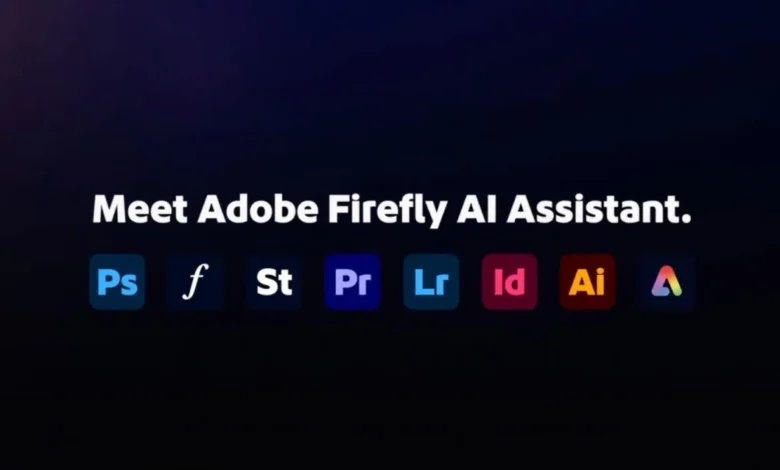
Adobe is strategically transforming its flagship Firefly AI from a mere image generation tool into a comprehensive creative agent, poised to redefine the user experience across its entire Creative Cloud ecosystem. This ambitious endeavor, announced with significant fanfare and detailed in recent official communications, introduces the Firefly AI Assistant as a sophisticated layer designed to streamline and automate complex multi-application workflows. Rather than requiring users to navigate between disparate applications like Photoshop, Premiere Pro, Illustrator, Lightroom, and Express for different stages of their creative process, the Firefly AI Assistant promises a unified, prompt-driven interface. Users will articulate their desired outcomes, and the AI will intelligently manage the underlying application hopping, preserving context and continuity across sessions. This represents a substantial evolution beyond simply embedding AI features within individual applications, pushing Adobe’s vision for AI integration to a broader, workflow-centric level.
The Genesis of a Creative Agent: Adobe’s Vision for Firefly AI Assistant
The announcement, detailed in Adobe’s official blog post on April 15, 2026, and further elaborated in its newsroom release, centers on a fundamental shift in how creative professionals interact with their tools. The core proposition of the Firefly AI Assistant is to empower users to spend less time deciphering application functionalities and navigating intricate menus, and more time focusing on the conceptualization and refinement of their creative vision. By enabling a single prompt to initiate a multi-step, cross-application workflow, Adobe aims to democratize complex creative tasks and accelerate production cycles.
The Firefly AI Assistant is being developed to integrate seamlessly with a wide array of Adobe Creative Cloud applications. While the full list of initial integrations is still being refined, key applications expected to be supported include Photoshop for image manipulation, Illustrator for vector graphics, Premiere Pro for video editing, After Effects for motion graphics, Lightroom for photo management and editing, and Adobe Express for rapid content creation. This broad integration underscores Adobe’s intent to make the assistant a ubiquitous presence across its creative suite.
Furthermore, the assistant will incorporate pre-built "Creative Skills." These are essentially reusable, automated task flows designed for common creative jobs. Examples include consistent portrait retouching using pre-defined presets or generating diverse social media content across multiple platforms with a single command. Crucially, users will also possess the ability to develop and customize their own Creative Skills. This feature elevates the assistant beyond a mere conversational chatbot, positioning it as a highly customizable automation layer for professional creative endeavors, adaptable to the unique needs of individual artists and teams.
The Interface Revolution: Prompts as the New Control Surface
The true innovation of the Firefly AI Assistant lies not solely in its AI capabilities but in its paradigm-shifting interface design. Adobe is pushing towards a model where natural language prompts become the primary control mechanism, with the intricate stack of Creative Cloud applications serving as the underlying execution engine. This approach significantly lowers the barrier to entry for users who may not possess deep technical expertise or intimate knowledge of every tool within the Creative Cloud suite. Instead of meticulously learning the location of specific tools or manually chaining complex actions, users can now describe their desired outcome, and the AI will translate that into tangible results.
This shift is particularly relevant for users who may have encountered limitations or frustrations with current AI functionalities, such as the occasional issues with Generative Fill in Photoshop. The Firefly AI Assistant is conceptualized as a "guided agent" rather than an opaque "black box." This implies a more interactive and transparent process. The assistant is designed to engage users with contextual follow-up questions, offer intelligent suggestions, and provide opportunities for users to intervene and refine outputs even while a workflow is in progress. This iterative dialogue ensures greater user control and allows for a more nuanced creative outcome.
Moreover, the assistant is intended to learn and adapt to individual user preferences over time. This includes understanding aesthetic sensibilities, preferred toolsets, and habitual workflow patterns. If Adobe successfully implements this learning capability, it could dramatically accelerate the execution of repetitive tasks for solo creators and teams engaged in similar weekly projects, fostering greater efficiency and consistency.
Practical Applications: Streamlining Tedious Creative Processes
Adobe has provided compelling examples to illustrate the practical utility of the Firefly AI Assistant. One such scenario involves editing a series of product photographs taken in a natural setting, such as a forest. Traditionally, achieving a consistent and aesthetically pleasing background, perhaps by subtly enhancing or modifying the surrounding foliage, would necessitate several manual editing steps. With the Firefly AI Assistant, this process could be drastically simplified. For instance, a user might be presented with a simple control, like a slider, to increase or decrease the density of trees and foliage around the subject. This transforms a potentially time-consuming manual editing task into a rapid, guided adjustment, highlighting the assistant’s potential to offer practical solutions for overcoming creative bottlenecks.
The core promise of this technology lies in its ability to provide a more direct and efficient path through traditionally tedious and time-consuming aspects of creative work, moving beyond purely experimental generative capabilities to tangible workflow enhancements.
Expanding the Horizon: Frame.io Integration and Collaborative Workflows
Adobe is extending the vision of the Firefly AI Assistant to its collaborative review and production platform, Frame.io, making the announcement particularly significant for teams and enterprise clients. Within Frame.io, the assistant is envisioned to streamline critical aspects of the production pipeline. This includes assisting with the packaging of creative assets for presentations, facilitating seamless sharing with collaborators, intelligently collecting and organizing feedback, and potentially even automating the application of requested changes.
This ambitious integration aims to blur the lines between content creation, review, and revision, transforming them into a more fluid and interconnected workflow rather than distinct, sequential stages. This move signals Adobe’s intent to embed AI-driven assistance throughout the entire project lifecycle, from initial concept to final delivery and iteration.
Beyond the Adobe Ecosystem: Interoperability and Third-Party Integrations
A particularly noteworthy aspect of Adobe’s strategy is its ambition for the Firefly AI Assistant to function beyond the confines of its own application suite. The company’s ongoing collaboration with AI research firms, such as Anthropic, is a key indicator of this direction. By fostering compatibility with leading third-party AI models, like Claude, Adobe aims to enable creators to leverage Adobe’s powerful workflows from external environments. This indicates a keen understanding of modern creative workflows, which rarely exist in a single software silo.
The strategic importance of this interoperability is clear: if the Firefly AI Assistant can be accessed and utilized where creators already work, it stands a much stronger chance of becoming an integral part of their actual workflows, rather than remaining a supplementary feature or a mere demonstration of technology. For organizations and individuals evaluating the considerable investment in Adobe’s ecosystem, this move towards broader integration could significantly influence their long-term platform decisions.
Accelerated Innovation: New Firefly Features on the Horizon
While the Firefly AI Assistant is slated for a public beta release in the coming weeks, Adobe has concurrently announced a wave of broader Firefly upgrades. These enhancements underscore Adobe’s commitment to continuously evolving its AI capabilities. Among these are significant advancements in Firefly’s video editing functionalities and notable changes within Premiere Pro.
Firefly Video Editor Updates: The Firefly Video Editor is set to receive a suite of powerful new features. These include enhanced text-to-video generation, allowing for more nuanced and creative control over video content creation through textual prompts. Additionally, improvements in video editing tools are expected to offer greater flexibility and efficiency for video professionals. The platform will also see expanded capabilities for video style transfer, enabling users to apply the aesthetic of one video to another, and sophisticated object removal and manipulation within video sequences.
Adobe is also significantly expanding the roster of third-party AI models available within the Firefly ecosystem. This curated selection now includes prominent models such as Kling 3.0, Kling 3.0 Omni, Veo 3.1, Runway Gen-4.5, Luma Ray3.14, FLUX.2 [pro], ElevenLabs Multilingual v2, and Topaz Astra, in addition to Adobe’s proprietary Firefly models. This broad integration of external AI powerhouses signifies a commitment to offering users the most advanced and diverse AI tools available.
New Image Editing Controls: On the image editing front, Adobe has introduced two pivotal new features. These are the "AI Image Mixer," which allows for the blending of multiple images based on textual prompts and stylistic parameters, and "AI Style Transfer," enabling users to apply the artistic style of one image to another. Both these innovations are indicative of a broader trend: moving beyond simple prompt-based generation towards more controlled, iterative, and refined image editing processes.
The Critical Juncture: Evaluating the Impact and Future of Creative AI
The unveiling of the Firefly AI Assistant arrives at a moment when the practical application of AI in professional creative software is under intense scrutiny. Many AI product demonstrations, while impressive in isolation, often falter when subjected to the demands of real-world workflows. Adobe’s approach stands out due to its ambition to create a cohesive, assistant-led workflow that seamlessly integrates generation, editing, collaboration, and revision.
The ultimate success of the Firefly AI Assistant will hinge on Adobe’s ability to deliver on its promise of a reliable, fast, and truly editable workflow. If the assistant proves to be sluggish, imprecise, or overly assertive in its automation, creative professionals may opt to revert to their familiar, trusted tools and methodologies. The delicate balance Adobe must strike is between harnessing the power of AI to enhance productivity and maintaining the essential creative control that artists and designers require.
Currently, the Firefly AI Assistant appears to represent Adobe’s most significant and clearest attempt to establish AI not merely as an added feature but as the fundamental operating layer across the entire Creative Cloud. This strategic pivot could profoundly influence the future trajectory of digital content creation, setting a new standard for how AI is integrated into professional creative tools. The implications for industries reliant on visual and multimedia content are substantial, potentially leading to unprecedented gains in efficiency, innovation, and creative output.