How Baseline is helping developers ship less JavaScript by reclaiming the browser platform

The modern web development ecosystem is currently undergoing a structural transformation as the gap between external dependency reliance and native browser capabilities continues to narrow. For years, developers have populated their project configuration files with third-party libraries to handle common tasks like data formatting, HTTP requests, and UI interactions. However, recent advancements in the Web Platform—codified through the "Baseline" project—have rendered a significant portion of these dependencies redundant. Industry analysts estimate that a standard mid-sized JavaScript application currently carries between 60KB and 90KB of minified and gzipped dependencies that are now natively supported by modern browsers, presenting a significant opportunity for performance optimization.
The Evolution of the Web Platform and the Baseline Initiative
The Baseline project, an initiative spearheaded by the WebDX Community Group, provides a clear, standardized measure of browser support for web features. By categorizing features into "Newly" and "Widely" available, the initiative offers developers a roadmap for feature adoption. A feature is labeled "Widely" available when it has been supported across the four major engines—Chrome, Edge, Firefox, and Safari—for a period of 30 months. This classification is vital for enterprise-level applications that require long-term stability and broad user reach.
The acceleration of browser feature delivery is unprecedented. In the last three years alone, the Web Platform has integrated native support for complex operations that previously required substantial JavaScript overhead. This shift is not merely a convenience; it is a fundamental change in how performance budgets are managed. By migrating from heavy external dependencies to native browser APIs, teams can reduce the total JavaScript payload, decrease main-thread execution time, and improve Time to Interactive (TTI) metrics, all of which are primary indicators for SEO and user retention.

Strategic Clustering: A New Audit Methodology
Rather than performing a granular, package-by-package analysis, experts recommend a "cluster-based" auditing approach. This method groups dependencies by their functional purpose, allowing developers to assess the impact of platform migration at a systemic level.
Internationalization and Data Formatting
The Internationalization (Intl) API namespace currently represents the most significant area for potential "dead weight" reduction. Popular libraries such as timeago.js and numeral often add significant bloat to bundles. Native alternatives, including Intl.RelativeTimeFormat, Intl.NumberFormat, and Intl.ListFormat, are now widely available and provide robust, localized results without the need for external code. While newer features like Intl.DurationFormat are currently in the "Newly" available phase, they signal a trend toward total platform coverage for date and time manipulation.
HTTP Communication and Network Protocols
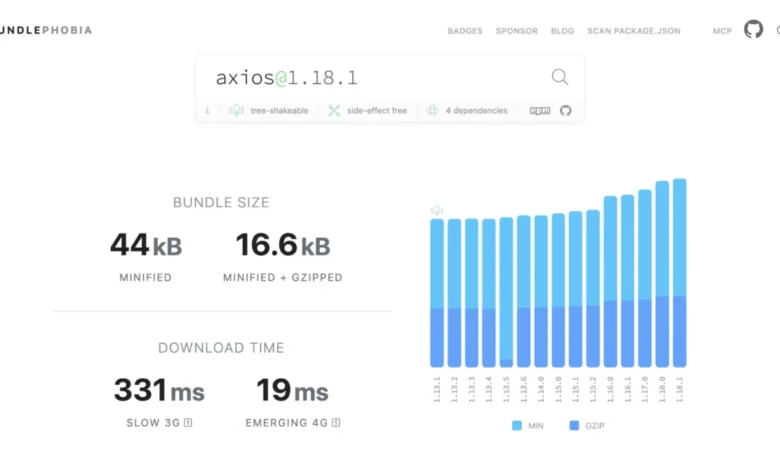
The shift from heavy HTTP clients like axios or superagent toward the native fetch API has been a point of contention in the developer community. While axios remains popular for its interceptors and automatic request serialization, modern fetch implementations—often combined with an AbortController for cancellation and custom wrapper classes for interceptors—can replicate these features with significantly less code. The implication is that developers are paying a 17KB to 19KB "tax" for abstractions that are increasingly easy to replicate natively.
UI Primitives and Accessible Components
Perhaps the most dramatic change is in the realm of UI components. The adoption of the <dialog> element, the Popover API, and CSS Anchor Positioning has fundamentally altered the need for libraries like tippy.js, focus-trap, and body-scroll-lock. Native solutions are not only smaller; they are inherently more accessible. Because they are handled by the browser’s "Top Layer," they avoid common issues with z-index stacking and focus management that have historically plagued hand-rolled or library-dependent modals.

The Decision-Making Framework: Risk vs. Performance
Despite the benefits of reducing dependencies, developers are advised against indiscriminate removal. A rigorous decision-making framework is necessary to ensure application stability. This framework rests on three critical questions:
- Baseline Compatibility: Is the native feature supported by the specific browser versions required by the target audience? If the target demographic includes users on older devices or legacy browsers, native features may require conditional polyfilling.
- The Cost of Replacement: If a feature is not yet "Widely" available, does the weight of the necessary polyfill exceed the size of the original library? In the case of the Temporal API for date handling, the current polyfill is significantly larger than lightweight alternatives like
dayjs, making migration premature for many projects. - Functional Parity: Does the native feature capture the specific utility the team requires? While
fetchis a powerful tool, it does not include every utility function found in high-level HTTP libraries. Developers must evaluate whether the custom implementation costs outweigh the benefits of removing the dependency.
Broader Economic and Performance Implications
The push to replace dependencies with native features aligns with the broader web performance movement toward "Zero-Dependency" or "Minimal-Dependency" architectures. As global internet traffic becomes increasingly mobile-first, the overhead of downloading, parsing, and executing unnecessary JavaScript becomes a major barrier to entry for users in emerging markets or those on limited hardware.
Official responses from industry standard-bearers indicate that the "platform-first" approach is the new industry benchmark. By offloading logic to the browser, developers leverage the highly optimized C++ engines (like V8 or WebKit) that browsers use to execute native code, which is almost always faster than executing interpreted JavaScript. Furthermore, native APIs are updated by browser vendors alongside the browser itself, meaning that performance improvements in the native code are inherited by the application without requiring a dependency version update.
Establishing a Regular Maintenance Cadence
To maintain a performant application, engineering teams should incorporate a quarterly audit of their package.json file. This process should involve:

- Dependency Mapping: Using tools like
npm lsto identify production dependencies. - Bundle Analysis: Utilizing
source-map-exploreror similar visualizers to determine the real-world impact of each library on the final bundle size. - Baseline Status Verification: Cross-referencing identified candidates with MDN or
webstatus.devto check the current support level of native counterparts. - Progressive Enhancement: Implementing native features with feature detection guards to ensure that modern users benefit from smaller bundles while legacy users maintain a functioning experience via a fallback.
As the industry moves toward 2026 and beyond, the expectation for high-performance web applications will only grow. The "Baseline" project serves as more than just a documentation tool; it is a catalyst for a leaner, more performant, and more resilient web. By regularly re-evaluating the necessity of third-party code, developers can reclaim the platform’s potential, ensuring that the web remains a fast and accessible medium for all users, regardless of their device or geographic location. This shift towards native capability marks a mature stage in the evolution of JavaScript development, prioritizing sustainability and efficiency over the rapid, often unoptimized, accumulation of external code.