The author’s first professional assignment as a teacher landed them in a city that outwardly possessed all the hallmarks of desirability: pristine streets, a vibrant culinary scene, a picturesque bay, and a populace exhibiting impeccable manners, reminiscent of British civility. Yet, despite this apparent perfection, an intangible element was conspicuously absent. This experience mirrors a common human observation: many cities, like many individuals, can excel in outward presentation and adherence to societal norms without possessing that crucial spark that captivates and connects.
Contrast this with a different urban landscape, one imprinted on the author’s childhood memory. This city, a beacon of vibrant energy, boasted a sprawling amusement park by its harbor, a testament to gradual, thoughtful reconstruction. Ferries, laden with eager tourists, navigated to sun-drenched beaches and secluded bays. The very sand, a brilliant white, emitted a distinct squeak underfoot, an auditory testament to its pristine nature. The climate was a perpetual embrace of warmth, a stark departure from harsh winters. Iconic landmarks, the Opera House and the majestic arch of its famous bridge – affectionately nicknamed "the coat hanger" – cemented its global recognition. This city possessed an undeniable "X-factor," a quality that transcends mere functionality and enters the realm of charisma. The author’s subsequent career move to this latter city was a testament to the profound, almost magnetic, pull of this intangible asset, a city that offered not just a checklist of amenities but a feeling, a connection.
This personal anecdote serves as a powerful allegory for the evolving landscape of human connection and influence in the digital age. While one city represented faultless execution, the other offered something beyond quantifiable metrics: charisma. This "thing" that cannot be placed on a checklist has, in the digital sphere, quietly emerged as one of the most valuable assets an individual can cultivate.
The prevailing notion that charisma is an innate gift, a genetic lottery, is a pervasive myth. The common narrative suggests one is either born with charisma or destined to lack it. This belief, however, is actively challenged by the lifelong work of figures like Dale Carnegie. Carnegie, a pioneer in interpersonal skills, dedicated his career to demonstrating that charisma is not a mystical endowment but a learnable skill, akin to any other craft that can be honed through practice and deliberate effort.
Furthermore, the popular understanding of charisma often misattributes it. It is not synonymous with being the most vociferous individual in a group; indeed, the loudest voices can often be the most isolated. It is not about polished performances or a veneer of slickness applied for an audience. True charisma, according to Carnegie and modern researchers, emanates from a more profound source: the quiet, steady signal of authenticity, indicating a genuine individual on the other side, worthy of attention.
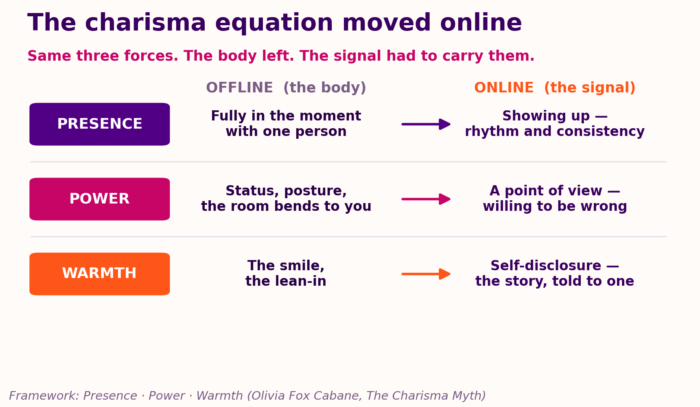
Contemporary research, notably the work of Olivia Fox Cabane, deconstructs charisma into three fundamental components that are demonstrably trainable: presence, power, and warmth. These pillars are supported by Carnegie’s enduring principles, such as the art of smiling, the importance of using an individual’s name, the necessity of active listening for comprehension, and the skill of reading a room.

However, a critical nuance often goes unstated: Carnegie’s methodologies were largely designed for in-person interactions. His emphasis on smiles, eye contact, remembering names, and mirroring body language all presuppose a physical presence where first impressions are formed in a fraction of a second, with the majority of communicative signals originating from the body.
The advent of online communication has fundamentally altered the "room." The immediate visual cues of eye contact are absent. The sheer volume of names to recall in a digital environment is overwhelming. Body language is often muted or entirely absent. Consequently, many of Carnegie’s foundational rules, while still valuable in their original context, falter when transposed directly to the digital interface.
By all logical extensions, online charisma should be an insurmountable challenge. Yet, a select group of individuals possess the remarkable ability to transcend the digital divide, to reach across the cold glass of a screen or monitor and forge genuine emotional connections with millions of strangers. These individuals are not breaking the established rules of charisma; rather, they are adapting them, employing a different set of principles for the virtual realm. This raises a pivotal question: when the physical body is no longer the primary medium, what then carries charisma?
The three core forces of charisma – presence, power, and warmth – do not vanish online; they transform and relocate.
Presence evolves from a fleeting moment into a consistent rhythm. It is demonstrated by repeated, reliable appearances, fostering a sense of familiarity and recognition in a digital audience. This persistent engagement is the quiet engine driving the success of countless creators who have built substantial followings by consistently showing up.
Power shifts from physical posture to a defined point of view. It manifests in the courage to articulate one’s beliefs, to take a stance, and to risk public disagreement. It is about having the conviction to say what needs to be said, even when it is unpopular.
Warmth transitions from a simple smile to authentic self-disclosure. It is conveyed through sharing personal stories, vulnerabilities, and the lessons learned from life’s challenges, fostering a one-to-one connection between individuals. It is the human element that resonates deeply, making a digital interaction feel personal and relatable.
In the absence of a physical presence and direct interpersonal engagement, there is a critical need to recalibrate how we cultivate a sense of friendship and connection, even across vast digital distances.
The Digital Gold Rush: Why Charisma Now Prints Money
For the majority of human history, trust was primarily vested in established institutions: corporations, financial entities, and broadcast media. This paradigm has undergone a seismic shift. Trust has largely migrated from these monolithic structures to individuals. People now tend to place greater faith in individuals who appear relatable and authentic than in corporate logos.
Data from organizations like Edelman’s Trust Barometer consistently reveals a significant portion of the population, approximately half, places trust in influencers. Moreover, a substantial number of these individuals would extend that trust to a brand they might otherwise distrust, provided it is endorsed by a person they believe in.
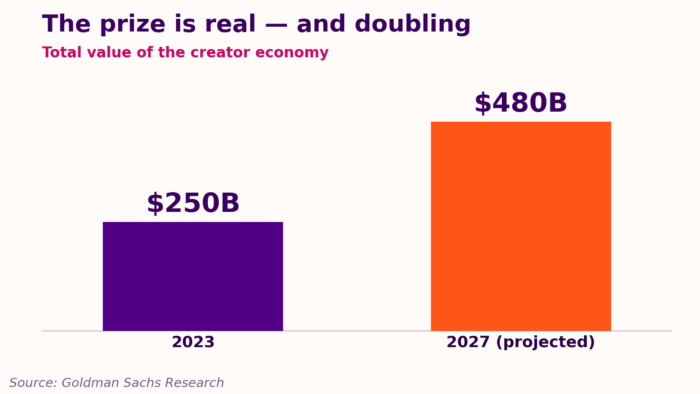
This migration of trust has directly influenced the flow of capital. The creator economy, a direct consequence of this shift, is projected to experience substantial growth, potentially reaching hundreds of billions of dollars in the coming years. Millions now identify as creators, leveraging their personal influence and charisma to build careers and businesses. This burgeoning sector underscores a fundamental truth of the current era: attention may be easily acquired, but genuine trust is a rare commodity, and charisma is the palpable manifestation of that trust.
While the potential for financial success is immense, the landscape is not uniformly prosperous. A significant majority of creators struggle to achieve financial stability, with only a small percentage earning a sustainable living from their online endeavors. The distinction between the successful few and the struggling many is rarely attributable to innate talent or sheer luck alone. More often, it is the strength of their signal, their unique charisma, that makes them memorable and impactful.
The economic implications of this trust-based influence are profound. A single recommendation from a trusted individual can sway purchasing decisions, leading consumers to patronize companies they would otherwise overlook. This is not merely marketing; it is the ancient art of recommendation amplified by digital technology and scaled to reach millions. The rise of social media has democratized voice, offering a global platform to anyone willing to utilize it.
The Sameness Machine: An Algorithm’s Threat to Authenticity
Despite the opportunities, a significant threat to individual charisma looms: the algorithmic systems that govern online platforms. These algorithms are designed to reward predictability, favoring templates, established best practices, and content that is perceived as safe and polished. Consequently, a deluge of competent yet identical content floods online spaces, often indistinguishable from one another, as if generated by a single, uninspired entity.
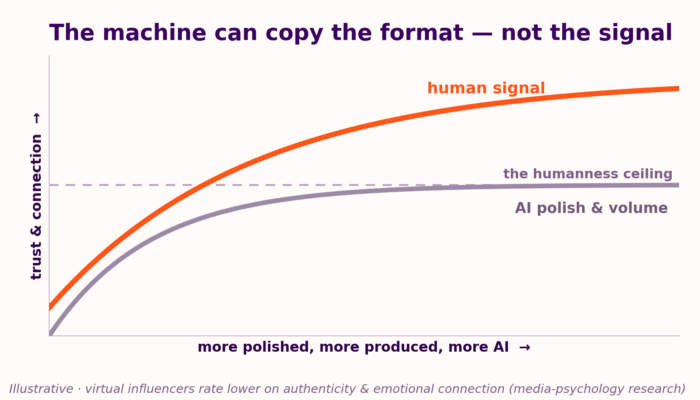
Charisma, conversely, thrives on distinctiveness. It is the magnetic allure of difference, the "X-factor" that no template can replicate. Empirical evidence supports this. Studies examining virtual influencers and AI-generated personas, despite their superficial perfection, consistently reveal lower ratings in authenticity and emotional connection from audiences. The machine can mimic form, but it cannot replicate the authentic human signal.
This phenomenon is not an overt imposition but a subtle temptation. The algorithmic system offers incremental rewards – small bursts of reach and engagement – for conforming to predictable patterns. Following trends, adopting popular formats, and smoothing out unique edges can feel like intelligent strategic choices. However, each surrender to this pressure erodes individuality. The cumulative effect can lead to a digital presence that, while technically proficient, no longer reflects the true self, leaving individuals feeling subsumed by the "sameness machine." The human web, intended for genuine connection, risks becoming populated by digital automatons.
The tension for creators lies in navigating this dynamic: to either leverage the system or risk becoming indistinguishable within it. The boundaries are fluid, requiring constant vigilance. A simple test for this phenomenon is to consider whether a month’s most successful post could be attributed to another individual without notice. If so, the machine has likely gained the upper hand.
Charisma in Action: Three Case Studies of Digital Influence and Monetization
To understand the practical application of charisma in the digital economy, examining individuals who have successfully translated it into tangible success is instructive.
Emma Chamberlain: The Embodiment of Warmth
Emma Chamberlain built a massive following not by adhering to polished conventions but by embracing imperfection. Her early content featured jump cuts, deliberately suboptimal lighting, and candid discussions about her anxieties and mundane experiences, fostering a sense of camaraderie as if she were a friend sharing her thoughts. This authentic warmth became the foundation for her entrepreneurial ventures. Chamberlain Coffee, her brand, reportedly achieved significant sales within its initial launch period, and she has become a prominent figure in luxury fashion, serving as a brand ambassador for Cartier. Her success lies not in selling coffee, but in selling the trust and connection she cultivated, with coffee as an extension of that relationship. Despite her elevated status, she retains her distinctive voice and persona, demonstrating that authenticity, not polish, is the key to enduring influence.
Alex Hormozi: The Power of Generosity and a Strong Stance
In contrast to the typical "guru" model that often sequesters valuable information behind paywalls, Alex Hormozi adopts a radically different approach. He disseminates his entire business playbook – including pricing strategies, scripts, and frameworks – freely across various platforms. This strategy of providing immense value establishes a powerful sense of trust at scale. This trust then fuels Acquisition.com, his primary revenue stream, where he takes equity in businesses that seek his expertise. His offering is not merely a course but a belief system translated into ownership. Hormozi’s narrative of overcoming near-bankruptcy at a young age to achieve nine-figure success is intrinsically linked to his willingness to share his knowledge openly. The underlying lesson is counterintuitive: the more one gives away, the more trust one garners, and consequently, the more opportunities for substantial return emerge.
Ali Abdaal: The Consistent Signal of Presence
Ali Abdaal, a former Cambridge doctor, cultivated a substantial audience by consistently sharing study tips and insights from his medical journey. Rather than abandoning his profession for the pursuit of online fame, he maintained a steady rhythm of content creation, building his platform organically through consistent, honest engagement. This "reinvention by rhythm" has led to significant success through his own online courses and a bestselling book, with traditional ad revenue forming a smaller portion of his income. His early videos, often simple screen recordings made between hospital shifts, prioritized substance and value over production quality, demonstrating that a clear point of view can be more impactful than polished visuals.
These three individuals, though distinct in their approaches, share a common thread: they cultivated an authentic signal that compelled algorithms to carry their message, rather than tailoring their message to appease the algorithm. They embraced their unique identities and then built ventures that leveraged that inherent charisma.
Building Your Charisma-to-Cash Ladder: A Tactical Framework
Translating charisma into tangible financial success requires a strategic, step-by-step approach. Skipping any rung of this ladder can lead to instability.
1. Discover Your Signal: Identify the unique aspects of your personality, experiences, and perspectives that an automated system cannot replicate. This includes your personal narrative, significant life challenges, and your distinctive blend of passions and obsessions. The critical question to ask is: "Could an AI have generated this?" If the answer is yes, it is likely noise rather than signal. The ancient wisdom of "know thyself" is more relevant than ever, as this self-awareness now has direct economic implications.
2. Cultivate an Audience Through Rhythm: Online presence is synonymous with consistency. Commit to a single platform and engage regularly for a sustained period, ideally two years. The act of consistent presence, even if seemingly mundane, is more impactful than sporadic brilliance. A stranger cannot develop trust with someone they encounter only fleetingly. The rhythm of your engagement is paramount in building a reliable connection.
3. Earn Trust Through Generous Value Exchange: Position yourself as the most generous voice in your niche. Provide comprehensive answers and actionable insights, rather than mere teasers. Hormozi’s approach of sharing his entire playbook exemplifies this. Generosity is a potent trust-builder. Giving to the point where it feels almost reckless creates a powerful barrier against competitors.
4. Construct an Offer You Own: This is a critical juncture where many creators falter. Reliance on brand deals, which essentially involves renting out your audience to other companies, often constitutes the majority of a creator’s income. True ownership lies in building and controlling your own offerings: products, courses, services, or communities. While rental income provides immediate returns, ownership secures long-term financial stability.
5. Convert Trust into Income: Ultimately, income is a reflection of earned trust. When your signal is authentic and your offer resonates with your audience, financial rewards naturally follow, rather than being the primary objective. The key is to earn the right to make an ask by consistently delivering value and building genuine relationships.
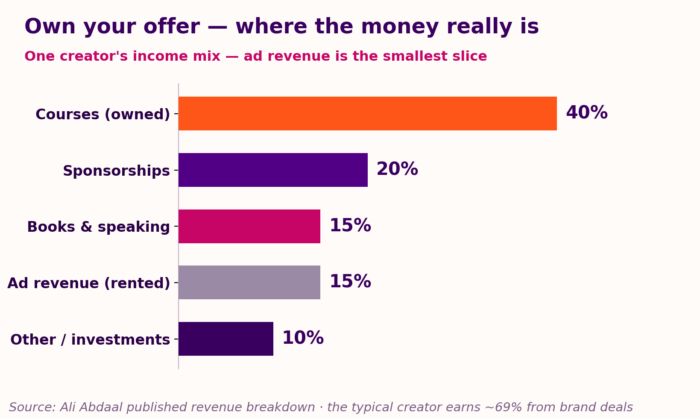
This structured approach illustrates a clear progression: authentic signal fosters audience growth, which in turn builds trust. This trust then underpins a valuable offer, which ultimately translates into sustainable income.
Conclusion: The Irreplaceable Human Signal in a Digital World
Charisma, far from being an exclusive gift, is a learnable skill. In an era saturated with digital sameness, it has emerged as the most valuable and resilient skill because it is the one element that artificial intelligence and algorithmic systems cannot manufacture. The directive is clear: cease striving for mere discoverability by algorithms and instead focus on becoming so uniquely yourself that you define your own category. Cultivate a presence so compelling and distinctive, with a perspective or narrative so potent, that individuals eagerly anticipate your contributions.
The true measure of success in this evolving digital landscape lies not in conforming to the predictable patterns of the "sameness machine," but in embracing and amplifying the irreplaceable human signal that connects, persuaves, and ultimately, enriches. The future belongs to those who understand that in a world drowning in content, authenticity and genuine human connection are the ultimate currency.