Microsoft Named a Leader in the 2026 Gartner Magic Quadrant for Container Management

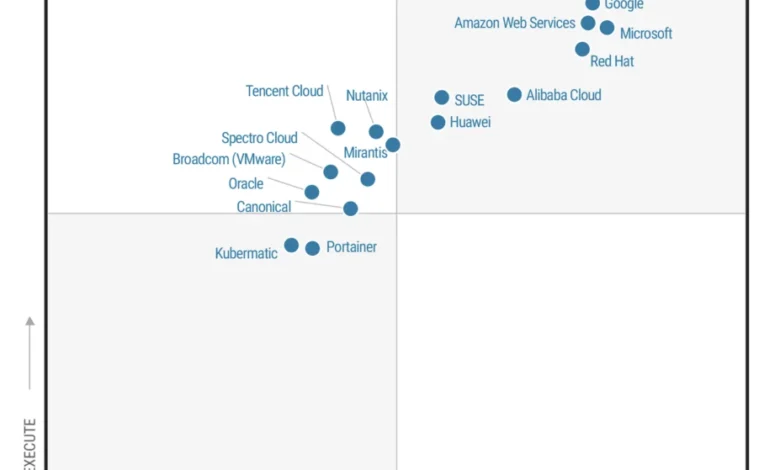
Microsoft has officially been recognized as a Leader in the 2026 Gartner Magic Quadrant for Container Management, achieving the furthest position to the right for Completeness of Vision. This acknowledgment underscores the company’s strategic shift toward providing a unified, AI-ready infrastructure that allows enterprises to modernize applications without the burden of increased operational complexity. As organizations grapple with the dual pressures of scaling generative AI and maintaining sovereignty over their data, Microsoft’s container portfolio—anchored by Azure Kubernetes Service (AKS)—has become a central pillar in the enterprise transition to hybrid and multi-cloud environments.
The evolution of container orchestration has moved rapidly from a niche tool for democratizing distributed systems to the foundational layer of modern digital infrastructure. When Kubernetes first emerged over a decade ago, the industry objective was relatively narrow: simplify the deployment of distributed services. Today, the requirements have expanded exponentially. Enterprises are now tasked with managing complex AI workloads that must exist in proximity to users, adhere to strict regulatory boundaries, and maintain consistency across fragmented deployment environments.
A Chronology of Container Evolution at Microsoft
The trajectory of Microsoft’s container strategy reflects the broader history of the cloud-native ecosystem. Following its early adoption of Kubernetes, Microsoft shifted its focus from merely supporting open-source tools to integrating them into a holistic platform. In 2017, the launch of Azure Kubernetes Service (AKS) marked a turning point, providing a managed Kubernetes experience that lowered the barrier to entry for enterprise developers.
By 2020, the realization that cloud-native environments were spreading beyond the data center led to the expansion of Azure Arc. This tool allowed organizations to apply governance and management policies to clusters running in other clouds or on-premises, effectively decoupling the control plane from the infrastructure. The introduction of Azure Kubernetes Fleet Manager and Azure Container Apps in subsequent years further signaled a move toward addressing the "coordination tax"—the operational friction that arises when managing thousands of clusters across disparate geographic regions.
Data-Driven Infrastructure and the Rise of AI
The current shift toward AI integration has necessitated a departure from traditional, static container management. According to industry analysis, container platforms are now being forced to adapt to two distinct operational models.
In the first model, organizations prioritize centralized control. Platform teams manage a persistent serving layer, GPU scheduling, and the model lifecycle to ensure high-volume, predictable performance. To support this, Microsoft has integrated open-source tooling, such as the AI toolchain operator, into AKS. Notably, AKS has achieved Cloud Native Computing Foundation (CNCF) AI Conformance certification, providing a benchmark for compatibility as AI ecosystems evolve.
The second model is driven by the rapid, on-demand nature of agentic AI. Applications or AI agents often require ephemeral capacity—invoking inference only when needed and releasing resources immediately thereafter. Azure Container Apps was specifically re-engineered to facilitate this, offering serverless GPUs and hardware-isolated sandboxes. This approach allows developers to run unpredictable, state-dependent workloads without the overhead of managing a full Kubernetes cluster, effectively lowering the technical barrier for application teams.
Bridging the Hybrid and Edge Divide
One of the most pressing challenges for modern enterprises is the requirement for "sovereign cloud" capabilities. As regulatory requirements mandate that data and processing remain within specific legal jurisdictions, the cloud estate has become increasingly decentralized. This decentralization often results in configuration drift, where clusters across different regions fail to remain synchronized, leading to security and policy inconsistencies.

Microsoft’s response to this sprawl has been the development of "AKS Everywhere," a strategy designed to extend the Azure Kubernetes platform to the edge. By utilizing Azure Arc, companies can maintain a common identity, observability, and policy model regardless of whether the cluster is located in a hyperscale data center, a remote branch office, or a third-party cloud. The integration of Azure Kubernetes Fleet Manager acts as the administrative layer, allowing operators to propagate configuration changes across fleets of clusters, effectively turning thousands of individual nodes into a single, cohesive entity.
Fact-Based Analysis: The Role of Open Source
A significant factor in Microsoft’s market positioning is its commitment to the upstream Kubernetes project. By eschewing proprietary forks in favor of open-source alignment, Microsoft has positioned itself as the largest contributor among cloud providers to CNCF projects over the past three years. This strategy is not merely altruistic; it serves as a risk-mitigation layer for customers. Because the API remains stable and consistent with the broader Kubernetes ecosystem, enterprises avoid the "lock-in" trap, maintaining the ability to migrate workloads between Azure and other environments as business requirements dictate.
Operational Efficiency in the Age of Scale
As the number of clusters within a typical enterprise grows, the ratio of human operators to machines has become unsustainable. To combat this, Microsoft has introduced "AKS Automatic," a feature set that applies pre-configured, best-practice operational defaults derived from internal Microsoft telemetry. This allows teams to gain the benefits of "GitOps" and high-availability standards without manual intervention.
Furthermore, the integration of the Azure SRE Agent and the AKS MCP Server represents an industry-wide trend toward "agentic operations." By utilizing large language models to assist in diagnostic and remediation tasks, these tools aim to reduce the time spent on routine incident response. The objective is to shift the operator’s role from manual troubleshooting to high-level system architecture, effectively increasing the "surface area" of the platforms they can manage without proportional headcount growth.
Industry Implications and Customer Momentum
The recognition by Gartner as a Leader in the 2026 Magic Quadrant serves as a validation of this platform-first approach. For organizations like CallRevu, the value proposition is clear: the ability to scale GPU resources based on call volume while maintaining consistent identity and network controls across the entire infrastructure.
The broader implication for the IT industry is a transition toward "platform engineering." Companies are moving away from treating Kubernetes as an infrastructure utility and toward treating it as a product. The successful platforms of the future will be those that allow for this dual-speed operation—providing the rigid control necessary for core business models and the rapid, elastic flexibility required for the next wave of AI-driven agentic applications.
As the industry continues to evolve, the distinction between "on-premises," "cloud," and "edge" will likely blur further, replaced by a singular, distributed compute fabric. For Microsoft, the challenge will be to continue absorbing the inherent complexity of this fabric into the platform layer, ensuring that the burden of managing modern, distributed, AI-enabled applications does not fall upon the end-user. The 2026 Gartner recognition suggests that the company’s focus on consistency and openness is currently the most viable path forward for enterprises attempting to navigate this volatile technological landscape.
Technical Governance and Future Outlook
The technical community has closely monitored the development of Kubernetes within Microsoft, particularly regarding how the company balances its internal requirements with the needs of the open-source community. The stability of the API and the adherence to CNCF standards have been the primary drivers of user adoption. Looking forward, the integration of autonomous agents into the management stack will be the next major hurdle. If Microsoft can successfully lower the barrier to managing these complex clusters, it will likely see continued growth in the adoption of Azure-native container services across regulated industries such as finance and healthcare, where the balance between agility and compliance is the most difficult to strike.
In summary, the 2026 Gartner Magic Quadrant for Container Management identifies a market that has matured significantly. The days of simple container deployment are over; the era of intelligent, distributed, and policy-governed orchestration has begun. For Microsoft, maintaining its leadership position will require a continued commitment to the principles of open-source collaboration, even as it introduces proprietary advancements in agentic automation and platform-level orchestration. As enterprise estates continue to expand into the edge and across sovereign boundaries, the ability to manage complexity at scale will define the next generation of cloud leadership.
Related posts: