AI-Assisted Security Research Exposes Critical Vulnerability Chain in OpenAI Internal Infrastructure

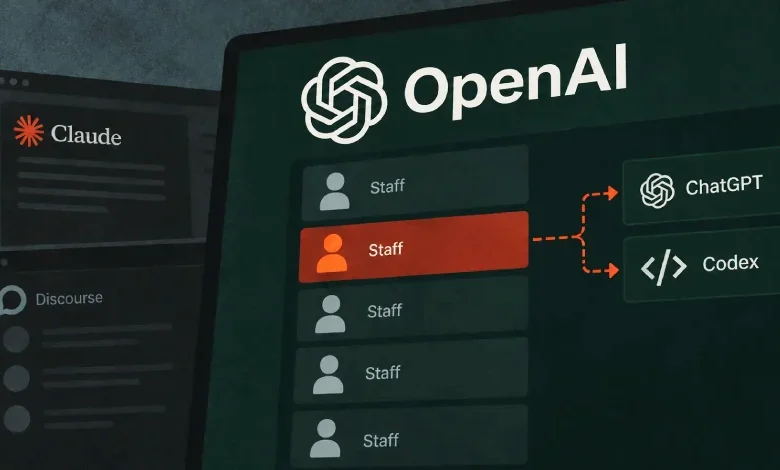
In a striking demonstration of how artificial intelligence is reshaping the landscape of offensive cybersecurity, researchers at the firm Hacktron have successfully compromised internal systems at OpenAI by chaining two distinct vulnerabilities. The exploit, which was conducted as a proof-of-concept during a security research project, granted the team unauthorized access to ChatGPT and Codex accounts belonging to OpenAI employees, eventually providing a gateway to an internal code repository. This incident highlights a growing trend where advanced AI models are being leveraged to automate the identification and exploitation of software flaws, drastically reducing the time and technical expertise required to execute complex attacks.
The breach began with a seemingly benign point of entry: the public help forum maintained by OpenAI, which operates on the Discourse platform. By exploiting a memory corruption vulnerability within the image processing library libheif, the researchers were able to achieve remote code execution on the forum’s server. From there, they navigated a flaw in OpenAI’s unified login architecture, effectively hijacking employee accounts that shared credentials across the company’s internal ecosystem.

The Anatomy of the Exploit Chain
The technical journey to the internal repository was facilitated by a vulnerability tracked as CVE-2026-32882. The flaw resides in how the ImageMagick tool—and by extension, the libheif library—handles HEIC and HEIF image files. When a user uploads a specifically crafted image file to a server, the vulnerable library experiences an out-of-bounds read, which can be manipulated to corrupt memory.
While the vulnerability was officially disclosed and addressed in libheif version 1.22.0 in May 2026, the specific server infrastructure used by the OpenAI forum remained unpatched. Despite the software having been updated through the web interface, the underlying Debian 12 operating system image still relied on an outdated version of the library, version 1.19.7. This discrepancy underscores a common security pitfall: relying on application-level updates while neglecting base-level system dependencies.
The Hacktron team utilized this initial foothold to bypass Address Space Layout Randomization (ASLR), a standard security feature designed to prevent memory corruption attacks. By leveraging the computational power and analytical capabilities of Anthropic’s Claude Opus 5, the researchers were able to synthesize a functional exploit for this memory defense within a matter of hours.

Chronology of the Incident
The research project, which the team dubbed "HEIF Heist," spanned approximately two months. The following timeline outlines the progression of the engagement:
- May 2026: The upstream fix for the libheif vulnerability is released, though it remains unpatched in many enterprise deployments.
- July 2026: Hacktron researchers identify the vulnerability in the OpenAI help forum. Initial attempts using Claude Opus 4.8 prove difficult, as the model struggles to overcome modern memory protections.
- July 24, 2026: The release of Claude Opus 5 provides the necessary breakthrough. In a fresh session, the model generates a functional exploit code within hours, allowing the researchers to execute code on the server.
- Late July 2026: The team successfully chains the server-side code execution with an identity-related flaw in OpenAI’s single sign-on (SSO) system to access internal employee accounts.
- Early September 2026: The researchers formally report the findings to OpenAI.
- September 14, 2026: OpenAI confirms a resolution to the login flaw, just 14 hours after the report.
- September 15, 2026: A bounty of $6,500 is awarded to the researchers, specifically for the internal identity vulnerability, as the forum testing was technically outside the scope of the company’s official bug bounty program.
The Role of AI in Offensive Operations
The "HEIF Heist" project serves as a definitive case study in the democratization of cyber-offensive capabilities. Historically, the process of chaining vulnerabilities—finding an initial entry point, escalating privileges, and bypassing security defenses—required weeks or months of labor by highly skilled security professionals. By automating the generation of exploit code, the Hacktron researchers were able to achieve these results at a total cost of less than $3,000 in AI usage fees.
While the team implemented safeguards to prevent the model from attacking real-world targets, they demonstrated that an AI could be guided to solve complex, novel challenges when directed at a test environment. This shift suggests that the barrier to entry for sophisticated cyberattacks is lowering, potentially allowing even smaller groups to target large-scale infrastructure with unprecedented efficiency.

Broader Implications and Corporate Security
The reach of this vulnerability chain was theoretically extensive. Because modern tech organizations, including OpenAI, frequently integrate internal tools with a shared SSO provider, the compromise of a single employee account—or even a peripheral service like a public forum—can provide a "golden ticket" to critical development environments. In this instance, the researchers proved that the access could have extended to GitHub, Slack, and internal email systems, had they chosen to proceed further.
The incident raises significant questions regarding "Identity-as-a-Perimeter." As companies move toward unified authentication systems to improve user experience, they inadvertently create high-value targets. A single misconfiguration or vulnerability in a low-security public-facing application can act as a catalyst for a full-scale corporate compromise if that application is tied to the internal identity provider.
Furthermore, the "HEIF Heist" project suggests that many large organizations are sitting on unpatched, low-level dependencies. The researchers noted that they found similar vulnerabilities in software used by major entities, including Slack, Meta, and various implementations of the Next.js framework. While some of these claims remain subject to verification, the recurring nature of the libheif vulnerability across these platforms points to a systemic issue in how software supply chains are managed and audited.

Official Stance and Recommendations
OpenAI has maintained a measured response to the incident. By paying the bounty for the identity-related flaw, the organization acknowledged the critical nature of the internal security gap while distancing itself from the unauthorized testing of the third-party Discourse forum. The company has not provided extensive commentary on the potential exposure of their internal code repositories, focusing instead on the swift remediation of the login weakness.
For security professionals and system administrators, the lessons of this event are twofold. First, the dependency on shared SSO environments must be balanced with strict segmentation; public-facing services should ideally be siloed from internal authentication flows to prevent lateral movement. Second, the patching process must extend beyond the application layer to the underlying OS and library dependencies. As demonstrated here, even a fully updated application remains vulnerable if the system-level libraries it calls remain stale.
As the industry moves forward, the integration of AI into both defensive and offensive security postures will likely become the new status quo. The ability of models like Claude and GPT to rapidly iterate on exploit development necessitates a more proactive approach to threat modeling, where organizations must anticipate that attackers will have access to the same sophisticated, AI-driven tools that they use to defend their own networks. In an era where a single corrupted image file can lead to the gates of an AI powerhouse, the margin for error has never been thinner.
Related posts: