The Algorithmic Cage: How Digital Platforms Monetize Identity and Stifle Human Evolution

In the final quarter of the most recent fiscal cycle, a single major digital advertising entity generated fifty-five billion dollars in revenue. This staggering figure equates to approximately seven thousand dollars earned every second, day and night, for ninety consecutive days. While this wealth is often framed as the success of the digital age, it highlights a fundamental, often ignored economic reality: the users of these platforms are not the customers. They are the inventory. The primary mechanism of this multi-billion-dollar enterprise is the construction of a comprehensive algorithmic identity, a digital profile that categorizes human behavior into predictable, monetizable containers.
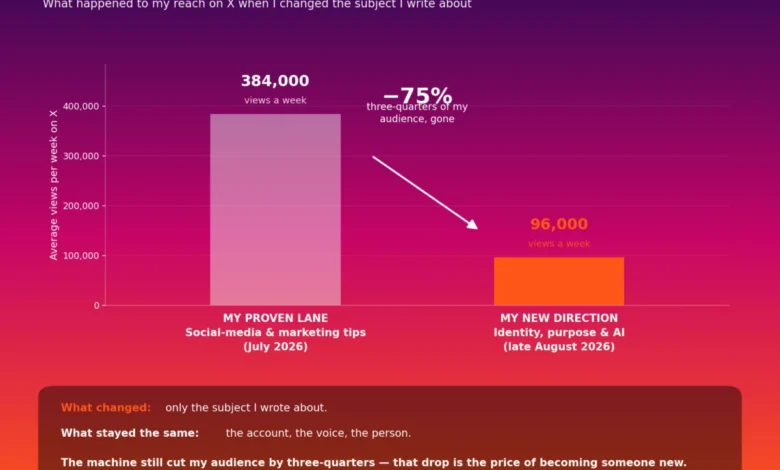
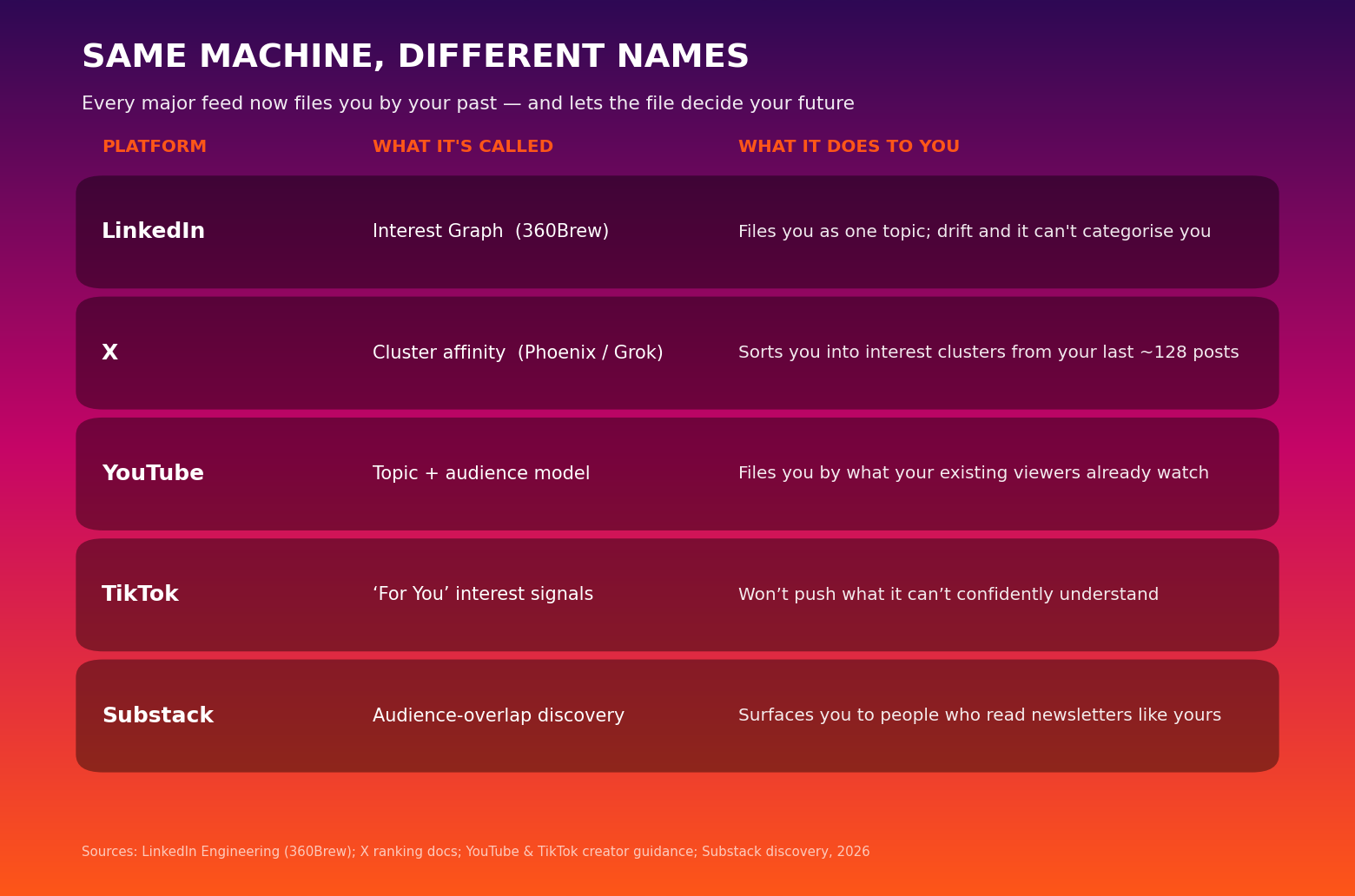
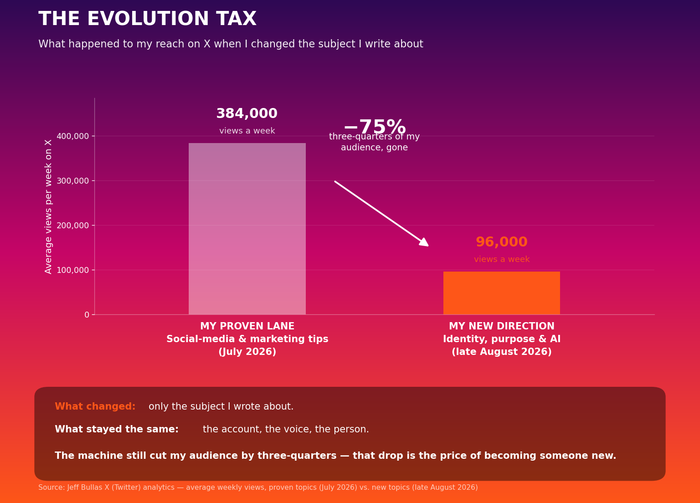
The architecture of modern social media and search platforms is built upon the necessity of predictability. To maximize advertising efficiency, platforms must categorize users by their interests, purchasing habits, and click-through patterns. A user who exhibits consistent, predictable behavior provides a cleaner, more valuable category for advertisers to target. Consequently, the algorithms that curate user feeds are engineered not to reward intellectual growth or creativity, but to reinforce existing patterns and encourage prolonged engagement. When a user deviates from their established content niche, the algorithmic recommendation engine often experiences a degradation in performance, resulting in significantly lower reach and visibility. This phenomenon creates a "black box" environment where content creators are effectively penalized for personal or professional growth.
A Historical Perspective on Algorithmic Profiling
The concept of an "algorithmic identity" is not a new development in digital sociology. As early as 2011, researchers identified that digital platforms were creating "data doubles"—virtual representations of users that are processed, tracked, and sold to third-party advertisers. Over the past fifteen years, this process has evolved from simple demographic tracking into sophisticated predictive modeling.

Chronologically, the rise of the "creator economy" mirrors the tightening of these algorithmic constraints. In the early 2010s, organic reach was relatively accessible; however, as platform saturation increased between 2018 and 2024, the "discovery" engines transitioned to prioritize high-retention, low-friction content. By 2026, internal engineering documentation from companies like LinkedIn and X (formerly Twitter) highlighted a shift toward "interest graph" reliance, which essentially locks creators into specific content silos. A creator who produces content outside their established genre is often met with immediate suppression, a reality that forces many to sacrifice their creative evolution to maintain their audience reach.
Supporting Data and Economic Implications
The financial mechanics of this system reveal a profound disparity between the value generated by creators and the compensation they receive. Estimates suggest that major video platforms compensate creators at a rate of five to fifteen dollars per thousand views, while simultaneously charging advertisers significantly higher premiums to reach those same audiences. This leaves a massive revenue gap that is absorbed by the platform. Current data indicates that platforms often retain between 20 and 45 percent of the total revenue generated by their ecosystems.
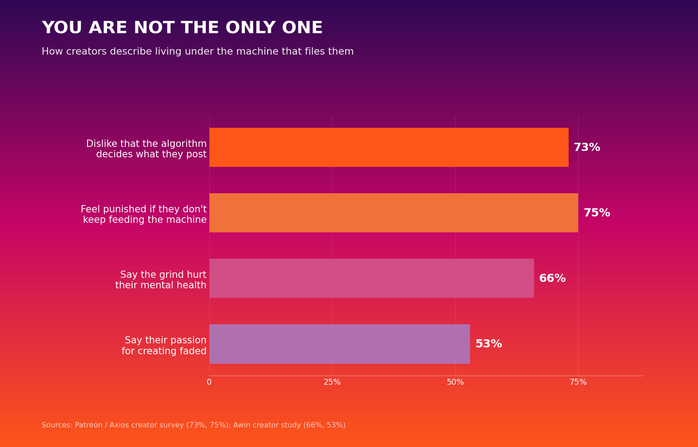
A 2022 survey conducted by Patreon and Axios, alongside subsequent studies by Awin, underscored the psychological and economic toll of these systems. Approximately 66 to 75 percent of surveyed creators reported that platform algorithm changes had a direct, negative impact on their livelihood and mental health. This is not merely a matter of frustration; it is a systemic issue where the creator is both the unpaid laborer and the product being sold.
The Rise of AI and the Erasure of the Creator
The most recent shift in this landscape involves the integration of generative artificial intelligence into search engines and platform feeds. Companies like Google have begun deploying AI-generated summaries that appear directly on search result pages, effectively answering user queries without the need for a click-through to the source website. Recent industry reports indicate that for approximately 25 percent of all searches, the answer is now contained entirely within the platform’s interface.
For publishers and independent creators, this marks a dangerous turning point. For two decades, these creators provided the data that trained these models. Now, the systems are sophisticated enough to synthesize that information, rendering the original author redundant. This "eating of the content" without sending traffic back to the source threatens the viability of independent digital journalism and creative media. The economic implication is clear: platforms are consolidating power by removing the middleman—the creator—from the value chain entirely.
Official Responses and Industry Guidance
While platform representatives consistently state that their algorithms are designed to improve "user experience," independent analysis from engineering circles suggests a different priority: the optimization of ad spend. When asked about visibility drops, platform support channels often point to "content quality" or "audience interest," yet they rarely acknowledge the algorithmic suppression that occurs during a pivot.
In response to these criticisms, some platforms have begun implementing tools that allegedly allow for more granular control over reach. However, critics argue these are superficial fixes for a systemic model that relies on behavioral rigidity. The underlying incentive remains the same: it is easier and more profitable to sell a predictable human than an evolving one.
Broader Impact on the Information Ecosystem
The implications of this system extend far beyond individual creators; they affect the quality and diversity of information available to the public. When the algorithm incentivizes the most predictable content, it creates a feedback loop that discourages nuanced, original, or challenging thought. The result is a homogenization of online discourse, where content is curated to be "safe" for advertisers rather than "valuable" for human intellectual growth.
This creates a structural barrier to entry for new ideas. If an algorithm is trained to serve a user what they have liked in the past, it fundamentally lacks the capacity to serve them what they might need to learn in the future. The "algorithmic identity" acts as a ceiling on curiosity. As a result, the digital commons are increasingly restricted by the very tools that were once promised to democratize them.
Navigating the Future: A Shift in Strategy
For creators and professionals operating within this environment, the data suggests that the traditional approach of chasing mass reach is increasingly ineffective. High-volume, low-engagement posts do not build a sustainable audience; they merely feed the machine’s requirement for data. Conversely, smaller, highly engaged audiences—those who stop to read, interact, and think—provide a higher signal-to-noise ratio.
Strategic pivoting is possible, though it requires a recalibration of success metrics. Instead of measuring success by raw impressions, creators are increasingly looking toward owned audiences—email lists, proprietary platforms, and decentralized networks—where the algorithmic "file" on them does not dictate their visibility. The cost of changing one’s niche is real, often resulting in temporary dips in performance, but it is an essential investment for those seeking to avoid the "black box" trap.
The necessity of change is becoming more apparent as the "penalty" for pivoting shrinks. Newer iterations of recommendation algorithms are beginning to weigh individual post performance more heavily than historical account data. This shift suggests that while the system is inherently designed for stability, the increasing velocity of content creation may eventually force platforms to become more responsive to shifting user interests.
Conclusion: Reclaiming Agency
The architecture of the modern web is not a natural phenomenon; it is a series of deliberate engineering choices. A system that rewards growth and curiosity is entirely possible; however, such a system would require a move away from the current advertisement-first business model. As long as platforms operate on the assumption that a predictable user is a more profitable one, the "algorithmic identity" will continue to serve as a cage for both the creator and the consumer.
The path forward lies in the recognition that the digital environment is a tool, not a sovereign authority. For those who choose to operate online, the objective should not be to satisfy the algorithm, but to outgrow the containers it provides. By prioritizing direct relationships and high-value content, users can begin to decouple their identity from the sales files maintained by big tech. The digital landscape is currently optimized to sell who you were; the goal for the next generation of creators and thinkers must be to build a space for who they are becoming. While the cost of leaving these containers is high, the cost of staying—the loss of creative autonomy and the eventual erasure of the individual—is far higher. The machine is designed to archive the past; human potential is defined by the capacity to change.