Marketers have long relied on branded search volume as a practical proxy for understanding brand demand. This assumption, deeply embedded in marketing strategy and capital allocation, is increasingly showing signs of strain, suggesting a significant shift in how consumer intent is expressed and measured in the digital landscape. The traditional view posited that search queries containing a brand name directly reflected a consumer’s intent to engage with or purchase from that brand. This relationship was considered robust, with data consistently showing that branded customer acquisition costs were substantially lower—averaging 76.6% less than non-branded acquisition costs across a broad client portfolio—underscoring the efficiency of capturing existing demand.
However, recent data analysis reveals a disconcerting trend: over the past month, a significant decline of 11.1% in branded search demand has been observed. This drop has occurred despite a relatively stable auction environment, meaning the cost and availability of search advertising slots have not drastically changed. This divergence between a seemingly weakening metric and the absence of other clear demand suppressors presents a critical challenge for marketers. If branded search were indeed a direct and unfettered reflection of brand demand, this decline would unequivocally indicate a weakening in underlying consumer interest. Yet, evidence suggests a more nuanced reality.
When the Proxy Stops Reflecting Reality
To understand this disconnect, it’s crucial to systematically rule out common alternative explanations for declining search volume. Factors such as a decrease in overall search engine usage, a significant reduction in marketing spend on brand awareness campaigns, or a substantial shift in consumer behavior away from online search altogether would all logically lead to lower branded search figures. However, current market indicators do not support these broad-based declines. Internet usage remains high, and while marketing budgets are always subject to scrutiny, a sudden, across-the-board abandonment of brand-building activities is unlikely. The stability of the auction environment further suggests that the issue isn’t a widespread dip in the overall market’s willingness to search.

This leaves a more plausible conclusion: consumers are not necessarily expressing less demand for brands; rather, they are expressing that demand through different channels and in different ways. The advent and rapid proliferation of AI-powered search experiences, such as AI Overviews, appear to be the primary catalyst for this change. Less than a year ago, AI Overviews were present in approximately 57.2% of commercial searches for a core keyword query within one client’s portfolio. By June of the current year, this figure had surged to an astonishing 95.9%.
This dramatic increase signifies a fundamental alteration in the user journey. As AI systems become more adept at answering questions directly, comparing product or service alternatives, and synthesizing complex information within a single search interface, the need for users to click through to individual websites or perform subsequent, more specific searches diminishes. Consequently, the observable metric of "branded search"—where a user explicitly types a brand name into a search engine—captures a smaller segment of the overall decision-making process. The underlying preference and intent may remain constant, but the way it manifests in measurable search behavior is being increasingly mediated by AI. Therefore, the observable decline in branded search may not indicate a decline in brand demand but rather a measurement problem, where the established proxy is no longer accurately reflecting the phenomenon it was designed to represent.
Why This Changes Marketing Decisions
The distinction between a measurement problem and a demand problem is not merely academic; it has profound implications for how marketing capital is allocated. Organizations, by their nature, tend to channel resources towards areas where they can see a direct, quantifiable return on investment. Metrics that appear to provide a clear line of sight between spending and measurable outcomes naturally attract disproportionate investment. This dynamic has historically fueled the growth and dominance of performance marketing, which offers readily trackable conversions and sales attributed directly to specific campaigns.
When a metric like branded search, which has long served as a reliable indicator of efficient demand capture, begins to falter, it risks distorting capital allocation. If marketers interpret the decline in branded search volume as a genuine decrease in brand demand, they might erroneously conclude that their brand is weakening. This misinterpretation could lead to underinvestment in the very activities that foster long-term brand preference and sustainable demand generation. The predictable consequence is a strategic pivot away from essential brand-building initiatives—such as content marketing, thought leadership, public relations, and creative advertising—in favor of channels that still appear to offer immediate, measurable results, even if those results are derived from a less representative metric.

While search engines will continue to capture expressed intent, the crucial change is that this expressed intent is no longer synonymous with underlying demand. The integration of AI into the search process has introduced an intermediary layer, effectively decoupling consumer preference from observable search behavior. Branded search remains a valuable component of a comprehensive marketing measurement strategy, but it can no longer be treated as the definitive, standalone gauge of brand demand. This realization extends beyond search engine optimization and paid search. Any situation where a long-standing proxy metric becomes less representative of the actual objective it was intended to measure presents a risk of organizations optimizing for the proxy itself, rather than for the ultimate business goal. Marketing, with its complex interplay of brand and performance, is particularly susceptible to this pitfall.
Rethinking How Brand Demand is Measured
The diminishing reliability of branded search as a sole proxy for brand demand does not necessitate its abandonment. Instead, it calls for a re-evaluation of the framework within which this metric is interpreted. Marketers must broaden their understanding of how brand demand is signaled and measured in the evolving digital ecosystem.
Branded search should retain its place as one indicator among many, but its role as the definitive proxy for demand should be reassessed. A greater emphasis must be placed on metrics that more directly capture consumer preference and the foundational drivers of demand. These include unaided brand awareness—understanding how many consumers recall a brand without prompting—and contextualized share of search, which analyzes a brand’s search volume relative to its competitors within specific market contexts. Furthermore, brand conversion rates, when analyzed with a nuanced understanding of the preceding customer journey, can offer deeper insights.
If consumer preference truly precedes measurable intent, then investments in distinctive brand positioning, original research, thought leadership, and sustained brand-building efforts should no longer be relegated to the periphery of performance marketing. Instead, they must be recognized as the foundational activities that shape and ultimately determine performance. The current environment suggests that these upstream brand-building activities are not merely adjacent to performance; they are the very engines that drive it, even if their impact is not immediately captured by traditional direct-response metrics.

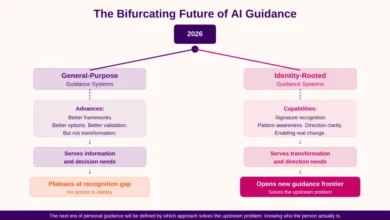
The shift in capital allocation also has implications for where competitive advantage is built. As AI systems increasingly act as intermediaries, filtering and synthesizing information for consumers, a brand’s authority extends beyond the channels it directly controls. Competitive advantage may increasingly depend less on the sheer volume of content a brand produces and more on its ability to become an integral part of the trusted body of evidence that AI systems consistently reference. This implies a move from a focus on distribution to a focus on credibility. Visibility in the AI-driven future may be earned through the trustworthiness and authority of information about a brand, rather than solely through its reach.
Search engines will likely continue to be a primary mechanism for capturing expressed intent. However, branded search appears to be capturing a narrower slice of the overall brand demand landscape than it did previously. Organizations that proactively recognize and adapt to this fundamental shift will not only achieve a more accurate measurement of brand performance but may also allocate their marketing capital more effectively. This effectiveness stems from a deeper understanding of the distinction between a metric and the underlying, dynamic phenomenon it seeks to represent—a crucial insight in an era of rapid technological evolution.
The evolving landscape of search, driven by AI, necessitates a recalibration of how brands assess their market position and consumer engagement. As AI Overviews and similar generative AI features become more prevalent, they are effectively front-loading the consumer journey. Instead of a user researching a product or service by performing a series of specific searches, they can now receive synthesized answers and comparisons directly within the initial search results. This fundamentally alters the traditional funnel model, where branded search was a clear indicator of intent at a later stage.
Consider the timeline of this shift. While AI in search has been developing for years, the widespread integration and user adoption of features like AI Overviews have accelerated dramatically in the past 12-24 months. This rapid evolution means that data collected even two years ago might not accurately reflect current consumer behavior. Companies that continue to rely solely on historical branded search data may be operating with an outdated understanding of their market.

The implications extend to how marketing effectiveness is communicated internally. If the CFO or CEO is accustomed to seeing branded search volume as a key performance indicator (KPI) for brand health, presenting a declining trend without a clear, AI-centric explanation could lead to unwarranted concerns about brand erosion. Educating leadership on these shifts is paramount. This involves demonstrating the increased prevalence of AI-generated summaries, explaining how they satisfy user queries without requiring direct brand interaction, and presenting alternative metrics that better reflect true demand and brand perception.
Furthermore, the rise of AI in search could inadvertently lead to a consolidation of visibility among established, authoritative brands. If AI systems prioritize sources that have a strong reputation and are frequently cited, newer or smaller brands might find it even harder to break through. This underscores the importance of investing in foundational brand building, public relations, and establishing a strong online presence that is recognized for its trustworthiness and expertise.
The future of marketing measurement will likely involve a more sophisticated, multi-faceted approach. Instead of relying on a single proxy, marketers will need to integrate data from various sources, including:
- AI-powered brand monitoring tools: These can track brand mentions and sentiment across a wider range of online content, including AI-generated summaries and discussions.
- Direct consumer feedback platforms: Surveys, focus groups, and direct feedback mechanisms can provide qualitative insights that quantitative metrics might miss.
- Attribution modeling that accounts for AI influence: Developing attribution models that acknowledge the role of AI in the customer journey will be critical for accurately assessing the ROI of different marketing activities.
- Earned media and influencer sentiment: Understanding how third parties are discussing and endorsing a brand can be a powerful indicator of preference, independent of direct search activity.
In conclusion, the current marketing paradigm, heavily reliant on branded search as a proxy for demand, is facing an existential challenge due to the rapid integration of AI in search. This is not a sign of weakening brands but a signal of evolving consumer behavior and measurement methodologies. Marketers who embrace this shift, adapt their measurement strategies, and prioritize foundational brand-building activities will be best positioned to navigate the complexities of the AI-driven future and build enduring competitive advantage. The focus must move from simply measuring what users search for to understanding why they search, what information they consume, and how their preferences are formed in this new digital era.