Google On What’s Next In AI Search And Five Essential Local Marketing Strategy Fixes For Multi-Location Brands

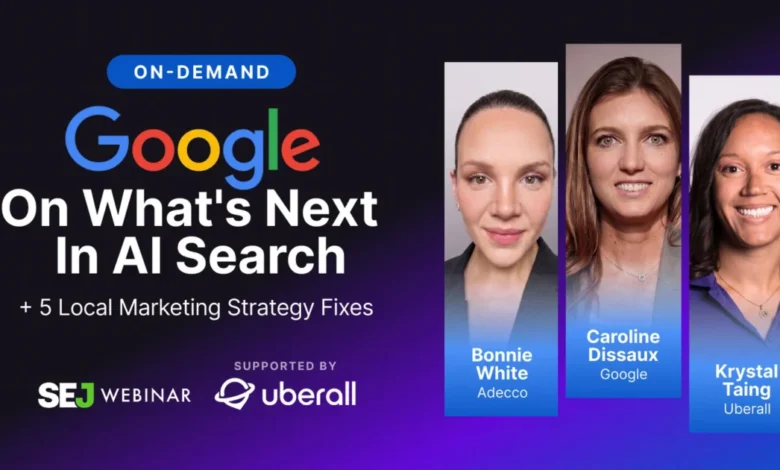
The modern digital discovery landscape is undergoing a profound structural shift, moving rapidly from traditional keyword-based queries to conversational, highly specific intent-driven prompts powered by artificial intelligence. This transformation was the core focus of a high-profile industry webinar held on September 24, titled Google On What’s Next In AI Search + 5 Local Marketing Strategy Fixes. The virtual event brought together key industry leaders, including Caroline Dissaux of Google, Bonnie White of Adecco, and Krystal Taing of Uberall, to dissect how generative AI and Large Language Models (LLMs) are redefining local search ecosystems.
As search engines evolve to understand complex, multi-layered user queries, digital marketers and multi-location business owners face an unprecedented challenge. No longer is it sufficient for a brick-and-mortar storefront or a distributed service brand to rely merely on a basic directory listing displaying a business name, phone number, and operating hours. Today, AI-driven search engines can seamlessly synthesize broad local intents into hyper-specific consumer requirements—such as finding a specific service provider that offers weekend availability, suitable accessibility amenities, and a precise geographical radius that aligns with the user’s immediate needs.
This comprehensive analysis explores the background of the September 24 event, the mechanics of how generative AI interacts with local data, the critical importance of localized data hygiene, and actionable strategies that multi-location enterprises must implement to maintain competitive visibility in an increasingly automated search environment.
The Evolution of Search: From Keywords to Conversational AI
To understand the urgency behind the recommendations shared by Dissaux, White, and Taing, one must examine the broader chronology of search engine development over the past decade. For years, local search optimization revolved around basic Local SEO tactics: claiming a Google Business Profile (GBP), ensuring NAP (Name, Address, Phone Number) consistency across third-party directories, and accumulating a steady stream of customer reviews. These foundational pillars formed the bedrock of local visibility.
However, the advent of conversational search interfaces, voice assistants, and generative AI search experiences—such as Google’s Search Generative Experience (SGE) and AI Overviews—has fundamentally disrupted this paradigm. Consumers no longer search with fragmented strings like "dentist near me." Instead, they input deeply conversational, highly qualified requests such as, "I need a pediatric dentist near downtown open this Saturday who accepts my insurance and has wheelchair accessibility."
During the September 24 webinar, Google representatives elaborated on this behavioral shift, noting that modern search users expect engines to break down complex requests into a series of related sub-questions and deliver synthesized, instantaneous answers. For multi-location brands, this means that a strong, overarching corporate website or a uniform national brand presence is no longer adequate to capture localized traffic. Each individual branch, franchise, or store location must independently satisfy the nuanced criteria demanded by LLMs.
The Scale and Complexity of Multi-Location Data Management
A central theme of the panel discussion was the sheer scale and complexity required to manage accurate data across dozens, hundreds, or even thousands of business locations. Krystal Taing of Uberall emphasized that while marketers have long discussed the importance of accurate listings, the stakes have risen exponentially in the era of generative AI.
"Most of us really have been talking about these things for years," Taing noted during the session. "What’s different is the scale, the complexity, and importance of getting these right across every location and what it means to LLMs and generative AI."
When an AI engine constructs an answer for a user seeking a specific service, it cross-references a multitude of data points. If a business operates in fifty different markets, a discrepancy in service offerings, holiday hours, or accepted payment methods at even a single location can lead the AI to bypass that business entirely in favor of a more reliable competitor. Consequently, traditional, top-down digital marketing strategies that assume a single national data profile represents every physical storefront are obsolete.
Marketers must execute rigorous, location-by-location data audits. This process involves verifying that every digital touchpoint—including the Google Business Profile, Apple Maps, Bing Places, and industry-specific directories—reflects the precise, up-to-date operational realities of that specific branch.
Optimizing Google Business Profiles for the AI Era
While adding a specific data field or updating a profile attribute does not guarantee automatic placement within an AI-generated overview, maintaining a robust and comprehensive Google Business Profile is vital for feeding the algorithms that power these features. Caroline Dissaux and Bonnie White outlined several priority areas where multi-location teams must focus their data hygiene efforts.
- Granular Categorization and Attributes: Businesses must select the most accurate primary and secondary categories. Furthermore, utilizing specific attributes—such as payment methods, accessibility features, and amenities—allows AI systems to match niche user queries with the exact operational capabilities of a store.
- Comprehensive Service and Menu Listings: Vague descriptions of services no longer suffice. Brands must list specific services, menu items, or product categories clearly, ensuring that the terminology used matches the natural phrasing of consumers.
- Inventory and Real-Time Availability: For retail and service-oriented businesses, connecting inventory data to local listings is becoming increasingly critical. When a consumer asks an AI search engine where they can purchase a specific item in stock today, the search engine relies on structured local inventory feeds to generate its response.
- Dynamic Pricing Transparency: The panel advised caution regarding pricing data. While displaying prices can enhance conversion rates, businesses should only include pricing information if they possess the operational capability to keep it universally accurate across all locations. For services with variable pricing, descriptive clarity is preferable to an unreliable figure.
Measuring AI Visibility and Performance Analytics
One of the most pressing questions raised by attendees during the webinar’s Q&A session concerned attribution: How can marketing teams accurately measure the impact of local optimization efforts on AI-driven search visibility?
Krystal Taing addressed this challenge by examining the limitations of current metrics. While native analytics—such as Google Business Profile post views, clicks, and direction requests—provide valuable insight into consumer engagement with individual listings, they do not explicitly isolate visibility within AI Overviews or specialized AI search modes.
To bridge this analytical gap, Taing recommended a qualitative and comparative approach. Marketing teams should systematically cross-reference their published post topics and local updates against the actual search queries and AI-generated answers appearing in their target markets. By observing patterns in how AI synthesizes local data, brands can infer which content adjustments successfully influence generative search outcomes.
Caroline Dissaux reinforced this perspective, cautioning that there is currently no direct, clear-cut metric or single KPI that definitively ties local posting frequency or profile updates directly to AI visibility. Instead, success must be viewed holistically, treating local profile optimization as an ongoing, foundational requirement for digital discoverability rather than a campaign-based tactic with immediate, trackable attribution.
Balancing Automation with Human Governance
Managing local data across hundreds or thousands of locations inevitably requires a high degree of automation. However, the webinar experts issued a strong warning against relying entirely on automated systems without human oversight.
Krystal Taing articulated the necessary division of labor between technology and human expertise during the session: "It doesn’t mean that a human needs to manually review every single thing. You know, you can have models, you can have these elements, but it does mean that humans should be the ones establishing the strategy, the standards, the guardrails."
For multi-location enterprises, this means deploying centralized software solutions and machine learning models to handle the repetitive, high-volume tasks of data synchronization and monitoring. Simultaneously, human strategists must establish the overarching brand standards, exception-handling protocols, and quality control measures. This hybrid approach ensures that while operational efficiency is achieved at scale, the brand’s localized accuracy and customer trust remain uncompromised.
Actionable Frameworks: Five Fixes for Multi-Location Brands
To translate the insights from the September 24 webinar into tangible operational outcomes, multi-location marketing teams should adopt a structured, sequential framework. Rather than attempting to overhaul every digital asset simultaneously, organizations can implement the following five strategic fixes:
- Establish a Single Source of Truth: Centralize all location data into a master database or enterprise location management platform. This repository must serve as the undisputed reference point for every address, phone number, operating hour, and service offering across all branches.
- Assign Local Ownership: Designate specific individuals or regional managers accountable for data accuracy at the local level. While a central digital team oversees the broader strategy, local owners are best positioned to catch sudden operational changes, such as unexpected closures or seasonal schedule adjustments.
- Perform Comprehensive Gaps Audits: Conduct a systematic review of all Google Business Profiles and localized landing pages. Identify missing attributes, outdated service descriptions, and inconsistencies between corporate websites and third-party directory listings.
- Align Content with Conversational Intent: Revise local copywriting to reflect how real humans speak and search. Incorporate natural language phrasing, localized keywords, and detailed answers to frequently asked questions that align with the types of multi-layered queries processed by AI search engines.
- Implement Continuous Monitoring Protocols: Establish routine schedules for auditing local data integrity. Given that AI search engines dynamically crawl and index real-time changes, maintaining freshness across all digital touchpoints must be treated as an ongoing, institutional process rather than a one-time project.
Broader Industry Implications and Future Outlook
The discussions from the Google, Adecco, and Uberall panel underscore a broader, irreversible shift in the digital marketing ecosystem. As artificial intelligence continues to intermediate the relationship between brands and consumers, the traditional advantages of massive national advertising budgets and generic brand awareness are diminishing.
In the age of AI search, visibility is earned at the granular, local level. Brands that successfully adapt to this paradigm by investing in robust data infrastructure, rigorous local hygiene, and intelligent human oversight will secure a decisive competitive advantage. Conversely, enterprises that neglect their individual location profiles risk becoming entirely invisible as conversational search engines streamline consumer choices down to the most accurate, contextually relevant local answers.
As the industry looks toward future developments in search engine architecture, the core takeaway for multi-location brands remains clear: treating local listings as an afterthought is no longer viable. Success requires treating every single branch office or storefront as an independent digital storefront capable of answering the highly specific, conversational demands of the modern AI-driven consumer.