Microsoft Advances the Agentic Era with General Availability of GPT-5.6 and Global Expansion of Foundry Platform Services


The global landscape of artificial intelligence has transitioned from a period of rapid experimentation to a phase defined by industrial-scale production, marked by Microsoft’s announcement that its GPT-5.6 model series is now generally available within the Microsoft Foundry ecosystem. This release, coupled with the launch of the Asia-Pacific (APAC) Data Zone and the Foundry Agent Service, signals a strategic pivot toward "agentic AI"—autonomous systems capable of reasoning, utilizing tools, and executing complex business workflows with minimal human intervention. As organizations move beyond simple chatbots, the focus has shifted toward reliability, observability, and alignment with specific business outcomes. Microsoft reports that more than 100,000 organizations are currently utilizing Microsoft Foundry, with industry leaders such as Adobe, Telefónica, and Tata Consultancy Services (TCS) already deploying AI agents in live production environments.
The Evolution of the Microsoft Foundry Ecosystem
Microsoft Foundry serves as an end-to-end platform designed to build, run, govern, and distribute AI agents. The platform’s architecture is built upon three core pillars: providing a diverse selection of frontier and open-source models, offering a robust runtime for agent execution, and ensuring enterprise-grade security and compliance. At the Microsoft Build conference earlier this year, the company promised a unified experience for developers to create agents within their existing workflows. Today’s general availability of several key features represents the fulfillment of that roadmap.
The integration of GPT-5.6 into Foundry is the cornerstone of this update. Unlike previous iterations that often required developers to stitch together disconnected tools, the new Foundry environment allows for the deployment of agents on trusted infrastructure with built-in identity and compliance controls. By centralizing these capabilities, Microsoft aims to reduce the "integration tax" that has historically slowed the transition of AI projects from the laboratory to the enterprise floor.
GPT-5.6: A Tiered Approach to Model Intelligence
The general availability of the GPT-5.6 series introduces three distinct models designed to balance capability, performance, and cost. This tiered strategy acknowledges that not every business task requires the highest level of computational reasoning.
- GPT-5.6 Sol: Positioned as the high-performance frontier model, Sol is designed for complex reasoning, multi-step problem solving, and high-stakes decision-making. It is priced at $5.00 per million input tokens and $30.00 per million output tokens.
- GPT-5.6 Terra: A balanced model intended for mainstream enterprise applications, Terra offers a middle ground between speed and intelligence. It is priced at $2.50 per million input tokens and $15.00 per million output tokens.
- GPT-5.6 Luna: The most cost-efficient model in the lineup, Luna is optimized for high-volume, low-latency tasks such as data categorization and basic customer service queries. It is priced at $1.00 per million input tokens and $6.00 per million output tokens.
Microsoft has ensured that these models are available through Global Standard and Global Priority Processing across 28 global regions from day one. This wide-scale rollout allows multinational corporations to maintain consistency in their AI deployments regardless of their geographic footprint.
Data Sovereignty and the Asia-Pacific Expansion
A significant hurdle for AI adoption in highly regulated sectors—such as finance, healthcare, and government—is data residency. To address this, Microsoft has announced the general availability of the Asia-Pacific (APAC) Data Zone for Microsoft Foundry. This development allows customers in the region to leverage the power of OpenAI’s frontier models while ensuring that data processing remains within regional boundaries.
Hongsoo Kim, the Chief Data and AI Officer at Viva Republica (Toss), emphasized the importance of this regional anchoring. According to Kim, the ability to keep data processing regional while accessing advanced AI at scale provides the "confidence to accelerate AI innovation responsibly." This move is particularly critical for the APAC market, where diverse regulatory environments often require strict adherence to local data sovereignty laws. By providing Global, Data Zone, and Regional deployment options, Microsoft is attempting to offer a flexible framework that aligns AI adoption with specific sovereignty and performance requirements.
Building and Running Agents in Production
The transition to agentic AI requires more than just a powerful model; it requires a comprehensive development and execution environment. Microsoft has integrated the Foundry Toolkit into Visual Studio (VS) Code, allowing developers to build agents within their preferred Integrated Development Environment (IDE). The Foundry skill then handles the deployment to the cloud, supporting various frameworks including the Microsoft Agent Framework, the GitHub Copilot SDK, and the Claude Agent SDK.
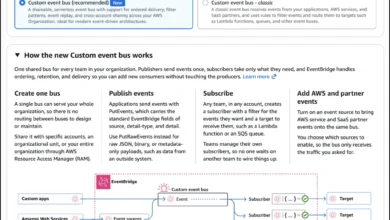
Once built, these agents require a "home" to function. The Foundry Agent Service provides a production-grade runtime where agents can access business-specific knowledge, governed tools, and long-term memory. This "memory" is crucial for agents that must interact with users over extended periods or across multiple sessions. Furthermore, the platform introduces "Event-Driven Triggers," which allow agents to act automatically based on real-world events, such as a change in a database or the arrival of a specific email, rather than waiting for a manual prompt.
Governance, Observability, and the Economics of AI
As AI agents scale from pilot programs to handling thousands of daily transactions, governance and cost management become paramount. Microsoft Foundry has introduced several tools to provide "observability" into agent behavior. The "Agent Trace" feature allows administrators to see exactly what an agent did and why, which is essential for auditing and debugging.
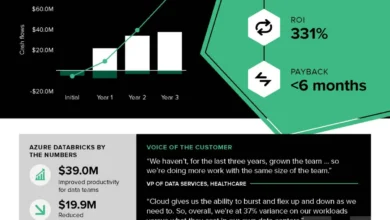
To manage the financial aspects of AI, Microsoft has introduced "ROI for Agents in Foundry." This dashboard connects business value and usage data with cost metrics, providing a clear view of whether a production agent is generating a positive return on investment. Other cost-saving features include:
- Prompt Caching: This reduces redundant computation by storing frequently used context, leading to lower costs and faster response times.
- Model Router: An automated system that matches each request to the most appropriate (and cost-effective) model based on the complexity of the task.
- PTU Spillover: This ensures service continuity during usage spikes by managing Provisioned Throughput Unit (PTU) capacity and optimizing quotas.
These tools are designed to keep AI spending predictable, addressing one of the primary concerns of Chief Financial Officers (CFOs) regarding the unpredictable nature of consumption-based AI pricing.
Industry Adoption and Real-World Impact
The efficacy of Microsoft Foundry is already being demonstrated by several early adopters. Adobe is utilizing the platform to enhance its creative workflows, while Telefónica is integrating agents to optimize its telecommunications operations. Tata Consultancy Services (TCS) is leveraging Foundry to build bespoke solutions for its global client base, reducing the time required to move from concept to deployment.
The consensus among these organizations is that the unification of tools is the primary driver of efficiency. Teams that previously spent weeks on integration, security, and compliance are now reportedly completing these tasks in a matter of days. This acceleration is vital in a competitive landscape where the "time to value" for AI investments is a key metric of success.
Chronology of the Agentic Era
The path to today’s announcement has been marked by several significant milestones in Microsoft’s AI strategy:
- Late 2023: Microsoft rebranded and consolidated its AI offerings under the "Copilot" and "Azure AI" umbrellas, setting the stage for a more unified developer experience.
- Microsoft Build (May 2024): The company first articulated its vision for the agentic era, promising a platform that would simplify the creation and distribution of autonomous agents.
- Mid-2024: Private preview phases for GPT-5.6 and the Foundry Agent Service allowed a select group of enterprises to test the infrastructure under real-world conditions.
- Today: General availability of GPT-5.6, the APAC Data Zone, and the Foundry Agent Service marks the official transition of these tools into the mainstream market.
Analysis: The Strategic Implications for the AI Market
The release of GPT-5.6 and the expansion of Foundry services represent a significant move in the ongoing "AI arms race" between Microsoft, Google, and Amazon Web Services (AWS). By focusing on the "agentic" nature of AI, Microsoft is attempting to move beyond the "search and chat" paradigm that dominated 2023.
The introduction of tiered pricing and regional data zones addresses two of the largest barriers to enterprise AI adoption: cost and compliance. By providing a clear path to ROI and ensuring data remains within specific jurisdictions, Microsoft is positioning Foundry as the "safe" choice for conservative industries like banking and insurance. Furthermore, the integration with Microsoft 365 ensures that these agents can be deployed directly where employees already work, potentially increasing the stickiness of the Microsoft ecosystem.
As agents become more autonomous, the industry will likely face new challenges regarding ethics and accountability. Microsoft’s focus on "observability" and "governance" within Foundry is a preemptive attempt to address these concerns, providing the tools necessary for human oversight in an increasingly automated world.
Conclusion and Future Outlook
Everything announced today is now live and accessible within the Microsoft Foundry portal. To support the developer community, Microsoft has released a 12-lesson curriculum titled "AI Agents for Beginners," along with guided labs for .NET developers and supply chain specialists.
The move toward production-ready AI agents is no longer a futuristic concept but a present-day reality for tens of thousands of organizations. As GPT-5.6 becomes the new standard for reasoning within the Foundry platform, the focus will likely shift toward how these agents interact with one another and how they can be further optimized to drive global economic productivity. For developers and business leaders alike, the message from Microsoft is clear: the era of experimentation is over, and the era of the agent has begun.