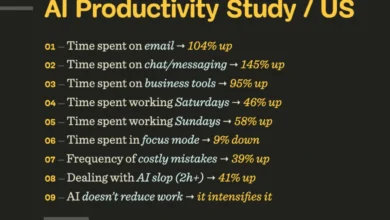
The digital landscape of mental health applications faces a persistent and alarming crisis: a staggering rate of user abandonment. Data reveals that nearly 95% of individuals who download a mental health app in the first instance discontinue its use by day 30, with a median 30-day retention rate of a mere 3.3%. Even prominent players in the mental health app sector see approximately half of their users depart within the initial ten days. This severe attrition and collapse in user engagement underscore a critical operational and clinical imperative: effective interface design is not merely an aesthetic consideration but a fundamental tool for user retention and, ultimately, for delivering therapeutic value.
While a multitude of factors contribute to this widespread disengagement, research increasingly points to a critical design flaw: many mental health applications have prioritized fleeting visual trends over the sustained needs of their vulnerable user base. In a domain defined by emotional fragility and cognitive strain, the pursuit of novel visual aesthetics can inadvertently impose additional burdens on users who have the least capacity to manage them. This approach risks eroding the very utility and trust that these applications are designed to foster. Users do not seek out mental health apps out of idle curiosity; they do so out of necessity, often in states of heightened stress, anxiety, overwhelming emotions, or profound exhaustion. In these vulnerable moments, an unconventional icon, a confusing gesture, or an overly flashy animation can transition from a mere distraction to a significant cognitive overload, becoming a direct impetus for disengagement. The ambition to capture attention and signal innovation through trendy UI elements frequently clashes with the core objectives of mental health apps: reducing cognitive strain, cultivating trust, and providing a sanctuary.
A significant tension exists between the prevailing goals of many UI trends and the fundamental requirements of mental health applications. Trend-driven design often aims to capture immediate attention and project an image of cutting-edge innovation. In stark contrast, the design of mental health experiences must prioritize offering refuge, alleviating strain, and building unwavering trust. This fundamental conflict in purpose manifests across several critical areas, where the uncritical adoption of trends can incur a greater cost in user engagement than any perceived benefit.

The High Cost of Trend-Driven Design in Mental Health
The pursuit of aesthetic novelty in interface design can impose a significant penalty on mental health applications, particularly when it overlooks the unique psychological states of their users. The data is stark: high user churn rates suggest that many applications fail to provide the sustained support required by individuals navigating mental health challenges. This failure is often rooted in a design philosophy that prioritizes superficial appeal over therapeutic efficacy.
Cognitive Friction: When Design Becomes a Barrier to Healing
A primary objective for any mental health tool should be to reduce, rather than exacerbate, cognitive load. However, many contemporary interfaces achieve the opposite. Neo-brutalist layouts, characterized by stark contrasts, demand significant visual parsing. Hidden navigation menus that rely on non-standard gestures transform simple tasks into complex puzzles. Abstract, unlabeled icons force users into a process of guesswork rather than recognition. Each of these patterns introduces friction—moments of hesitation, confusion, and increased mental effort. For individuals whose mental energy reserves are already depleted, these cumulative costs can become prohibitive.

Research indicates that during periods of high anxiety or depression, even basic tasks like typing or making simple choices can feel overwhelmingly difficult. When an interface demands substantial cognitive effort precisely at the moment support is most needed, it not only complicates that immediate session but also provides an overwhelmed user with a compelling reason to abandon the app entirely, and crucially, a reason not to return. Each point of confusion can evolve into a permanent point of abandonment.
Conversely, studies demonstrate that applications with simplified interfaces reduce the time and effort required for user engagement, directly enhancing retention. In contrast, complex, trend-driven user interfaces increase this engagement time, creating an obstacle course that undermines the very habit formation the app is intended to support. This does not imply that all mental health products must adopt a visually plain or minimalist aesthetic. The critical factor is whether the interface aligns with the user’s current capacity and needs.

For instance, a tool designed for panic support functions optimally when it presents a limited number of clearly discernible actions, rather than requiring users to browse through extensive options. If a feature intended for immediate panic relief instead surfaces an upgrade screen, the product fundamentally fails the user at a moment of critical need. While monetization strategies are not inherently problematic, their implementation must avoid introducing friction at points where users expect immediate, uncomplicated support.
The application "Nonori" exemplifies a different approach, one that prioritizes a straightforward, linear user flow. Rather than overwhelming users with a vast content library or a complex dashboard upon initial access, it guides them through a sequence of small, manageable actions. This pattern significantly reduces the effort required to begin engaging with the app. For users experiencing fatigue, anxiety, or mental overload, knowing precisely what to do next can lower the barrier to re-engagement.

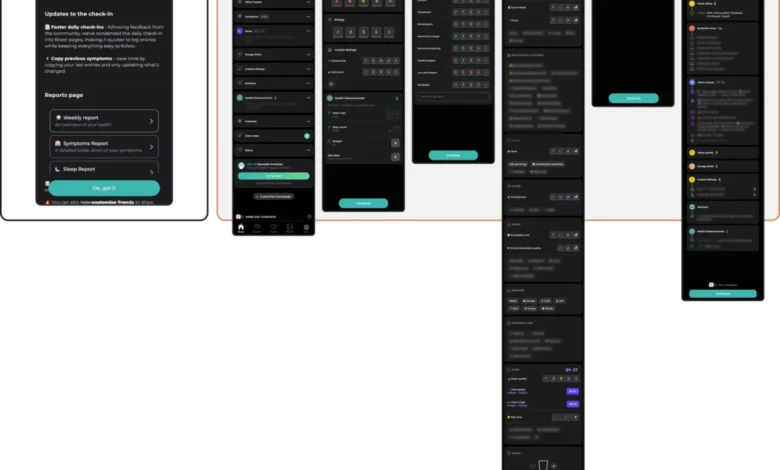
At the other end of the spectrum, comprehensive tracking applications present a different design challenge. "Bearable," for example, consolidates a wide array of user-tracked data—mood, symptoms, sleep patterns, medication, habits, and correlations—into a single platform. While this comprehensiveness can be invaluable for individuals managing chronic conditions or preparing for medical consultations, it can also become a significant burden for an exhausted user. Dense dashboards and multi-step check-ins necessitate executive function, a cognitive resource often diminished by anxiety, depression, burnout, or brain fog.
A similar dynamic arises in anxiety support apps that offer extensive content but feature busy entry points. A product might contain highly beneficial features, yet its initial screen could feel cluttered with numerous cards, locked items, playful characters, or promotional prompts. This is not an indictment of the product’s quality but an illustration of how the same interface can be perceived vastly differently depending on the user’s state: clear enough for exploration, yet excessively demanding during distress.

These observations underscore a guiding principle: every interaction point must meet users at their current level of capacity, actively removing mechanical and cognitive barriers rather than adding to them. This principle informed the integration of low-friction, state-aware interactions in applications such as "Bear Room," an app designed for stress and anxiety reduction, and "Teeni," an emotional well-being application for parents of teenagers.
In "Bear Room," alongside a rapid mood-based flow utilizing four emotion cards, product research identified a user need for more personalized support. Instead of implementing a lengthy selection process or a text-only input, voice interaction was established as a primary, prominent pathway, always complemented by a text alternative. A central microphone icon allows users to articulate their concerns, which an AI then analyzes to provide tailored coping strategies. This dual-pathway approach, accommodating different user states and preferences, proved more effective than a single entry model.

Similarly, "Teeni" directly addresses the cognitive friction associated with parental stress by incorporating a "Quick Relief" button. This initiates an empathy-friendly flow for parents experiencing anger or frustration, allowing them to first vent and release immediate negative emotions through voice input. Only after this emotional catharsis does the app gently guide them into a more reflective "Cold Flow" for accessing the app’s resources. This sequential, state-sensitive design acknowledges that a user in peak distress cannot effectively navigate a complex application; they require a direct, simple, and validating initial step.
Emotional Mismatch: The Trust Erosion of Misaligned Design Tone
A user’s emotional state serves as the fundamental context within which a mental health application operates. Consequently, its visual language must be empathetic and considerate. Research into the influence of color and aesthetics on mood in mobile health applications reveals a critical insight: individuals experiencing distress exhibit a marked preference for subtlety. They gravitate towards darker palettes, sleek and sophisticated aesthetics, and clean, uncluttered designs. Conversely, bright, cheerful colors, while seemingly appropriate, can create a jarring, even physically uncomfortable, dissonance with their current emotional state.

This does not mandate that all mental health or well-being apps adopt a uniformly dark, subdued, or clinically restrained appearance. The category is broad, encompassing self-care, anxiety support, habit change, addiction recovery, trauma interventions, and therapy-adjacent products. A playful visual style may be suitable for one application but entirely inappropriate for another. The determining factor is not the brightness or mutedness of the interface, but whether its emotional tone aligns with the product’s purpose and the user’s anticipated state upon arrival.
Emotional mismatch can also manifest in interactive mechanics, not solely in aesthetics. In "Calmer," an app for anxiety and panic relief, the interface itself appears relatively clean and serene. However, some of its engagement and monetization mechanics—such as a discount wheel or confetti animations celebrating a logged low mood—operate on a different emotional register. For a user who has just recorded a difficult moment, this shift from quiet support to an upsell or an overly celebratory display can feel like a jarring mismatch, regardless of the developer’s intent.

For "Bear Room," a "cozy room" design was prototyped, informed by direct user feedback that echoed research findings. Several participants described previously used apps as "too bright, too happy, and too overwhelming." Users expressed a longing for a digital safe space. This sentiment guided the selection of a quieter color palette: muted, earthy tones—such as soft greens and taupes—set against darker, calming backgrounds. The interface deliberately avoided bright alerts or abrupt animations, making calmness a core feature. This approach created a space that felt safe without being somber, directly addressing the user’s need for refuge.
This case highlights a crucial principle: an overly cheerful, bold, or trend-forward interface can be perceived as dismissive by someone in distress, creating a trust-eroding conflict. As "Bear Room" demonstrates, trust is cultivated when the interface respectfully aligns with the user’s emotional reality, offering solace through subtlety rather than a solution through overwhelming sensory input.

The Inconsistency Penalty: Why Novelty Undermines Routine
Mental well-being often relies on routine and predictability. Yet, many contemporary UI trends thrive on novelty and disruption, intentionally reimagining fundamental navigation patterns. When an application introduces a novel interaction, such as a unique swipe gesture or a non-standard button behavior, it compels the user to learn something new before they can act, demanding cognitive effort they may not be able to afford.
This does not imply that mental health applications must be uniformly plain, rigid, or generic. A product can possess its own distinct character, playfulness, and identity. The critical question is whether that identity remains understandable and predictable when the user returns in a low-capacity state. A gamified self-care app like "Finch" might function effectively when the user is in an exploratory and energetic mood. However, accessing it after a challenging day, simply to mark a single task as complete, can transform what might be delightful celebration screens into an additional hurdle to overcome before reaching the intended objective.

A similar tension emerges in large meditation and well-being platforms. Applications such as "Headspace" and "Calm" offer extensive libraries of diverse content, which can be valuable during periods of exploration. However, in moments of acute stress, the critical question becomes: can the user quickly locate the precise support they need, or must they undertake a search, filtering, and relearning process? Individuals experiencing anxiety or executive dysfunction require straightforward navigation, not an interface that necessitates repeated learning.
The application "PTSD Coach," a public-health-oriented trauma support tool, offers a positive counterexample. Its interface is not designed for trendiness; its strength lies in a stable information architecture. Users can learn about PTSD, track symptoms, manage them, and access support through clearly delineated sections. For a user returning in a state of distress, this predictability is far more valuable than novelty.

"CALMzone" provides another instructive example. While some of its breathing animations deviate from standard visual patterns, they remain directly tied to the exercise itself, guiding the user through inhalation and breath-holding phases. The guided audio screen explicitly encourages the user to put their phone down and listen. This represents a rare and valuable form of interaction design where the product’s success is measured not by increased screen time, but by reduced user effort and enhanced regulation.
These insights informed the design of applications like "Bear Room," where navigational reliability was treated as a therapeutic feature. The interface was intentionally crafted to provide an empathetic, guided flow. Recognizing that users would likely approach the app in states of overwhelm, the structure offered a clear, unwavering path, featuring a visible "Start" prompt. Key emotional support tools were represented as familiar objects within the app’s "room" metaphor, instantly recognizable and visually highlighted to prevent users from getting lost in extraneous elements. This ensures easy access to needed tools and facilitates recall of the app’s navigation upon subsequent use.

Trend-driven interfaces often sacrifice this navigational certainty for novelty. Each unconventional design choice in mHealth applications, particularly when core functionalities are obscured by experimental interactions or placed in unexpected locations, leads to a cumulative effect of fatigue rather than innovation. Users in distress are not in a mindset for exploration; they may abandon the practice of seeking digital support entirely when every interaction feels like solving a new puzzle. This does not preclude experimentation but emphasizes that animations, micro-interactions, AI, or playful mechanics must serve the user’s state rather than disrupt it.
The Silent Exclusion: How Trends Compromise Accessibility
Many popular UI trends can inadvertently become exclusionary when implemented without careful adaptation. The minimalist trend of low-contrast text, for instance, poses significant challenges for users with visual impairments. Gesture-only navigation marginalizes individuals with motor difficulties. Visually dense, animated interfaces can overwhelm users with cognitive or attentional conditions. In the realm of mental health, the population requiring support disproportionately includes individuals with these accessibility needs.

Prioritizing a trending aesthetic over an accessible one is therefore an active decision to limit the application’s reach and efficacy, potentially excluding those who could benefit most. Accessibility is not an add-on feature but a fundamental design constraint. Compliance with Web Content Accessibility Guidelines (WCAG) 2.2 is essential, mandating specific contrast ratios for text, minimum sizes for interactive elements, and the provision of visible button fallbacks for gesture-based controls.
The Coercion Paradox: When "Engagement" Becomes "Pressure"
A final, often overlooked, consequence of uncritical trend adoption is the incorporation of engagement mechanics designed for entertainment, educational, or productivity applications. Features like streaks, aggressive notifications, and gamified reward systems are engineered to maximize screen time and foster dependency. While these have historically been viewed as effective retention tools, their application in a mental health context can be profoundly misguided. What appears as "motivation" can swiftly transform into a source of performance pressure and guilt. For an individual managing depression, a broken streak or a missed daily goal can exacerbate the very feelings the app aims to alleviate.

These mechanics are not inherently unethical. In products designed for habit building, they can indeed motivate some users. The risk arises when they are transferred into mental health contexts without accounting for shame, low energy, relapse, and the non-linear nature of recovery. A streak, for example, becomes more than just a retention metric for an emotionally vulnerable user; it can transform into a visible ledger of their perceived success or failure in maintaining their well-being.
In the applications reviewed, this tension was evident through common persuasive patterns: streaks, streak freezes, commitment language, urgency-driven notifications, promotional prompts, and success-framed buttons. In self-care or well-being products, these elements can make the app feel less like a supportive tool and more like another system the user must satisfy.

While designers still need mechanisms to encourage user return, these must be adapted to the emotional context. In "Bear Room," for instance, this philosophy is embodied in short, forgiving three-day streaks. The streak does not reset upon missing a day, and every third day offers a small benefit. The objective is not to punish absence but to gently encourage return.
This commitment to supportive, non-coercive design extends to the fundamental architecture of the application. Sustainable retention in mental health technology is earned not by capturing attention, but by becoming a consistently respectful and helpful presence in a user’s life. The challenge lies in balancing the need to boost app usage with the imperative not to be overly demanding.

The Scale of the Stakes
This is not a niche concern affecting a marginal audience. The World Health Organization (WHO) estimates that approximately one billion people globally live with a mental disorder, with depression alone impacting nearly 5% of adults. Critically, the overall number is increasing, with depression and anxiety cases rising by 25% in the last decade. This vast and vulnerable population cannot afford for its digital tools to fail due to inadequate design. While UI trends are not inherently problematic, their application within well-being products demands a radically contextual approach.
Even a brief decompression tool intended for use between meetings carries an emotional context. A style chosen purely for its aesthetic appeal—such as glassmorphism or a particular variant of ultra-minimalism—can miss this crucial nuance, regardless of the sophistication of the target audience. The point is not that these styles are inherently wrong, but that the visual presentation must be responsive to the user’s immediate need and emotional state. Soft biomorphic shapes or fluid transitions can genuinely aid in achieving calm when they directly serve that goal, but these same elements can become distracting noise when employed solely to impress.

The highest risk emerges when visually striking "Dribbble shots" are adopted without deep adaptation, solving for the designer’s portfolio rather than the user’s actual needs.
A Practical Framework for Evaluation
The five critical fronts—cognitive friction, emotional mismatch, inconsistency penalty, silent exclusion, and coercion paradox—form the foundation of an evaluation framework for anyone designing in the mental health space. Before integrating any trendy visual or interaction pattern, it is prudent to assess it against each of these criteria:

- Cognitive Load: Does the pattern reduce or increase mental effort?
- Emotional Alignment: Does the pattern’s tone resonate with the user’s likely emotional state?
- Navigational Reliability: Does the pattern support predictable and consistent use, especially for returning users?
- Accessibility: Does the pattern exclude or hinder users with disabilities?
- Autonomy & Pressure: Does the pattern foster intrinsic motivation or create undue pressure?
A design that successfully navigates all five criteria transcends mere usability; it becomes a tool that users can trust implicitly, returning to it in moments of genuine need. Trends can be inspiring and generate attention, but in mental health, the most effective design often becomes a quiet helper—one that users trust enough to rely on during times of stress and vulnerability. Its ultimate success is not measured by its visibility but by the felt impact of the support it provides.