Google Updates Privacy Policy to Allow Gmail and Photos Data to Shape Personalized Ads Through Personal Intelligence

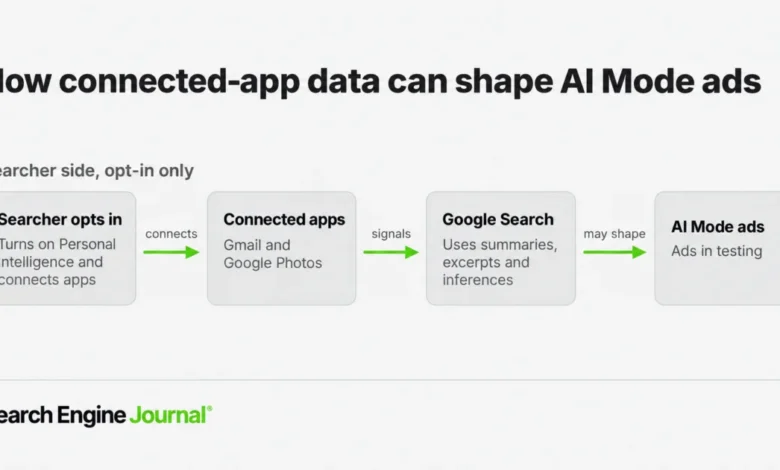
Google has officially modified its corporate privacy policy to permit the integration of personal data from Gmail, Google Photos, and Google Drive into its targeted advertising ecosystem. This sweeping adjustment, which quietly went into effect on October 16, specifically targets users who choose to opt into the company’s advanced artificial intelligence features, namely Personal Intelligence within Gemini and AI Mode in Search. While the foundational promise that Google does not scan personal cloud storage for direct ad placement remains intact on paper, the newly introduced exceptions fundamentally reshape how user-granted permissions interact with the tech giant’s monetization machinery.
The policy shift marks a notable evolution in Google’s data governance strategy, balancing the commercial necessity of AI monetization with user-facing opt-in controls. As artificial intelligence transforms from a novelty into the core interface of the internet, the boundaries between personal productivity assistants and targeted marketing engines are increasingly dissolving. For digital marketers, everyday consumers, and privacy advocates alike, understanding the mechanics, timeline, and implications of this policy change is essential for navigating the next generation of digital advertising.
Background Context and the Evolution of Google’s Privacy Stance
For more than a decade, Google’s handling of personal data stored in cloud repositories like Gmail, Google Photos, and Google Drive has been a central focal point for privacy watchdogs. Historically, Google scanned the contents of free Gmail inboxes to build advertiser profiles until a policy pivot in 2017 ended the practice of reading consumer emails strictly for commercial ad targeting. From that point onward, the contents of personal cloud applications were ostensibly cordoned off from advertising algorithms, maintained as a private sanctuary for productivity and personal memory retention.
However, the rapid commercialization of generative artificial intelligence has created immense economic pressure for tech platforms to leverage proprietary data. Training and running advanced large language models (LLMs) requires astronomical computational resources, prompting companies to seek high-value monetization avenues for their AI investments. Google’s introduction of "Personal Intelligence" in early 2026 provided the bridge needed to cross this divide. By asking users for explicit permission to connect their personal productivity apps to AI assistants to improve contextual utility, Google laid the groundwork for an integrated ecosystem where personal utility and targeted advertising can comfortably coexist under a revised legal framework.
Chronology of the Feature Rollout and Policy Implementation
The journey toward this privacy policy update began in January 2026, when Google first introduced Personal Intelligence as a Labs experiment. Initially rolled out in English for users in the United States subscribing to Google AI Pro and AI Ultra tiers, the feature was restricted to personal Google accounts, strictly excluding Workspace business, enterprise, and education domains. During this initial phase, users were given the ability to seamlessly connect Gmail and Google Photos so that AI Mode in Search and Gemini could pull relevant context from their day-to-day lives—such as a flight confirmation or a vacation photograph—to tailor responses.
When Google expanded the availability of Personal Intelligence in March 2026, corporate representatives explicitly stated that the feature would temporarily remain ad-free, though they strongly hinted that commercial monetization would eventually arrive. That prediction materialized over the summer and autumn months, culminating in the October 16 rollout of the updated privacy policy. This revision explicitly carved out exceptions for users who connect their personal apps to AI-driven services, paving the way for the concurrent launch of ad testing within AI Mode for opted-in accounts.
Deconstructing the Policy Changes and Operational Mechanics
The core modification to Google’s privacy policy centers on a single, crucial caveat added to longstanding data protections. While the policy continues to state that Google does not utilize content from Drive, Gmail, or Photos to show personalized ads under standard circumstances, it now appends a vital qualifier: unless the user deliberately chooses to make data from these services available to other Google services that support personalized ads.
Subsequent clauses in the policy clarify that when users grant Search or Gemini Apps access to external application data, the utilization of that information is governed by the operational parameters of the receiving service. Consequently, Search may ingest fragments of this data to personalize broader experiences, including the delivery of advertisements.
Crucially, Google’s official Search Help documentation emphasizes that advertisements are not directly matched against the raw, unedited contents of an individual’s emails or photo libraries. Instead, AI Mode references high-level summaries, extracted excerpts, and algorithmic inferences generated from connected data sources. For example, if a user’s Gmail contains a confirmation for an upcoming trip to Chicago in March, and their Google Photos archive features images of winter apparel, AI Mode’s contextual reasoning synthesizes these signals. When the user searches for a coat, the system delivers tailored suggestions and corresponding advertisements for windproof outerwear suitable for a Midwestern winter.
Implicit Boundaries, Data Handling, and Privacy Controls
To mitigate potential consumer backlash, Google has outlined several structural boundaries regarding how connected-app signals are processed. Notably, turning off standard ad personalization settings inside My Ad Center does not automatically sever the data pipeline feeding into AI features. The sole method for a user to completely remove Gmail and Photos from the Personal Intelligence ecosystem is to manually disconnect the third-party or internal app links entirely.
Furthermore, Google’s documentation indicates that summaries, excerpts, and inferences derived from connected applications may be utilized to further train and refine the company’s generative AI models. Additionally, a select subset of data processed by AI Mode and allied features is subject to human reviewer analysis, a standard practice in AI development that has historically drawn intense scrutiny from privacy advocates.
Implications for Advertisers and Campaign Management
For the digital marketing community, the rollout of Personal Intelligence ad testing presents a complex paradox. Despite the advanced underlying technology, Google has not introduced any new audience targeting toggles, custom segments, or dedicated reporting metrics specifically for Personal Intelligence within the Google Ads dashboard. Advertisers cannot manually bid on, target, or isolate insights derived from Gmail or Google Photos.
Instead, ad delivery relies entirely on existing campaign eligibility structures configured for AI Mode. Google has confirmed that three primary campaign types are eligible to participate in this testing phase: Performance Max, Shopping campaigns, and Search campaigns utilizing broad match—including the newly introduced AI Max for Search.
While eligible advertisers stand to benefit from contextual intent that consumers may omit from traditional keyword queries, visibility remains severely limited. Marketers are left with little to no analytical transparency regarding whether connected-app signals actively contributed to a conversion or influenced ad delivery. Reporting mechanisms currently lack granular breakdowns, making it difficult to quantify the precise return on investment generated by the integration of personal cloud data into the advertising funnel.
Broader Industry Impact and Future Outlook
As Google continues to test and refine ads within AI Mode, several critical questions remain unanswered. Company executives have not yet disclosed a definitive timeline for when the current test phase will conclude and transition into a permanent, platform-wide feature. It remains equally unclear whether advertisers will eventually gain dedicated reporting tools, placement controls, or explicit budget allocation options for AI-driven personal contexts.
Furthermore, the operational scope of these connected-app signals may extend far beyond AI Mode. Although the current advertising tests are framed around AI Search experiences, Google’s overarching help documentation defines "Search Services" broadly to encompass traditional Google Search, Google Discover, Maps, Shopping, Flights, Hotels, Translate, and News. As Google concurrently replaces legacy privacy controls like Web & App Activity and Search Personalization with upcoming frameworks such as Search Services History and Personalized Recommendations, the convergence of productivity data and commercial advertising will undoubtedly remain a defining trend of the modern digital landscape.