Tesla Expands Robotaxi Service to Dallas and Houston, Deepening Autonomous Vehicle Footprint in Texas Amidst Scrutiny

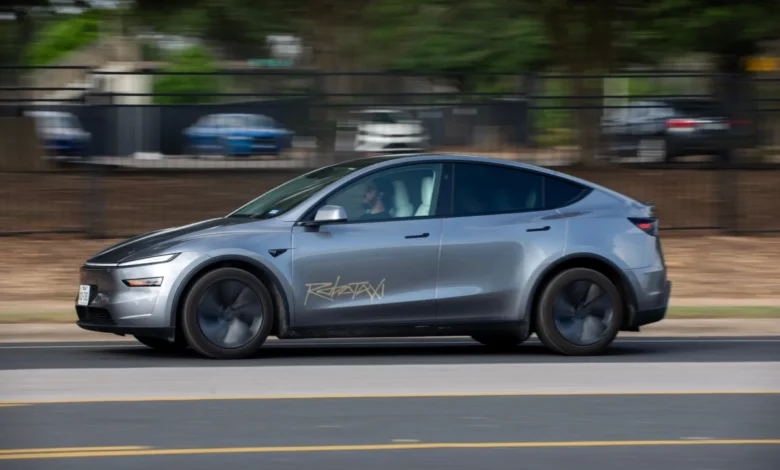
Tesla has announced the expansion of its burgeoning robotaxi service into two major Texas metropolitan areas, Dallas and Houston, marking a significant step in the company’s long-term autonomous vehicle strategy. The announcement, disseminated through a concise social media post from Tesla’s official "Robotaxi" account, stated simply, "Robotaxi is now rolling out in Dallas & Houston," and was accompanied by a brief, 14-second video showcasing Tesla vehicles navigating urban environments without visible human monitors or drivers in the front seats. This expansion follows the initial launch of Tesla’s robotaxi operations in Austin last year, where the company has progressively scaled its service, including the controversial introduction of rides without human safety drivers earlier this year. The move further solidifies Texas as a key proving ground for Tesla’s vision-only autonomous technology, a strategy that continues to draw both fervent support and considerable scrutiny from industry observers, regulators, and safety advocates.
Background on Tesla’s Autonomous Ambitions and FSD Development
Tesla’s foray into fully autonomous ride-hailing services has been a cornerstone of CEO Elon Musk’s vision for the company for nearly a decade. Musk first articulated ambitious timelines for a global network of self-driving taxis during Tesla’s Autonomy Day in April 2019, famously predicting that a million robotaxis would be operational by the end of 2020. While these timelines have consistently proven optimistic, the underlying technological development of Tesla’s Full Self-Driving (FSD) software has continued. Unlike many competitors in the autonomous vehicle space that rely on a suite of sensors including LiDAR, radar, and cameras, Tesla has largely committed to a "vision-only" approach, leveraging an array of cameras and powerful on-board AI processing to interpret the environment. This strategy, while potentially offering cost advantages, has also been a point of contention, with critics questioning its robustness compared to multi-sensor systems.
The FSD software, initially released as a limited beta to select customers, has undergone numerous iterations, gradually expanding its user base and capabilities. Tesla’s approach involves a broad public beta program, where customers pay for or subscribe to the FSD software and effectively act as testers, providing valuable real-world data to refine the system. This iterative development model, while accelerating data collection, contrasts sharply with the more cautious, geographically restricted, and heavily supervised testing methodologies employed by companies like Waymo and Cruise, which typically operate with dedicated fleets and extensive safety protocols before expanding to driverless operations.
Chronology of Tesla’s Robotaxi Deployment and Milestones
The journey to the current robotaxi expansion in Dallas and Houston can be traced through several key milestones:
- April 2019: Elon Musk announces plans for a "robotaxi network" by 2020, projecting immense revenue potential from autonomous ride-hailing.
- Late 2020 – Present: The FSD Beta program is progressively rolled out to a wider customer base in North America, allowing users to experience increasingly autonomous driving features, albeit with a requirement for active driver supervision.
- June 2025: Tesla officially launches its first robotaxi service in Austin, Texas. Initially, these services are believed to be limited in scope, potentially to employees or specific geographic zones, and likely operated with human safety drivers on board, though the company’s public statements often lacked explicit details on these initial operational parameters.
- January 2026: A significant escalation occurs as Tesla begins to offer robotaxi rides in Austin without human safety drivers in the vehicle. This move signifies a transition from supervised testing to unsupervised, public-facing autonomous operations, placing Tesla among a select few companies globally to achieve this level of deployment.
- February 2026: In a regulatory filing, Tesla discloses that its Austin robotaxi fleet has been involved in 14 crashes since its launch. While the severity and causes of these incidents were not immediately detailed, the data underscores the inherent challenges and risks associated with deploying nascent autonomous technology on public roads.
- September 2025 (Concurrent Development): Tesla also begins seeking permits to offer a more traditional ride-hailing service, albeit with human drivers, at Silicon Valley airports. This indicates a multi-pronged strategy, potentially using human-driven services as a bridge or complement to fully autonomous offerings in certain markets or scenarios.
- May 2026 (Current News): Tesla announces the rollout of robotaxi services in Dallas and Houston, extending its driverless operations to two additional major Texan cities.
Operational Details and Current Scope in Texas
The recent social media announcement, while brief, suggests that the Dallas and Houston operations are intended to be driverless from the outset, mirroring the current operational model in Austin. However, the initial scale of deployment in these new markets appears to be highly limited. According to crowdsourced data compiled by the Robotaxi Tracker website, only a single Tesla vehicle has been registered in each city (Dallas and Houston) as actively engaged in robotaxi operations. This contrasts sharply with Austin, where the tracker logs 46 active vehicles.
This disparity suggests that the Dallas and Houston rollouts are likely in very early stages, potentially comprising initial mapping, validation, or limited employee-only trials before a broader public launch. Such a phased approach is common in autonomous vehicle deployment, allowing companies to gather data, refine local operational parameters, and address specific challenges posed by new urban environments. Dallas and Houston, both sprawling metropolises with distinct traffic patterns, complex interchanges, and varied road infrastructure, present unique challenges for autonomous systems compared to Austin. The specific geofenced areas for these initial operations, the hours of service, and the criteria for access (e.g., public, employees, select testers) remain undisclosed by Tesla, a characteristic of its often opaque communication regarding autonomous operations.
The favorable regulatory environment in Texas has undoubtedly played a role in Tesla’s decision to concentrate its robotaxi efforts there. Unlike California, which has a more stringent and well-established permitting process for autonomous vehicle testing and deployment, Texas has generally adopted a more hands-off approach, allowing companies greater flexibility in operating self-driving cars. This regulatory landscape enables Tesla to accelerate its deployment without navigating the same level of bureaucratic hurdles faced by competitors in other states.
Safety, Regulatory Scrutiny, and Industry Comparison
The expansion of Tesla’s driverless robotaxi service inevitably brings renewed attention to safety concerns. The disclosure of 14 crashes involving Austin robotaxis, while not fully detailed, immediately raises questions about the maturity and reliability of the FSD system in real-world, unsupervised conditions. The National Highway Traffic Safety Administration (NHTSA) has an ongoing interest in autonomous vehicle safety and monitors incidents involving these technologies. While the raw number of crashes needs to be contextualized against total miles driven and comparison to human-driven incidents, it underscores the critical importance of robust safety validation.
Tesla’s "vision-only" approach has been a subject of continuous debate among autonomous vehicle experts. Proponents argue that a system mimicking human visual perception, if perfected, could be more scalable and adaptable. Critics, however, point to the potential vulnerabilities of vision-only systems in adverse weather conditions (heavy rain, fog, snow), low light, or situations where visual cues are ambiguous or obstructed. Competitors like Waymo (Google’s self-driving unit) and Cruise (GM’s autonomous vehicle subsidiary) employ a redundant sensor suite typically including LiDAR, radar, and cameras, arguing that this multi-modality provides a more comprehensive and robust understanding of the environment, reducing single-point failure risks. Waymo and Cruise also generally adhere to more stringent safety driver protocols during extensive testing phases before transitioning to fully driverless operations, often with dedicated safety teams monitoring vehicles remotely.
Safety advocates and consumer groups are likely to react to Tesla’s rapid expansion with calls for greater transparency and independent oversight. The lack of detailed public reporting on the nature of the Austin crashes, the remedial actions taken, or the overall safety metrics (e.g., disengagement rates, accident rates per mile) makes it challenging for external parties to assess the true safety profile of Tesla’s robotaxi service. Regulators will face increasing pressure to establish clearer federal guidelines for the deployment of Level 4 (high automation, no driver needed in specific conditions) autonomous vehicles, ensuring public safety without stifling innovation.
Economic and Market Implications
The successful deployment and scaling of a robotaxi network holds immense economic implications for Tesla. Elon Musk has frequently positioned robotaxis as a core pillar of Tesla’s future valuation, envisioning them as a massive new revenue stream that could transform the company from primarily a vehicle manufacturer into a diversified transportation and technology service provider. A functioning robotaxi fleet could generate revenue through ride-hailing fees, potentially allowing vehicle owners to earn income by dispatching their Teslas as autonomous taxis when not in personal use. This vision, if realized, could fundamentally alter the economics of car ownership and urban mobility.
The expansion into Dallas and Houston signifies Tesla’s intent to challenge incumbent ride-hailing giants like Uber and Lyft. While still in nascent stages, a fully autonomous, cost-effective robotaxi service could significantly disrupt the traditional ride-hailing model by eliminating driver labor costs, which typically constitute the largest expense for ride-hailing companies. This could allow Tesla to offer more competitive fares, attract a larger customer base, and achieve higher profit margins per ride.
Furthermore, Tesla’s vertical integration strategy, encompassing vehicle manufacturing, software development, and now service operation, positions it uniquely in the autonomous vehicle landscape. This allows for tight control over hardware and software, potentially leading to faster iteration cycles and cost efficiencies that pure software or pure hardware companies might struggle to match. The race for autonomous market share is intense, with billions invested by various players. Tesla’s Texas expansion intensifies this competition, pushing rivals to accelerate their own deployment plans and technological advancements.
Technological Aspects and Future Challenges
Operating robotaxis in environments like Dallas and Houston presents significant technological challenges. These cities feature complex multi-lane highways, dense urban cores, diverse weather conditions, and a wide array of unpredictable human behaviors (pedestrians, cyclists, construction zones). Tesla’s vision-only system must accurately perceive and predict these dynamic elements to navigate safely and efficiently. The ability to handle unstructured environments, interpret nuanced social cues, and adapt to unforeseen circumstances remains the ultimate test for any autonomous system.
Public perception and trust are also critical hurdles. Despite the technological advancements, a segment of the public remains skeptical or apprehensive about riding in driverless vehicles. High-profile incidents, regardless of fault, can severely erode public confidence. Tesla, like other AV companies, must demonstrate an impeccable safety record and transparently communicate its progress and any incidents to foster widespread acceptance. The user experience, including ride comfort, reliability, and ease of summoning, will also be crucial for mass adoption.
Broader Impact and Future Outlook
The expansion of Tesla’s robotaxi service into additional major cities in Texas has far-reaching implications for urban mobility and the future of transportation. If successful, it could contribute to reduced traffic congestion (through optimized routing and potentially fewer privately owned vehicles), lower carbon emissions (through electric, shared fleets), and increased accessibility for various populations. However, it also raises questions about job displacement for professional drivers and the need for robust regulatory frameworks to manage autonomous vehicle operations responsibly.
Tesla’s aggressive rollout in Texas underscores its determination to be a frontrunner in the autonomous vehicle revolution. The company’s unique blend of vehicle manufacturing, AI software development, and direct consumer engagement positions it to potentially disrupt multiple industries. The coming months will be critical for observing how the Dallas and Houston operations scale, how they address the inevitable challenges of urban autonomous driving, and how they contribute to Tesla’s ambitious long-term vision of a world populated by millions of its self-driving robotaxis. The success or struggles of these new deployments will provide invaluable data and insights, not just for Tesla, but for the entire autonomous vehicle industry as it collectively navigates the complex path toward a driverless future.