Radaris Data Broker Empire Faces Judicial Dismantling Following Repeated Privacy Law Violations


The persistent refusal of consumer data broker Radaris.com to comply with personal information removal requests has culminated in a landmark judicial intervention, resulting in the transfer of the company’s primary web domain and over a dozen sister sites to the plaintiffs. This enforcement action marks a significant escalation in the ongoing legal battle surrounding Daniel’s Law, a New Jersey statute designed to shield law enforcement officials, judges, and government personnel from the risks associated with the public disclosure of their private data. The court-ordered transfer represents a rare and aggressive move against a data broker industry long characterized by its ability to evade accountability through complex corporate shell games and jurisdictional maneuvering.
A Chronology of Evasion and Litigation
The legal friction between Radaris and privacy advocates began in earnest in February 2024, when Atlas Data Privacy Corp initiated a lawsuit alleging systematic violations of Daniel’s Law. The statute, which carries a penalty of $1,000 per violation, provides a legal framework for public officials to demand the total erasure of their personal information from commercial databases. Despite the clear mandates of the law, Radaris—operated by Russian-born brothers Igor and Dmitry Lubarsky—maintained a reputation for stonewalling, often failing to process legitimate removal requests while employing legal counsel to dismiss the relevance of the statute.
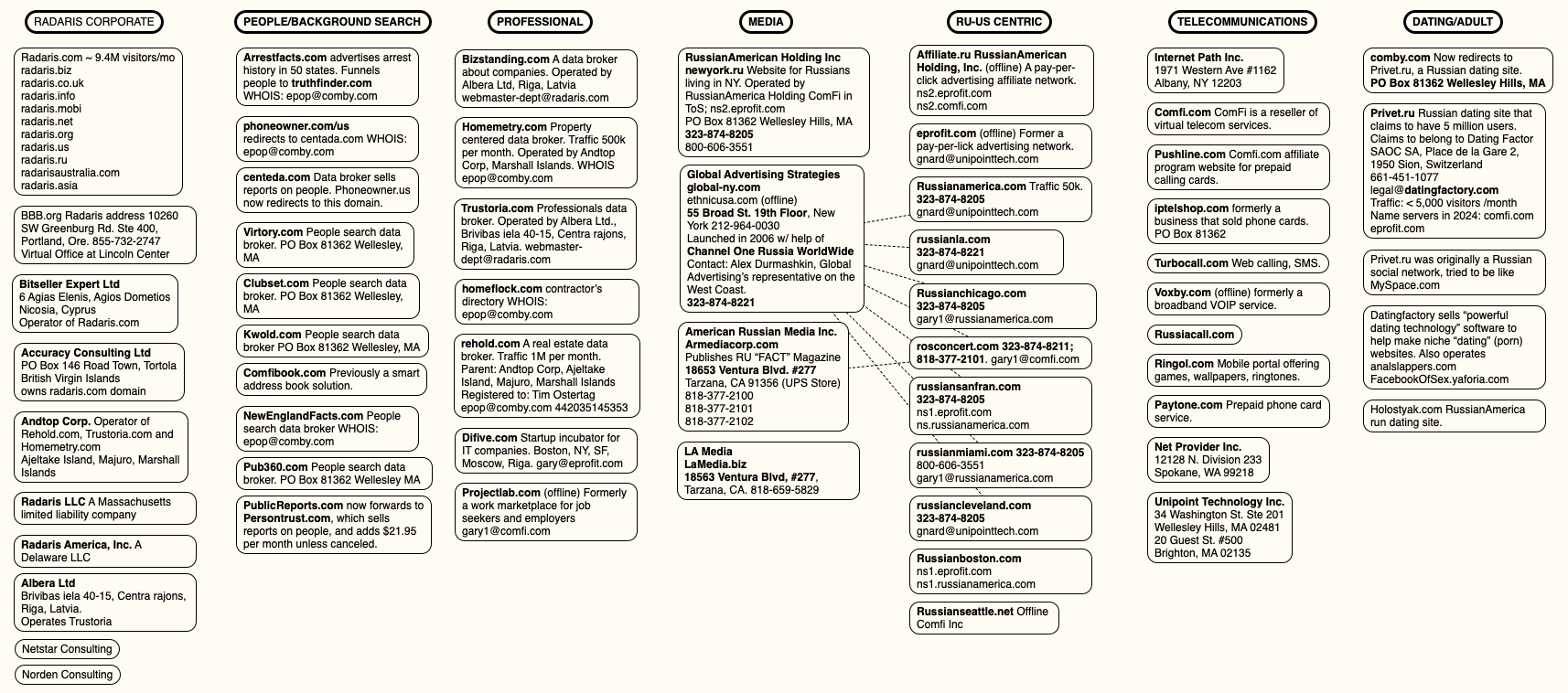
The litigation revealed a sophisticated, multi-year strategy of obfuscation. Radaris frequently updated its terms of service, shifting operational control between various corporate entities in jurisdictions such as the Marshall Islands, the British Virgin Islands, and the Seychelles. This "island-hopping" strategy was designed to complicate the service of legal process and shield the true owners from liability.
In 2017, the company successfully fended off a $7.5 million default judgment by exploiting procedural technicalities, specifically by challenging the identity of the named defendant. When the court allowed the plaintiffs to refile, the company simply transitioned operations from Bitseller Expert Limited to Andtop Company, a Marshall Islands entity formed in late 2020. This pattern of discarding legal entities once they become the target of litigation allowed the Lubarsky brothers to maintain continuity of service while effectively insulating themselves from judicial reach for nearly a decade.
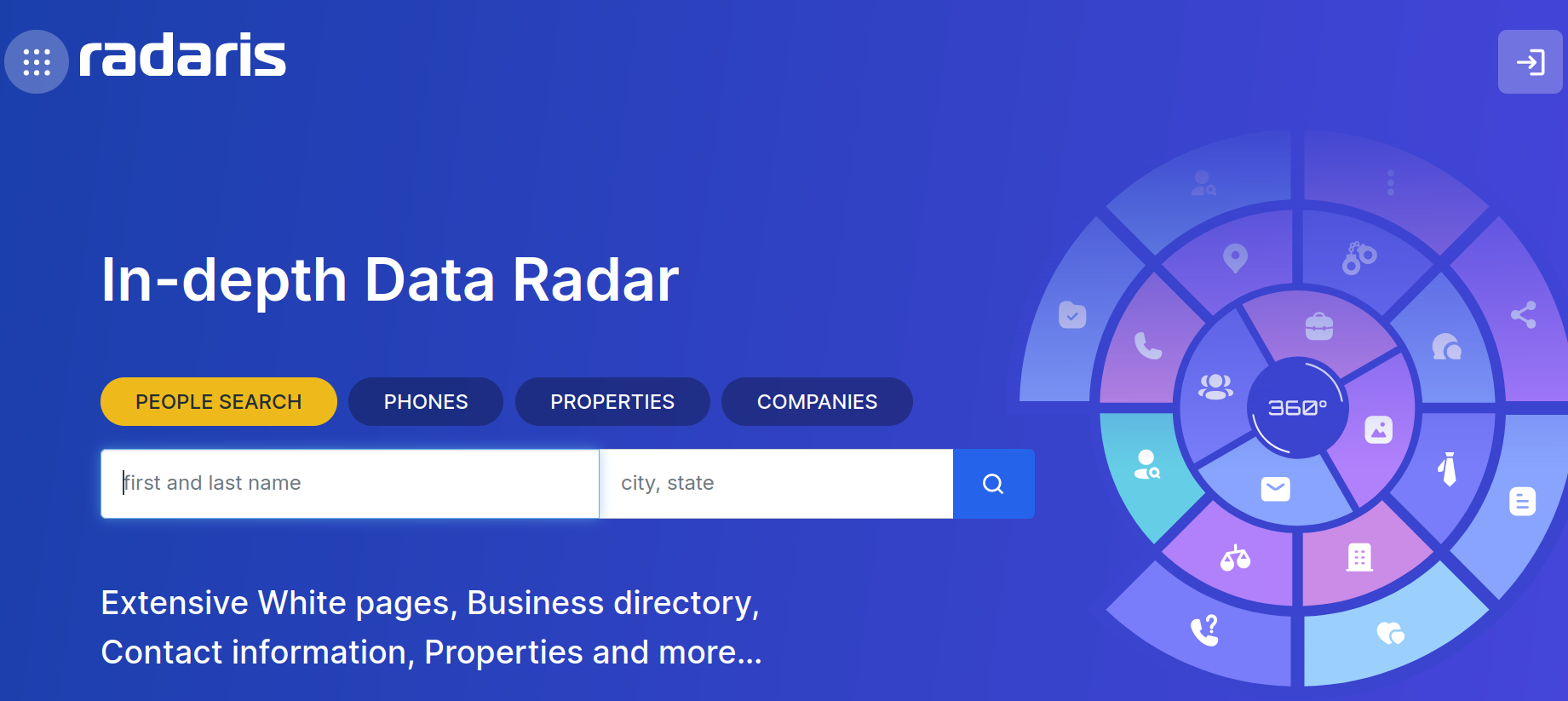
The Anatomy of a Data Broker Shell Game
Internal communications obtained by Atlas Data Privacy Corp during the discovery process provide unprecedented insight into the scale and centralization of the Radaris network. Despite the company’s insistence that its various domains were managed by independent, offshore entities, internal documents establish that at least 25 different people-search websites—including Radaris.com and Veripages.com—function as a single, integrated operation.
The evidence confirms that these sites share centralized administrative, financial, and technical infrastructure, often utilizing the same bank accounts, payment processors, and virtual office addresses. Administrative functions were routed through a series of internal email domains, such as centerex.com and scienteco.com, which served as the nexus for the network’s operations.
Financial disclosures extracted from these records paint a lucrative picture: Radaris.com generates approximately $42,000 in monthly revenue, while Veripages.com pulls in an additional $45,000. These figures are bolstered by strategic partnerships with prominent advertising firms like the Lifetime Value Company and even companies that claim to offer "privacy services," such as Onerep. The revelation that Onerep—a service designed to help consumers remove their data from the web—has historically operated its own people-search sites, such as Nuwber, underscores the paradoxical and often self-serving nature of the data broker economy.
Corporate Facades and Fictitious Leadership
A defining characteristic of the Radaris operation was the use of a fabricated CEO, "Gary Norden." For years, this pseudonym was used in press releases and investor solicitations to provide a veneer of legitimacy to the operation. The deception was only fully brought to light following investigative reporting by KrebsOnSecurity, which forced the company’s legal counsel, Val Gurvits of the Boston Law Group, to acknowledge the fabrication.
The subsequent legal fallout saw the defendants attempting to avoid default judgments by claiming the plaintiffs had failed to serve the "real" owners of the business. However, as the New Jersey court noted in its August 2026 ruling, the defendants were provided with multiple opportunities to rectify their filings and defend their interests in court. Their failure to do so, combined with the clear evidence of fraudulent corporate structures, ultimately led the judge to authorize the transfer of the domain names to Atlas. Currently, Radaris.com serves as a notice board for the court-ordered transfer, signaling a total cessation of its data-selling operations.

Broader Implications and the Constitutional Tug-of-War
The Radaris case is not an isolated incident but a flashpoint in a broader national debate over the balance between data privacy and the First Amendment. As of late 2026, over 150 data broker firms, including the Radaris family, are embroiled in litigation brought by Atlas Data Privacy Corp. The industry has mounted a unified constitutional defense, arguing that statutes like Daniel’s Law are overly broad and infringe upon the rights of data brokers to compile and distribute publicly available information.
This conflict has already reached the federal courts, with more than 70 of these lawsuits being consolidated and moved to federal jurisdiction. While the U.S. Court of Appeals for the Third Circuit weighs the constitutional arguments, the legal landscape remains volatile. In August 2025, a federal district court ruled that West Virginia’s version of Daniel’s Law was facially unconstitutional, adding significant momentum to the industry’s lobbying efforts.
Privacy experts argue that the reliance on state-level legislation creates a patchwork of protections that is fundamentally inadequate. Justin Sherman, a noted privacy researcher, emphasizes that current state laws suffer from significant loopholes, particularly regarding the definition of "public records." Most privacy statutes exempt categories such as voting registries, property filings, marriage certificates, and criminal records—the very data that forms the backbone of the people-search industry.
The Path to Comprehensive Reform
The systemic failure to protect American citizens from identity theft and surveillance is increasingly viewed as a failure of federal oversight. The recent breach at IDScan.net, which exposed the driver’s license information of 153 million Americans, serves as a grim case study. Without federal mandates governing how companies scan, store, and monetize identity documents, sensitive personal data is left vulnerable to exploitation by dark web actors.
As states continue to pass age-verification laws and privacy mandates, the lack of a cohesive, national data protection policy leaves both the public and the private sector in a state of legal uncertainty. Lobbying efforts by big tech, social media platforms, and AI firms have successfully stalled comprehensive privacy legislation at the federal level, often by framing data regulation as a threat to economic competitiveness.
For the victims of the Radaris data-harvesting model, the court’s decision is a rare victory. However, the legal experts involved in the litigation warn that the battle is far from over. The data broker industry has demonstrated a high degree of resilience, leveraging deep financial resources to outlast plaintiffs through attrition and complex procedural delays. The question now is whether the judiciary will continue to pierce the corporate veils of these entities or whether the industry will successfully use constitutional challenges to neutralize state-level privacy protections.
Until Congress acts to establish a floor for consumer privacy rights, the Radaris saga will likely remain a template for both the predatory practices of the data brokerage industry and the difficult, protracted struggle to hold them accountable. The transfer of the Radaris domain is a tactical win for public safety, but the fundamental structure of the surveillance economy remains largely intact, awaiting a comprehensive legislative response that has, thus far, remained elusive.