Mastering Autonomous Intelligence A Comprehensive Guide to the Top Five Free Resources for Agentic AI Development and Implementation

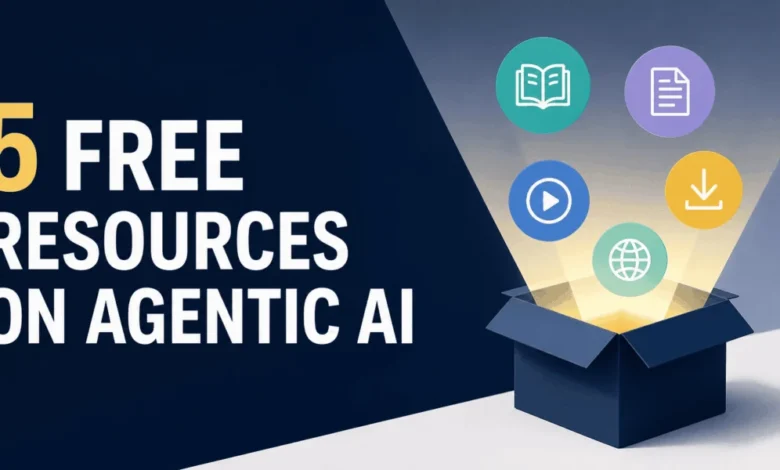
The rapid evolution of artificial intelligence has transitioned from simple generative text to the era of "Agentic AI," where large language models (LLMs) are no longer passive responders but active participants capable of planning, using tools, and executing complex multi-step workflows. While the industry has seen a massive surge in the deployment of autonomous agents, a significant knowledge gap persists among developers and engineers. Many can deploy a basic agent loop, yet few can diagnose why these systems enter infinite loops, fail to utilize provided tools, or hallucinate successful task completion. To bridge this gap, a series of high-level educational resources have been released by industry leaders including Microsoft, Google, Anthropic, and Hugging Face, providing the foundational and practical knowledge required to build reliable, production-ready agentic systems without the burden of licensing fees or paywalls.
The Shift Toward Agentic Workflows
The current technological landscape is defined by the transition from "Chatbots" to "Agents." According to industry analysts at Gartner, by 2028, at least 33% of enterprise software applications will include some form of agentic AI, up from less than 5% in 2023. This shift is driven by the realization that while standalone LLMs are powerful, their utility is exponentially increased when they are granted "agency"—the ability to interact with external environments, databases, and software APIs.
However, the complexity of managing these agents is substantial. Unlike traditional software, agentic systems are non-deterministic. They require sophisticated memory management, context engineering, and error-correction loops. The five resources highlighted in this report represent a curated curriculum designed to move practitioners from basic prompt engineering to advanced architectural design.
Microsoft’s AI Agents for Beginners: A Structured Foundations Course
For developers seeking a structured academic path, Microsoft has released "AI Agents for Beginners," a comprehensive curriculum hosted on GitHub under the permissive MIT license. This resource is significant not only for its pedigree but for its commitment to maintaining currency in a field that changes weekly.
The course comprises over fifteen lessons, each accompanied by video walkthroughs and runnable Python code. It begins by defining the ontological boundaries of an agent—distinguishing when a task requires autonomy versus when it can be solved with a simple script. The curriculum moves through critical design patterns, including tool use, planning, and Retrieval-Augmented Generation (RAG).
Crucially, Microsoft has updated this resource to include the Model Context Protocol (MCP), a new interoperability standard that allows agents to connect more seamlessly to data sources and tools. By providing a "structured textbook" that also compiles and runs, Microsoft addresses the primary complaint of modern AI education: the lack of reproducible environments.
Hugging Face AI Agents Course: Framework Agnosticism and Practical Calluses
While Microsoft provides the structure, Hugging Face offers the breadth. The "Hugging Face Agents Course" focuses on the practical realities of the "framework wars." In the current ecosystem, developers often feel pressured to choose between libraries like LangChain, LlamaIndex, or LangGraph. Hugging Face’s approach is relentlessly comparative, teaching students to build agents across various stacks, including their own "smolagents" library.
This course is designed to build "technical calluses." It emphasizes the trial-and-error nature of agent development, forcing students to confront the friction of integrating different models with different toolsets. The program concludes with a benchmarked project, providing a quantifiable measure of an agent’s performance. This focus on benchmarking is vital; as the industry moves toward "Agentic Benchmarks" like GAIA (General AI Assistants), the ability to measure success objectively is becoming a prerequisite for professional AI roles.
Anthropic’s Engineering Guide: The Philosophy of Effective Agency
Anthropic, the creator of the Claude series of models, has taken a more philosophical yet deeply practical approach with its guide, "Building Effective Agents." Rather than a long-form course, this resource serves as a high-level engineering manifesto. It introduces a vital distinction that has become a standard talking point in AI circles: the difference between "workflows" and "agents."
Anthropic argues that many developers over-engineer their solutions. A "workflow" is a predefined path where the LLM follows a script; an "agent" is a system where the LLM directs its own process. Anthropic’s guide warns that true autonomy introduces higher costs and the potential for "compounding errors"—where a small mistake in the first step of a multi-step plan leads to a total system failure by the tenth step.
The guide catalogs essential patterns such as:
- Prompt Chaining: Breaking tasks into sub-tasks.
- Routing: Directing inputs to specialized models.
- Evaluator-Optimizer Loops: Where one model generates a response and another critiques and improves it.
This resource is often cited by lead engineers as the "sobering reality check" needed after the initial hype of building a first agent wears off.
The Academic Bedrock: Multiagent Systems by Shoham and Leyton-Brown
While the current wave of AI is powered by LLMs, the study of autonomous actors is decades old. "Multiagent Systems" by Yoav Shoham and Kevin Leyton-Brown provides the rigorous mathematical and logical foundations that predate the modern transformer era. The authors have made the electronic version of this text free to the public, recognizing its renewed relevance.
This resource covers game theory, distributed decision-making, and mechanism design. Understanding these concepts is essential for developers working on "multi-agent" setups where different AI agents must negotiate or collaborate to solve a problem. For instance, if two agents are tasked with scheduling a meeting, they must navigate coordination problems and incentive structures—topics that were well-studied in the 1990s and 2000s. By grounding contemporary development in classical theory, engineers can avoid "reinventing the wheel" for problems like resource allocation and agent communication protocols.
Google and Kaggle’s Whitepaper Series: From Prototype to Production
Google’s five-part whitepaper series on Kaggle represents the most industry-aligned resource available for free. The series moves through five critical volumes:
- Agent Architectures: Comparing different ways to structure an agent’s "brain."
- Tools and Interoperability: Deep dives into MCP and API integration.
- Context Engineering: How to manage an agent’s long-term memory and session history.
- Agent Quality and Evaluation: The most critical volume, focusing on how to measure if an agent is actually "good."
- Production Readiness: Addressing the leap from a local demo to a scalable cloud service.
The fourth volume on evaluation is particularly noteworthy. In a recent survey of AI developers, over 60% cited "evaluation" as their primary challenge. Google’s series provides a roadmap for creating evaluation pipelines that go beyond simple "vibes" and move toward rigorous, automated testing of agentic behavior.
A Chronology of the Agentic AI Movement
To understand the value of these resources, one must look at the timeline of the "Agentic Turn":
- November 2022: Launch of ChatGPT. The focus is on conversational AI.
- March 2023: Release of AutoGPT and BabyAGI. These experimental projects go viral, demonstrating the potential for LLMs to run in loops and complete tasks autonomously.
- Late 2023: The "Hype Trough." Developers realize that autonomous agents are prone to "hallucination loops" and are too unreliable for production use.
- Early 2024: Andrew Ng and other AI leaders begin advocating for "Agentic Workflows," arguing that iterative loops are more important than model size.
- Late 2024: The release of Model Context Protocol (MCP) and standardized educational resources marks the professionalization of the field.
Technical Analysis: The Role of Model Context Protocol (MCP)
A recurring theme across these resources—particularly those from Microsoft and Google—is the Model Context Protocol (MCP). MCP is an open standard that enables AI models to interact with data and tools in a consistent way. Previously, every time a developer wanted to give an agent access to a new tool (like a Google Calendar or a database), they had to write custom "glue code."
MCP functions like a universal adapter (similar to USB for hardware). It allows developers to build a "server" for their data once, which can then be accessed by any agent regardless of the underlying LLM. The inclusion of MCP in these free resources signals a move toward a more modular and interoperable AI ecosystem, reducing the "vendor lock-in" that has plagued early AI adoption.
Broader Impacts and Industry Implications
The democratization of this knowledge through free resources has profound implications for the global labor market. As high-quality training becomes accessible to anyone with an internet connection, the barrier to entry for "AI Architect" roles is lowering. However, the complexity of these systems suggests that the demand for "deep" expertise—understanding the theory and evaluation methods—will only increase.
Furthermore, the emphasis on "simpler is better" (as seen in the Anthropic and Google guides) suggests a shift in corporate AI strategy. Instead of chasing the largest, most expensive models, companies are beginning to focus on efficient workflows and smaller, specialized agents that are easier to monitor and cheaper to run.
Conclusion: The Path Forward for Developers
The five resources identified—Microsoft’s GitHub course, Hugging Face’s framework-agnostic training, Anthropic’s architectural philosophy, Shoham and Leyton-Brown’s academic foundations, and Google’s production-focused whitepapers—form a complete curriculum for the modern AI engineer.
In a field characterized by rapid obsolescence, these resources provide a balance of "evergreen" theory and "bleeding-edge" practice. For the individual developer, the message is clear: the tools to master the next phase of the AI revolution are freely available, provided one is willing to invest the time in moving beyond the prompt and into the architecture. As the industry moves from "demos that look cool" to "agents that work reliably," the ability to explain, evaluate, and optimize these systems will be the primary differentiator of success in the tech sector.