Navigating the Blue Checkmark: A Comprehensive Guide to Facebook Account Verification and Brand Protection

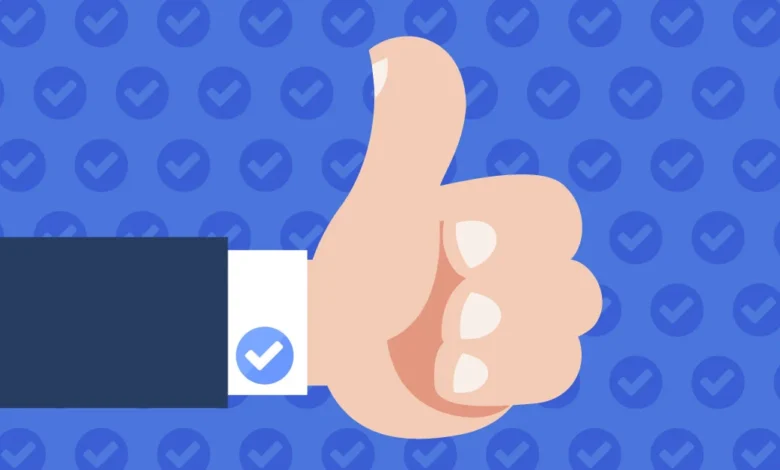
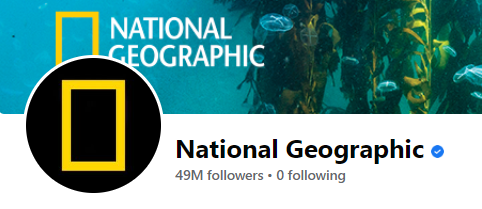
Securing authenticity on social media has become a primary operational challenge for global brands, public figures, and digital creators operating in increasingly saturated digital ecosystems. As impersonation scams and unauthorized profile replication grow more sophisticated, platforms like Meta have continually refined their trust and safety mechanisms. Central to this defensive strategy is the Facebook verification badge—the ubiquitous blue checkmark designed to signal to millions of users that a specific profile or business page is genuinely operated by the entity it claims to represent.
While the concept of the blue checkmark originated as an elite identifier for public figures, journalists, and massive corporations, the application process has evolved significantly over the past decade. Today, businesses of all sizes recognize verification not merely as a vanity metric, but as an essential tool for search visibility, consumer trust, and brand protection. However, the path to approval remains notoriously opaque, requiring meticulous preparation, absolute transparency, and adherence to strict platform guidelines. Understanding the systematic requirements for verification, the preparation steps necessary to maximize approval odds, and the ongoing maintenance protocols required to retain the badge is vital for any organization looking to cement its digital footprint.
The Evolution of Social Media Verification and the Blue Checkmark
The framework of account verification was first popularized by Twitter in the late 2000s as an emergency response to celebrity impersonation and legal liability. Recognizing the same vulnerabilities across its own infrastructure, Facebook introduced its verification program in May 2013. Initially, the initiative was strictly gated, focusing exclusively on high-profile accounts in categories such as entertainment, politics, journalism, and global enterprise.
By 2018, as digital commerce expanded and small-to-medium enterprises increasingly relied on social media as their primary storefront, Facebook broadened its parameters to include Pages with substantial regional followings. In subsequent updates, the platform extended eligibility to individual personal profiles, provided the account holder met strict notability criteria and maintained a significant public presence. Historically, the platform experimented with alternative indicators, such as gray verification badges for local businesses and specific Marketplace trust markers. However, these variants were eventually phased out in favor of the singular, universally recognized blue checkmark.
Today, the verification badge performs multiple distinct functions. Beyond confirming identity and mitigating the financial and reputational damages of phishing or impersonation scams, verified Pages often experience algorithmic advantages. Verified properties frequently rank higher in internal platform search queries, streamlining the discovery process for prospective customers and loyal audiences alike. Furthermore, verified status signals to consumers that a business has undergone rigorous identity validation by a third party, substantially reducing friction in the consumer decision-making journey.
Phase One: Pre-Application Optimization and Eligibility Requirements
Applying for verification via Facebook’s dedicated request form is technically straightforward, but submitting an application without preliminary preparation frequently results in immediate rejection. Industry data suggests that a vast majority of initial verification requests are denied due to incomplete profiles, insufficient proof of notability, or mismatched official documentation. To circumvent these hurdles, brands and influencers must systematically evaluate and optimize their digital properties long before clicking submit.
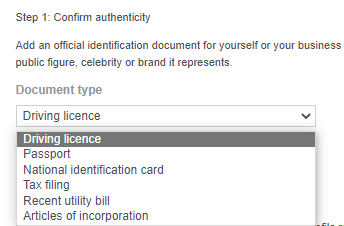
Meta’s trust and safety teams evaluate applications based on four foundational pillars: authenticity, uniqueness, completeness, and notability. To satisfy the authenticity requirement, applicants must provide government-issued identification—such as a valid passport, driver’s license, or official national identity card—or official corporate documentation, including articles of incorporation, tax exemption certificates, or utility bills bearing the organization’s legal name and address.
Simultaneously, the digital profile itself must be impeccably maintained. Company information, including contact details, physical addresses, operational hours, and customer service channels, must be entirely accurate and cross-referenced with external web properties. A business page featuring outdated contact information or conflicting corporate names will almost certainly fail the preliminary validation review.
Completeness is equally critical. The "About" section of a Facebook Page or profile should serve as an exhaustive digital resume for the brand. Administrators must populate every available field, detailing the exact nature of the enterprise, its geographic focus, and the demographic makeup of its target audience. Crucially, the digital footprint must extend beyond the platform itself. Applicants are required to link their official business websites directly to their Facebook Page, and conversely, embed the verified Facebook URL onto their primary corporate web properties. This bidirectional digital linkage establishes an unassailable chain of custody and ownership that automated and human reviewers rely on during the auditing process.
Establishing Notability and Public Interest
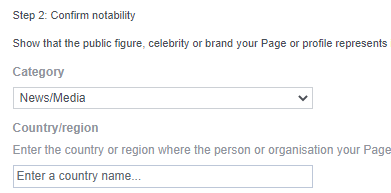
The most challenging hurdle in the Facebook verification process is proving notability. Meta explicitly states that verification is reserved for accounts representing individuals, brands, or entities that are well-known and frequently searched for. Notability is distinct from simple popularity; it measures whether an account is prominent enough to be a genuine target for impersonation.
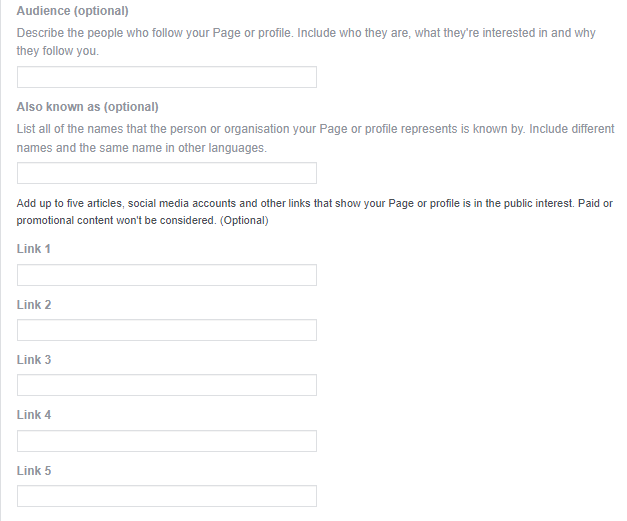
To substantiate notability during the application process, administrators must supply up to five independent, authoritative digital links. These links typically direct reviewers to prominent news articles, industry publications, broadcast media profiles, or major third-party features that discuss the brand or individual. Meta explicitly excludes paid, sponsored, or promotional content from consideration, maintaining a strict requirement for objective, third-party journalistic coverage.
In regions where a brand operates under multiple names or localized entities, the application provides fields to document these variations. Providing a comprehensive, multi-channel narrative of the brand’s public resonance dramatically improves the likelihood of a successful outcome. Once submitted, the review cycle generally ranges from 48 hours to 45 days, culminating in an official notification delivered via email regarding the status of the request.
Post-Verification Governance: Protecting and Retaining the Badge
Securing the coveted blue checkmark is a major milestone, but it does not guarantee permanent status. Meta’s platform policies grant the company unilateral authority to revoke verification badges if an account violates community standards or undergoes significant structural changes. Consequently, verified entities must implement robust governance and security frameworks to protect their digital assets.
The primary vulnerability for any high-profile account is unauthorized access. Because a verified badge significantly increases the perceived credibility of a profile, accounts with checkmarks are prime targets for sophisticated phishing campaigns, credential stuffing, and social engineering attacks. To mitigate this risk, mandatory implementation of two-factor authentication (2FA) is non-negotiable. Utilizing authenticator applications, hardware security keys, or encrypted SMS verification ensures that even if login credentials are compromised, unauthorized actors cannot access the account.
Beyond cybersecurity, compliance with Facebook’s Community Standards is mandatory and subject to ongoing algorithmic and manual audits. While all users must adhere to baseline prohibitions against hate speech, harassment, and illegal content, verified entities face heightened scrutiny regarding intellectual property rights and content curation. Brands that frequently share third-party media, user-generated content, or industry news must ensure their publishing practices strictly comply with copyright laws and privacy guidelines. A single severe policy violation can result in the immediate removal of the verification badge, a penalty that is notoriously difficult to reverse.
Finally, maintaining organic popularity and active community engagement is essential for long-term retention. Because notability is a dynamic metric, accounts that fall dormant or experience steep declines in audience engagement may face re-evaluation during periodic platform audits. Integrating a cohesive social media marketing strategy—ranging from consistent organic publishing to targeted advertising campaigns—ensures that the brand remains culturally relevant, actively engaged with its consumer base, and fully compliant with the evolving standards of the digital ecosystem.