The Strategic Imperative of Calls to Action: Driving Digital Engagement and Conversion Across Platforms


In the increasingly saturated digital landscape, the efficacy of a marketing campaign hinges significantly on its Call to Action (CTA). Far from being a mere suggestion, a well-crafted CTA serves as the critical bridge between audience engagement and desired business outcomes, whether it’s prompting a click, a download, an addition to a shopping cart, or a subscription. Its absence or ineffectiveness can render even the most visually appealing content invisible, leading audiences to passively scroll past opportunities for interaction.

What is a Call to Action? Defining the Digital Prompt
A Call to Action (CTA) is a concise, directive prompt designed to guide a target audience toward a specific, desired action within a marketing campaign. These prompts are fundamental tools in digital marketing, compelling individuals to move from passive consumption of content to active participation. Examples range from direct imperatives like "Buy Now" or "Download Your Guide" to more descriptive phrases such as "Subscribe today so you’ll never miss an update." The versatility of CTAs allows them to be deployed across a multitude of digital touchpoints, including social media advertisements, email newsletters, landing pages, and website elements.
The primary function of a CTA extends beyond simple instruction; it aims to alleviate decision fatigue for users navigating a vast ocean of information. In a world where consumers are constantly bombarded with choices, a clear and unambiguous CTA provides direction, giving meaning and purpose to the content it accompanies. By explicitly stating the next step, CTAs reduce friction in the user journey, making it easier for potential customers to engage further with a brand. This guidance is particularly crucial in the fast-paced environment of social media, where attention spans are fleeting, and immediate clarity is paramount to capturing interest. Moreover, CTAs that subtly integrate elements of urgency or scarcity, such as "Limited Time Offer" or "Act Now," have been demonstrably shown to increase conversion rates by tapping into psychological triggers that encourage immediate action, often leveraging the fear of missing out (FOMO).
The Evolving Digital Landscape and the CTA Imperative
The contemporary digital marketing ecosystem is characterized by intense competition and an audience increasingly adept at filtering out promotional content. Recent studies indicate that a significant portion of internet users, approximately 22.3%, employ ad blockers, often citing "too many ads" as their primary motivation. This statistic underscores the profound challenge marketers face in capturing and retaining audience attention. In this environment, generic or uninspired CTAs are easily overlooked, fading into the background noise of online activity.
Industry analysts consistently highlight the growing importance of strategic CTA implementation. As one marketing expert recently noted, "In a world battling information overload, a CTA isn’t just a button; it’s a beacon. It’s the moment of truth where a brand either converts interest into action or loses a potential customer to the endless scroll." The evolution of digital platforms has also necessitated a more sophisticated approach to CTAs. Early digital marketing might have sufficed with simple "Click Here" prompts, but today’s discerning consumers expect relevance, value, and a seamless experience. This shift demands that CTAs not only instruct but also entice, reflecting a deeper understanding of user psychology and the specific context of the platform they appear on. The objective is to cut through the digital clutter, fostering meaningful engagement and ultimately driving measurable business growth. This continuous adaptation of CTA strategies has become a key differentiator for brands seeking to maintain relevance and effectiveness in a dynamic online environment.
Crafting Persuasive CTAs: Strategies for Enhanced Engagement
Developing an effective CTA is an art form rooted in strategic communication and an understanding of human behavior. The goal is to motivate action while adhering to the constraints and nuances of various digital channels.
Utilizing Strong Action Words
The foundation of a compelling CTA lies in its brevity and directness. Powerful verbs initiate action, immediately conveying what the user is expected to do. Common examples include "Buy," "Shop," "Order," "Try," "Get Started," "Subscribe," "Download," "Join," and "Learn More." These verbs should be paired judiciously with an object or benefit, creating a clear value proposition. For instance, "Download Now" is functional, but "Download Your Free Ebook" adds a layer of benefit, making the action more appealing. The character limitations inherent in many ad platforms make concise, impactful phrasing a necessity.

A categorization of common CTA verbs by purpose includes:
- Ecommerce: Buy Now, Shop Latest Arrivals, Add to Cart, Secure Your Order, View Collection
- SaaS/Service: Start Your Free Trial, Request a Demo, Sign Up, Unlock Features, Get Started
- Content/Community: Subscribe to Our Newsletter, Join Our Community, Explore More Articles, Connect with Us
- Lead Generation: Get Your Instant Quote, Claim Your Discount, Discover Solutions, Find Out More
Provoking Emotion and Enthusiasm
Beyond direct instruction, some of the most successful CTAs tap into emotional drivers. By evoking feelings such as excitement, curiosity, exclusivity, or even a sense of relief, longer, more descriptive CTAs can create a deeper connection with the audience. Modifiers and benefit-oriented language are key here. Consider phrases like "Unleash Your Creative Potential," "Transform Your Workflow Today," or "Find Your Perfect Escape." These examples go beyond simply telling users what to do; they suggest a positive outcome or an improved state, making the action intrinsically more desirable. The strategic use of sensory words, as exemplified by Headspace’s "Snuggle up to Headspace," can further personalize the brand experience and deepen emotional resonance, fostering a sense of comfort and familiarity.

The Power of Uniqueness and A/B Testing
While established CTA phrases offer a reliable starting point, true innovation often comes from crafting unique, brand-specific calls to action. This involves understanding a company’s mission and translating its core value proposition into a distinctive prompt. For example, a skincare brand might move beyond "Shop Now" to "Reveal Your Radiance" or "Nourish Your Skin." The period product brand Thinx famously used "Period better," transforming a noun into a verb to create a memorable and empowering message that resonated deeply with its target demographic.
However, the effectiveness of such creative CTAs is rarely guaranteed on the first attempt. This underscores the critical importance of A/B testing. Marketers must continuously experiment with different CTA variations, comparing their performance metrics—such as click-through rates and conversion rates—to identify what resonates most powerfully with their specific audience. A/B testing is not merely a recommendation; it is an essential practice for optimizing campaign performance and ensuring that marketing efforts yield the highest possible return on investment. The iterative nature of A/B testing allows for continuous refinement and adaptation, ensuring CTAs remain effective over time.

Applying the LIFT Model for Optimal Conversion
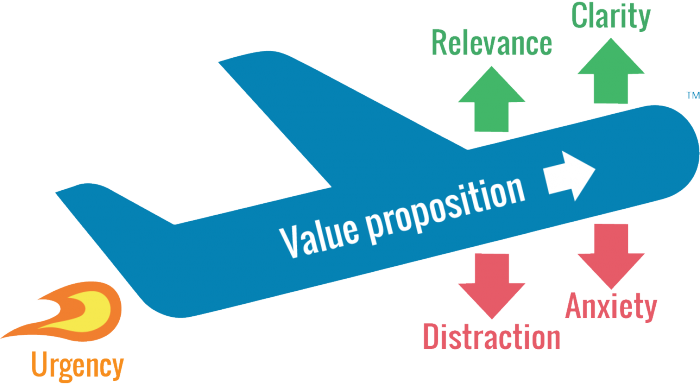
A valuable framework for evaluating CTA effectiveness is the LIFT Model (Landing Page Influence Functions for Conversion). Developed by WiderFunnel, this model posits that conversion is influenced by six key factors: Value Proposition, Relevance, Clarity, Urgency, Anxiety, and Distraction. An optimal CTA should clearly communicate the Value Proposition (the core benefit the user receives), be Relevant to the ad or content that precedes it, and possess absolute Clarity in its instruction. Elements of Urgency can be incorporated through time-sensitive language ("Limited Time Offer"), while minimizing Anxiety (e.g., "No Credit Card Required," "Cancel Anytime") and Distraction (e.g., too many competing CTAs or cluttered page design) are crucial for a smooth conversion path. For instance, the CTA "Download this ebook now" effectively addresses relevance ("this ebook"), clarity ("Download"), and urgency ("now"), all contributing to a strong value proposition. Marketers can use this model to systematically audit and improve their CTAs, ensuring each component aligns to maximize conversion potential.
Platform-Specific CTA Applications and Success Stories
The strategic deployment of CTAs varies significantly across different digital platforms, each demanding a tailored approach to maximize impact.

Facebook Ad CTAs
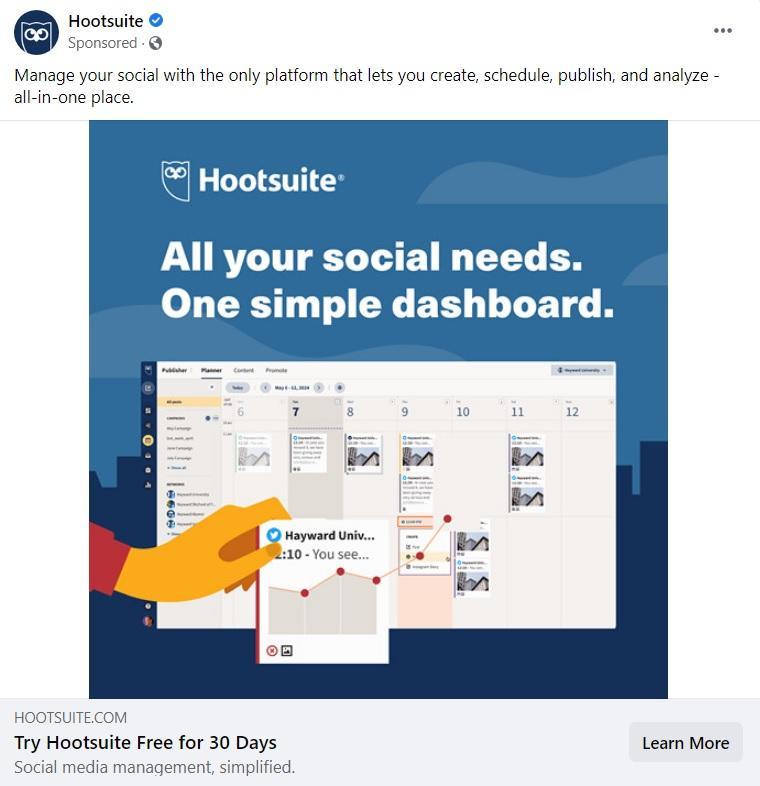
Facebook’s native CTA buttons (e.g., "Shop Now," "Learn More," "Sign Up") are integral to campaign success. Brands like ClickUp strategically employ "Claim Lifetime Deal" in retargeting campaigns, combining urgency with an exclusive offer that resonates with users already familiar with their product. The ad’s primary CTA is reinforced by explicit instructions within the ad copy, guiding users directly to the desired action. Shaw Academy masterfully uses a barrage of urgent CTAs, emojis, and exclamation marks ("Enrol Now," "Book Today," "Get Your Free Course") to create an overwhelming sense of immediacy, a tactic particularly effective for time-sensitive promotions in education. Babbel leverages social proof ("over 500,000 5-star reviews") alongside an attractive discount, culminating in a "Get Offer" button that feels low-risk due to the established trust. Hootsuite maintains a concise approach with "Learn More," directing users to discover their social media management solutions without immediate pressure, suitable for early-stage consideration. A critical finding from AdEspresso’s own experimentation revealed that the choice of Facebook CTA button can dramatically affect conversion costs, highlighting the necessity of A/B testing these native options.
Instagram Ad CTAs
Instagram’s visual-first nature requires CTAs that complement strong imagery and concise ad copy. While "Swipe Up" is a common feature for stories, in-feed ads often utilize custom or platform-standard buttons. Headspace exemplifies a custom, emotionally resonant CTA with "Snuggle up to Headspace," aligning perfectly with its brand image of calm and well-being. This unique phrasing personalizes the brand interaction, making the action feel inviting rather than demanding. Elementor, for event promotions, ensures clarity by including all vital event details (speakers, date, time) directly in the ad, making the "Register Now" CTA a natural progression for interested users. For e-commerce brands like Nøie Skincare, a direct "Shop Now" is effective when paired with compelling visuals and ad copy that sells the experience rather than just the product, allowing the CTA to serve as the final step in an already persuasive narrative. VAI Course keeps its "Apply Now" button vibrant and simple, leveraging clean design and clear value proposition in the surrounding text.
Email CTAs
Email marketing benefits from the flexibility to incorporate multiple CTAs within a longer message, catering to different levels of reader engagement. Black Illustrations effectively uses both primary and secondary button CTAs, along with hyperlinked text, to guide users through their email content, ensuring that regardless of where a reader’s attention falls, an actionable prompt is available. This multi-CTA strategy is particularly effective for newsletters or promotional emails with varied content. Audiense, an audience analysis tool, employs longer, user-centric CTAs such as "Show me the findings" or "Take me to…" This approach empowers the user, making them feel in control and emphasizing the direct benefit they will receive by clicking, thus fostering a stronger value proposition. Email conversion rates can be remarkably high, sometimes reaching up to 15%, underscoring the power of well-placed and personalized CTAs in this channel. The average email conversion rate across industries hovers around 2-5%, making a 15% rate a testament to optimized CTAs.
Landing Page CTAs
Landing pages are designed for a single conversion goal, making their CTAs singularly focused and visually prominent. Tim Ferriss’s minimalistic email sign-up page exemplifies this, with "Get the 5-Bullet Friday" as the sole, unmissable CTA. The absence of distracting elements (navigation menus, external links) ensures that the user’s attention is entirely on the CTA. Joy, a razor subscription service, uses a stark, contrasting "Get Started" button as the darkest element on its light-themed landing page, making it visually pop and immediately actionable. Leadfeeder’s lead-generation landing page for an ebook clearly summarizes the value proposition on one side and presents a form with a "Get the Guide" button on the other, ensuring that the benefit is understood before the action is requested. Key best practices for landing page CTAs include making them visually distinct (using contrasting color, appropriate size), placing them "above the fold" for immediate visibility, and ensuring the text is clear and benefit-oriented.

Website CTAs
A website’s homepage and internal pages require CTAs that guide visitors through the user journey, whether to explore products, sign up for a service, or access information. Touchland creatively integrates its "Shop Now" CTA within a whimsical "checklist" storytelling technique, subtly introducing the product into a familiar user routine. Airbnb leverages aspirational imagery and a "Discover Stays" CTA to encourage users to explore travel options, especially relevant during periods of fluctuating travel restrictions, by tapping into wanderlust. Smartlook, a user behavior analysis tool, places its "Start Free Trial" CTA prominently in its hero section, aligning with website best practices for immediate conversion prompts and offering a low-risk entry point. Ecom World, for its large e-commerce event, consolidates all crucial information (what, when, where) "above the fold," with "Register Now" as the clear and central call to action. These examples demonstrate that effective website CTAs are not just buttons but integral components of the overall user experience and brand narrative, designed to funnel users efficiently towards conversion goals.
The Strategic Importance of CTA Buttons
While text-based CTAs have their place, the integration of clickable CTA buttons significantly elevates conversion rates across all marketing materials. Studies have repeatedly shown their profound impact: one research found that adding a CTA button to article templates boosted conversions by 83% and e-commerce conversions by 22%. Copyblogger reported a 45% increase in conversion rates when their CTAs appeared as buttons rather than plain text. This phenomenon is largely attributed to user psychology; buttons are universally recognized as interactive elements, signaling an opportunity for action and providing a clear visual cue.

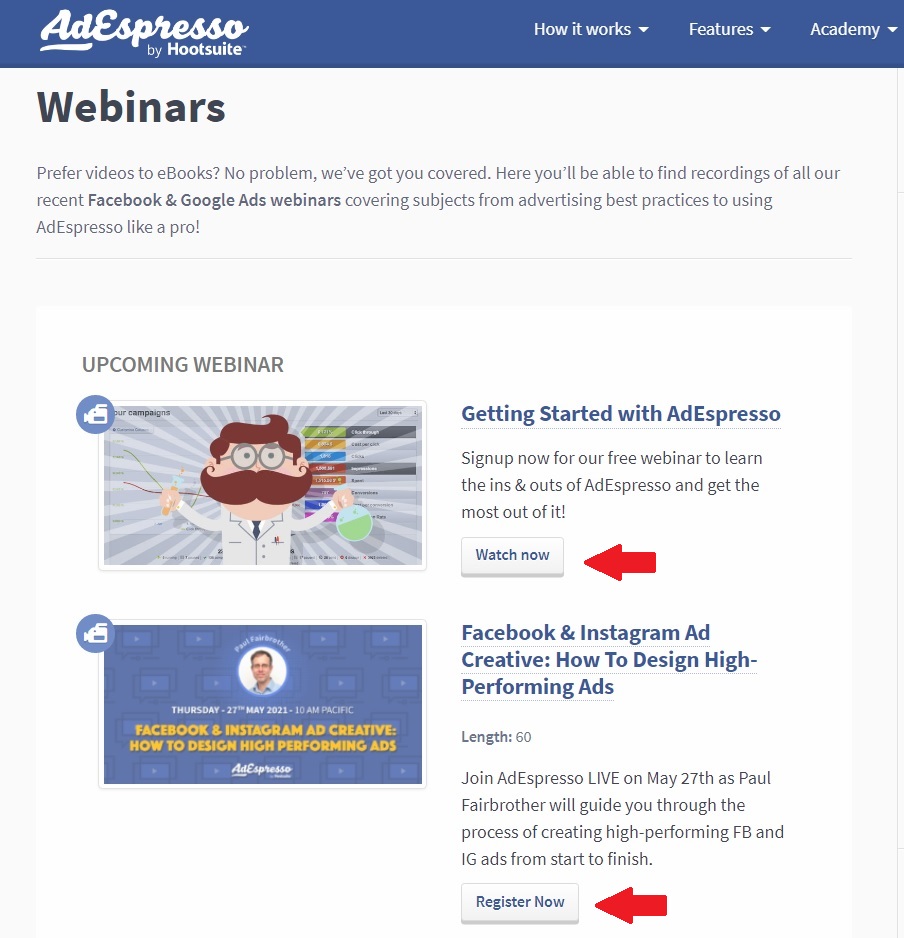
For platforms like Facebook Ads, native CTA buttons are indispensable. Options such as "Download," "Shop Now," or "Learn More" are not merely decorative; they reinforce the ad’s message and streamline the user’s path to conversion. AdEspresso’s own $1000 experiment underscored this, revealing that selecting the right CTA button on Facebook Ads could halve the cost per conversion. A "Download" button achieved 49 conversions at $5.10 each, while an ad with no button yielded only 20 conversions at $12.50. This dramatic difference highlights that CTA button optimization is not a minor tweak but a critical factor in campaign efficiency and ROI. Marketers are encouraged to utilize split-testing tools, like those offered by AdEspresso, to systematically evaluate various button texts, colors, and placements, even automating the pausing of underperforming combinations.
Beyond ads, website and landing page CTA buttons are crucial for guiding user flow. They should be visually distinct (using contrasting colors, appropriate size, and white space), clearly labeled with action-oriented text, and strategically placed where users are most likely to take the next step. Tools like Unbounce enable rigorous A/B testing of these on-site buttons, allowing businesses to continuously refine their user experience and conversion funnels. The goal is to create an intuitive journey where the desired action is always evident and inviting, removing any potential ambiguity or hesitation.

Industry Perspectives on CTA Optimization
Leading marketing professionals emphasize that CTA optimization is not a one-time fix but an ongoing, iterative process. "The digital landscape is constantly shifting, and so too should our CTAs," stated a prominent digital strategist during a recent industry summit. "What worked last year might not work today. Continuous testing, leveraging AI-driven insights, and staying attuned to audience behavior are non-negotiable for maximizing conversion potential." This sentiment reflects a broader understanding within the industry that CTAs are living elements of a marketing campaign, requiring constant vigilance and refinement. Data scientists in marketing analytics teams are increasingly focusing on granular CTA performance, analyzing click-through rates, time-on-page post-click, and subsequent conversion funnels to extract deeper insights. The emphasis is on personalization and dynamic CTAs that adapt to individual user segments, further enhancing relevance and impact. These experts advocate for a data-centric approach, where every click and interaction informs future optimization efforts, transforming CTA design from guesswork into a science.
Broader Implications for Digital Marketing Success
The meticulous crafting and strategic placement of Calls to Action carry significant implications for the overarching success of digital marketing initiatives. Effective CTAs directly translate into improved conversion rates, which in turn drive higher return on investment (ROI) for marketing spend. For businesses, this means more leads, increased sales, stronger community engagement, and ultimately, accelerated growth in a competitive marketplace.

Beyond immediate conversions, well-optimized CTAs contribute to a more positive and intuitive user experience. By providing clear guidance, they reduce user frustration and build trust, fostering a stronger relationship between the brand and its audience. This long-term relationship building is invaluable in an era where brand loyalty is increasingly hard-won, and consumer expectations for seamless digital interactions are at an all-time high. As the digital realm continues to expand and diversify, the ability to effectively prompt and guide user action through compelling CTAs will remain a cornerstone of successful digital strategy, differentiating thriving brands from those struggling to cut through the noise. The future of digital marketing demands not just visibility, but actionable engagement, and CTAs are at the forefront of this imperative, acting as the silent architects of digital success.