Modernizing the Social Media Organization for Enterprise Impact and Strategic Growth


The era of viewing social media as a mere digital bulletin board for brand announcements has definitively ended, yet many modern enterprises remain tethered to outdated operational models from 2010. As digital landscapes shift toward fragmented discovery and AI-driven search, the mandate for social media teams has expanded significantly. Today, these departments serve as the frontline for influencer partnerships, high-speed customer care, social search optimization (SOSEO), paid media orchestration, and critical business intelligence. For leadership, the challenge lies in restructuring these teams to transition from tactical executioners to strategic pillars that drive tangible revenue and long-term organizational growth.
The Evolution of the Social Media Mandate
Historically, social media was siloed within marketing departments, tasked primarily with publishing content and managing comments. This structure was sufficient when social channels functioned as broadcast tools. However, the rise of the creator economy and the shift in consumer behavior toward using social platforms as search engines—a phenomenon noted in Q2 2026 industry surveys—has necessitated a more complex approach.
Current data from Sprout Social indicates that while 93% of executive leaders identify social intelligence as a prerequisite for future growth, only 10% of organizations have successfully integrated these insights into their enterprise-wide strategies. This 83% gap represents a significant opportunity cost. Companies that fail to modernize their team structures risk losing touch with real-time consumer sentiment, competitor movements, and emerging market trends that are now frequently surfacing on social platforms before appearing in traditional industry reports.
Analyzing Common Organizational Structures
To bridge this gap, organizations are experimenting with four primary structural models, each tailored to different business scales and operational complexities.
The Functional Model represents a pivot toward specialization. By organizing team roles around core competencies—such as influencer relations, paid media, and SOSEO—companies can mitigate the burnout common in generalist roles. In this model, clear ownership prevents the inefficiencies of "context switching," where a single employee is expected to pivot from crisis communication to creative design in the span of an hour.
Conversely, the Network-Specific model aligns employees with individual platforms like TikTok, Instagram, or LinkedIn. While this allows for deep platform-native expertise, many enterprises are finding it less scalable as the digital landscape grows more fluid. As new platforms emerge and consumer preferences shift rapidly, network-based roles can create redundancies or, conversely, leave significant coverage gaps.
The Audience Engagement model focuses on the customer’s journey, categorizing the team by engagement goals—such as brand awareness, customer loyalty, or acquisition. This requires a robust, centralized management software suite to ensure that despite the focus on specific audience segments, the brand voice remains unified across all touchpoints.
Finally, the Center of Excellence (CoE) model is increasingly popular among global enterprises. By establishing a central council composed of leaders from PR, HR, legal, and product departments, organizations create a standardized governance framework. This minimizes the risk of fragmented communication and ensures that social data is shared across all relevant business units, rather than being trapped in a marketing silo.
Building the Modern Social Dream Team
The professionalization of social media has introduced nine essential roles that forward-thinking firms are prioritizing in their recruitment efforts. The SOSEO strategist, for instance, has become a high-priority hire as consumers increasingly bypass traditional search engines for social-first discovery. By conducting keyword research tailored to platform-specific algorithms, these strategists ensure that a brand remains visible in a visual-first information ecosystem.

The Social Customer Care lead is equally critical in the modern climate. With consumer expectations for response times dropping—where 38% of users now demand resolutions within two hours—this role acts as the bridge between public-facing community management and internal CRM systems.
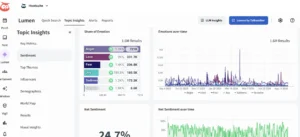
Furthermore, the integration of the Social Intelligence Analyst has shifted the role of social from a creative function to a data-driven science. These analysts translate raw social listening data into actionable insights for the C-suite, proving social’s impact on everything from product development to supply chain adjustments.
Addressing the Gap Between Insight and Action
A primary concern for management is the "speed-to-action" gap. While data is abundant, the ability to synthesize it into a business decision is often bottlenecked by bureaucratic approval processes. Data suggests that 86% of organizations have suffered missed opportunities because consumer insights remained siloed or were processed too slowly to be actionable.
To rectify this, leadership must prioritize the adoption of AI-assisted workflows. By utilizing AI to handle repetitive tasks—such as initial report generation and first-tier customer response—human talent is freed to focus on high-level strategic interpretation. This transition is not merely a technological upgrade; it is a cultural shift that requires clear AI usage policies to ensure brand safety while maintaining the agility needed to capitalize on social trends.
Implications of Under-Resourcing
The cost of under-resourcing is no longer confined to low engagement numbers; it manifests as a failure to understand the customer. When teams are stretched thin, they lose the capacity to conduct deep-dive analyses or engage in proactive community building. This leads to a reactive posture, where the company only responds to crises rather than anticipating market shifts.
For companies seeking to justify budget increases for their social departments, the argument must shift from "more followers" to "higher intelligence." Leaders should present data linking social activity to pipeline development. For example, organizations that implement multi-touch attribution models often discover that social media’s influence on the sales pipeline is significantly higher than traditional reporting suggests. When social is connected to CRM data, the perceived ROI of the social media department often increases exponentially.
Future-Proofing the Organization
As we look toward the latter half of the decade, the integration of social data into core enterprise strategy will likely become a benchmark for competitive advantage. By 2029, it is projected that social intelligence will influence corporate strategy more heavily than traditional market research.
The path forward requires a three-pronged approach:
- Investment in Development: Retaining talent in the social space is difficult. Providing clear paths for specialization and professional development is as important as competitive compensation.
- Cross-Functional Data Democratization: Breaking down the walls between social media and other departments ensures that insights regarding product feedback or customer satisfaction are not just "liked" but acted upon by the appropriate teams.
- Rigorous Attribution: Incompatibilities between social management tools and the broader marketing tech stack must be resolved. Without a unified view of the customer journey, social media teams will continue to struggle to prove their value to the finance department.
In summary, the transition from a 2010-style social media presence to a modern, intelligence-driven organization is a necessity for survival in a digital-first economy. The organizations that thrive will be those that view their social teams not as content generators, but as the central nervous system of their customer-facing operations. By formalizing governance, investing in specialized roles, and leveraging AI for operational efficiency, businesses can transform their social presence from a cost center into a powerful, data-rich driver of enterprise-wide growth.
Related posts: