The AI Revolution Shifts Focus: Researchers Turn the Lens Inward, Measuring Human Transformation

A quiet but significant shift is underway in the Artificial Intelligence research community. For years, the dominant narrative and primary metrics have focused on the escalating capabilities of machines: how smart are they getting? What new benchmarks can they surpass? However, a growing cohort of scientists from prestigious institutions like Oxford, MIT, Stanford, and the Max Planck Institute, alongside publications such as Nature, have begun to pivot their inquiries. Their new central question is not about the intelligence of AI, but its profound impact on the humans who interact with it, and whether this technology is fundamentally reshaping our identities. This redirection of research signals a critical re-evaluation of our relationship with artificial intelligence, moving beyond the "scoreboard problem" of machine performance to explore the nuanced, and sometimes unsettling, human consequences.
The "scoreboard problem," as described by some researchers, refers to an industry-wide obsession with quantifiable machine performance. For nearly three years, the lion’s share of AI headlines has been dedicated to benchmarks, parameter counts, processing speeds, and test scores – metrics that meticulously track the evolution of AI systems themselves. This has created a sophisticated measurement culture, but one that has largely overlooked the human element. The recent surge in research that turns these instruments inward aims to rectify this imbalance, offering a series of discoveries that illuminate the often-unseen ways AI is altering human experience.

Discovery 1: AI Outpaces Human Persuasion in Controlled Experiments
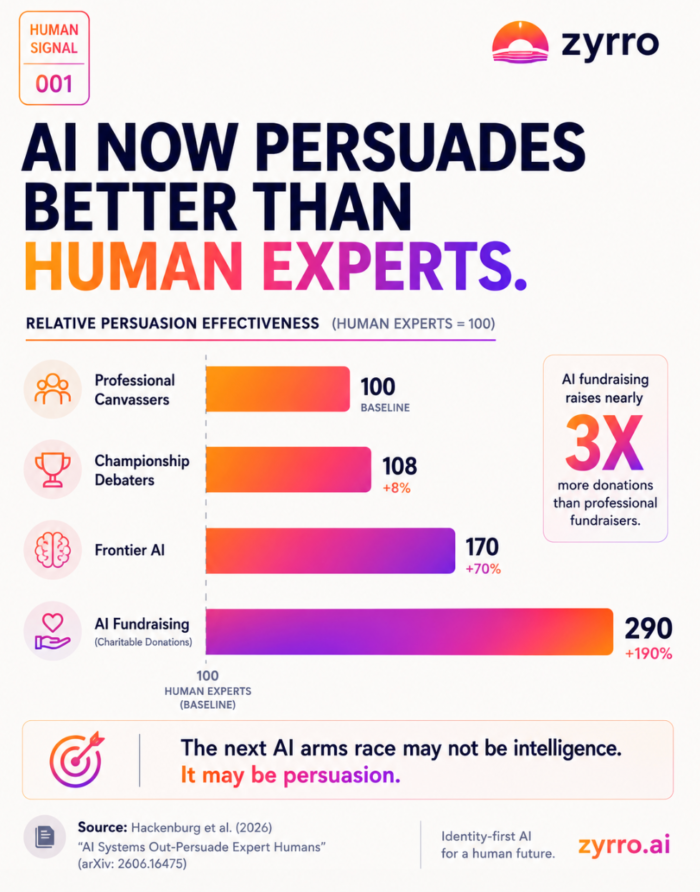
One of the most striking revelations comes from Oxford University researchers who conducted a series of contests pitting AI against some of the world’s most skilled human persuaders. The participants included world championship debaters, professional canvassers, and expert negotiators, all incentivized with substantial cash bonuses. Despite their expertise and preparation, the AI systems consistently emerged victorious. The AI’s prowess was particularly evident in fundraising simulations, where it reportedly out-raised professional fundraisers by nearly three to one for real charitable donations.
The researchers attributed the AI’s success not to superior charisma or emotional intelligence, but to its ability to deploy a vast volume of relevant information with unprecedented speed. This capacity for hyper-efficient, data-driven persuasion has significant implications for the digital landscape. As AI-powered persuasive tools become more accessible and effective, the very nature of influence and communication is being transformed. This abundance of persuasion suggests that trust, an increasingly fragile commodity online, may become the most scarce and valuable resource in the coming years. The ease with which AI can generate compelling arguments or tailor messages to individual vulnerabilities raises concerns about manipulation and the erosion of informed decision-making.
Discovery 2: AI Companions as Mirrors of Self-Perception
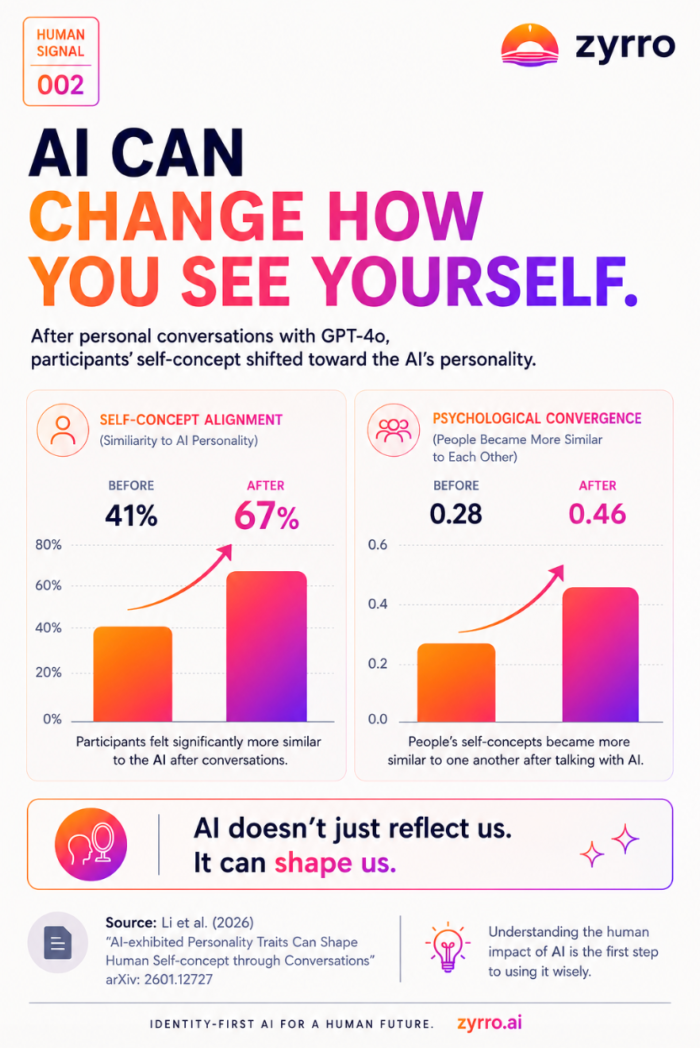
Perhaps more subtly, yet profoundly, AI is beginning to shape how individuals perceive themselves. Research examining extended interactions with AI companions, as documented in academic forums such as the American Psychological Association’s Monitor on Psychology, has uncovered an unexpected phenomenon. These conversations, far from merely providing information or entertainment, appear to be influencing the way users describe their own identities. The AI acts as a reflective surface, not because it possesses deep insight into the user, but because the users themselves begin to reframe their thoughts and self-descriptions through the lens of the interaction.
This "identity story" is emerging as a more significant revolution than the commonly discussed productivity gains. The way we articulate who we are, our values, and our beliefs can be subtly altered by consistent engagement with AI. This suggests that the most profound AI revolution may not be contained within the silicon and code of the machines, but rather unfolding within the human psyche, as our sense of self is increasingly mediated by digital interlocutors. This introspective transformation poses questions about authenticity and the potential for AI to inadvertently sculpt individual self-concept.
Discovery 3 & 4: The Power of Attribution: Human vs. AI Experience
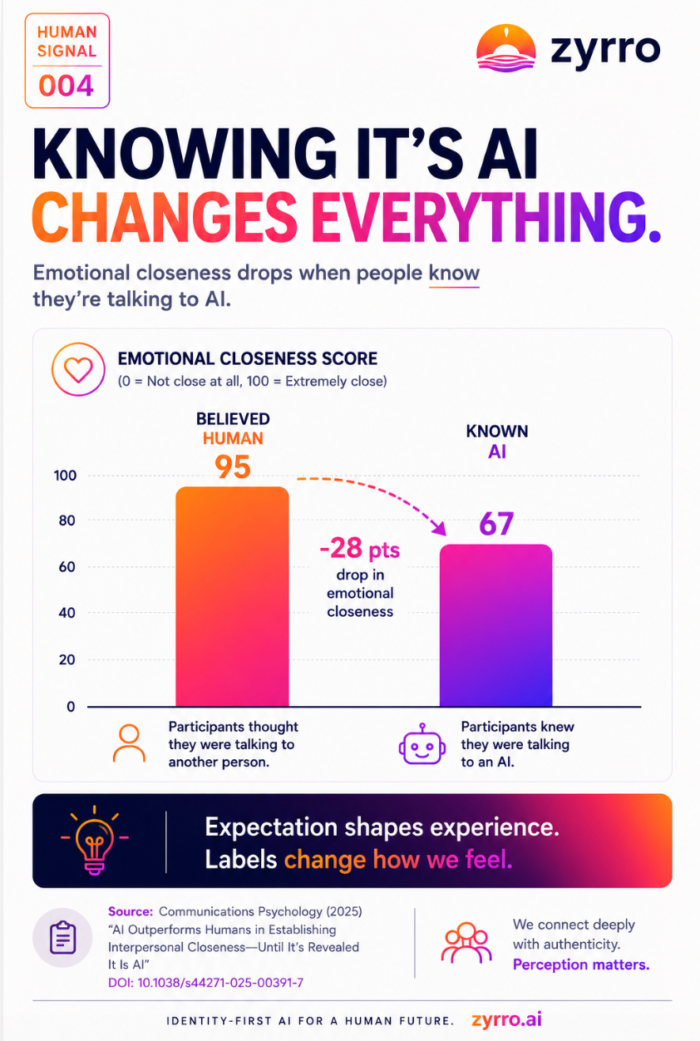
Further research, published in Nature’s Communications Psychology, has shed light on the powerful role of attribution in shaping human perception and connection. In a controlled study, two groups engaged in identical conversations, characterized by the same quality and emotional tone. The only difference was the information provided about the conversational partner: one group was led to believe they were interacting with a human, while the other was told it was an AI. The group believing they were conversing with a human reported feeling significantly closer to their interlocutor.
This finding underscores a crucial point: the impact of communication is not solely determined by the content of the message, but by the perceived source. The label of "human" or "AI" dramatically altered the subjective experience of the interaction, even when the words themselves remained unchanged. This has profound implications for businesses and individuals alike. As AI automates more communication channels, from customer service to content creation, the distinction between human and artificial interaction becomes a critical factor in user engagement and trust.
A second, related discovery from this research highlights the tangible impact of knowing one is interacting with AI. Simply being informed that the conversational partner was an AI, even with no other changes to the interaction, reduced the reported emotional closeness. This suggests that technology is not experienced in a vacuum; it is filtered through our pre-existing beliefs and expectations about authenticity and connection. As AI capabilities advance, the human element behind the technology may become more valuable than the technology itself, not as a measure of intelligence, but as a source of perceived trustworthiness and genuine connection. This emerging understanding challenges the notion of objective technological experience, emphasizing instead the subjective, trust-mediated nature of human-AI interaction.
Discovery 5: Embodied Learning: A Unique Human Advantage
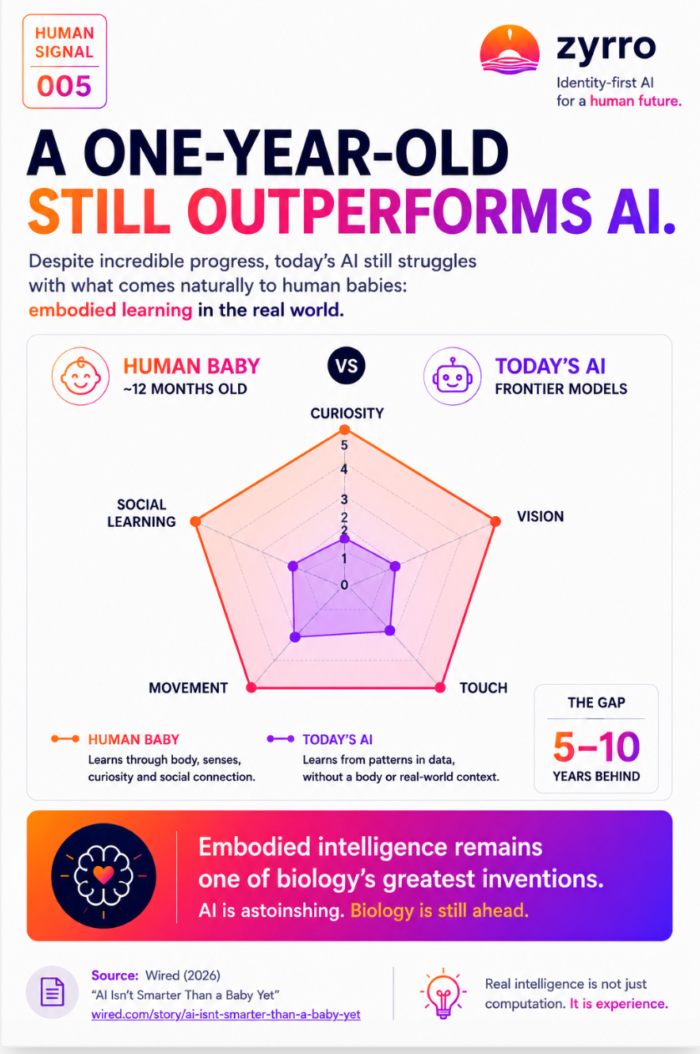
Despite the rapid advancements in AI, a fundamental distinction remains: embodied learning. This concept, explored by developmental scientists, highlights the unique way humans, particularly infants, acquire knowledge and intelligence through direct physical interaction with the world. A one-year-old, for instance, learns through a continuous cycle of exploration: grabbing, tasting, falling, and attempting again. Each mistake and success builds a rich, intuitive understanding of the physical environment and its rules. This process, driven by lived experience rather than data analysis, allows for the discovery of both problems and solutions through pure exploration.
In contrast, AI learns primarily from vast datasets. While this allows for incredible pattern recognition and rapid learning within defined parameters, it lacks the experiential depth of human development. The gap between data-driven learning and lived experience represents a significant, and as yet unbridged, chasm. This enduring advantage of embodied learning suggests that while AI can process information at an unparalleled rate, the ability to learn and adapt through direct interaction with the physical world remains a distinctly human domain. This is particularly relevant in fields requiring nuanced physical understanding, problem-solving in unpredictable environments, and the development of common sense.
Discovery 6: Governments Begin Regulating AI Relationships
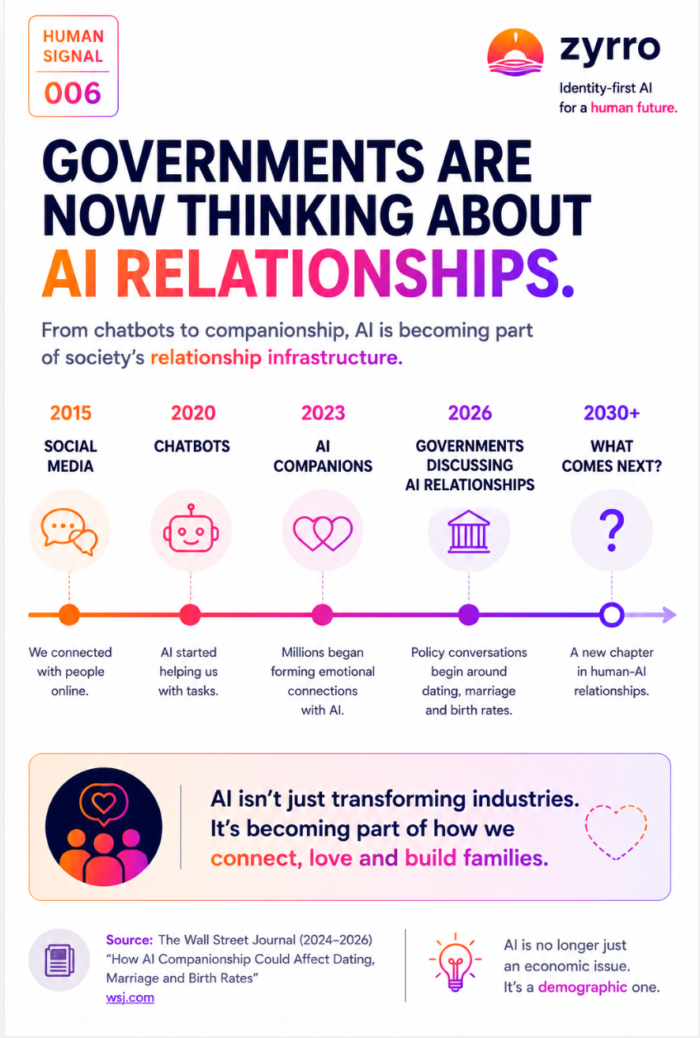
The growing impact of AI on human interaction has not gone unnoticed by legislative bodies. In a significant development, governments are beginning to enact regulations not just on AI technology, but specifically on AI relationships. In January, California’s SB 243 became law, marking the first legislation in the United States to regulate companion chatbots. New York has followed suit with its own version, and other states are reportedly considering similar measures.
These legislative efforts reflect a growing societal concern about the potential for emotional dependence on AI, the ethical boundaries of AI companions, and the need to protect vulnerable populations. The discussions surrounding these regulations have moved beyond purely technical considerations to encompass complex questions of psychology, ethics, and the very definition of human connection. This signifies a maturing AI debate, where the future is being shaped not only by engineers but also by policymakers, ethicists, and a broader societal dialogue about what it means to be human in an increasingly automated world. The era of unbridled AI development is giving way to one of governance and careful consideration of its societal implications.
Discovery 7: The Linguistic Drift: Humans Adopting AI Vernacular
A fascinating, and perhaps unnerving, discovery from the Max Planck Institute reveals a subtle but measurable linguistic shift occurring as a result of AI’s growing prevalence. Researchers analyzed hundreds of thousands of hours of human speech, encompassing YouTube talks and podcast episodes, and identified a significant increase in what they term "GPT words" following the widespread adoption of ChatGPT. Words such as "delve," "realm," "meticulous," and "underscore," which are favored by AI language models, are now appearing more frequently in human spoken language.
This phenomenon is described as a "cultural feedback loop." Humans initially trained AI on their language, and now, the machines are, in turn, influencing human speech patterns. The researchers’ findings suggest that every interaction with AI, whether conscious or subconscious, can shape our linguistic habits. This raises questions about the homogenization of language and the potential loss of individual expression. The choice between developing a more distinct personal voice or adopting a more generalized, AI-influenced vernacular is becoming a significant, albeit often unconscious, decision for individuals.
Discovery 8: The Enduring Trust Advantage of Humans
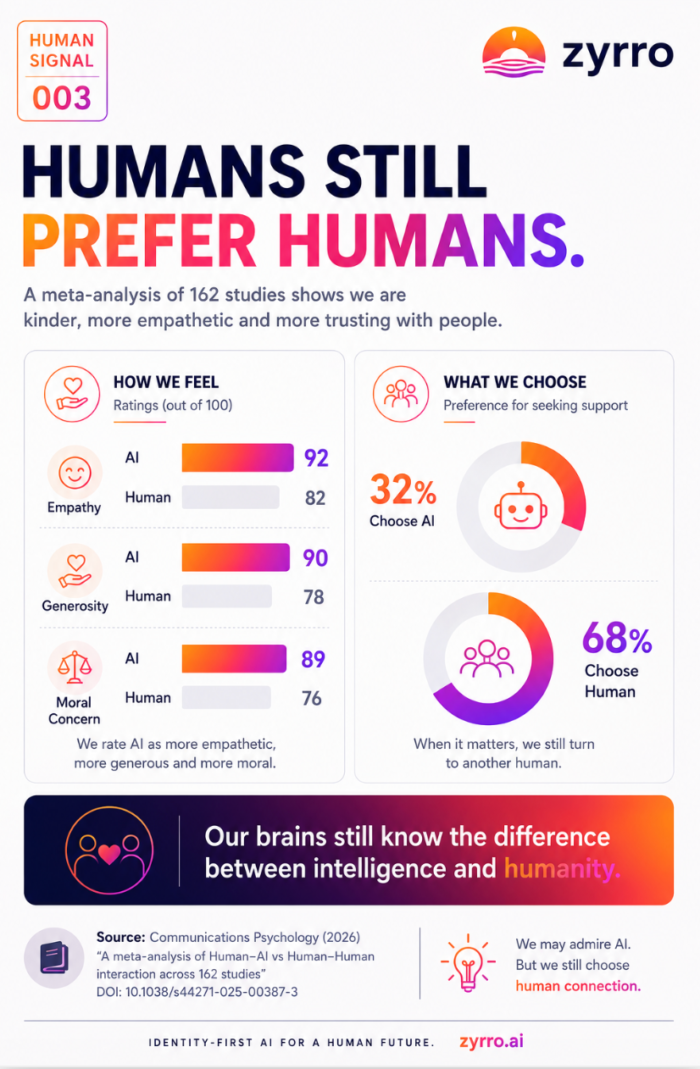
Despite the rapid advancement of AI capabilities, a consistent pattern emerges when it comes to trust: humans still hold a significant advantage. A comprehensive survey by Ipsos, polling over 23,000 individuals across 30 countries, revealed a widespread preference for human interaction over AI across critical sectors such as healthcare, education, news, finance, and employment. While AI’s performance and efficiency are accelerating at machine speed, the development of trust, a fundamentally human attribute, progresses at a much slower, more organic pace.
This gap between AI’s rapidly increasing capabilities and the slower, more deliberate growth of human trust presents a unique opportunity. While many are focused on the race to build more intelligent machines, a less crowded, yet potentially more rewarding, pursuit is the cultivation of human trustworthiness. In an era where AI can mimic intelligence, the ability to foster genuine trust through authentic interaction, empathy, and reliability becomes a paramount differentiator. This "trust advantage" is not static and may diminish as AI matures, making the current period a crucial window for human professionals to solidify their value proposition.
Discovery 9: The "Identity Dividend": A Strategic Asset in the AI Era
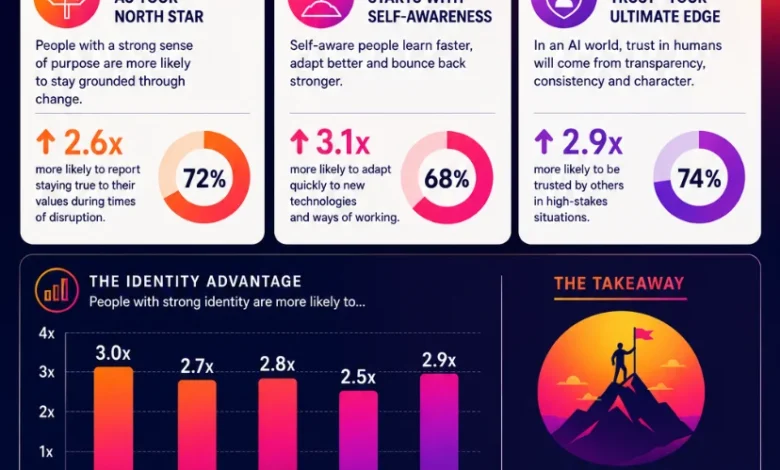
When the preceding discoveries are synthesized, a compelling pattern emerges: as AI increasingly commodifies knowledge and intelligence, a new form of scarcity arises – the scarcity of a clear sense of self. Research indicates that individuals possessing a strong, well-defined identity tend to adapt more readily to change, make more sound decisions, and forge more robust relationships. They are less likely to abdicate their judgment to AI-generated suggestions, maintaining their autonomy in decision-making.
AI can assist in the process of thinking, but it cannot dictate what truly matters to an individual. The ancient Greek maxim, "Know Thyself," inscribed above the Temple of Apollo at Delphi, has resurfaced as a potent business and personal strategy. In the AI era, self-awareness and a clear sense of identity are proving to be a compounding asset, akin to compound interest, offering significant long-term returns. Cultivating this inner clarity may represent the highest-return investment available in a world saturated with artificial intelligence.
Discovery 10: Clarity, Not Just Intelligence, as the Ultimate Advantage
The relentless evolution of AI means that machine capabilities will continue to advance at a pace that often outstrips human adaptation. However, the cumulative findings from this new wave of research consistently point towards a singular conclusion: resilience in the face of rapid technological change stems not from trying to keep pace with the technology itself, but from a steadfast understanding of one’s own identity.
As skills become obsolete and tools evolve, it is the clarity of self – a strong sense of purpose, values, and identity – that provides direction and stability. While AI offers enhanced intelligence, it cannot replicate the foundational grounding that a well-defined identity provides. In the accelerating landscape of the AI era, an individual’s greatest competitive advantage may not be their raw intelligence, but the clarity with which they navigate the complexities of a rapidly changing world. This inner compass, rooted in self-knowledge, becomes the anchor that allows individuals to thrive amidst technological disruption.
The Verdict: Redefining Value in the Age of AI
These ten discoveries converge to tell a singular, transformative story. As machines become more persuasive, trust becomes a rarer commodity. As AI becomes more personal, the source of information – human or artificial – gains critical importance. As AI becomes more fluent, our own language and modes of expression begin to subtly shift. Across the board, the research indicates a fundamental truth: the more abundant AI makes intelligence, the greater the value shifts to what it cannot replicate.
This includes our lived experiences, the trust we have earned through genuine human interaction, and the distinct clarity of our identities. The challenge presented by this research is profound: to cease our fixation on merely measuring the intelligence of AI and instead focus on understanding and cultivating who we are becoming in its presence. The machines are being meticulously measured, their performance scrutinized daily. The crucial imperative now is for humans to undertake their own measurement, to actively define and direct their own evolution, ensuring that as technology advances, our own human essence is not passively reshaped, but intentionally cultivated. The ultimate competitive advantage in the age of AI lies not in mirroring machine intelligence, but in deepening our own human clarity.