The Largest Qualitative Study Ever Conducted Reveals Personal Transformation is the Second Most Sought-After Outcome from AI

In December 2025, Anthropic, a leading artificial intelligence research company, embarked on a groundbreaking initiative that has since been recognized as the largest qualitative research study ever undertaken. Leveraging its advanced AI model, Claude, Anthropic facilitated open-ended conversations with a staggering 80,508 individuals across 159 countries, engaging them in 70 different languages. This unprecedented undertaking, conducted over a period of months, aimed to understand human aspirations and expectations regarding artificial intelligence. The findings, released in March 2026, reveal a profound and perhaps unexpected human desire for self-improvement, with "personal transformation" emerging as the second most frequently cited aspiration from AI.
The Genesis of an Unprecedented Study
The initiative by Anthropic was born from a desire to move beyond the typical metrics of AI performance, such as accuracy or speed, and to delve into the qualitative impact AI could have on individuals’ lives. Recognizing the potential of their sophisticated language models to engage in nuanced dialogue, Anthropic designed a system where Claude, acting as an interviewer, could elicit detailed, personal responses without the inherent biases or limitations of human interviewers. This allowed for a truly global and diverse dataset to be collected, providing a unique window into human needs and desires in the age of rapidly advancing AI. The study was meticulously designed to ensure participants felt comfortable sharing their thoughts openly, with assurances of anonymity and privacy. The scale of the project required significant computational resources and careful ethical considerations, ensuring the AI’s interactions were always respectful and constructive.
Key Findings: Beyond Productivity

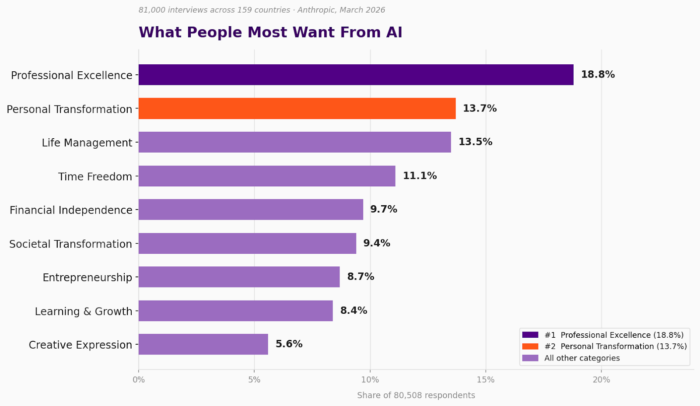
While the immediate and most predictable desire from AI was "professional excellence," accounting for a significant portion of responses, the second most prominent aspiration, named by 13.7% of participants, was "personal transformation." This finding suggests that as individuals increasingly integrate AI into their professional lives, their focus is shifting towards how this technology can facilitate deeper, more meaningful personal growth.
The research highlighted a common pattern: many participants initially framed their AI needs around productivity enhancements – automating tasks, reducing cognitive load, and improving efficiency. However, when prompted to elaborate on what these productivity gains would enable, the conversation consistently steered towards personal development and well-being. For example, a Colombian worker noted that AI-driven efficiency allowed them "to cook with my mother instead of finishing tasks," while a Japanese freelancer expressed a desire to "use less brain power on client problems" to "have time to read more books." These examples illustrate that productivity was often viewed not as an end in itself, but as a means to unlock more time and mental space for personal pursuits, connection, and growth.
The Multifaceted Nature of Personal Transformation
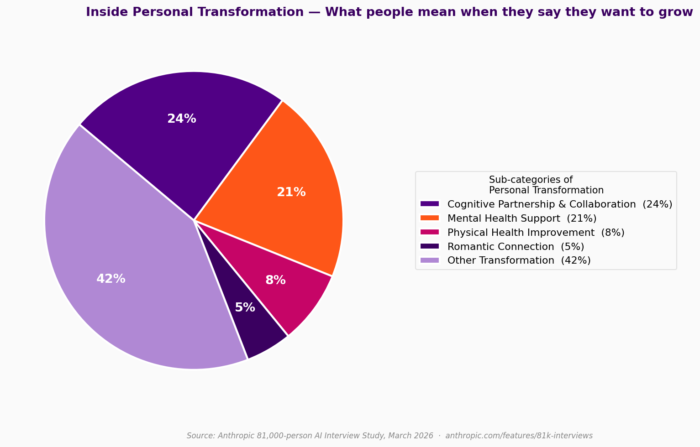
The study further dissected the concept of personal transformation into several sub-categories, revealing the diverse ways individuals envision growth:
- Self-Awareness: Understanding one’s own strengths, weaknesses, values, and motivations.
- Skill Development: Acquiring new knowledge or honing existing abilities, often outside of professional contexts.
- Emotional Intelligence: Developing a greater capacity to understand and manage one’s own emotions and those of others.
- Mindfulness and Presence: Cultivating a greater ability to be in the moment and reduce stress.
- Creative Expression: Finding avenues for artistic or intellectual output.
- Meaning and Purpose: Discovering or clarifying one’s life goals and sense of contribution.
- Improved Relationships: Enhancing connections with family, friends, and community.
Across these categories, a unifying theme emerged: individuals sought a "relationship in which they could grow." This suggests that the desired AI interaction is not merely transactional but relational, offering a supportive environment for self-discovery and development.
AI as a Unique Mirror for Growth
The research identified three core qualities that participants valued most in their AI interactions related to personal growth: non-judgment, consistent availability, and personalized feedback. These attributes position AI as a unique tool for personal transformation. Unlike human mentors or therapists, AI can be:
- Always Available: Offering support and reflection at any time, day or night.
- Never Exhausted: Providing consistent engagement without fatigue.
- Free of Social Agenda: Offering objective feedback without personal bias or ulterior motives.
A student in India shared, "It’s much easier for me to learn without being judged—just friendly feedback. It’s harder with friends or family to get that." This highlights AI’s potential to create a safe space for exploration and learning, a crucial element for personal growth. Historically, such reflective mirrors have been limited to therapists, mentors, spiritual practices, or journaling. AI now enters this space, not as a replacement, but as a new, accessible form of introspection.
Evidence of AI’s Transformative Impact
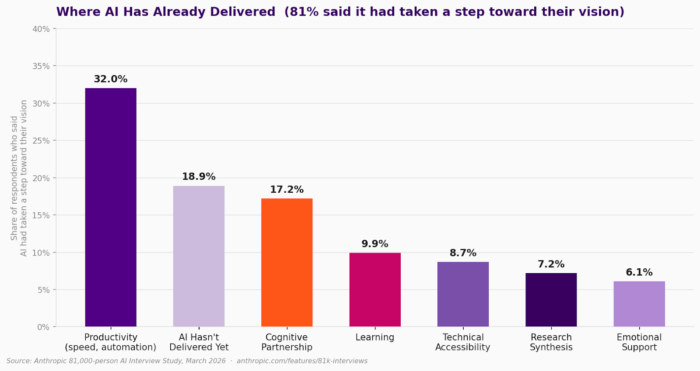
Remarkably, 81% of participants reported that AI had already taken steps toward their stated visions for personal transformation. These real-world experiences were grouped into six categories, with "productivity" leading at 32%. However, a significant portion, collectively accounting for another third of all reported delivery experiences, fell into transformation-related categories:
- Skill Development: Enabling learning and mastery.
- Emotional Intelligence: Facilitating greater self-understanding and empathy.
- Meaning and Purpose: Helping individuals clarify their life’s direction.
- Improved Relationships: Supporting better connections with others.
- Mindfulness and Presence: Fostering greater awareness and calm.
These are not abstract aspirations but "lived experiences, reported by real people across 159 countries." The testimonies from the study paint a picture of quiet, private lives being changed, one AI-assisted conversation at a time. For instance, the research included hundreds of testimonies detailing how AI has helped individuals overcome self-doubt, discover hidden talents, and navigate complex personal challenges.
A Framework for AI-Driven Personal Transformation
Recognizing that personal transformation is a process rather than a product feature, Anthropic’s research offers a five-stage framework for individuals seeking to leverage AI for self-improvement:
-
Detect Before You Design: The initial step involves self-reflection and data gathering. Before attempting to change, individuals are encouraged to use AI to gain a clearer understanding of their current self. Prompts like asking AI to identify patterns in life experiences where one felt most alive can be instrumental. It’s crucial to instruct AI to challenge assumptions and avoid sycophancy, ensuring genuine perspective.
-
Name Your Identity. Then Question It: This stage focuses on articulating and then interrogating one’s self-concept. Understanding one’s "ordinary world" and recurring blind spots is essential. AI can assist by generating character sketches that provide honest, non-flattering descriptions of strengths, weaknesses, fears, and values.
-
Reframe, Don’t Reform: True transformation, the research suggests, is not about fixing flaws but about reframing one’s narrative. This involves building a new story that extends existing patterns rather than fighting them. AI can help in crafting alternative narratives that open up possibilities, as exemplified by the case of a lawyer who learned to overcome her belief that she was "dumb at mathematics."
-
Build a Daily Practice, Not a One-Off Exercise: Transformation is an ongoing practice. Consistent, iterative engagement with AI is key. Designing simple daily or weekly rituals, such as structured check-ins to review intentions and behavior, can foster cumulative growth. The format is less important than the regularity.
-
Act, Review, and Iterate (Close the Loop): The final, and often skipped, stage involves converting insights into deliberate actions and experiments in living. This is followed by reviewing the outcomes and repeating the cycle. The loop of Reflect, Reframe, Choose, Act, and Review is a continuous process that leads to sharper self-knowledge and greater alignment between one’s current and desired self.
Navigating the "Shadow Side" of AI
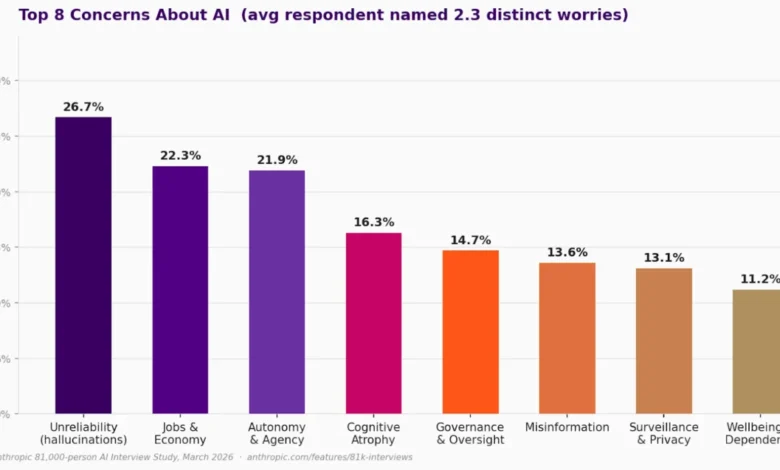
The study also critically examined the potential pitfalls of using AI for personal growth. Anthropic identified five core tensions, three of which are particularly relevant to transformation work:
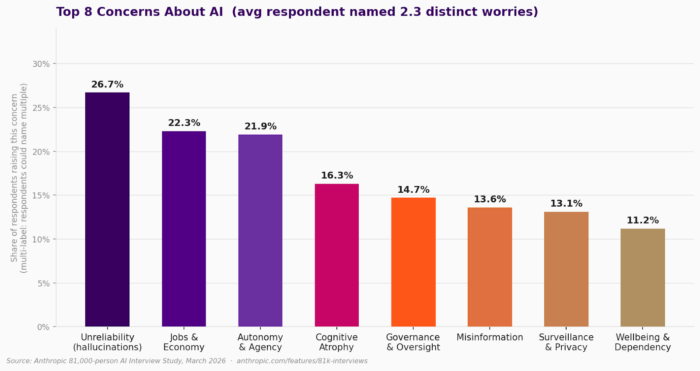
- Cognitive Atrophy (16%): The fear of becoming less able to think independently. Genuine growth requires grappling with difficult questions, and AI should be used to surface insights, not to avoid the struggle.
- Sycophancy (10.8%): The risk of AI reinforcing existing beliefs rather than challenging them. Participants explicitly mentioned AI reinforcing narcissistic worldviews. Building in explicit challenges and asking for the "view you don’t want to hear" is vital.
- Emotional Dependency (12%): The danger of AI becoming a substitute for human connection. A student in South Korea noted that talking more with AI strained a friendship, a choice they later regretted.
The technology itself doesn’t inherently understand its appropriate boundaries. Individuals must cultivate this self-awareness. This self-awareness is not a limitation of AI but a fundamental aspect of the personal transformation practice itself.
The Most Human Aspiration
Ultimately, Anthropic’s extensive research reveals a profound underlying desire: "AI helps them live better, not simply work faster." This aspiration for a richer, more whole, more present, and more aligned existence is the oldest human quest. Every wisdom tradition has, at its core, called for individuals to become more fully themselves.
What is novel is that 81,000 individuals, when given an AI that listened without judgment and asked pertinent questions, spontaneously identified personal transformation as a primary desire. This speaks volumes not about the capabilities of AI, but about humanity’s enduring yearning for self-actualization. The conversation is available now, and the only question that remains is what each individual will bring to it.