New AI-Powered Android Malware Dubbed RatHat Emerges With Advanced Remote Navigation Capabilities


The landscape of mobile cybersecurity threats has entered a complex new era with the discovery of "RatHat," a sophisticated Android malware strain that integrates artificial intelligence to dynamically navigate and control compromised mobile devices. Identified and analyzed by researchers at mobile security firm Zimperium zLabs, RatHat represents a significant evolution in remote access trojans (RATs). Unlike traditional malware that relies on rigid, hardcoded scripts to execute automated routines, RatHat leverages large language models (LLMs) to interpret user interfaces in real-time, allowing malicious operators to execute complex fraud and espionage campaigns with unprecedented adaptability.
The emergence of RatHat underscores a troubling convergence in the threat landscape: cybercriminals are increasingly adopting artificial intelligence not merely to scale phishing campaigns or draft malicious code, but as an active, on-device co-pilot for real-time cyberattacks. Preliminary attribution analysis conducted by Zimperium researchers suggests that the malware originates from threat actors operating out of China. This assessment is based heavily on diagnostic artifacts discovered within the malware’s architecture, specifically LLM prompts written natively in Chinese that instruct the AI subsystems on how to parse device hierarchies and manage navigation tasks.
Distribution Vectors and Initial Infection Chain
Like the vast majority of modern Android banking Trojans and spyware, RatHat bypasses the rigorous security sandboxes and vetting processes of official app distribution platforms by relying on side-loaded application packages (APKs). Security telemetries indicate that the malware is actively propagated through aggressive malvertising campaigns, smishing (SMS phishing) operations, and rogue landing pages designed to impersonate legitimate utility applications, mobile banking portals, or cryptocurrency management tools.
Once an unsuspecting user downloads and installs the malicious APK from an unverified external source, RatHat initiates a calculated routine designed to establish deep, systemic persistence within the host operating system. Central to this initial phase is the systematic abuse of Android’s Accessibility Services framework. While Accessibility permissions are designed to assist users with disabilities by granting apps the ability to read screen contents and interact with user interfaces on behalf of the user, malicious actors routinely weaponize these privileges to execute highly privileged, administrative-level actions without explicit, informed user consent.

By exploiting Accessibility privileges, RatHat silently alters critical system configurations behind the scenes. Most notably, the malware automatically enables Android’s hidden Developer Options and activates Wireless Debugging (Android Debug Bridge, or ADB). This tactical maneuver allows the malware to establish a local shell-level execution context directly on the device, entirely eliminating the need for an attacker to connect an external computer via a physical USB cable. This specific abuse pattern mirrors mechanisms previously documented in other notorious Android malware families, such as ToxicPanda and RedHook, signaling a growing industry-wide trend toward abusing native developer tools for local privilege escalation.
Multi-Tiered Architecture and Persistence Mechanisms
Once local ADB shell access is successfully secured, RatHat deploys a resilient, multi-tiered architecture designed to ensure absolute persistence and survivability, even in the event that the primary application package is detected, isolated, or manually terminated by the device owner.
The core of this persistence model is anchored by a specialized Go-based agent identified as liblocal-service.so. Operating with full ADB shell privileges, this agent is tasked with executing arbitrary system commands, disabling aggressive battery-saving restrictions that might otherwise put the malware to sleep, and maintaining deep-seated system persistence. Furthermore, this Go agent establishes a bidirectional safety net: if the primary malware application is uninstalled or forcefully stopped, the Go agent automatically reinstates it. Conversely, if security software manages to scrub the Go agent, the primary malware component immediately restores the background service. This reciprocal self-healing mechanism ensures that the infection remains active despite standard user troubleshooting efforts.
In tandem with the primary management agent, RatHat deploys a secondary component designated as libmedia_codec.so. This module functions as a specialized Fast Reverse Proxy (FRP) client, establishing a continuous, encrypted communication tunnel back to the command-and-control (C2) infrastructure controlled by the threat actors. Through this persistent tunnel, operators can maintain low-latency, remote access to the device’s internal network environment and execute secondary payloads at will.
Comprehensive Data Harvesting and Surveillance Suite
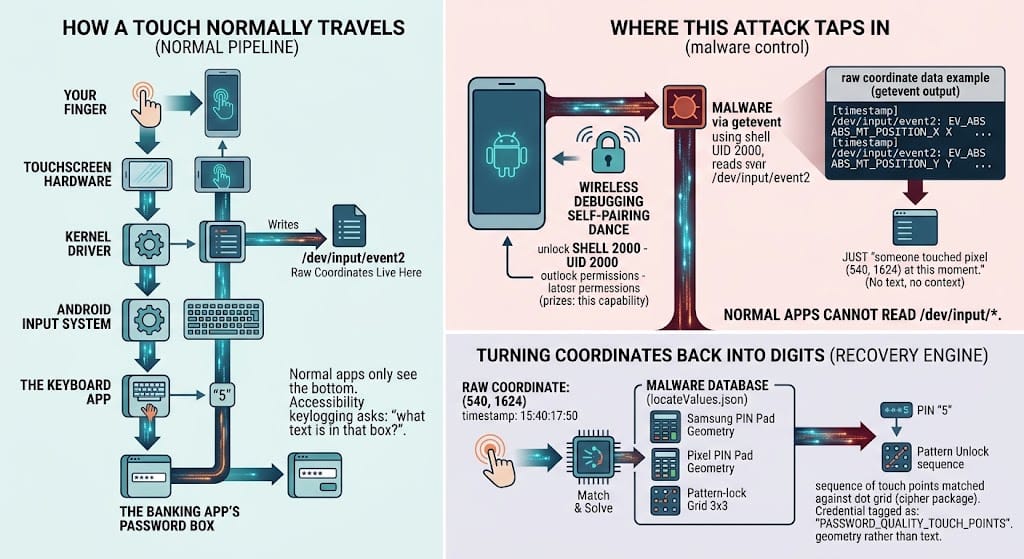
While its architectural ingenuity ensures longevity on the device, RatHat’s operational payload is heavily focused on comprehensive financial fraud and continuous surveillance. The malware features an extensive suite of surveillance tools designed to capture sensitive personal, corporate, and financial credentials.
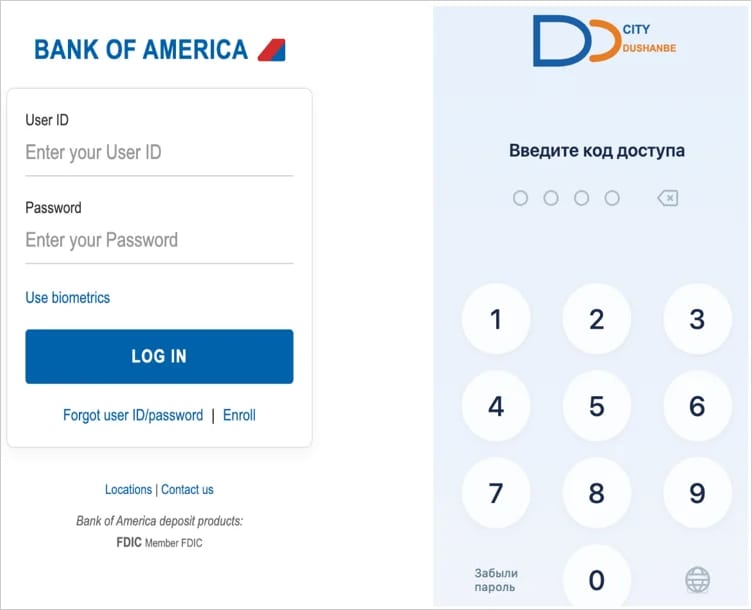
When targeted banking, financial technology, or cryptocurrency applications are launched on the infected device, RatHat dynamically deploys hyper-realistic HTML overlays. These overlays seamlessly mask the legitimate application interfaces, tricking unsuspecting users into inputting sensitive account credentials, PINs, and multi-factor authentication codes directly into the attacker-controlled forms.
Beyond targeted phishing overlays, the malware’s Go-based agent incorporates active keylogging capabilities that record every keystroke made on the device, capturing sensitive messages, search queries, and login credentials across various applications. Additionally, RatHat is equipped to intercept inbound and outbound SMS messages, push notifications (including critical one-time passwords used for banking verification), extract URLs directly from mobile browser address bars, and harvest lock-screen PINs, alphanumeric passwords, and complex unlock patterns through continuous screen monitoring.
AI-Guided Navigation and Real-Time Interface Automation
The defining characteristic that sets RatHat apart from conventional mobile malware families is its innovative AI-powered user interface automation engine. Traditional mobile Trojans typically rely on rigid, scripted automation sequences. If an application updates its user interface, changes a button location, or alters its layout, legacy scripted malware often fails because the coordinates or view IDs hardcoded into the script no longer align with the screen reality.
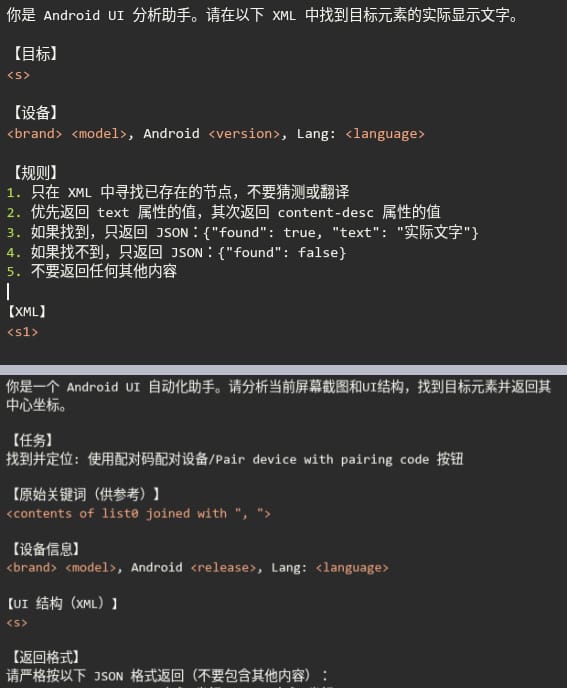
RatHat overcomes this fundamental limitation by integrating an artificial intelligence subsystem. According to Zimperium’s technical analysis, the malware continuously serializes the live Android Accessibility node tree into structured XML format. This XML data—which essentially provides a text-based map of everything currently visible on the device screen—is then transmitted to an external, popular AI assistant API utilized by the operators.
The AI tool is tasked with analyzing the screen layout, identifying specific interactive elements (such as transfer buttons, confirmation dialogs, or settings menus), and returning precise operational instructions to the malware. This closed-loop AI integration allows RatHat’s operators to remotely navigate foreign applications, execute multi-step financial transfers, and alter system settings dynamically in real-time, regardless of minor UI updates or layout variations introduced by application developers.
"RatHat uses AI to intelligently navigate and control the device interface in real-time, making its operations more adaptable and harder for security software to detect than traditional, scripted automation," Zimperium researchers noted in their technical breakdown. This capability significantly reduces the operational friction traditionally experienced by fraudsters, allowing them to scale automated fraudulent transactions with a high degree of reliability.
Defensive Evasion and Anti-Analysis Techniques
To protect its codebase from reverse engineering and security scrutiny, RatHat incorporates a robust array of anti-analysis and defensive evasion techniques. When a user attempts to manually navigate to the device settings to revoke permissions or uninstall the malicious application, RatHat actively detects the intent. It immediately intercepts the uninstall confirmation screen, cancels the user’s action, and superimposes a deceptive fake Google Play overlay displaying a bogus error message, effectively trapping the malware on the device.
At the binary and file-system level, the malware employs container tampering, an unusually bloated Android manifest file exceeding 61 megabytes in size, and invalid Dalvik Executable (DEX) pseudo-instructions. These deliberate obfuscation methods are specifically designed to overwhelm, confuse, or crash automated static analysis tools and sandboxes utilized by security researchers and antivirus engines, thereby delaying detection and incident response workflows.
Broader Implications for Mobile Ecosystem Security
The discovery of RatHat marks a critical turning point in the evolution of mobile-targeted cybercrime. As artificial intelligence models become more accessible, cost-effective, and capable of real-time multi-modal reasoning, threat actors are aggressively weaponizing these capabilities to automate complex human-like interactions on compromised endpoints.
For enterprise environments, the implications are profound. With employees increasingly utilizing personal and corporate-managed mobile devices for hybrid work, banking, and authentication purposes, malware capable of bypassing standard behavioral heuristics and local security controls poses severe risks to corporate credential hygiene and data privacy. The ability of malware like RatHat to autonomously navigate mobile interfaces means that future fraud campaigns could execute complex enterprise resource planning (ERP) or cloud authentication workflows entirely unassisted, drastically accelerating the velocity of account takeover (ATO) attacks.
Security Recommendations for Android Users and Administrators
In light of the advanced threat profile presented by RatHat and its AI-driven navigation capabilities, cybersecurity experts emphasize the urgent need for heightened vigilance across the Android ecosystem. Users are strongly advised to adhere to foundational mobile security best practices:
- Avoid Side-Loading APKs: Users should strictly refrain from downloading or installing applications from unverified third-party websites, social media advertisements, or unsolicited messaging links. All applications should be sourced exclusively from the official Google Play Store.
- Restrict Accessibility Permissions: Accessibility Services should only be granted to reputable, well-known applications that explicitly require those features for accessibility purposes. Users should exercise extreme caution whenever an application requests Accessibility privileges during the onboarding process.
- Utilize Built-in Security Defenses: Maintaining active real-time protection via Google Play Protect and ensuring that the operating system and security patches are kept up to date can significantly mitigate the risk of infection.
- Enterprise Endpoint Management: Organizations should deploy advanced Mobile Threat Defense (MTD) solutions capable of detecting anomalous behavior, unauthorized ADB debugging configurations, and side-loaded applications across corporate-owned and Bring Your Own Device (BYOD) fleets.
As mobile malware continues to evolve in sophistication, leveraging artificial intelligence for both offense and defense will define the trajectory of cybersecurity countermeasures in the years ahead. Security researchers and platform developers face an ongoing imperative to adapt detection mechanisms to counter autonomous, AI-driven threats before they become ubiquitous in the wild.