Mastering Social Media Performance: The Essential Guide to Analytics Tools and Data-Driven Strategy

The landscape of digital communication has undergone a profound transformation, evolving from an era of speculative content creation to one demanding precise, data-backed strategies. For many organizations and individual creators, the initial foray into consistent social media posting often reveals a perplexing inconsistency: some content garners immense attention, while other, seemingly similar efforts, fail to resonate. This dichotomy, once a source of frustration, is increasingly being demystified by the systematic application of social media analytics. By diligently monitoring performance metrics, content creators and marketers gain clarity, identifying successful engagement hooks, optimal posting schedules, and ideal content formats. This shift from intuition to data-driven decision-making is not merely an advantage but a fundamental necessity for achieving measurable impact in the crowded digital sphere.
The Evolution of Social Media Analytics: A Chronological Overview

The journey of social media analytics mirrors the rapid growth and maturation of social platforms themselves. In the early days of social media, metrics were rudimentary and largely confined to native platform dashboards. Basic counts of "likes," "shares," and "comments" provided a superficial glimpse into content performance, often leaving marketers to infer success rather than precisely quantify it. This initial phase was characterized by a heavy reliance on qualitative observation and trial-and-error, a stark contrast to today’s sophisticated analytical capabilities.
As social media platforms proliferated and audiences fragmented across multiple channels, the limitations of native insights became glaringly apparent. Marketers found themselves manually compiling data from disparate dashboards, a time-consuming and inefficient process that often led to incomplete or inconsistent reporting. The lack of cross-platform integration meant a holistic view of campaign performance was virtually impossible to achieve without significant manual effort. Furthermore, native tools frequently omitted crucial details, such as timestamps for past LinkedIn posts, hindering efforts to pinpoint optimal engagement periods.
The modern era has witnessed the rise of sophisticated third-party social media analytics tools, designed to address these challenges head-on. These platforms aggregate data from multiple social networks into unified dashboards, offering a comprehensive and integrated view of performance. This evolution has been propelled by advancements in data science, artificial intelligence (AI), and machine learning (ML), enabling tools to move beyond simple data collection to provide deeper insights, competitive benchmarking, sentiment analysis, and even predictive recommendations. The global social media analytics market is projected to reach substantial valuations in the coming years, underscoring its growing importance to businesses of all sizes seeking to optimize their digital presence.
Understanding Social Media Analytics: Definitions and Distinctions
Social media analytics encompass the collection, measurement, analysis, and interpretation of data from social media platforms to understand and optimize content performance. Key metrics include reach (the number of unique users who saw your content), impressions (the total number of times your content was displayed), engagement rate (the percentage of your audience that interacted with your content), click-through rate (CTR), and follower growth. Beyond mere numbers, these analytics aim to explain why certain content succeeds and to guide future content strategy.
While often used interchangeably, "social media analytics" and "social media data analysis" represent distinct but related processes. Analytics refers to the raw numbers and metrics themselves—the "what." Data analysis, conversely, is the act of delving into these numbers, spotting patterns, identifying trends, and deriving actionable conclusions—the "why" and "what next." Similarly, "analytics" and "reporting" are two sides of the same coin. Analytics involves the collection and measurement of data, answering "what happened?" and "why?" Reporting takes that analysis and presents it in a clear, digestible format for stakeholders, clients, or internal teams, often leveraging dashboards, PDFs, or branded presentations. The most effective tools seamlessly integrate both functions, streamlining the workflow from raw data to executive-ready insights.
The field of analytics can be broadly categorized into four types, each offering increasing levels of sophistication and strategic value:
- Descriptive Analytics: This is the most basic form, focusing on "what happened." It involves presenting raw data such as impressions, likes, shares, and comments. Most native social media dashboards and entry-level third-party tools excel here.
- Diagnostic Analytics: Moving beyond mere description, diagnostic analytics aim to understand "why it happened." This involves investigating the root causes of performance trends, such as analyzing content types, posting times, or audience demographics to explain spikes or dips in engagement.
- Predictive Analytics: Leveraging historical data and statistical models, predictive analytics attempt to forecast "what will happen." This could include predicting future engagement rates for certain content themes or identifying emerging trends before they become mainstream. These capabilities are typically found in more advanced, premium tools.
- Prescriptive Analytics: The most advanced form, prescriptive analytics go a step further by recommending "what you should do." Powered by AI and machine learning, these tools offer actionable advice based on data analysis, such as suggesting optimal content topics, posting times, or even specific calls to action to achieve desired outcomes.
The Limitations of Native Insights and the Rise of Third-Party Solutions
While all major social media networks provide their own native insights dashboards, relying solely on them presents significant limitations for comprehensive social media management.
Firstly, native insights often lack the depth and specific metrics required for strategic decision-making. As highlighted, LinkedIn, for example, does not provide timestamps on past posts, making it challenging to identify precise peak engagement times. This omission can hinder efforts to refine posting schedules for maximum audience reach and interaction.
Secondly, the fragmented nature of native insights poses a considerable hurdle for multi-platform strategies. A business running a large-scale campaign across Facebook, Instagram, TikTok, and X would need to manually consolidate data from four separate dashboards, a laborious process prone to errors and inconsistencies. Third-party tools overcome this by centralizing data, offering a unified view of performance across all connected channels and enabling cross-platform analysis of campaign effectiveness.
Finally, native platforms are inherently designed to promote their own ecosystems, meaning their analytics may not offer the objective, comparative insights that businesses need to benchmark against competitors or identify broader industry trends.
This is precisely where third-party social media analytics tools prove invaluable. They offer:
- Consolidated Dashboards: A single interface to view and analyze data from all connected social media profiles.
- Deeper Insights: Access to metrics not available natively, or presented with greater granularity.
- Competitive Analysis: Features to benchmark performance against competitors, identify their successful strategies, and uncover market gaps.
- Historical Data: Retention of data for extended periods, enabling long-term trend analysis and strategic planning.
- Advanced Features: AI-powered sentiment analysis, content recommendations, predictive modeling, and automated reporting.
Navigating the Ecosystem: Dedicated Tools vs. Management Suites
The choice between a dedicated social media analytics tool and a comprehensive social media management suite often depends on specific organizational needs and existing workflows.
- Social Media Management Software: These all-in-one platforms integrate analytics with other crucial functions like content scheduling, audience engagement (social inbox), content curation, and team collaboration. They are ideal for individual creators, one-person marketing teams, or small businesses seeking to streamline their entire social media operation from a single dashboard. The convenience of having everything in one place often outweighs the need for hyper-specialized analytics features.
- Dedicated Social Media Analytics Tools: These tools focus exclusively on performance measurement and reporting. They are best suited for organizations that already manage other aspects of their social media strategy (either manually or with other tools) but require deep, specialized insights that a management suite might not provide. This includes needs like advanced competitive intelligence, in-depth market research, granular sentiment analysis, or highly customized reporting for diverse stakeholders. For larger agencies or enterprises, integrating a dedicated analytics tool alongside a management platform can provide a robust, multi-layered approach to social media intelligence.
Key Criteria for Selecting a Social Media Analytics Tool
Choosing the right social media analytics tool is a strategic decision that can significantly impact a business’s digital performance. Several key criteria should guide the selection process:
- Supported Platforms: Ensure the tool integrates with all the social media networks relevant to your strategy, including emerging platforms.
- Depth of Analytics: Evaluate whether the tool provides the specific metrics and insights you need, from basic engagement rates to advanced audience demographics, sentiment analysis, or competitive benchmarking.
- Reporting Capabilities: Assess the ease of generating customizable, shareable reports (e.g., PDF, CSV, branded dashboards) for internal teams and external stakeholders.
- Ease of Use: A user-friendly interface and intuitive navigation are crucial for efficient data analysis, regardless of team size.
- AI and Automation: Consider tools with AI-powered features for content recommendations, sentiment analysis, or automated insights to save time and enhance strategic planning.
- Integrations: Check for compatibility with other marketing tools in your tech stack, such as Google Analytics, CRM systems, or ad platforms, for a holistic view of marketing performance.
- Pricing Model: Evaluate the cost-effectiveness, considering free tiers, trial periods, and how pricing scales with additional users, channels, or features.
- Competitive Analysis: For agencies or competitive markets, robust competitor benchmarking features are essential.
- Customer Support and Resources: Access to helpful support, tutorials, and a knowledge base can be critical for maximizing tool utility.
A Comprehensive Review of Leading Social Media Analytics Platforms (2026)
The market for social media analytics tools is diverse, with solutions tailored to various needs, from solo creators to large enterprises. Here’s an overview of some of the leading platforms, categorized by their primary strengths:
| Social media analytics tool | Best for | Price | Free tier? | Supported social media platforms |
|---|---|---|---|---|
| Buffer | Creators, growing teams, and agencies | Free; paid plans from $6/mo | ✓ Yes | Bluesky, Facebook, Instagram, LinkedIn, Mastodon, Pinterest, Threads, TikTok, X, YouTube |
| Rival IQ | Large agencies | From $239/mo | 14-day trial | Facebook, Instagram, LinkedIn, TikTok, X, YouTube |
| Keyhole | Market research | Not publicly available | Contact sales | Facebook, Instagram, LinkedIn, TikTok, X, YouTube |
| Social Status | Small businesses running ads and influencer partnerships | From $99/mo | ✓ Yes | Facebook, Instagram, LinkedIn, TikTok, X, YouTube |
| Siftsy | Analyzing your comments | Not publicly available | Contact sales | Instagram, LinkedIn, TikTok, X, YouTube |
| Vista Social | Tracking reviews and social metrics | From $79/mo | 14-day trial | Bluesky, Facebook, Google Business, Instagram, LinkedIn, Pinterest, Reddit, Threads, TikTok, X, Yelp, YouTube, and more |
| Typefully | X (formerly Twitter) focused | Free; paid from $16/mo | ✓ Yes | Bluesky, LinkedIn, Mastodon, Threads, X |
| Tailwind | Pinterest users | From $29.99/mo | ✓ Yes | Facebook, Instagram, Pinterest |
| DashThis | All-in-one marketing dashboard | From $49/mo | 15-day trial | Facebook, Instagram, LinkedIn, Pinterest, TikTok, YouTube |
| Socialinsider | AI-driven content pillar insights | From $99/mo | 14-day trial | Facebook, Instagram, LinkedIn, TikTok, X, YouTube |
| Talkwalker | In-depth audience insights | Not publicly available | Contact sales | Facebook, Instagram, X |
1. Buffer: Holistic Management for Growing Teams
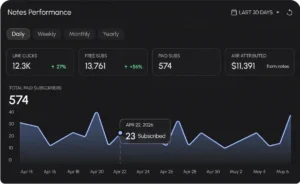
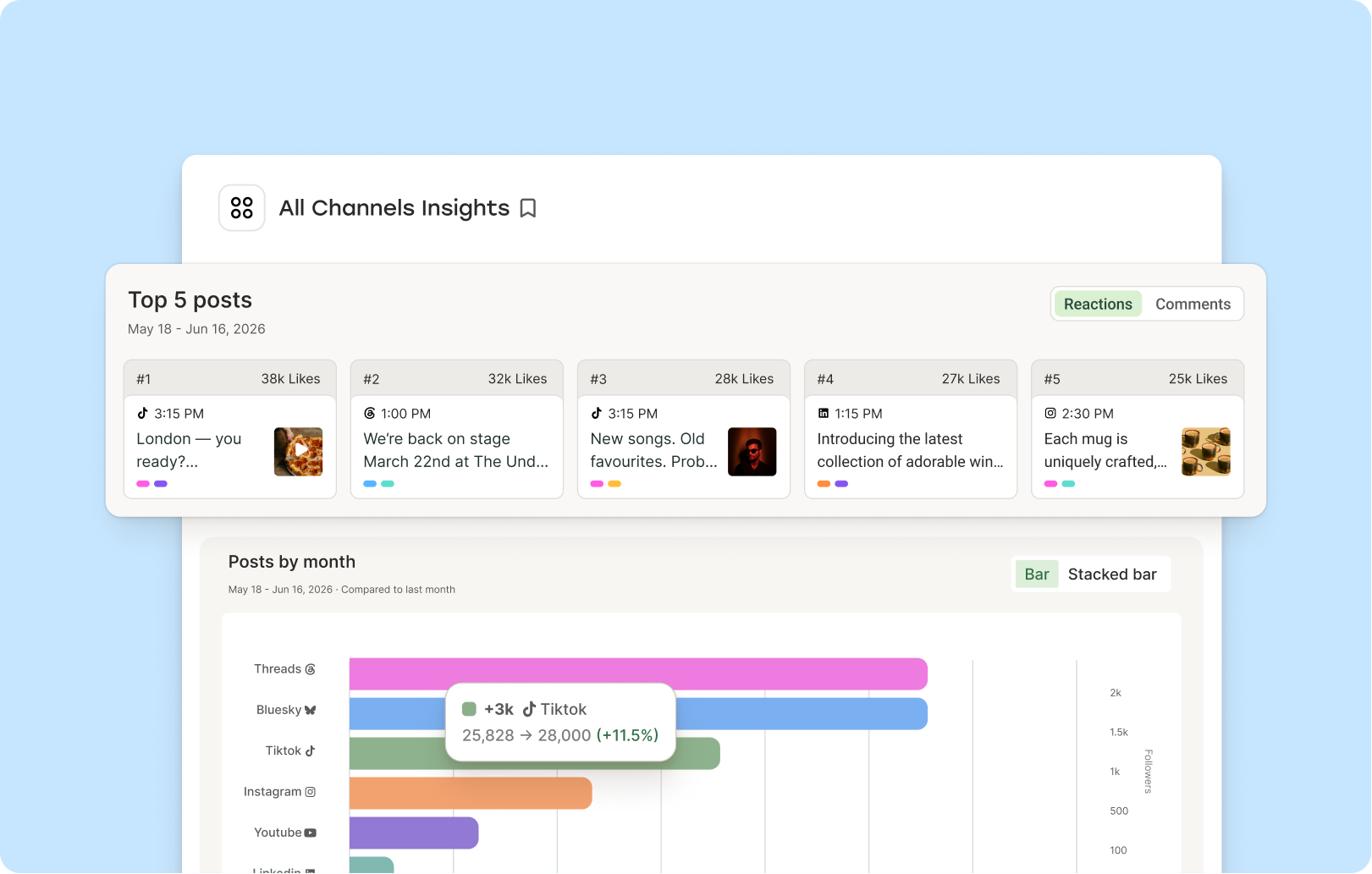
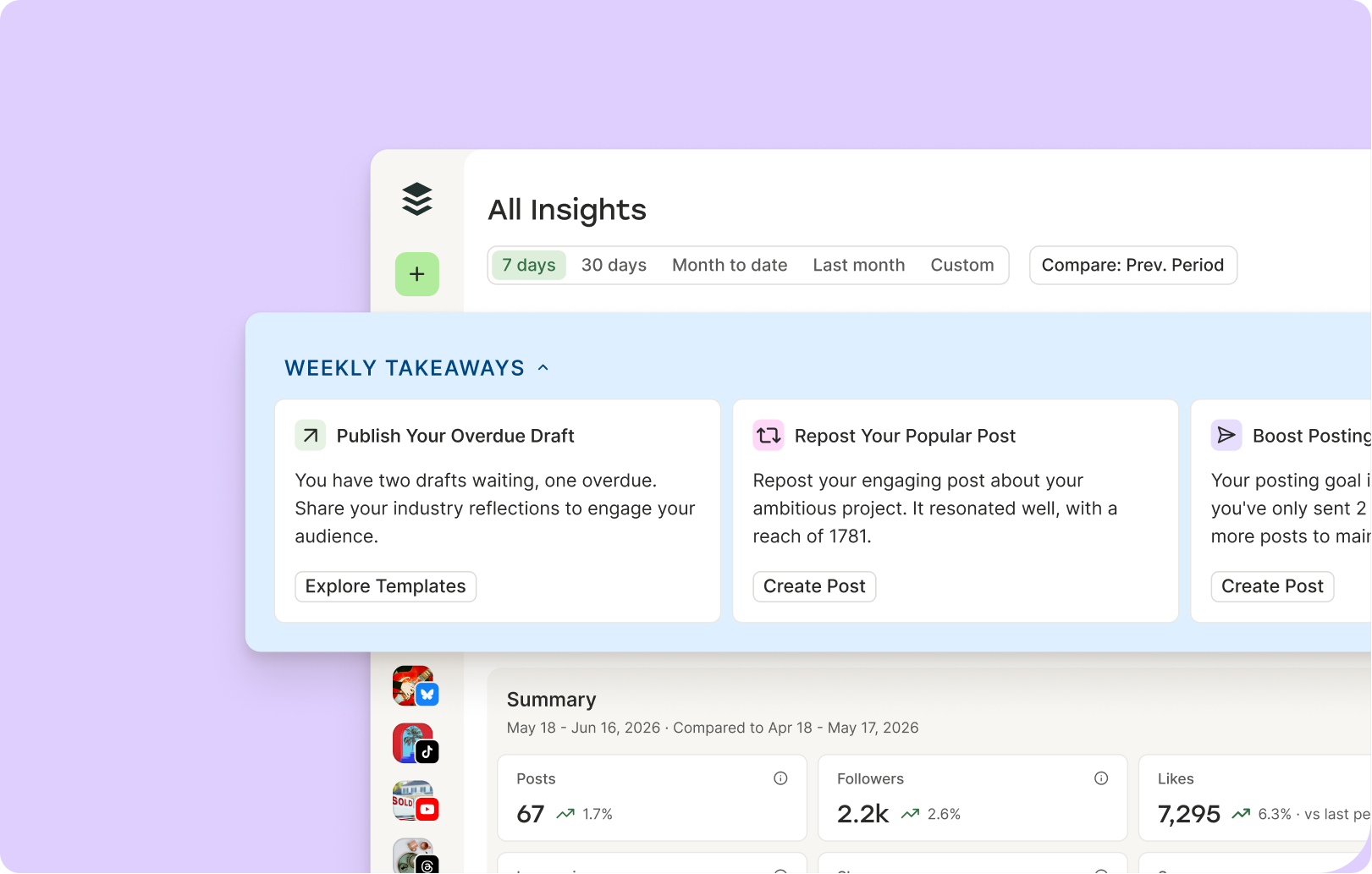
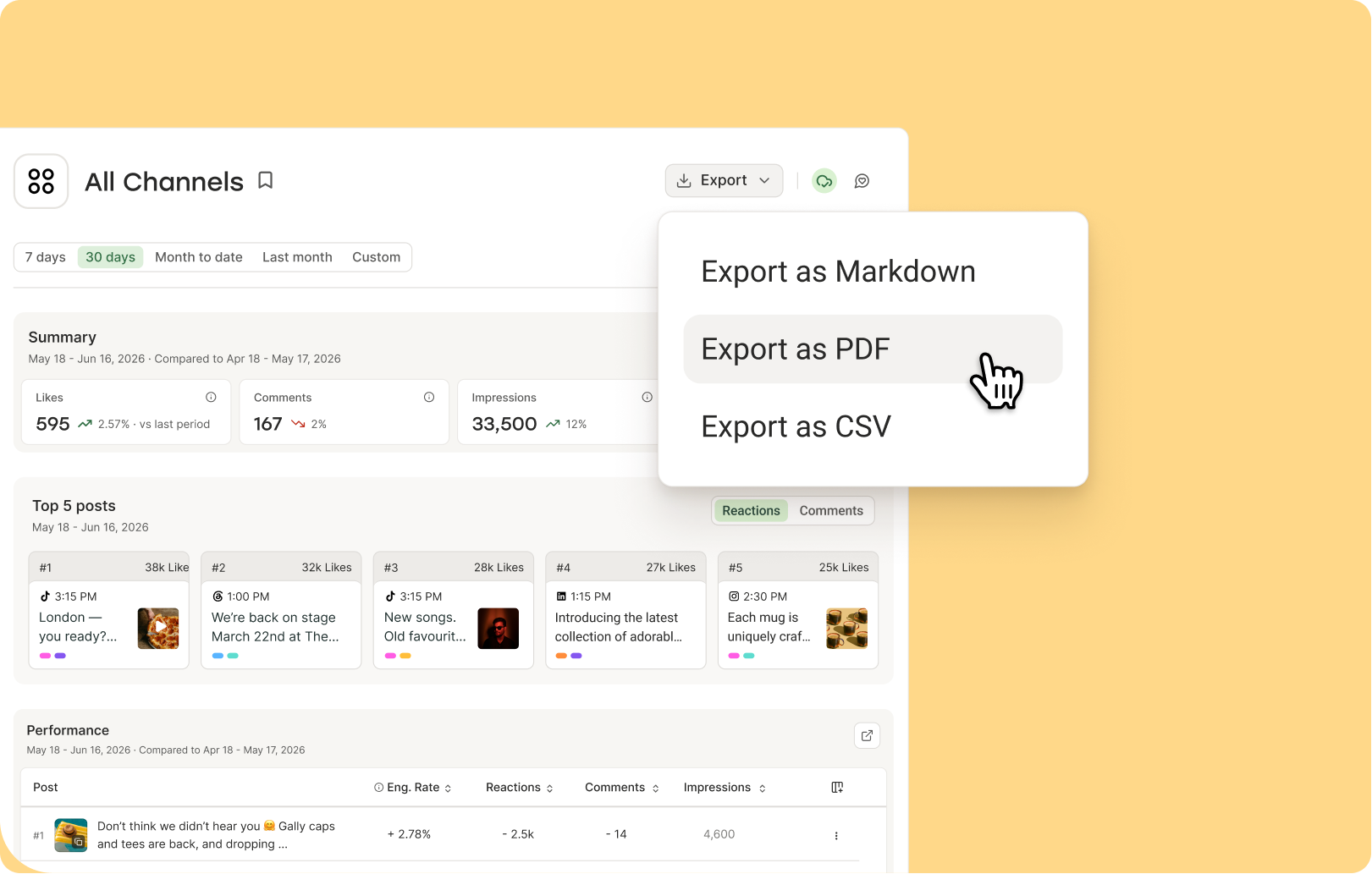
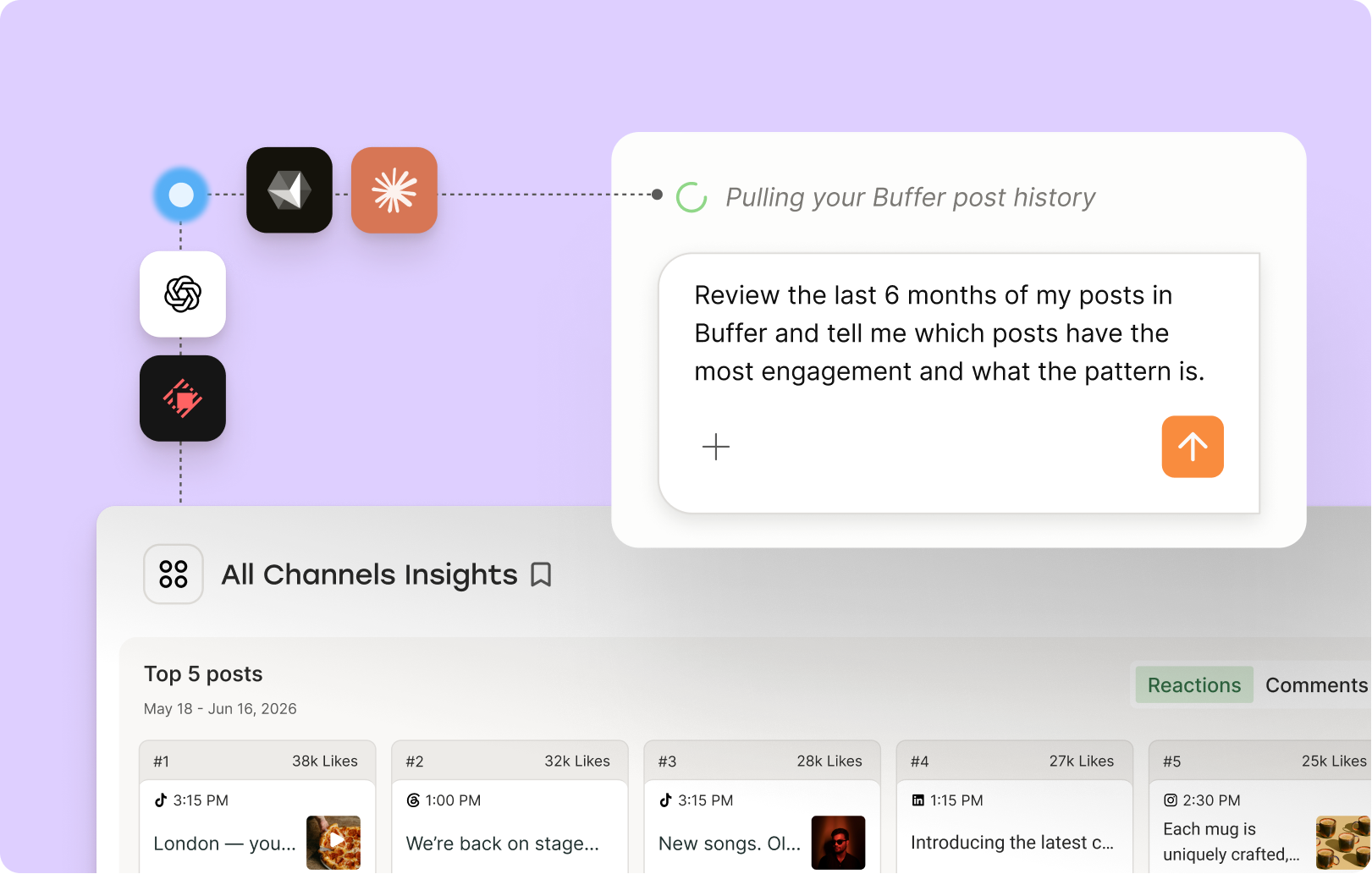
Buffer stands out as a robust social media management platform with an intuitive analytics dashboard, "Insights." It streamlines the process of understanding performance by surfacing key metrics and offering AI-powered "Takeaways." These observations identify successful content, suggest older posts for resharing, and even provide prompts for new content creation based on past performance. Buffer’s ability to consolidate data across over 10 networks (including Bluesky, Threads, and Mastodon) into a single, aesthetically pleasing dashboard makes it ideal for creators, growing teams, and agencies seeking an integrated scheduling and analytics solution. Its reporting features allow for easy export of PDF or CSV reports, facilitating seamless communication with stakeholders.
2. Rival IQ: Enterprise-Grade Competitive Intelligence
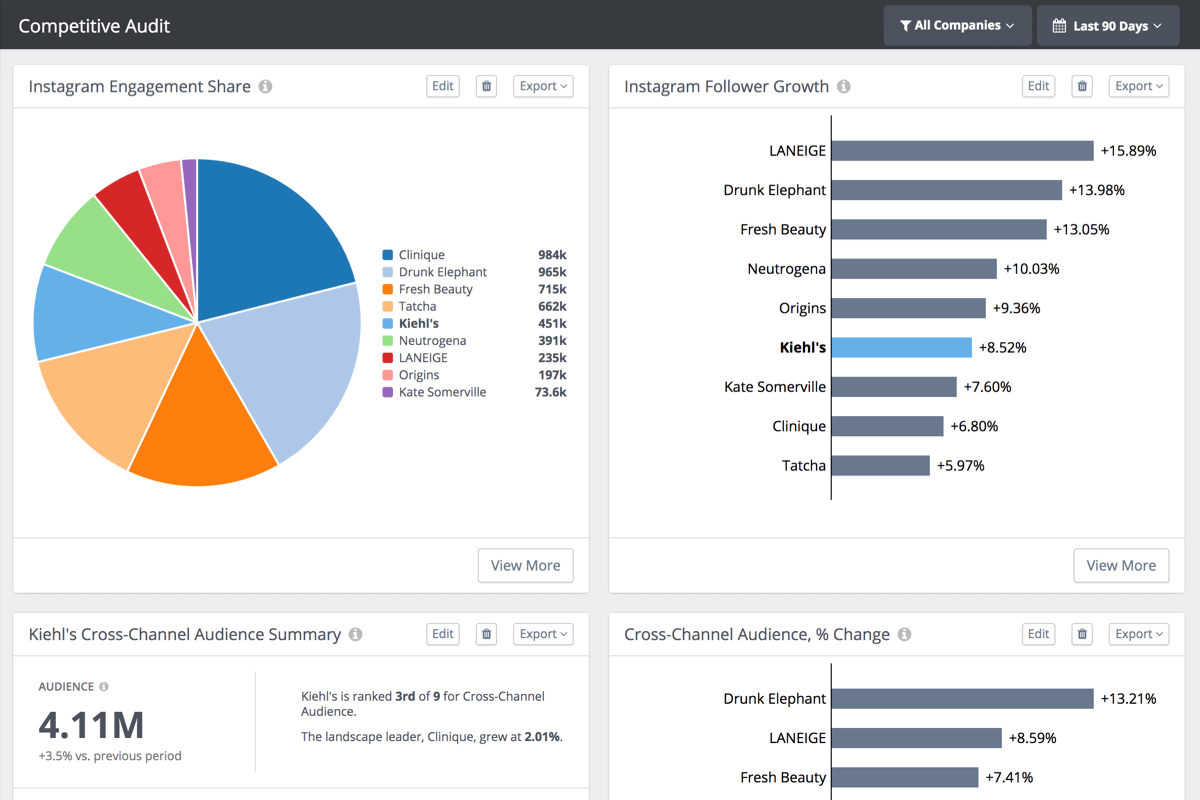
Tailored for large agencies, Rival IQ excels in competitive benchmarking. It provides in-depth social media analytics, competitor analysis, and social listening features within a single platform. Its unique capabilities include identifying boosted competitor posts, comparing brand positioning across social profiles, and benchmarking performance against chosen competitors within a specific niche. This comprehensive competitive intelligence is invaluable for agencies crafting data-driven strategies for their clients. Rival IQ’s pricing structure reflects its enterprise focus, making it a powerful investment for organizations with significant competitive analysis needs.
3. Keyhole: Deep Market Research and Historical Trends
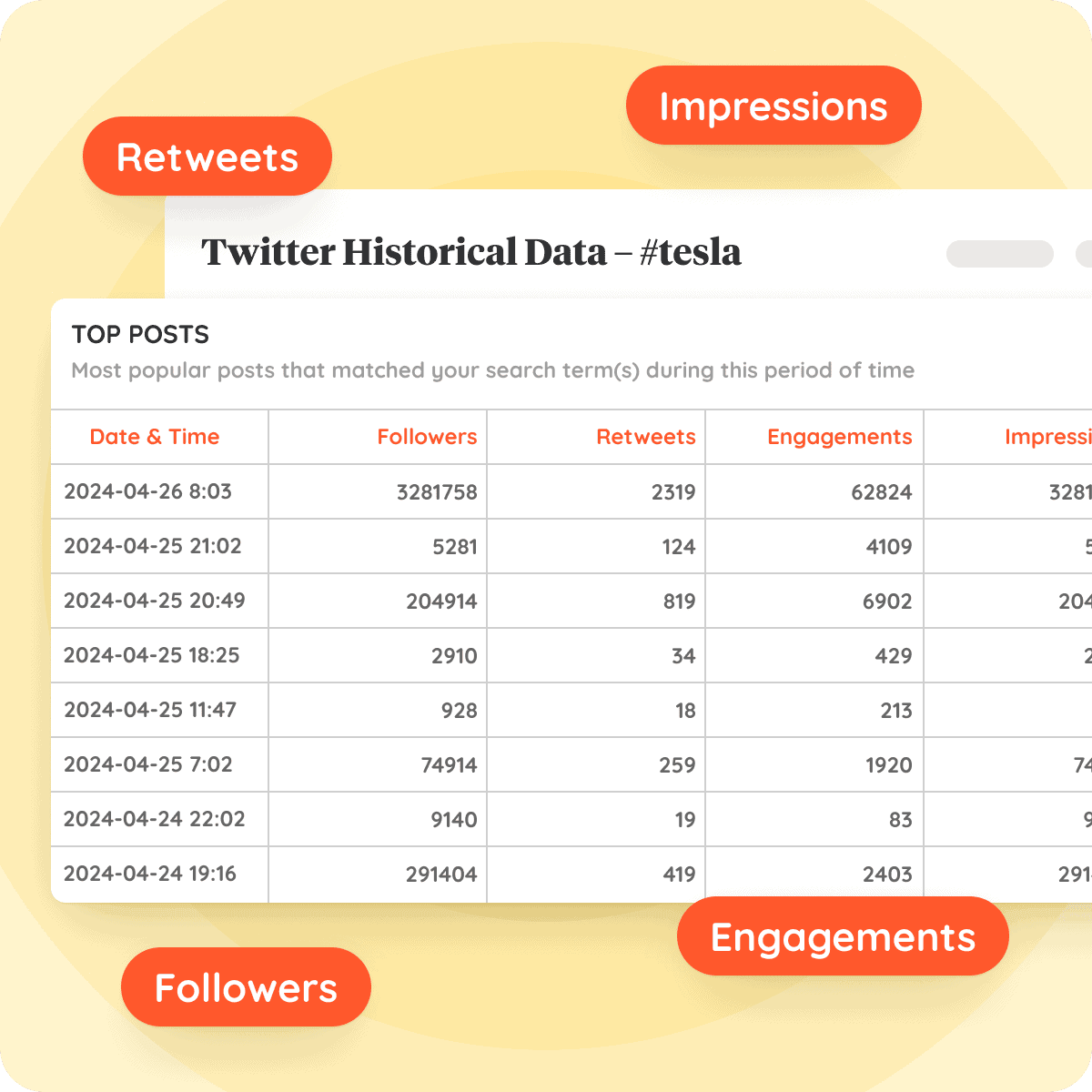
Keyhole specializes in historical insights and market research, particularly valuable for understanding long-term conversations and trend evolution. It offers the ability to unlock data stretching back a decade, primarily for X (formerly Twitter), allowing users to analyze shifts in audience sentiment and identify enduring topics. Keyhole’s machine learning system can pinpoint emerging trends in real-time, providing powerful insights for product development and content strategy. While its historical depth for X is unparalleled, the additional cost for these reports and limited platform scope for deep historical dives are considerations.
4. Social Status: Ad & Influencer Performance for SMBs
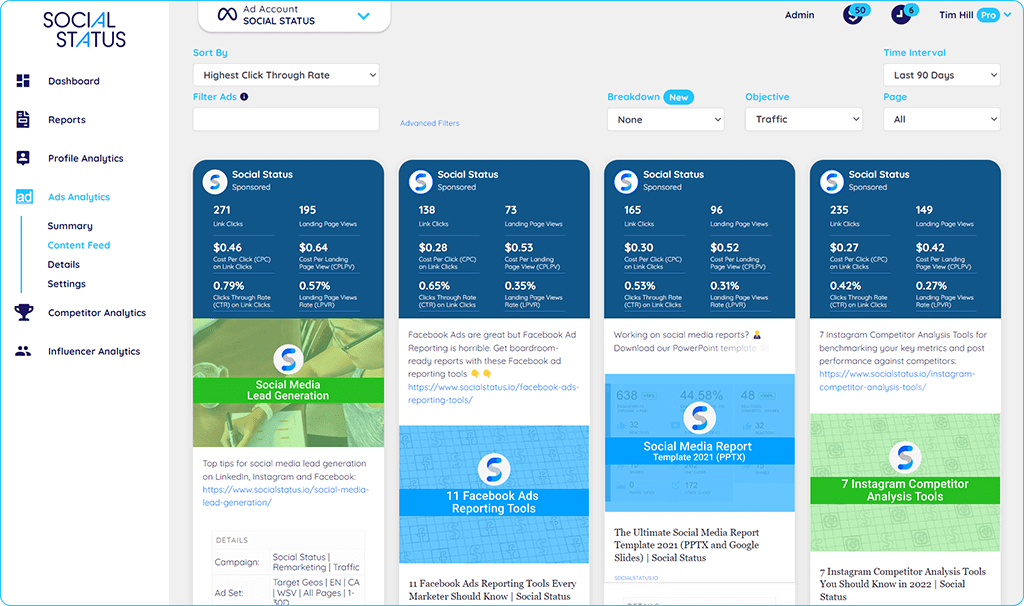
Social Status is a strong contender for small businesses managing both organic and paid social media strategies, including influencer partnerships. Beyond standard KPIs, it offers ad performance analytics (impressions, clicks, conversions), ROI tracking for influencer campaigns, and user-generated content (UGC) tracking. This integrated approach allows small businesses to consolidate insights from diverse marketing efforts into one dashboard, simplifying the complex task of measuring mixed social media strategies.
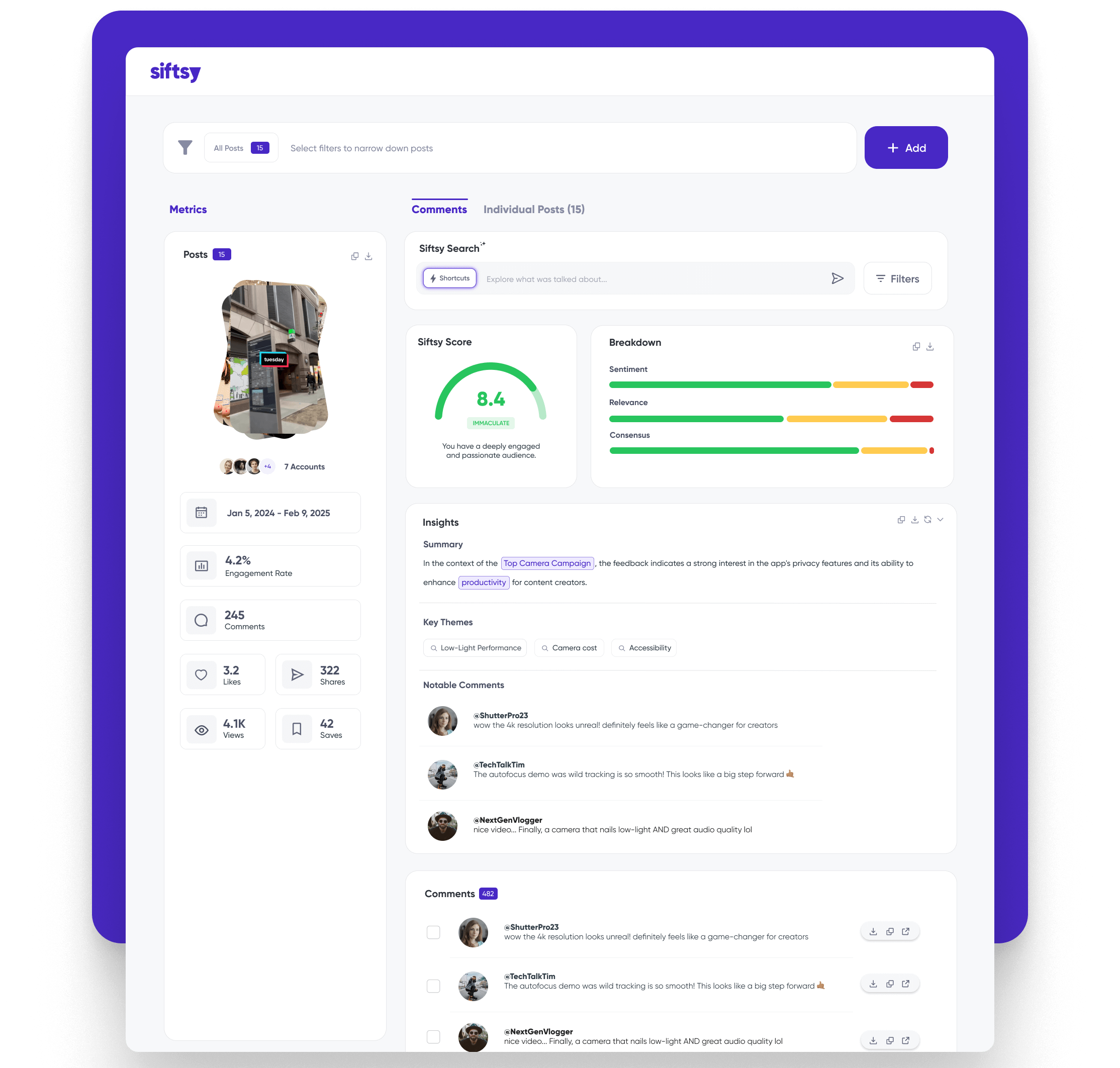
5. Siftsy: Advanced Comment and Sentiment Analysis
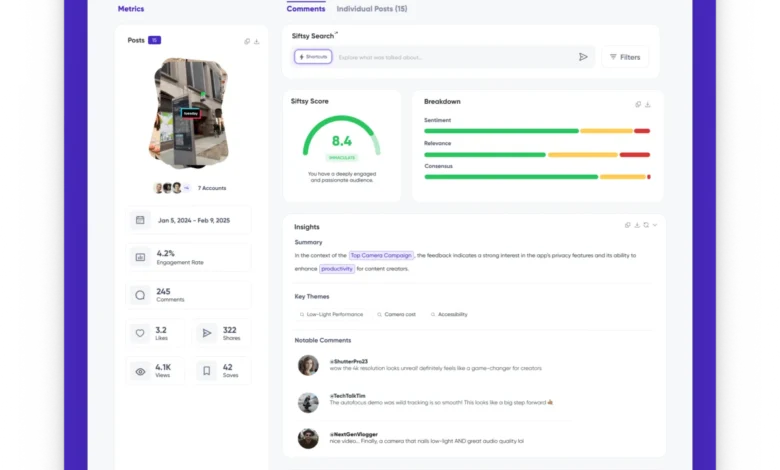
Siftsy addresses a critical gap in many analytics tools: the qualitative insights hidden within comments. By leveraging AI to analyze sentiment across multiple channels, Siftsy helps users understand the "why" behind engagement numbers. It can identify common themes in audience feedback, highlight specific conversations, and summarize key takeaways, making it an invaluable tool for product feedback, customer service improvements, and content ideation. This deep dive into audience reactions complements quantitative data for a more nuanced understanding of content resonance.
6. Vista Social: Reputation Management and Multi-Channel Tracking
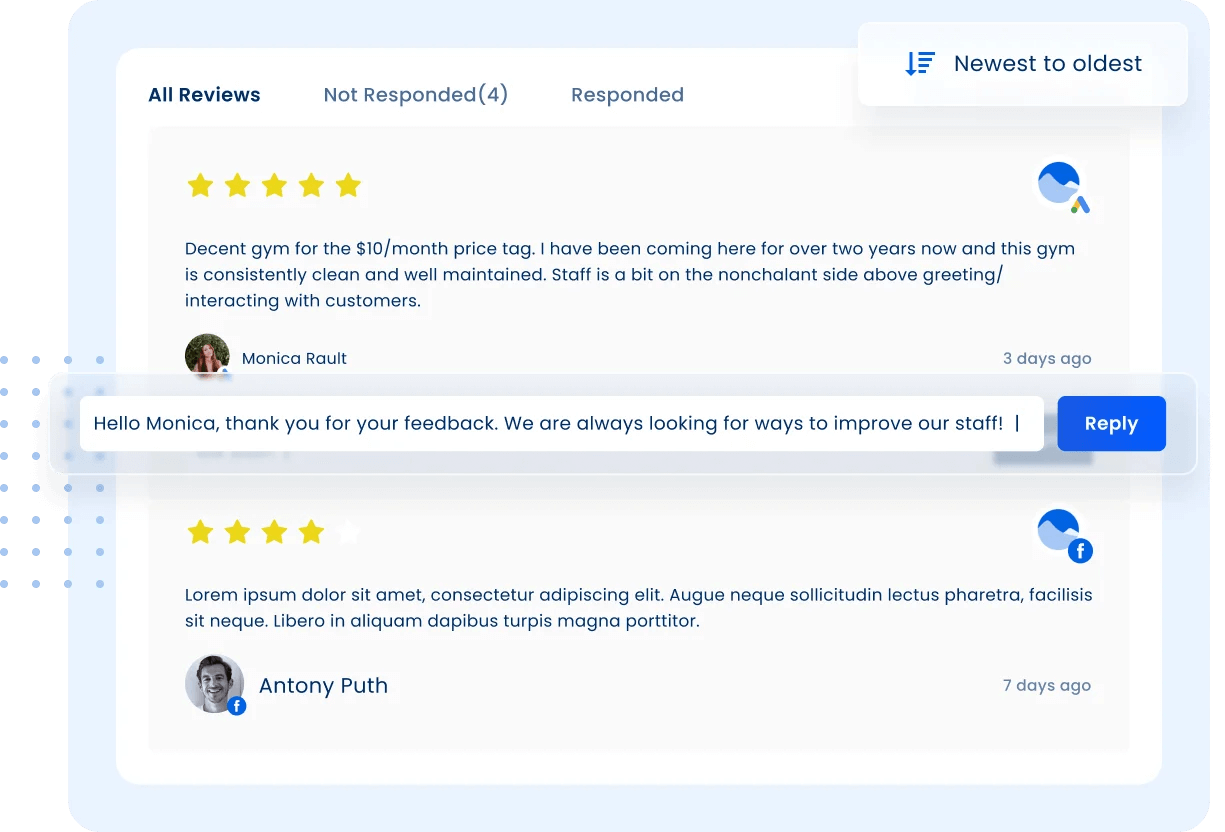
Vista Social is a comprehensive social media management platform that extends its capabilities to robust review management. It pulls feedback from numerous review sites (e.g., Google Business, Yelp, Trustpilot) into a single dashboard, enabling businesses to monitor, analyze, and respond to customer reviews efficiently. This integration of social media metrics with reputation management provides a holistic view of brand perception and customer satisfaction across a wide array of platforms, including niche ones like OpenTable and TripAdvisor.
7. Typefully: X-Centric Deep Dive
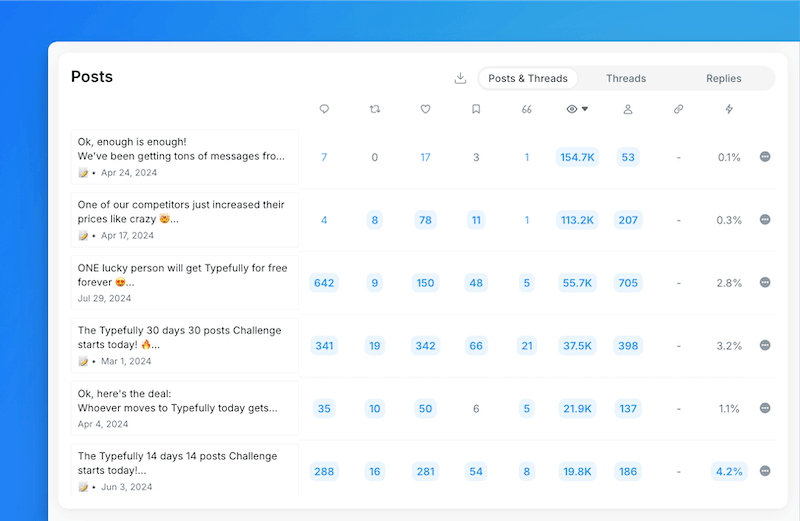
For users primarily focused on X (formerly Twitter), Typefully offers unparalleled specialized analytics. Beyond standard metrics like impressions and follower growth, it provides unique insights such as "profile conversion rate"—the percentage of profile visitors who convert into followers. This metric offers crucial data on profile optimization and audience appeal. Typefully also excels in its user experience for drafting X threads, offering features like "viral thread hooks" for inspiration, making it a go-to for X power users and content creators.
8. Tailwind: Pinterest and Visual Content Optimization
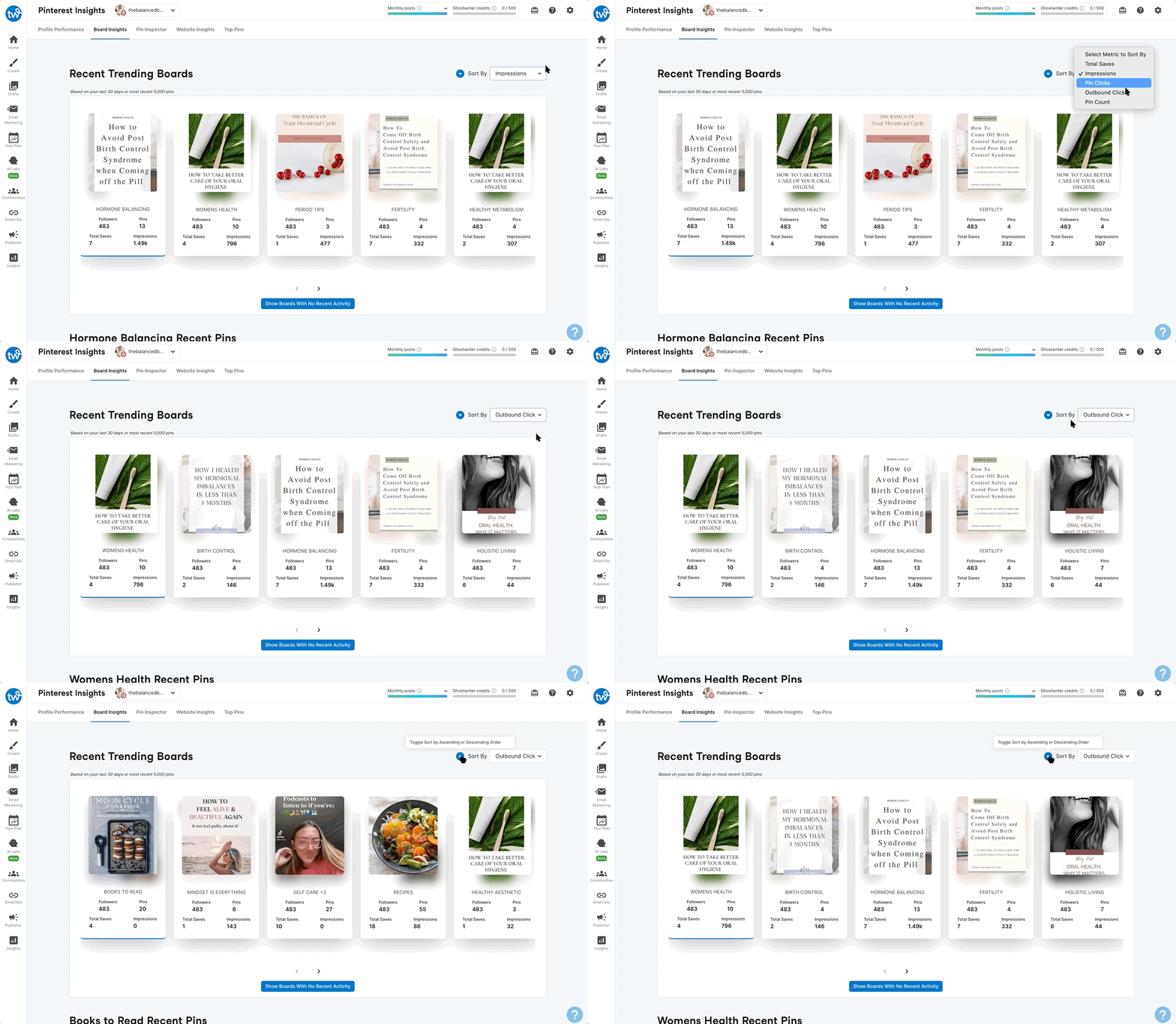
Tailwind is the quintessential tool for businesses leveraging Pinterest for traffic generation. Recognizing Pinterest’s dual function as a social network and a search engine, Tailwind offers specialized analytics that integrate with Google Analytics to track which pins drive the most website traffic. It provides granular data on individual pins, boards, and trends, allowing users to optimize visual content strategies for maximum reach and engagement. Its focus on Pinterest-specific KPIs makes it indispensable for visual marketers.
9. DashThis: Unified Marketing Performance Dashboards
DashThis is not solely a social media tool but a powerful all-in-one marketing dashboard designed to consolidate data from various marketing channels. It allows users to combine social media metrics with data from Google Analytics, ad platforms (Meta, TikTok, Google Ads), SEO tools (Ahrefs), and CRM systems (HubSpot) into a single, comprehensive report. This is particularly beneficial for marketing teams needing to demonstrate the integrated impact of their efforts and prove social media’s ROI within a broader marketing context. Its unlimited users and data sources per plan make it ideal for large, multi-faceted marketing operations.
10. Socialinsider: AI-Driven Content Pillar Insights
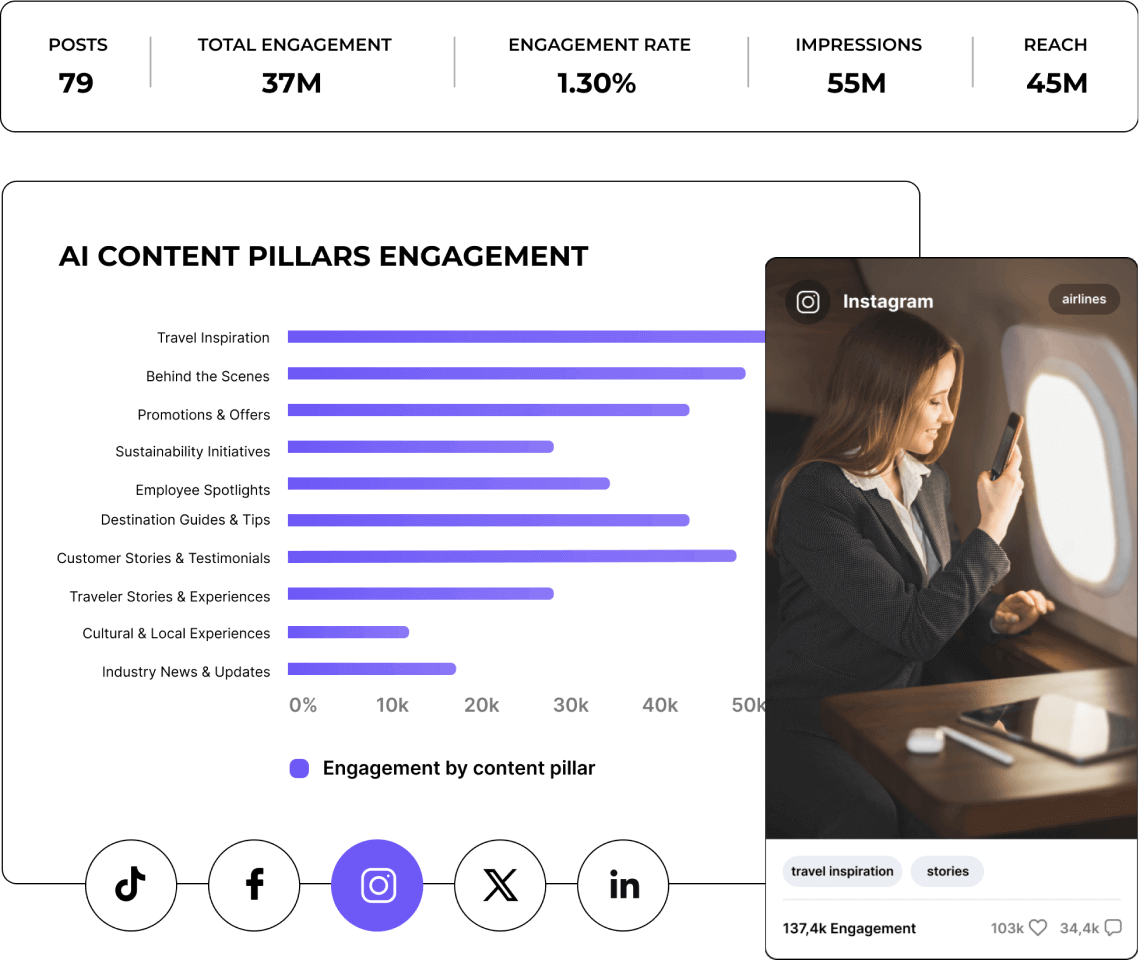
Socialinsider offers advanced, AI-driven insights specifically for optimizing content pillars. It allows users to tag and group social media posts to monitor the collective performance of campaigns or content themes. Its higher-tier plans include AI-driven competitor analysis, enabling users to identify successful content pillars used by competitors and adapt them for their own strategy. While powerful for strategic content planning, its premium features are generally geared towards larger teams or agencies with a dedicated budget for advanced analytics.
11. Talkwalker: Comprehensive Audience and Sentiment Intelligence
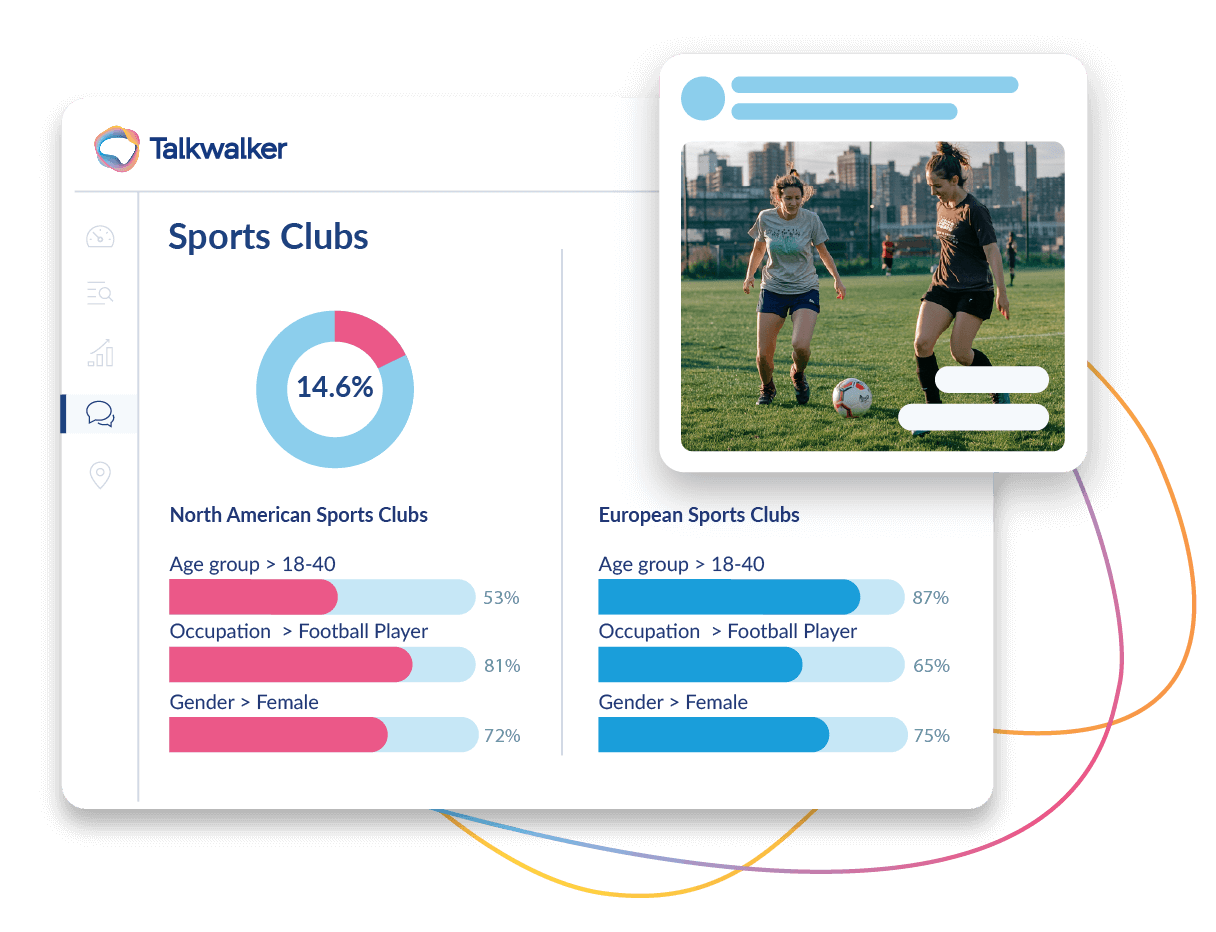
Talkwalker distinguishes itself with exceptional audience analytics and sentiment intelligence. It can pull insights from diverse sources, including customer calls, support tickets, and online communities, then segment audiences by demographics to understand their specific interests. This granular audience understanding is invaluable for content ideation and personalized marketing. With its AI assistant, Yeti, users can quickly access relevant insights about various audience segments. Talkwalker’s acquisition by Hootsuite in 2024 further integrates its deep analytics capabilities with a broader social media management suite, though many advanced features remain in higher-tier plans.
Strategic Application: Transforming Data into Actionable Insights
Possessing a powerful analytics tool is only half the equation; the other half involves strategically applying the data to refine and improve social media strategies. Industry experts consistently emphasize a systematic approach to ensure analytics translate into tangible results.
- Start with Your Goal, Not the Metric: Avoid "data overload" by aligning analytics with specific business objectives. If the goal is brand awareness, track reach and impressions. For engagement, focus on likes, comments, and shares. For lead generation, monitor click-through rates and conversions. Metrics that do not directly contribute to a defined goal should be de-prioritized to maintain focus.
- Consolidate Data into One View: The friction of logging into multiple native dashboards can deter consistent analysis. Utilizing a third-party tool that aggregates data from all active social channels into a single, unified dashboard is crucial. This integrated view allows for quick cross-platform comparisons and a holistic understanding of performance without manual data compilation.
- Look for the ‘Why,’ Not Just the ‘What’: Raw numbers reveal what happened, but strategic insights come from understanding why. Analyze which content formats (e.g., video, image carousel, text-only) perform best, what topics resonate most, or which calls to action drive conversions. Tools with AI-powered insights or sentiment analysis can significantly aid in uncovering these causal relationships.
- Establish a Consistent Cadence: Regular review of analytics is paramount. A quick weekly check helps identify immediate trends, top-performing posts, and optimal engagement times. A more in-depth monthly review allows for evaluating long-term trends, assessing campaign performance, and making strategic adjustments. For active campaigns, daily monitoring ensures real-time optimization.
- Automate Reporting: To minimize manual effort and ensure consistent communication, transform analytical findings into repeatable reports. Many third-party tools offer customizable report templates, allowing for the generation of polished PDF or CSV reports for clients, managers, or internal teams with just a few clicks. This automation frees up valuable time for strategic thinking and creative execution.
The Broader Implications: ROI, Competitive Edge, and Future Trends
The strategic application of social media analytics has profound implications for businesses. It directly impacts Return on Investment (ROI) by enabling marketers to optimize spending on content creation and advertising, ensuring resources are allocated to strategies that demonstrably yield results. By identifying which content drives traffic and conversions, organizations can refine their approaches, leading to increased efficiency and greater profitability.
Furthermore, robust analytics provide a significant competitive edge. Understanding competitor strategies, identifying market gaps, and responding to emerging trends faster than rivals can position a brand as a leader. This proactive approach, fueled by data, allows businesses to adapt to dynamic market conditions and audience preferences, ensuring long-term relevance and growth.
The future of social media analytics is poised for even greater sophistication. The integration of advanced AI and machine learning will continue to evolve, offering more precise predictive models and highly personalized prescriptive recommendations. Real-time sentiment analysis, deep audience segmentation, and the ability to correlate social data with broader business intelligence systems will become standard. Ethical considerations regarding data privacy and responsible AI use will also play an increasingly critical role in shaping the development and deployment of these tools.
In essence, social media analytics has transitioned from a supplementary function to an indispensable core component of any successful digital strategy. It empowers businesses to move beyond guesswork, fostering a culture of continuous learning and optimization that drives engagement, audience growth, and ultimately, measurable business outcomes.
Frequently Asked Questions (FAQs)
What exactly is a social media analytics tool?
A social media analytics tool gathers data from your various social media accounts and presents it in an organized, interpretable format. This data typically includes metrics like reach, impressions, engagement rates, click-through rates, and audience demographics. Beyond raw numbers, these tools aim to provide actionable intelligence, helping you understand not just that a post performed well, but why it did, and what strategic actions to take next.
What is the purpose of a social media analytics dashboard?
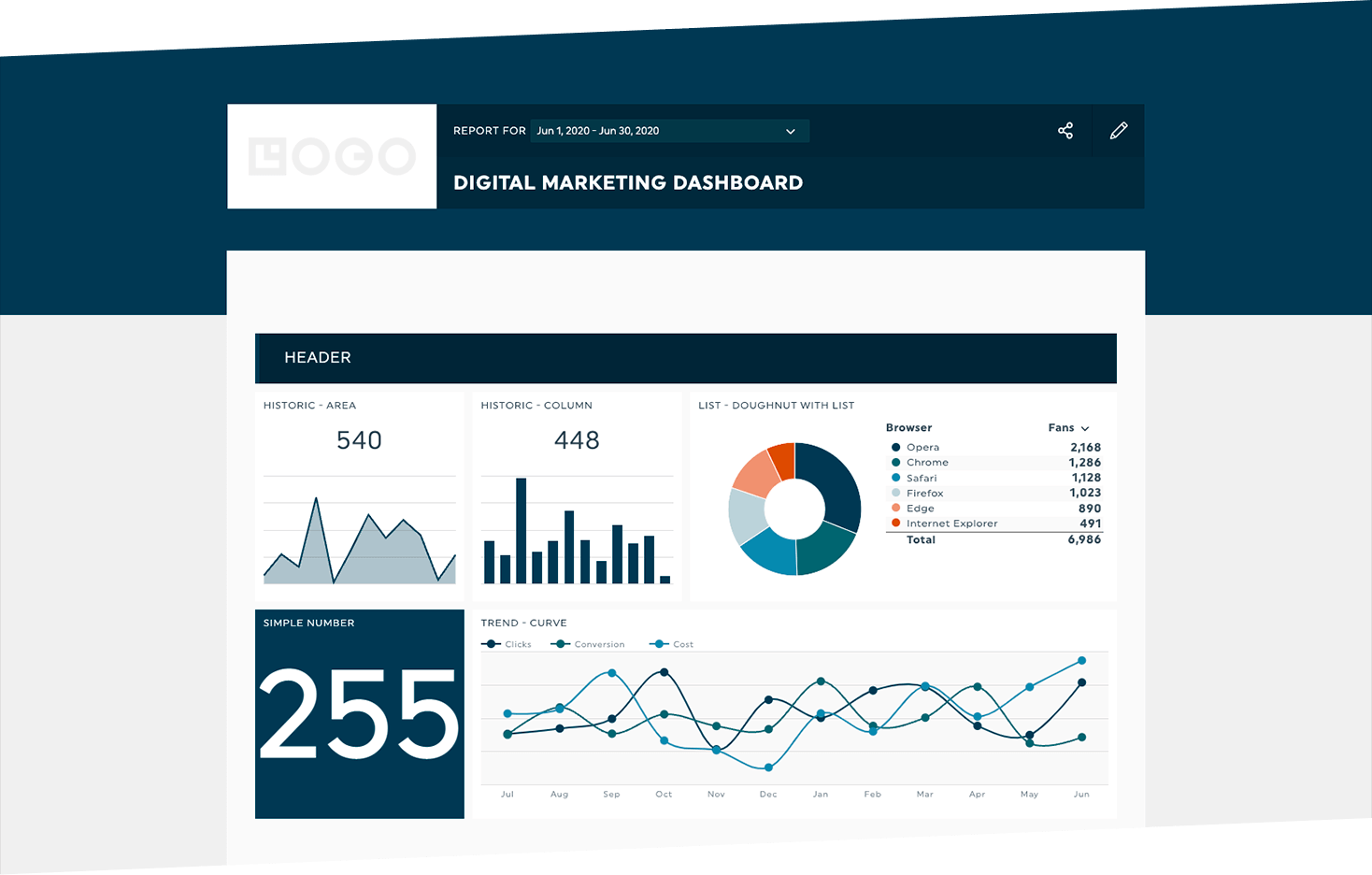
A social media analytics dashboard serves as a centralized hub, consolidating metrics from all your social platforms into a single view. Instead of individually checking Instagram, TikTok, or LinkedIn, a dashboard allows you to compare performance metrics like reach, engagement, and follower growth side-by-side. The most effective dashboards also process this data, highlighting key trends and offering insights into content effectiveness.
Why are social media analytics important for businesses?
Social media analytics are critical for proving the ROI of social media efforts, identifying which content types drive traffic and conversions, and optimizing posting strategies based on empirical data rather than speculation. Over time, consistent tracking and adjustment based on this data lead to more effective content, accelerated audience growth, and smarter marketing decisions, enabling teams to consistently outperform those operating without data-driven strategies.
Which social media metrics are most important to track?
The most critical metrics depend heavily on your specific social media goals. For brand awareness, focus on reach and impressions. For audience engagement, track likes, comments, shares, and engagement rate. For website traffic, prioritize click-through rate (CTR). For lead generation or sales, monitor conversion rate and ROI. Most teams should track a baseline of reach, impressions, engagement rate, audience growth, and conversion rate, then delve deeper into metrics directly tied to their business objectives.
What are the different types of social media analytics?
There are four primary types: descriptive (what happened, e.g., impressions), diagnostic (why it happened, e.g., content type analysis), predictive (what will happen, e.g., trend forecasting), and prescriptive (what you should do, e.g., AI-driven recommendations). Most tools provide descriptive and diagnostic analytics, while premium tools venture into predictive and prescriptive capabilities.
How should a business choose the right social media analytics tool?
Start by defining your needs: how many accounts, budget, necessity for competitive benchmarking, and reporting requirements for stakeholders. Test free tiers or trial versions of 2-3 tools that fit your criteria, evaluating ease of use, data accuracy, reporting features, and integrations with your existing marketing stack. Avoid paying for features you don’t immediately need; opt for the simplest solution that addresses your core problems effectively.
What is the difference between social media analytics and "insights"?
"Insights" is the term commonly used by social platforms for their native analytics dashboards (e.g., Instagram Insights). "Analytics" generally refers to third-party tools that aggregate data across multiple platforms, offering more advanced features like competitive comparison, cross-platform reporting, and trend analysis. Native insights are free but limited to your own data on a single platform, whereas third-party tools, while costing money, provide greater flexibility and comprehensive cross-platform visibility.
Are native social media analytics dashboards sufficient for businesses?
Native analytics are useful for basic performance tracking but have significant limitations. They are confined to your own data on a single platform, offer limited customization, do not facilitate competitor benchmarking, and rarely integrate with other marketing tools. For businesses managing multiple accounts, needing competitive intelligence, or preparing comprehensive reports for stakeholders, a third-party tool is generally a worthwhile investment. A solo creator tracking basic performance on one platform might find native insights sufficient initially.
How frequently should social media analytics be checked?
Most creators and social media managers benefit from checking analytics at least once a week. A weekly review helps identify immediate patterns, top-performing posts, and peak audience activity. A deeper monthly review is beneficial for assessing long-term trends and refining the overall social media strategy. During active campaigns, daily check-ins are advisable for real-time optimization.
What is the distinction between analytics tools and social media management tools?
Dedicated analytics tools focus solely on measuring performance and generating reports. Social media management tools, on the other hand, combine analytics with broader functionalities such as scheduling posts, managing audience engagement (e.g., replying to comments), and storing content ideas. For many creators and small teams, a management tool with integrated analytics is the most practical choice due to its all-in-one convenience. However, for specialized needs like deep competitive analysis or advanced sentiment tracking, a standalone analytics tool might be added to the tech stack.