An extensive survey conducted by Optimizely, polling over 2,000 B2B marketers globally, has revealed a significant disconnect between the widespread adoption of Artificial Intelligence (AI) in marketing departments and its actual, effective integration into daily workflows. While nearly half of respondents reported that AI is fully integrated into their day-to-day operations, a closer examination of their experiences paints a more complex picture. The majority of these marketers are dedicating substantial weekly hours to rectifying AI-generated content, navigating disparate and disconnected tools, and compensating for operational processes that have not yet evolved to keep pace with this rapid technological influx.
This disparity highlights that the primary hurdle for marketers is not a lack of access to AI technology, but rather the operational and infrastructural challenges that accompany its implementation. The initial promise of AI was a significant boost in efficiency and a reduction in manual tasks. However, the reality has proven to be far more nuanced. The research indicates that AI is becoming an integral part of the marketing landscape, yet the essential frameworks for governance, streamlined workflows, and robust technological infrastructure required to harness its full potential are still in their nascent stages of development and adaptation.

The Hidden Costs of AI Integration: Time and Resources Diverted
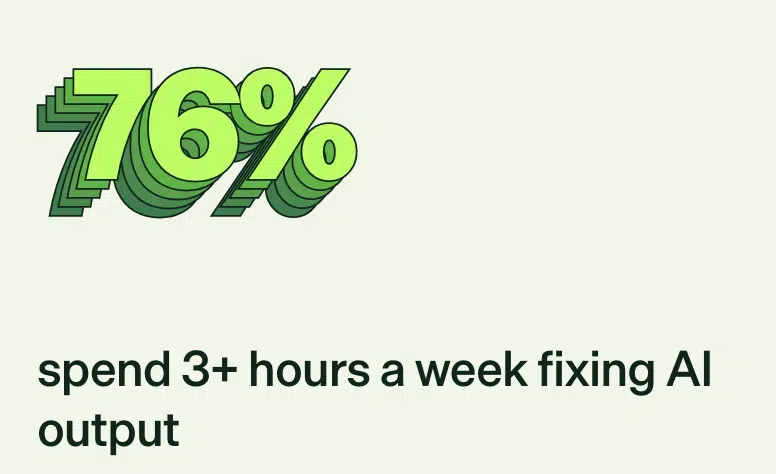
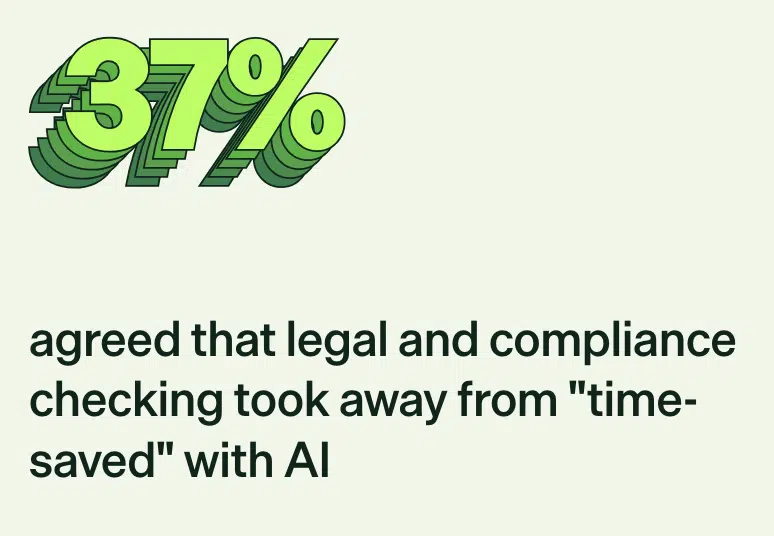
The Optimizely report underscores a critical finding: AI adoption has not necessarily eliminated work but has, in many instances, shifted and even increased the burden of certain tasks. A staggering three-quarters of the surveyed marketers reported spending at least three hours each week on the manual correction of AI-generated content. This extensive time investment is primarily consumed by editing, fact-checking for accuracy, and rectifying outputs that often contain “hallucinations” – fabricated information presented as fact. Furthermore, the necessity of manually copying and pasting information between disconnected software applications and the rigorous legal and compliance reviews required for AI-generated material add to this significant time drain. Consequently, only a marginal 4% of respondents felt that AI genuinely saved them time across the entire content creation lifecycle.
This operational friction is particularly pronounced outside of the United States. While the global figure for marketers experiencing time savings at every stage of content creation with AI hovers at a mere 4%, U.S. marketers demonstrated a notably higher degree of confidence in the immediate usability of AI output. Specifically, 39% of U.S. marketers indicated that most AI-generated content requires minimal editing, a figure that stands in stark contrast to the global average of 28%. This suggests that regional differences in AI implementation strategies, training, or the maturity of supporting technologies may be contributing factors.
The findings strongly suggest that AI has not automated away tasks but rather has reallocated human effort. While the initial generation of content might be faster, the subsequent stages of quality control, ensuring brand consistency, and managing overall governance demand a greater share of a marketer’s attention and time. A substantial portion of this increased workload appears directly attributable to the fragmentation of the technology stack itself.
Fragmented Technology Stack Amplifies AI Challenges
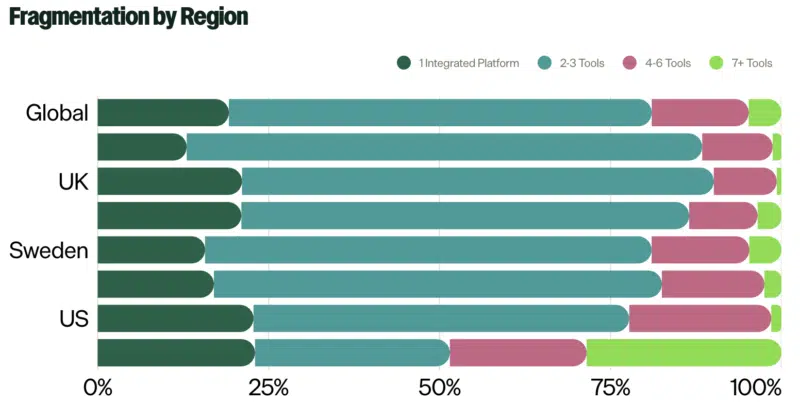
A key factor exacerbating these challenges is the lack of integration among the AI tools marketers are using. The survey revealed that a mere 19% of respondents are leveraging a single, unified AI platform. The overwhelming majority, over 80%, are compelled to switch between multiple, often unconnected, AI applications on a regular basis. This constant toggling between systems necessitates the manual transfer of data, creating inefficient and disconnected workflows that undermine the very efficiency AI is intended to provide.
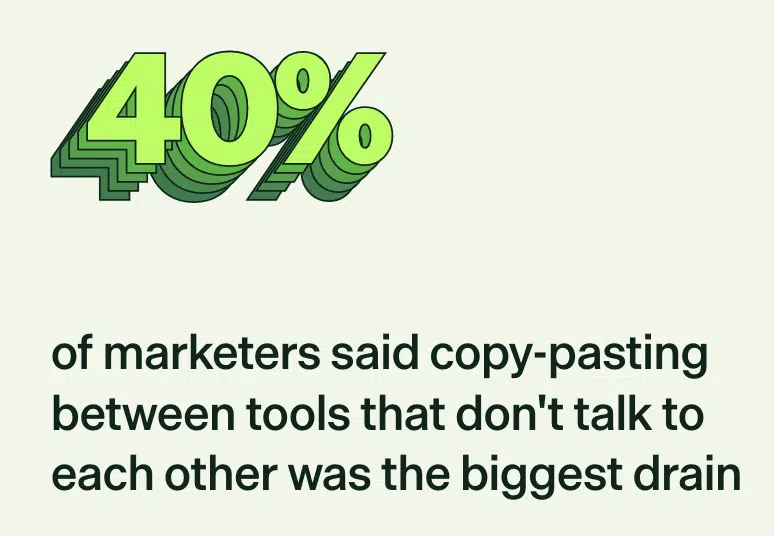
These fragmented technological environments create significant governance complexities. Teams are forced to expend more energy on verifying the accuracy of AI outputs, ensuring compliance with internal policies and external regulations, and maintaining information consistency across disparate systems. This diverts valuable resources and attention away from the core marketing objective: developing and executing strategies that build superior customer experiences.
The issue of brand identity preservation also remains a significant challenge for AI. More than half of the surveyed marketers stated that while AI can effectively capture factual information, it often fails to grasp and replicate the nuanced emotional tone and specific voice of their brand. Only about one-third of respondents expressed strong confidence that their AI tools consistently reflect their brand’s unique identity.
Brand Governance: A Human Imperative in the Age of AI
While AI’s ability to capture factual data is improving, its capacity to imbue content with a distinct brand personality is still a work in progress. The emotional resonance and unique stylistic elements that define a brand are proving difficult for AI to fully replicate. This limitation necessitates continued human oversight to ensure that AI-generated content aligns with established brand guidelines and resonates authentically with the target audience.
U.S. marketers, mirroring their greater confidence in AI output, also reported higher levels of satisfaction with AI’s ability to capture brand emotion, with 45% expressing high confidence compared to approximately one-third globally. However, even within the U.S., a significant majority (62%) of respondents voiced concerns that the pervasive use of AI is leading to a homogenization of brand voices across the competitive landscape. This raises a crucial question about the long-term impact of AI on brand differentiation and market distinctiveness.
The concern extends beyond individual pieces of content. A notable 15% of respondents indicated that AI-generated work would be indistinguishable from a competitor’s if branding elements were removed. Two-thirds of marketers expressed apprehension that AI adoption is contributing to an increasing similarity in brand voices across industries, potentially diluting unique market positions. These findings underscore that the act of content generation is merely one component of a larger, complex workflow. Maintaining competitive differentiation continues to rely heavily on robust editorial oversight, stringent governance protocols, and the effective management of brand assets and systems.
The Executive-Practitioner Divide in AI Perception
A striking observation from the Optimizely report is the significant divergence in how AI is perceived by organizational leadership versus the frontline marketers who utilize it daily. More than half of the marketing practitioners surveyed believe that their leadership underestimates the substantial human effort and oversight required for effective AI implementation. Conversely, C-suite respondents were considerably more likely to describe themselves as being "liberated" by AI and to assert that their organization’s AI implementation is fully aligned and proceeding smoothly.
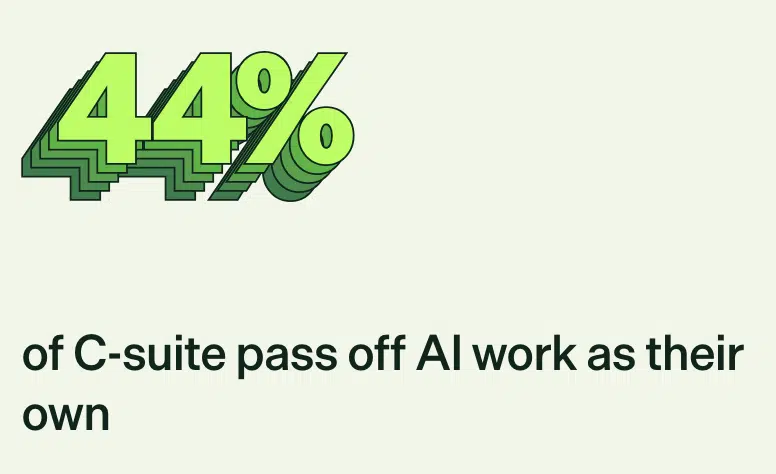
This perception gap extends to practical application and disclosure. The survey found that 44% of C-suite respondents admitted to frequently or always submitting AI-generated work without disclosing its origin. Furthermore, one-quarter of marketing leaders acknowledged publishing AI-generated content they knew was off-brand, often driven by pressure to meet tight deadlines. In the United States, this figure climbs to one in three marketing leaders. These statistics do not necessarily point to isolated instances of governance failure but rather reflect the intense operational pressures marketers are experiencing as AI adoption outpaces the development of supportive processes and frameworks.
Operationalizing AI: The Next Frontier for Marketers
Perhaps the most compelling finding of the report is the indication of a widespread reassessment of AI strategies. A substantial 65% of marketing leaders expressed a willingness to consider pausing their AI rollout for a 90-day period to fundamentally rethink their approach. Only 35% of these leaders feel confident that their current AI implementation is on the right trajectory.
While this research is vendor-sponsored and reflects marketers’ perceptions rather than independently measured productivity metrics, it points to a consistent and critical theme: marketing organizations have largely embraced AI. The more formidable challenge now lies in the systematic development of robust governance structures, the integration of disparate technology systems, and the establishment of an operating model that ensures AI’s reliability and scalability.

For enterprise marketers, the competitive edge is no longer derived simply from adopting AI technologies. Instead, the true advantage will be found in the sophisticated operationalization of AI – making it work seamlessly, reliably, and strategically within the broader marketing ecosystem. This requires a holistic approach that addresses not only the technology itself but also the people, processes, and governance that enable its effective and impactful use. The journey from AI adoption to AI mastery is proving to be a complex but necessary evolution for modern marketing departments.