New AI Search And SEO KPIs: 4 Signals That Guide Real Decisions Through Performance-Focused Measurement


The rapid evolution of generative artificial intelligence and conversational search engines has fundamentally transformed how digital marketers evaluate online visibility. Traditionally, search engine optimization (SEO) relied on straightforward metrics such as keyword rankings, organic traffic volume, and click-through rates. However, the emergence of AI-driven platforms like OpenAI’s ChatGPT, Google’s Gemini, Microsoft Copilot, and Perplexity has rendered conventional key performance indicators (KPIs) insufficient for strategic decision-making. Marketers increasingly find themselves navigating an opaque landscape defined by simulated brand mentions, sentiment tracking, and citation shares. While these metrics offer a baseline understanding of how often a brand appears in generative responses, they frequently fail to provide actionable insights for content strategy, technical optimization, or budget allocation.
To address this growing industry challenge, LightSite AI Founder Stas Levitan recently joined Search Engine Journal (SEJ) Founder Loren Baker for an in-depth on-demand webinar titled New AI Search & SEO KPIs: 4 Signals That Guide Real Decisions. Drawing on extensive datasets comprising bot activity and human referral metrics from hundreds of websites, the session established a performance-driven framework designed to help marketing teams transition from passive observation to strategic execution. The discussion underscored a critical distinction within modern digital analytics: the difference between competitive benchmarking data and actionable performance data. As organizations reallocate content, technical, and authority-building budgets to capture market share in AI search, understanding this division has become paramount for digital success.
The Evolution of Search Measurement and the Benchmark Trap
For decades, the SEO industry depended on deterministic metrics that mapped directly to user queries on traditional search engine results pages (SERPs). When a user typed a query, algorithms delivered a ranked list of blue links, and tracking tools measured exact positions, impressions, and clicks. The shift toward generative engine optimization (GEO) and AI-driven answer engines, however, replaced static rankings with dynamic, conversational, and highly personalized summaries. In response, a new ecosystem of visibility tools emerged, utilizing simulated prompts to track how frequently a company or product is cited within AI-generated outputs.
While these tracking platforms provide valuable high-level visibility trends and competitive benchmarking, Stas Levitan argues that marketers often mistakenly treat these simulated estimates as definitive performance metrics. Because AI responses are contextual and vary widely based on user intent, geographic location, and personalized conversation histories, a synthetic prompt sample can only ever indicate what might happen. Conversely, first-party site data reveals what actually occurred. Confusing these two distinct categories of evidence can cultivate false confidence, leading organizations to direct valuable financial and human resources toward campaigns that fail to generate genuine audience demand or commercial returns.
The Four-Signal Framework for AI Search Performance
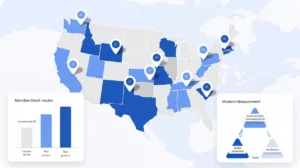
To bridge the gap between speculative visibility and concrete execution, the SEJ webinar introduced a comprehensive four-stage measurement framework. Rather than relying solely on estimated mention frequencies, the methodology maps AI search performance across machine discovery, machine interest, human demand, and the intricate relationship connecting them.
The first signal, machine discovery, addresses foundational technical accessibility. Before an AI system can cite or recommend a brand, its web crawlers must successfully access, parse, and index the underlying infrastructure. Research data presented during the session revealed a startling technical barrier: approximately one-third of evaluated websites actively blocked at least one major AI bot. These access blocks frequently occurred unintentionally due to misaligned priorities between enterprise security protocols, content delivery networks (CDNs), and marketing objectives.
The second signal focuses on machine interest, analyzing how automated agents interact with specific pages once access is granted. Observed patterns within LightSite AI’s dataset demonstrated that AI bot attention is heavily concentrated rather than evenly distributed. Specifically, roughly 12 percent of pages absorbed approximately half of all bot impressions. Furthermore, a very small cohort of pages that experienced repeated crawls over a consistent four- to six-week window accounted for a disproportionate share of total crawl volume. This concentrated bot behavior offers strong directional clues regarding which assets automated systems perceive as authoritative or structurally sound.
The third signal incorporates human demand, evaluating the actual referral traffic, user engagement, and conversion behavior generated by visitors arriving from AI-powered platforms. Crucially, the framework emphasizes that high numbers in the first two categories—discovery and interest—do not automatically guarantee positive outcomes in human demand. A heavily crawled page that yields zero human referrals requires a fundamentally different remediation strategy than a page successfully capturing both automated attention and qualified prospective buyers.
The fourth signal analyzes the intersection and correlation between machine activity and human engagement. By synthesizing these data streams, digital marketing teams can construct an objective decision matrix that replaces guesswork with empirical evidence.
Empirical Insights from Bot and Referral Data
Moving beyond theoretical frameworks, the webinar presented granular empirical findings derived from real-world observation. By analyzing extensive logs of bot and human referral data, the session offered practical guidance on how organizations can prioritize existing digital assets before commissioning costly new content production.
The analysis challenged common assumptions regarding content formats, contrasting generic, broad-target blog posts with highly specific, functional assets. Data comparisons revealed that pages designed to solve a single, highly specific problem for a clearly defined audience—such as interactive tools, specialized templates, technical documentation, and targeted support resources—frequently outperformed traditional top-of-funnel content in attracting sustained machine and human attention.
Customer case studies shared during the session illustrated how brands successfully applied these insights to restructure their digital properties. By identifying high-intent support pages that were underperforming in conversational search engines, teams were able to optimize technical schemas, clarify structural hierarchies, and refine content delivery. These targeted interventions resulted in measurable improvements in both AI-driven crawl efficiency and qualified human referrals, proving that optimizing for generative search requires rigorous structural refinement rather than sheer volume of output.
Actionable Strategies for Marketing Teams
Translating these advanced signals into an effective operational plan requires a systematic, phased approach. The methodology outlined by Levitan and Baker begins with an exhaustive technical audit to align marketing goals with IT and security infrastructure. Organizations must verify that robots.txt files, server configurations, and CDN firewalls permit authorized AI search crawlers to index priority content without impediment.
Following the technical verification phase, marketers must analyze first-party server logs and analytics platforms to identify which specific URLs currently attract the highest volume of bot attention. By cross-referencing this automated activity against human referral metrics, teams can identify structural anomalies. For instance, pages experiencing heavy crawl frequency but negligible human visits often signal a disconnect between how AI models interpret the content and what human users actually require.
The integration of an AI Click-Through Rate (CTR) decision matrix allows marketing professionals to categorize pages based on their performance signals, assigning precise tactical responses to each segment. Whether a page requires structural schema markup enhancements, content expansion, or technical remediation, the framework provides an objective roadmap for prioritizing editorial and engineering resources.
Addressing Industry Questions: Key Insights from the Q&A Session
The webinar concluded with an extensive question-and-answer segment addressing some of the most pressing challenges facing digital marketers in the era of conversational search.
Addressing whether AI search visibility can be reliably connected to revenue, Levitan detailed the current limitations of attribution models while highlighting measurable conversion behaviors observed among visitors referred by AI systems. While top-of-funnel brand mentions remain difficult to tie directly to closed sales, lower-funnel navigational queries and specific product citations demonstrated predictable conversion pathways.
The discussion also explored technical infrastructure, specifically addressing whether certain Content Management Systems (CMS) are inherently easier for AI bots to crawl. Experts noted that while platforms such as WordPress, Shopify, Webflow, and Squarespace offer distinct structural advantages, overarching CDN settings, server response times, and bot-management configurations frequently override the default accessibility of any given CMS.
Furthermore, the Q&A clarified the relationship between crawl behavior and citation frequency. Levitan reiterated the necessity of treating deterministic crawl observations as separate from probabilistic citation monitoring. Each dataset serves a distinct diagnostic purpose: crawl logs reveal how machines consume content architecture, while citation tools track the brand visibility output of generative algorithms. Marketers were cautioned against conflating the two, as doing so obscures the root causes of performance fluctuations.
Broader Industry Implications and Future Outlook
The introduction of this four-signal measurement framework reflects a maturing digital marketing industry grappling with the rapid decentralization of web traffic. As traditional search engines evolve into answer engines that synthesize information directly on the results page, the traditional metrics of success are undergoing a permanent paradigm shift.
Organizations that continue to rely exclusively on vanity metrics and simulated visibility estimates risk misallocating budgets and missing vital optimization opportunities. Conversely, enterprises that adopt a performance-focused methodology—grounded in first-party bot analytics, technical accessibility, machine interest, and verified human demand—will be uniquely positioned to secure sustainable visibility and authority in the generative AI era.
As search technology continues to advance, the integration of rigorous, data-driven KPIs will no longer be an optional supplementary strategy, but an essential foundational requirement for competitive digital commerce.