Navigating the 2026 Frontier AI Landscape: Why ChatGPT Work Is Redefining Enterprise Productivity

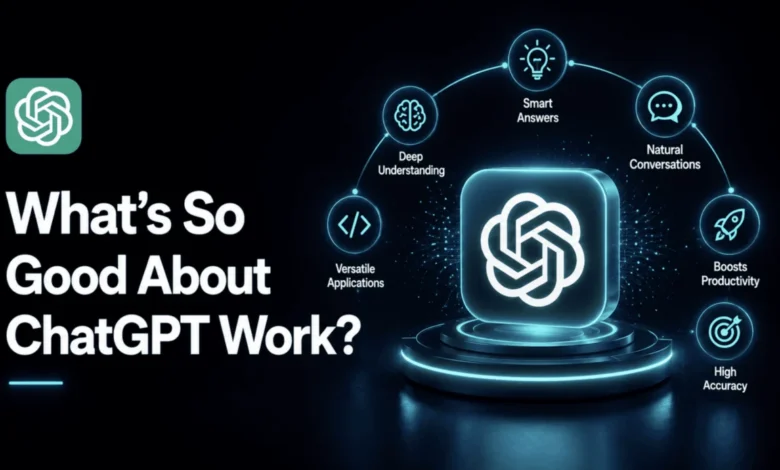
The global artificial intelligence sector experienced an unprecedented convergence of flagship model releases during a compressed eight-week window in the summer of 2026. This intense period of competition saw Anthropic release Claude Sonnet 5 on June 30, xAI follow with Grok 4.5 on July 8, and OpenAI roll out the general availability of GPT-5.6 on July 9, alongside continuous updates to Google’s Gemini 3.1 Pro. For industry analysts, enterprise buyers, and software developers, this rapid-fire deployment cycle signaled a definitive shift in the artificial intelligence market. As four major laboratories shipped highly capable frontier systems within days of one another, benchmarking absolute intelligence has become a diminishing metric. Because performance gaps fluctuate weekly and rarely dictate real-world utility, the more pressing evaluation metric has shifted from raw model capability to functional integration—specifically, what an AI ecosystem allows organizations to accomplish. Within this context, OpenAI’s enterprise-focused offering, ChatGPT Work, presents a compelling case study in applied artificial intelligence.
Background Context and the 2026 Model Release Wave
The summer of 2026 marked a mature phase in the generative artificial intelligence boom, moving away from hyper-scaled hype toward specialized enterprise deployment. Historically, the AI market was characterized by staggered releases where a single lab would hold the undisputed performance crown for six months or more. The compressed deployment schedules of June and July 2026 broke this pattern, forcing a commoditization of raw intelligence parameters.
Powered by the GPT-5.6 model family, ChatGPT Work was engineered to address a specific enterprise bottleneck: the friction between asking a conversational assistant for information and manually translating that response into professional deliverables. Rather than operating purely as a Q&A interface, the platform is designed to ingest high-level operational goals, pull contextual data directly from native file repositories and connected software tools, and output finished corporate assets—ranging from structured spreadsheets to complex research dossiers and interactive dashboards.
Strategic Architecture of the GPT-5.6 Model Family
When OpenAI commercialized the GPT-5.6 architecture, it departed from the prevailing industry trend of utilizing a single flagship model equipped with a user-controlled reasoning-effort slider. Instead, OpenAI partitioned the model family into three distinct, named tiers optimized for specific computational workloads: Sol, Terra, and Luna.
This tiered packaging strategy allows corporate IT and engineering teams to route routine administrative and low-complexity tasks to the lighter Luna tier, reserve the intermediate Terra tier for general operational workflows, and allocate the high-compute Sol tier exclusively to complex architectural, analytical, or coding tasks. By avoiding the uniform overhead associated with universal high-reasoning models, organizations can optimize operational token expenditure without migrating between disparate software products.
Comparative Benchmark Analysis and Token Economics
A rigorous evaluation of GPT-5.6’s performance reveals a nuanced picture when compared against its primary market rivals, such as Anthropic’s Claude Fable 5. On standardized agentic coding evaluations like Terminal-Bench 2.1, the Sol tier achieved an 88.8% score in standard mode, scaling to 91.9% under higher-compute Ultra conditions. This performance marginally surpassed previous iterations and rival architectures, including Claude Mythos 5, which scored 88.0%.
However, competitive dynamics vary across benchmarks. Anthropic’s flagship Claude Fable 5 maintains an advantage on SWE-Bench Pro, registering 80% compared to Sol’s 64.6%, and leads on specific segments of the Artificial Analysis Intelligence Index. Despite these metric variances, enterprise adoption patterns frequently pivot on token economics rather than isolated benchmark peaks. Claude Fable 5 commands input and output pricing of $10 and $50 per million tokens respectively, effectively doubling the cost of OpenAI’s Sol tier. OpenAI’s internal telemetry indicates that Sol achieves comparable operational outcomes on agentic and software engineering tasks while consuming fewer tokens and reducing execution time. For high-volume enterprise environments, this trade-off between marginal benchmark superiority and cost-efficiency represents a critical purchasing criterion.
Open-Weight Infrastructure and Data Residency
Beyond cloud-hosted API infrastructure, OpenAI broadened its market approach through the introduction of open-weight language models: gpt-oss-120b and gpt-oss-20b. Released under the permissive Apache 2.0 license, these models represent OpenAI’s first open-weight offerings since early development stages.
Designed specifically for enterprise environments requiring strict data residency guarantees, customized fine-tuning pipelines, and local deployment, these models operate independently of OpenAI’s proprietary cloud infrastructure. Compatible with standard open-source inference stacks including vLLM, Ollama, and llama.cpp, the models provide organizations with an internal deployment pathway that bypasses external API dependencies. While distinct from the cloud-based ChatGPT interface, the availability of these weights alters the strategic calculus for corporate buyers who previously faced a binary choice between proprietary cloud ecosystems and entirely self-managed open-source alternatives.
Practical Enterprise Applications and Verified Case Studies
The functional utility of ChatGPT Work is best evaluated through verified deployment metrics reported by major enterprise users. Organizations across sectors have moved beyond exploratory trials, integrating the platform into core operational workflows.
At Zapier, internal lead-triage procedures that traditionally consumed between 35 and 45 minutes per prospect across disparate software platforms—including HubSpot, Gong, and enterprise email clients—were re-engineered into an automated quality-assurance workflow. According to Zapier’s Head of Enterprise Marketing, the system tracks the customer journey in real-time, surfaces pipeline drop-offs, and contributes seven figures in verified sales pipeline value on a monthly basis.
Similarly, at NVIDIA, a Go-to-Market Manager reported that approximately 40% of pre-event manual data processing prior to GTC conferences has been successfully automated. Operating on a bi-weekly automated schedule, the workflow eliminates manual data consolidation, reallocating human capital toward direct strategic engagement with field sales teams. Shopify’s Lead for Applied AI and Enablement integrated the platform as an operational "second brain," centralizing context from internal communication channels like Slack to coordinate cross-functional research initiatives across thousands of non-technical employees.
Automation Mechanics and Scheduled Tasks
A foundational component of enterprise automation within the platform is its dedicated Scheduled Tasks framework. Updated to include a centralized management interface, the feature transforms reactive, one-off prompts into persistent, autonomous processes.
Scheduled tasks can execute recurring operational duties—such as generating executive morning briefings, compiling status reports, or monitoring specific data thresholds—and trigger notifications only when actionable variances are detected. Integrated with live web browsing and enterprise software connectors via the chat interface, these automated tasks function less like conventional calendar reminders and more like autonomous digital assistants.
Platform constraints remain clearly defined for administrative oversight: scheduled tasks are limited to a maximum execution frequency of once per hour. Active task allocations scale predictably by subscription tier, ranging from three concurrent tasks on basic business accounts up to fifteen for Pro, Business, and Enterprise deployments.
Ecosystem Integration and the Model Context Protocol
Interoperability remains a defining characteristic of modern enterprise software deployment. In a departure from closed proprietary architectures, OpenAI adopted the Model Context Protocol (MCP) in March 2025. Originally pioneered by Anthropic and subsequently transitioned to a vendor-neutral governance foundation, MCP establishes an open standard for connecting language models to external data repositories and software applications.
Because the protocol is standardized, a single internal MCP integration built by an enterprise engineering team can serve multiple AI models, preventing vendor lock-in. Within ChatGPT Work, this is manifested through Developer Mode for custom remote MCP servers on individual plans, and workspace-published MCP apps for Business and Enterprise tiers.
The software ecosystem responded rapidly to the Apps SDK release. Within sixty days, more than thirty-five major enterprise software vendors—including Salesforce, Box, Dropbox, Atlassian, and Adobe—deployed native ChatGPT applications. Combined with a library of over 1,400 built-in plugins, these integrations enable bi-directional read and write actions across standard business applications without requiring custom middleware development.
Data Access Tiers and Usage Thresholds
Enterprise deployment requires a clear understanding of data governance, browsing capabilities, and rate-limiting structures across subscription tiers. ChatGPT incorporates real-time web browsing to retrieve contemporaneous data, bypassing the inherent limitations of static model training cutoffs. Agent Mode extends this functionality, allowing the system to execute multi-step routines involving iterative web searches, code execution, and tool calls within a unified session.
Usage parameters vary significantly by subscription tier. Free-tier users operate under message caps on default foundational models before falling back to lightweight secondary models. Paid subscriptions, such as the $20-per-month Plus tier, expand message allowances significantly while incorporating dedicated weekly allowances for advanced reasoning models. Enterprise and Pro tiers provide high-volume access designed for continuous commercial usage, though all operational tiers maintain fair-use guardrails to manage systemic infrastructure load.
Comparative Technical Specifications
| Feature / Metric | GPT-5.6 (ChatGPT Work) | Claude Sonnet 5 | Gemini 3.1 Pro | Grok 4.5 |
|---|---|---|---|---|
| Release Date | July 9, 2026 | June 30, 2026 | Rolling updates (2026) | July 8, 2026 |
| Pricing Structure | Sol: $5/$30; Terra: $2.50/$15; Luna: $1/$6 (Per million tokens) | $2/$10 intro tier (exp. Aug 31, 2026), scaling to $3/$15 | Variable based on deployment path | $2 input / $6 output (Per million tokens) |
| Context Window | 1.05 Million tokens | 1 Million tokens | 1 Million input / 65K output | 500,000 tokens |
| Primary Strength | Advanced agentic execution, tiered computational cost scaling, extensive MCP ecosystem | High-performance repository coding at introductory rates | Long-context multimodal data processing | Cost-efficient code generation, Cursor integration |
Broader Industry Implications and Outlook
The maturation of frontier AI models through the mid-2026 release cycle indicates that the artificial intelligence industry is entering a phase of consolidation centered on practical utility, cost predictability, and infrastructural standardization. While individual laboratories will continue to vie for incremental benchmark advantages, the broader commercial landscape demonstrates that enterprise value is derived less from theoretical intelligence quotients and more from robust system integration, open interoperability standards like MCP, and reliable automated workflows.
For corporate decision-makers, platforms like ChatGPT Work illustrate that the integration of generative AI into daily enterprise operations is no longer limited by model intelligence. Instead, success is defined by how effectively these systems connect with existing software stacks, respect institutional data boundaries, and translate complex operational inputs into verifiable business outcomes. As the market absorbs the 2026 model generation, the emphasis will remain firmly on execution, efficiency, and measurable return on investment across the global enterprise ecosystem.
Related posts: