The Strategic Imperative of Sentiment Analysis: Leveraging AI to Understand Customer Emotion and Drive Business Success

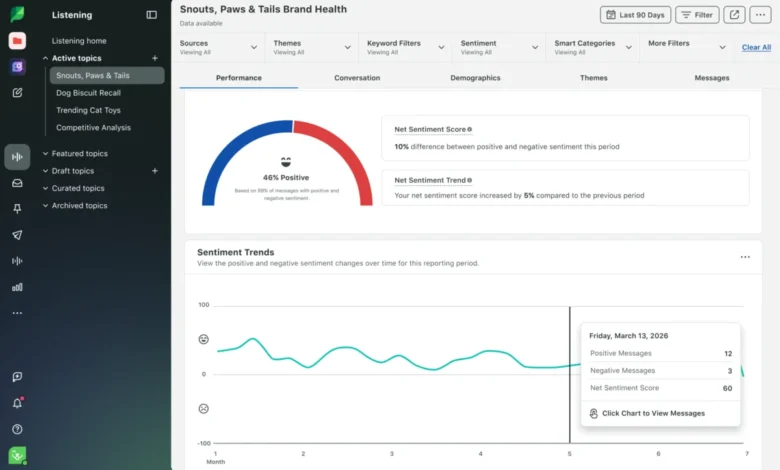
Just as non-verbal cues convey critical information in face-to-face communication, the language customers use online is imbued with human emotion. Decoding these emotions and understanding genuine perceptions of a brand is the core function of sentiment analysis. In an increasingly digital world, where customer conversations unfold across myriad platforms in real-time, the sheer volume of data makes manual emotional interpretation an impossible task. This necessitates the deployment of sophisticated sentiment analysis tools, software solutions designed to monitor, analyze, and interpret customer sentiment around brands, products, and campaigns.
The Technological Underpinnings: AI, NLP, and Machine Learning

A sentiment analysis tool is essentially a software application that employs artificial intelligence (AI) to detect and interpret emotions embedded within text data. At its heart lies Natural Language Processing (NLP), a branch of AI that enables computers to understand, interpret, and manipulate human language. NLP algorithms are crucial for making sense of the unstructured nature of social media posts, customer reviews, feedback forms, and countless other text sources.
Behind the scenes, these tools utilize advanced algorithms and machine learning (ML) models. These models are trained on vast datasets of human language, learning to categorize words, phrases, and even entire sentences based on their tone, emotional intent, and sentiment polarity—classifying them as positive, negative, or neutral. More advanced systems can delve deeper, identifying specific emotions like joy, anger, sadness, surprise, or even subtle nuances such as sarcasm and irony, although these remain significant challenges for even the most sophisticated AI. The process typically involves several stages:
- Data Collection: Gathering text data from various sources (social media, reviews, forums, news, surveys).
- Preprocessing: Cleaning the text, removing irrelevant characters, standardizing language, and tokenizing it into individual words or phrases.
- Feature Extraction: Identifying linguistic features relevant to sentiment, such as keywords, emojis, intensifiers, and negations.
- Sentiment Classification: Applying machine learning models (e.g., support vector machines, recurrent neural networks, transformer models) to classify the sentiment.
- Aggregation and Reporting: Compiling sentiment scores and trends into actionable dashboards and reports.
This AI-driven approach allows brands to process and understand customer feedback at a scale and speed that is humanly impossible, providing invaluable insights into public perception, emerging trends, and the overall health of their brand.
Core Functionalities and Strategic Applications
The capabilities of modern sentiment analysis tools extend far beyond simple positive/negative categorization. They offer a comprehensive suite of functionalities that empower businesses to gain deep, actionable insights:
- Sentiment Scoring and Polarity Detection: Assigning numerical scores or labels (positive, negative, neutral) to text segments.
- Emotion Detection: Identifying specific emotions like anger, joy, sadness, fear, or surprise.
- Aspect-Based Sentiment Analysis: Pinpointing sentiment towards specific features or aspects of a product or service (e.g., "The camera is great, but the battery life is terrible").
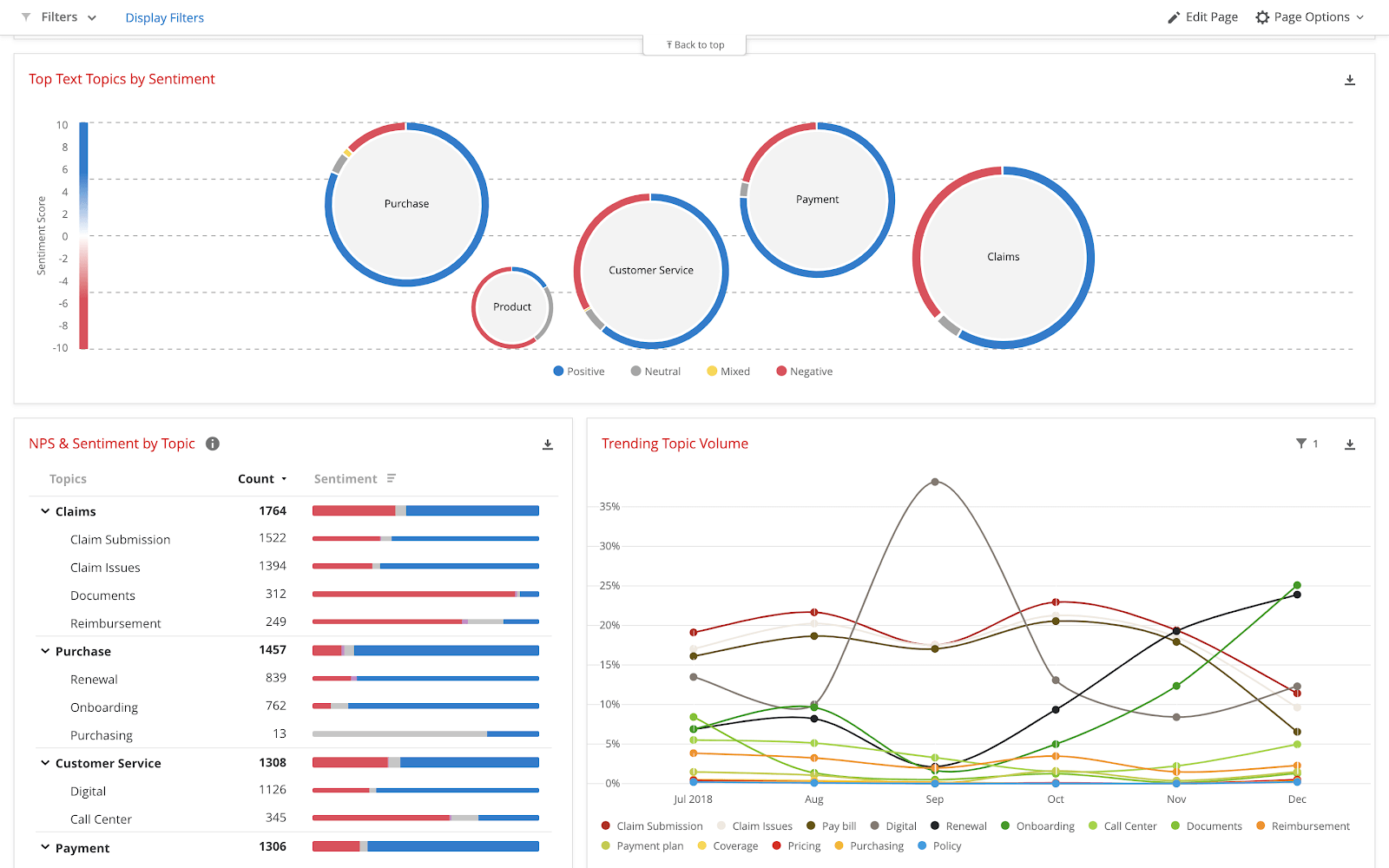
- Topic Modeling: Automatically identifying prevalent themes and topics within large datasets of customer feedback, linking sentiment to these topics.
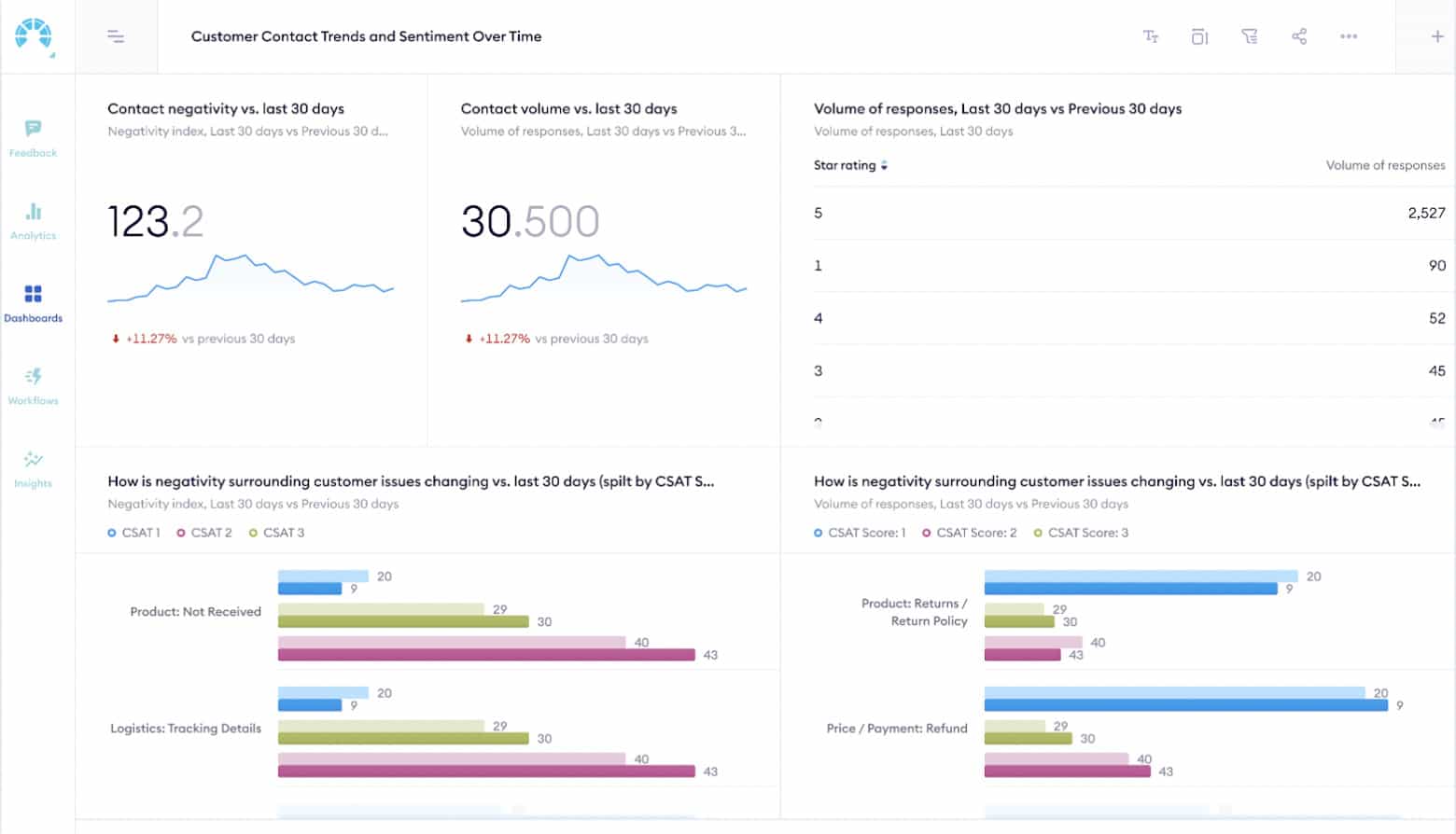
- Trend Analysis: Tracking shifts in sentiment over time, allowing businesses to monitor the impact of campaigns, product launches, or market events.
- Multilingual Analysis: Processing and understanding sentiment in various languages, crucial for global brands.
- Real-time Monitoring: Providing instantaneous alerts and insights into unfolding conversations, critical for crisis management.
- Competitor Analysis: Benchmarking brand sentiment against competitors to understand market positioning and identify opportunities.
- Reporting and Visualization: Presenting complex data in easy-to-understand dashboards and graphs.
These capabilities transform raw, unstructured text into actionable datasets, enabling businesses to quickly spot patterns in how people perceive their brand and what drives their reactions. This accelerates the design of insight-driven product development, customer service enhancements, and marketing strategies tailored to resonate with the target audience. For instance, in AI marketing, sentiment analysis tools for social media are instrumental in understanding public perception, identifying emerging trends, improving customer care, and crafting more targeted campaigns that drive business growth.
The Critical Importance of Sentiment Analysis
Understanding how often people mention a brand provides only a partial view. Sentiment analysis tools reveal how people feel in their mentions, providing the crucial emotional context necessary for strategic decision-making.
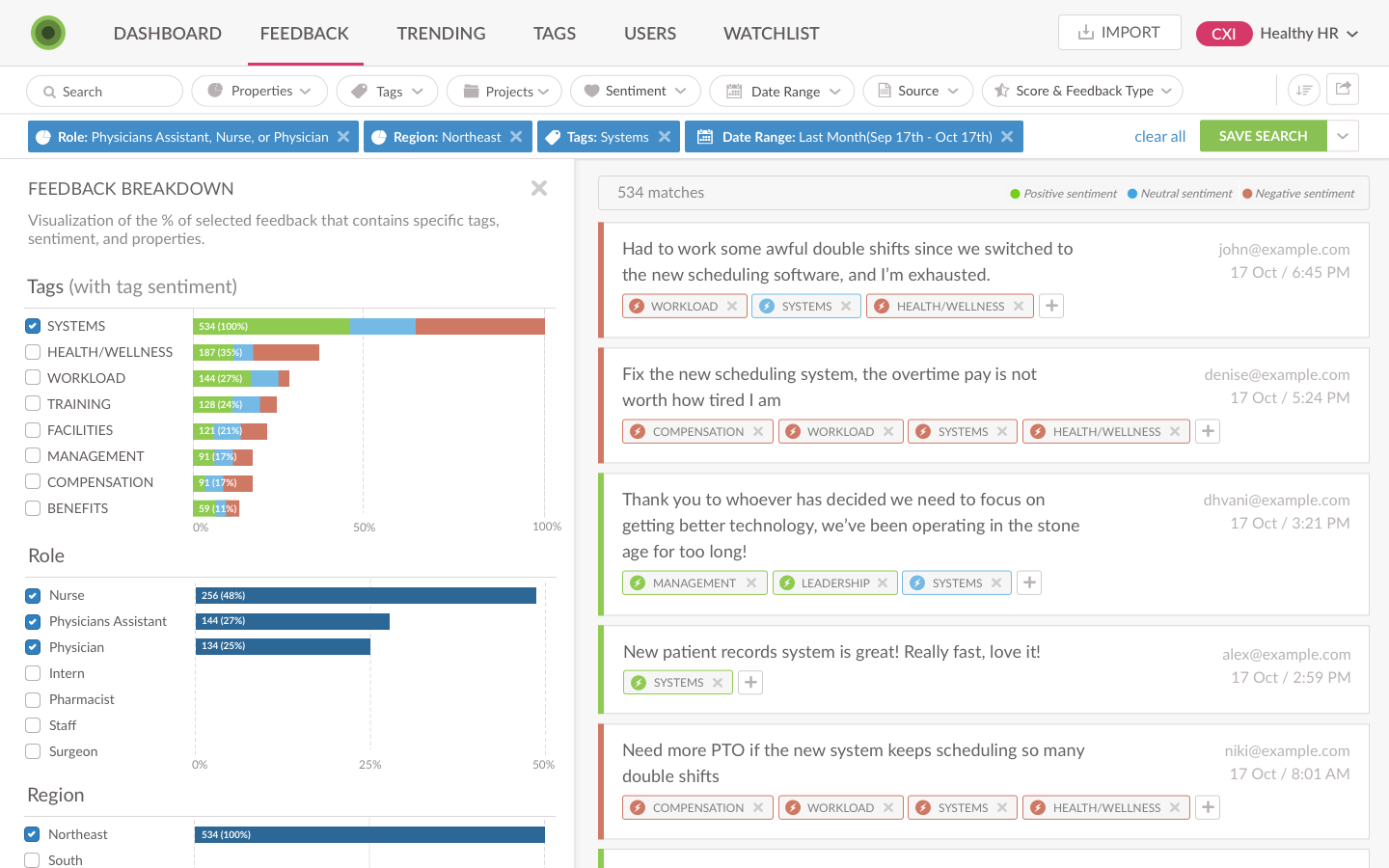
- Gaining the Full Narrative Behind Brand Mentions: A single phrase can carry immense nuance. "Thanks a lot" can be genuine appreciation or dripping with sarcasm. Without sentiment analysis, businesses risk misinterpreting customer feedback, missing subtle hints of disappointment in product reviews or veiled frustration in support inquiries. These tools decode such signals, revealing authentic reactions to messaging, product updates, or service experiences. This allows for more accurate responses, content refinement, and strategy shaping that truly reflects audience experiences.
- Facilitating Faster, Smarter Decisions: In the fast-paced digital environment, timing is paramount. Sentiment analysis spots emotional cues as they unfold, enabling businesses to act proactively. Whether a product update causes widespread confusion or a marketing campaign unexpectedly sparks immense brand loyalty, sentiment data provides early signals to pivot rapidly. This proactive approach helps mitigate potential issues before they escalate into crises or allows brands to capitalize on positive momentum before opportunities fade. The Chicago Bulls, for example, leverage Sprout Social’s sentiment analysis to understand fan emotions, allowing their marketing team to engage with relevant and timely contributions, fostering deeper connections.
- Benchmarking Brand Health and Audience Trust: Brand sentiment is a direct indicator of how the public perceives a business, its products, and its customer service. It’s not a static metric but an evolving narrative. Tracking its shifts over time reveals patterns in audience trust, highlighting what resonates, what falls flat, and how trust fluctuates based on strategic actions. This longitudinal analysis enriches market research, transforming qualitative feedback into quantifiable, actionable customer insights.
- Prioritizing Customer Experience (CX) Improvements: Sentiment analysis software moves beyond superficial star ratings or isolated complaints. By classifying text into specific topics, emotions, and sentiment scores, it uncovers recurring issues, identifies ineffective customer touchpoints, or highlights consistently positive experiences. This holistic view enables businesses to prioritize CX improvements based on widespread sentiment, addressing systemic problems that affect many customers rather than just individual cases.
Key Challenges and Solutions in Sentiment Analysis

While offering immense value, sentiment analysis tools face several inherent challenges that can impact the accuracy and depth of insights. However, advanced social listening platforms are continually evolving to overcome these hurdles:
- Sarcasm and Irony: One of the most significant challenges. AI often struggles to differentiate genuine positive sentiment from sarcastic remarks (e.g., "Oh, great, another price hike!").
- Solution: Advanced NLP models incorporate contextual analysis, deep learning, and even training on datasets specifically tagged for sarcasm.
- Ambiguity and Context: Words can have different meanings based on context (e.g., "sick" can mean ill or cool). Without proper context, sentiment can be misclassified.
- Solution: Leveraging broader conversational context, named entity recognition, and aspect-based sentiment analysis to tie sentiment to specific entities or attributes.
- Domain-Specific Language: Jargon, acronyms, or slang common in a particular industry or community may be misinterpreted by general sentiment models.
- Solution: Customizable models that can be trained on domain-specific datasets, allowing businesses to fine-tune the analysis for their unique language.
- Multilingual Nuances: Direct translation often loses emotional subtleties, and sentiment expression varies greatly across cultures and languages.
- Solution: Developing language-specific models and incorporating cultural context into analysis, rather than relying solely on translation.
- Emoji and Multimedia: The rise of emojis, memes, and visual content adds layers of non-textual emotional cues that traditional text analysis might miss.
- Solution: Integrating emoji detection, image recognition, and multimodal AI to analyze sentiment across different media types.
- Evolving Language: Slang and popular expressions change rapidly, requiring constant model updates.
- Solution: Continuous learning models that adapt to new linguistic patterns and real-time updates based on emerging trends.
- Data Volume and Noise: The sheer amount of data available can contain significant "noise" (irrelevant mentions, spam), making it hard to extract meaningful insights.
- Solution: Robust filtering mechanisms, topic modeling, and advanced data categorization to focus on relevant conversations.
- Ethical Considerations and Bias: AI models can inadvertently learn biases present in their training data, leading to unfair or inaccurate sentiment classifications, particularly for diverse demographics.
- Solution: Emphasizing ethical AI development, transparent model design, continuous auditing for bias, and human oversight in sensitive contexts.
A Landscape of Leading Sentiment Analysis Tools
The market offers a diverse range of sentiment analysis tools, categorized by their primary focus and capabilities.
Full-Stack Sentiment Analysis Tools
These platforms offer comprehensive solutions, pulling data from multiple sources, leveraging advanced machine learning, and providing deep audience insights with high data integrity. They are typically powerful, flexible, and scalable, often running on proprietary AI technology.
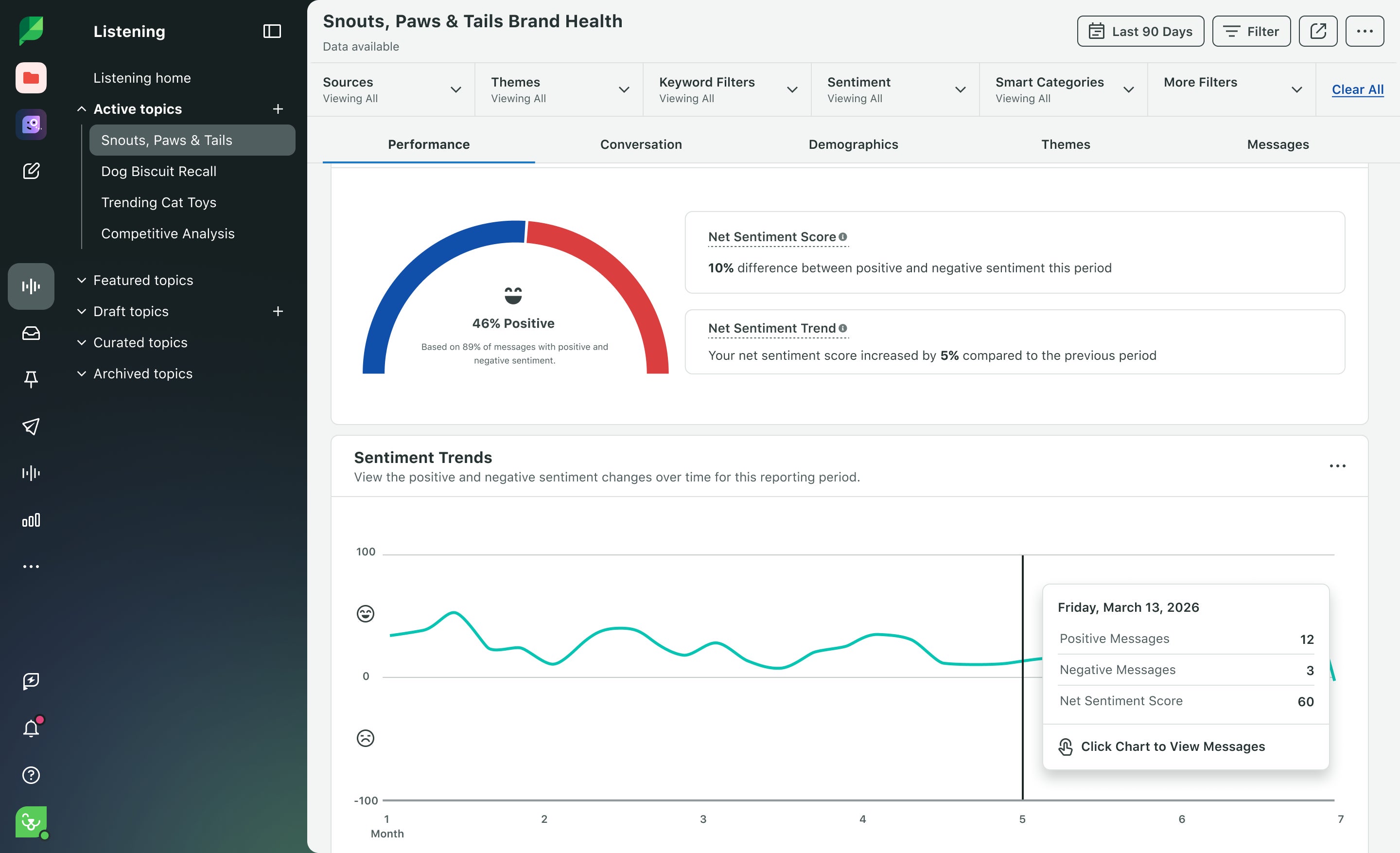
- Sprout Social: A leader in all-in-one social media management, Sprout Social offers AI-powered listening and granular sentiment analysis. It monitors sentiment across diverse platforms, uncovering how audiences genuinely feel about brands, content, campaigns, or competitors, regardless of language, tone, or emoji. Key capabilities include multilingual sentiment detection, trend analysis, competitive benchmarking, and automated analysis, allowing businesses to transform complex data into actionable customer insights quickly.
- InMoment: This customer experience platform uses AI to analyze text from various sources—surveys, social media, and voice—aggregating feedback into a single source of truth. It eliminates data silos and surfaces the intent and emotion behind every customer interaction.
- Medallia: Medallia’s experience management platform provides powerful listening features that pinpoint sentiment in text, speech, and video. It excels in collecting and analyzing real-time feedback from a wide array of sources, including social media, surveys, reviews, SMS, emails, and voice conversations.
- Qualtrics (Clarabridge): Part of the Qualtrics experience management platform, Text iQ is a sentiment analysis tool leveraging advanced NLP to analyze unstructured data from social media, surveys, and customer support. It automatically categorizes feedback into themes, assigns sentiment scores, and supports multiple languages.
- Chattermill: A unified customer intelligence platform, Chattermill uses AI to analyze feedback from surveys, reviews, and support conversations. It merges cross-channel data for a centralized view of brand sentiment, automatically detecting emotional tone and classifying responses by theme to identify drivers of satisfaction or frustration. It supports multiple languages and integrates with platforms like Zendesk and Salesforce.
Social Media Sentiment Analysis Tools
These tools specialize in evaluating metrics, posts, and audience commentary specifically from social media platforms.
- Brandwatch: Offering a suite of social media research and management tools, Brandwatch’s listening feature analyzes sentiment alongside brand mentions and conversations across various social platforms. It classifies sentiment as positive, negative, or neutral and tracks changes over time through an intuitive dashboard.
- Buffer: Buffer provides user-friendly social media management tools for publishing, performance analysis, and engagement. Its sentiment tagging feature allows users to categorize posts as "negative," "question," or "product mentions," helping brands sort conversations and prioritize responses.
- Agorapulse: This social media management software focuses on publishing and inbox organization. It offers basic, keyword-based sentiment tagging, enabling manual assignment of "positive" or "negative" labels or automatic categorization via its Inbox Assistant based on specific keywords (e.g., "happy," "awful").
News Sentiment Analysis Tools
These tools monitor and analyze sentiment in news content, utilizing News APIs to mine data and provide insights into media portrayal of brands or topics.
- Brand24: A real-time media monitoring tool, Brand24 scans the web—from major news outlets to niche blogs and forums—delivering automated sentiment data for PR and communications teams. Its Volume Chart overlays mention spikes with sentiment shifts, revealing the emotional impact of news breakouts for crisis management and capitalizing on positive press.
- Meltwater: Meltwater’s AI-powered tools monitor trends and public opinion about brands. Its sentiment analysis feature breaks down the tone of news content into positive, negative, or neutral using deep-learning technology, supporting over 100 languages for global news sentiment tracking.
Text Sentiment Analysis Tools
These tools leverage proprietary AI marketing technology but typically do not have built-in data sources via direct APIs with social media or news platforms, focusing instead on raw text processing.
- Google NLP API: This text analysis tool is designed to extract insights and opinions from various documents, including emails, chats, and social media, through entity and sentiment analysis. It supports multimedia content via integration with Speech-to-Text and Vision APIs and can analyze sentiment across multiple languages using its Translation API.
- Amazon Comprehend: Amazon’s text analysis tool processes documents, emails, social media, and customer support tickets to uncover insights. It identifies key elements like phrases, sentiment, and topics, and allows businesses to train custom models. It also prioritizes data privacy by identifying and redacting Personally Identifiable Information (PII).
Strategic Selection: Choosing the Right Sentiment Analysis Tool
Selecting the optimal sentiment analysis tool is a critical strategic decision that profoundly impacts a business’s understanding of customer feedback and brand perception. With numerous options available, focusing on key factors will ensure the chosen solution aligns with specific organizational needs:

- Accuracy and Nuance: Evaluate how well the tool handles complex language, including sarcasm, irony, slang, and domain-specific terminology. A high degree of accuracy is paramount for reliable insights.
- Data Sources and Coverage: Determine if the tool integrates with all relevant data sources for your business (e.g., social media platforms, review sites, news outlets, internal CRM, surveys, chat logs). Comprehensive coverage ensures a holistic view.
- Scalability and Performance: Assess the tool’s ability to handle growing volumes of data in real-time or near real-time, without compromising performance or accuracy.
- Integration Capabilities: Ensure seamless integration with existing business systems, such as CRM, marketing automation platforms, customer service desks, and data visualization tools, to streamline workflows.
- Reporting and Visualization: Look for intuitive dashboards and customizable reporting features that translate complex data into easily digestible, actionable insights for various stakeholders.
- Customization and Flexibility: The ability to customize sentiment models, add domain-specific lexicons, or create custom categories is crucial for tailored analysis.
- Multilingual Support: For global businesses, robust support for multiple languages, including cultural nuances, is non-negotiable.
- Cost-Effectiveness: Evaluate the pricing model (subscription, usage-based) against the value and features offered, ensuring it aligns with budget constraints.
- Ease of Use and Support: A user-friendly interface and responsive customer support are vital for efficient adoption and ongoing utilization.
Sentiment Analysis Tools in Action: The Atlanta Hawks Case Study
The Atlanta Hawks basketball team faced a significant challenge: moving beyond basic social media metrics to deeply understand the sentiment of their predominantly young fan base. They needed to optimize content and fulfill commitments to corporate partners by grasping the emotional reactions and preferences tied to various content types and major marketing campaigns.
To address this, the Hawks integrated Sprout Social, heavily leveraging its Social Listening tool. This allowed them to monitor real-time conversations around their brand, specific content pillars, and large initiatives like jersey launches. Sprout Social’s sentiment analysis capabilities provided a "Sentiment Summary" and "Topic Insights Word Cloud," enabling the Hawks to gauge the emotional tone (positive, negative, neutral) of fan discussions. For instance, they noted a remarkable 99% positive sentiment for a new jersey launch. This deep dive into sentiment, coupled with content tagging and A/B testing, helped them identify precisely what resonated with their audience.
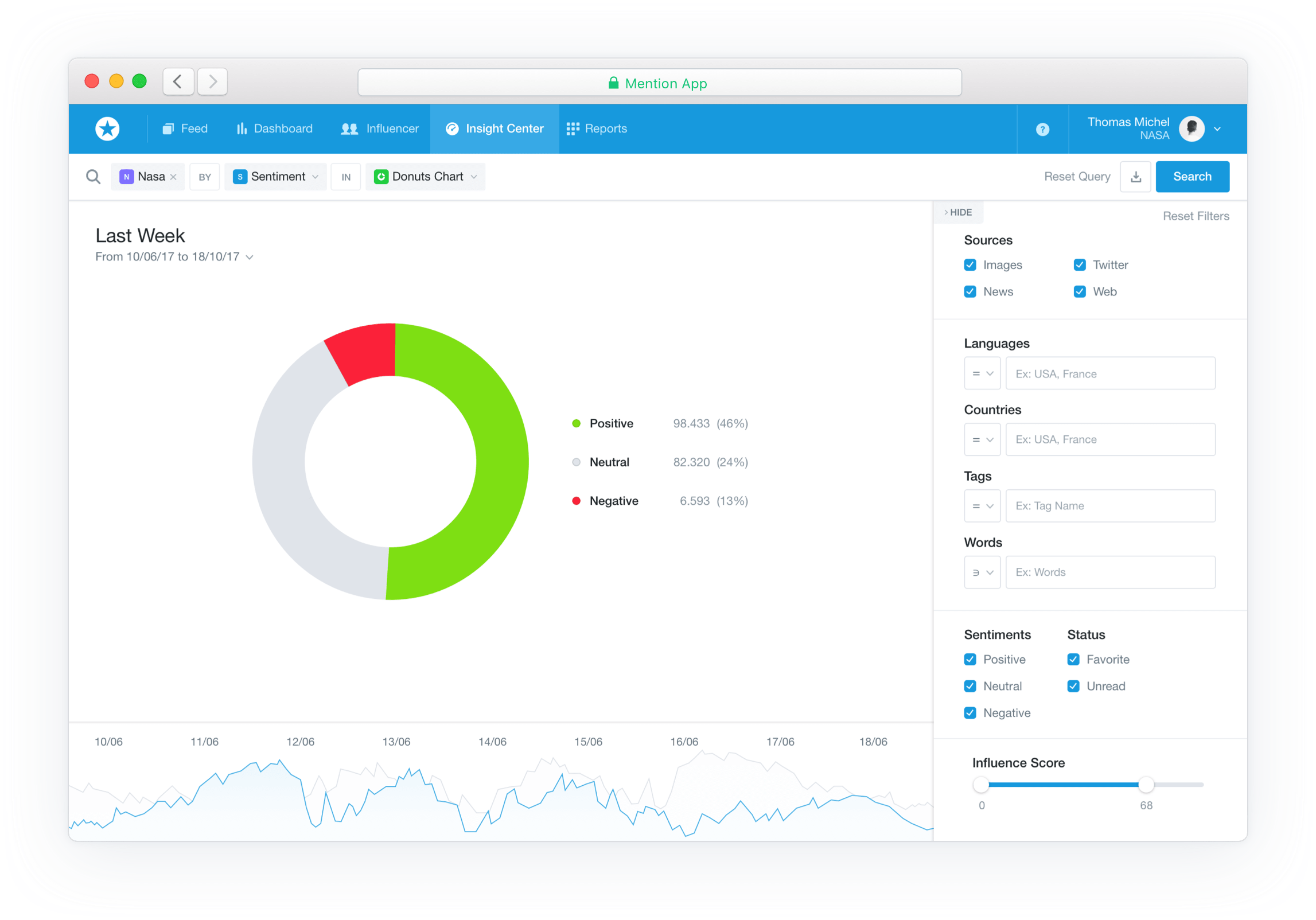
The measurable outcomes were impressive: a 127.1% increase in video views and 170.1% Facebook audience growth. The ability to present clear sentiment data in reports, demonstrating tangible fan enthusiasm and engagement, also strengthened trust with over 35 corporate partners, facilitating more flexible and impactful content strategies. The Hawks’ experience underscores how AI-powered sentiment analysis can transform raw social chatter into strategic assets, driving both audience engagement and business objectives.
The Future of Sentiment Analysis
The field of sentiment analysis is continuously evolving, driven by advancements in AI and the ever-increasing complexity of human communication. Future trends include:

- Predictive Sentiment Analysis: Moving beyond current sentiment to forecast future emotional responses based on historical data and real-time triggers.
- Multimodal Sentiment Analysis: Integrating text, audio (voice tone), and visual cues (facial expressions, body language, emojis, images) to achieve a more holistic and accurate understanding of sentiment.
- Hyper-Personalization: Using sentiment insights to deliver highly personalized content, product recommendations, and customer service interactions.
- Ethical AI in Sentiment Analysis: Increased focus on developing unbiased models, ensuring data privacy, and establishing transparent ethical guidelines for the use of sentiment data.
- Integration with IoT and Wearables: Potentially analyzing biometric data or contextual information from IoT devices to infer user sentiment in real-time environments.
Conclusion: AI-Driven Insights for Business Growth
AI-powered sentiment analysis tools are no longer a luxury but a strategic imperative for businesses aiming to thrive in the digital age. They make it incredibly easy for organizations to understand and respond effectively to customer emotions and opinions, transforming a chaotic deluge of data into decision-ready intelligence. By decoding the emotional fabric of online conversations, brands can build stronger relationships, mitigate risks, innovate products, and ultimately, drive sustainable business growth. Platforms like Sprout Social, with their proprietary AI and advanced sentiment analysis and listening features, exemplify how these tools empower businesses to gain a competitive edge by truly understanding the human element behind the data. The journey from raw text to actionable insight is a testament to the transformative power of AI in modern business.