Google Ads Editor 2.13 Rolls Out with Enhanced AI Max Capabilities, Performance Max Updates, and Demand Gen Expansion

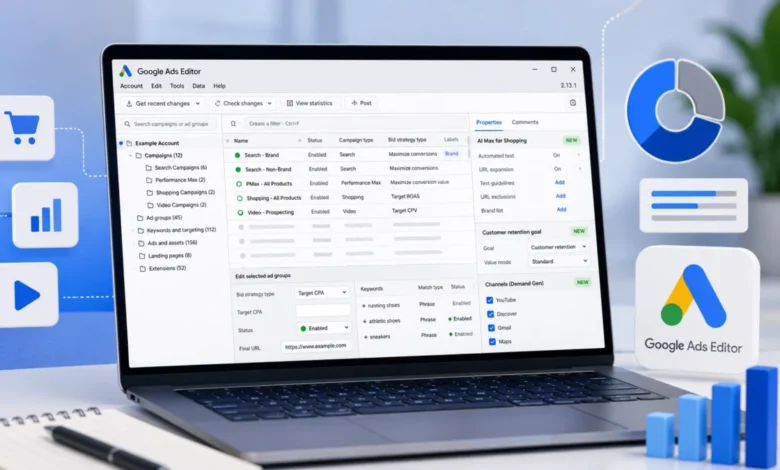
Google Ads Editor 2.13 has begun its rollout, ushering in a significant wave of enhancements designed to empower advertisers in managing their campaigns more effectively, particularly those leveraging Google’s advanced AI-driven advertising solutions. The latest version introduces crucial support for AI Max within Shopping campaigns, introduces new retention goals for Performance Max, expands the functionality of Demand Gen campaigns, and incorporates several workflow improvements aimed at streamlining offline campaign management. This update also brings new reporting features and AI compliance tools, while simultaneously phasing out the creation of new Video Action campaigns.
Key Innovations in Google Ads Editor 2.13
The release of Google Ads Editor 2.13 represents a substantial leap forward in providing advertisers with the tools they need to navigate the increasingly sophisticated landscape of Google Ads. A primary focus of this update is to enhance the integration and management of Google’s latest artificial intelligence-powered campaign types.
Among the standout features are:
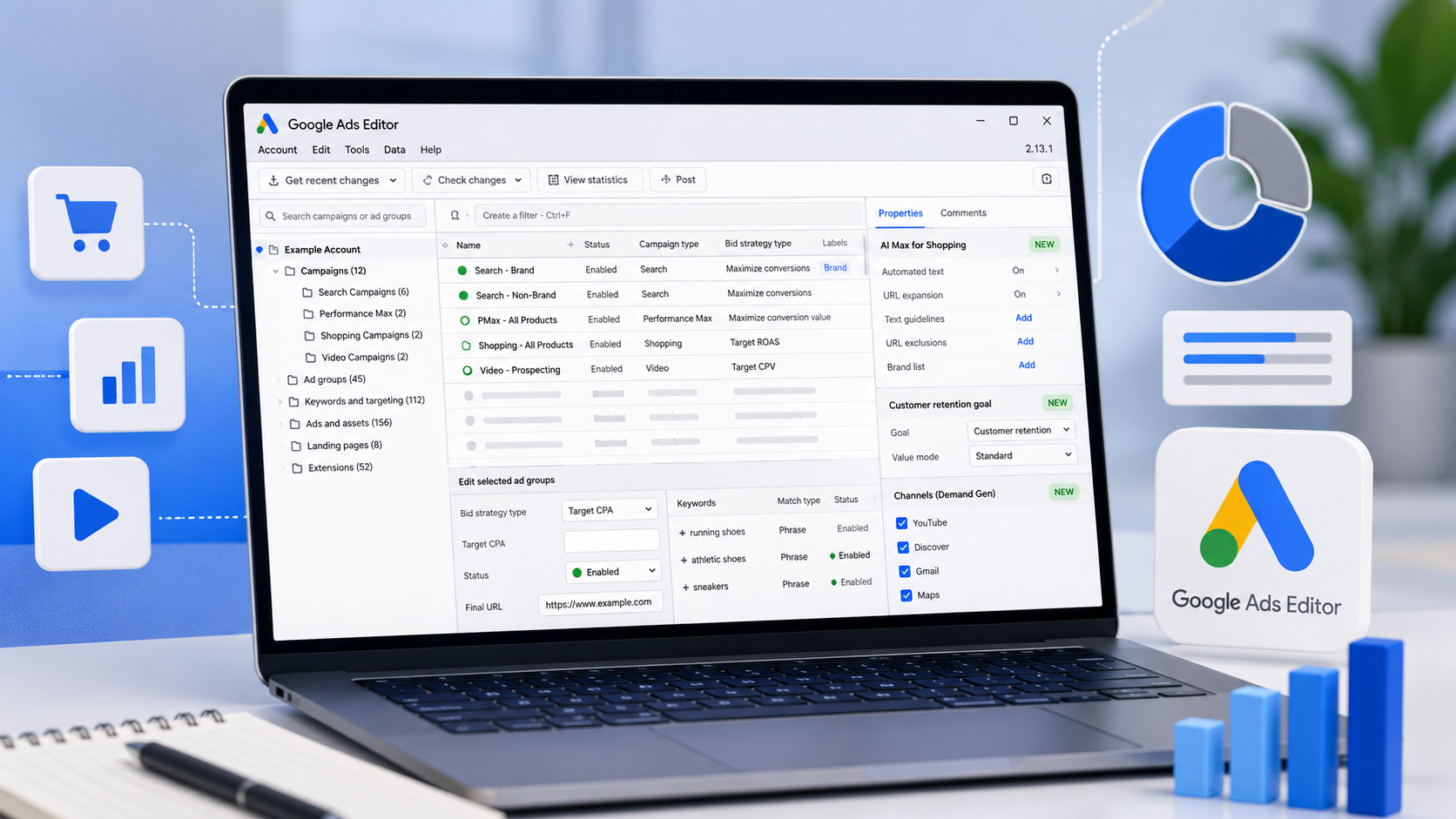
- AI Max Support for Shopping Campaigns: This is arguably the most impactful addition for Pay-Per-Click (PPC) advertisers. It bridges a critical gap, bringing feature parity between Shopping campaigns, Search campaigns, and Performance Max campaigns directly within Google Ads Editor. This means advertisers who prefer or rely on Editor for bulk campaign management can now configure and optimize AI-powered features for their Shopping ads without needing to switch back to the web-based Google Ads interface. This integration is vital for efficiency, allowing for mass edits, adjustments, and strategic planning of AI-driven Shopping campaigns directly from a desktop application.
- New Performance Max Retention Goals: Performance Max campaigns, designed to automate ad delivery across all of Google’s channels, have been further refined with the introduction of new retention goals. These goals allow advertisers to better target users who are likely to return or engage with their brand over time, moving beyond immediate conversion metrics to foster long-term customer relationships. This addition reflects a broader industry trend towards valuing customer lifetime value (CLV) over single-transaction metrics.
- Expanded Demand Gen Features: Demand Gen campaigns, which leverage AI to drive demand across YouTube, Discover, and Gmail, have seen expanded functionality within the Editor. This includes enhancements to audience targeting, creative asset management, and performance insights, enabling advertisers to manage these visually rich and audience-focused campaigns with greater precision and efficiency offline. The integration of these advanced features into the Editor signifies Google’s commitment to making its newer campaign types more accessible to a wider range of advertisers.
- AI Compliance Tools: In an era of increasing data privacy concerns and regulatory scrutiny, the inclusion of AI compliance tools is a significant development. While specific details of these tools are not elaborated in the initial announcement, their presence suggests Google is proactively addressing the need for advertisers to manage their AI-driven campaigns in a manner that aligns with evolving privacy standards and ethical considerations. This could involve features related to data usage transparency, consent management, or adherence to specific AI guidelines.
- New Reporting Capabilities: Enhanced reporting is a perennial request from advertisers, and Google Ads Editor 2.13 delivers with new capabilities that provide deeper insights into campaign performance. While the specifics are not detailed, improved reporting often translates to more granular data, better visualization options, and the ability to export more comprehensive reports for analysis and strategic decision-making. This empowers advertisers to understand the impact of their campaigns more thoroughly.
- Retirement of New Video Action Campaigns: A notable change in this release is the discontinuation of support for creating new Video Action campaigns within Google Ads Editor. This decision aligns with Google’s ongoing strategic shift towards consolidating and evolving its video advertising offerings. Video Action campaigns have largely been superseded by the more versatile Demand Gen campaigns, which offer a broader reach and more integrated creative options across Google’s video and discovery surfaces. Advertisers can still manage existing Video Action campaigns, but the focus for new campaign creation is now firmly on Demand Gen.
Why This Update Matters to Advertisers
The significance of Google Ads Editor 2.13 cannot be overstated, particularly for advertisers who depend on the Editor for efficient bulk campaign management. The ability to manage AI Max for Shopping campaigns directly within the Editor means a significant reduction in manual work and potential for error. Previously, advertisers might have had to toggle between the Editor and the web interface to fully leverage these advanced AI features. Now, they can perform comprehensive configuration and optimization of Shopping campaigns, Search campaigns, and Performance Max campaigns from a single, offline-accessible platform. This not only saves time but also allows for more strategic and integrated campaign planning.
The introduction of new reporting capabilities and workflow improvements further solidifies the Editor’s role as a central hub for campaign management. Features like improved column management, resume download support (allowing interrupted downloads to be picked up where they left off), and updates to bidding strategy management all contribute to a more robust and user-friendly experience. These enhancements are particularly valuable for agencies and large advertisers managing numerous accounts and complex campaigns.
The Evolving Role of Google Ads Editor
The trajectory of Google Ads Editor’s development clearly indicates its transformation from a simple bulk editing tool into a comprehensive platform capable of managing nearly every major campaign feature offline. As Google continues to integrate more sophisticated AI and automation into its advertising products, the Editor is evolving in lockstep to ensure advertisers can harness these advancements without being tethered to the web interface.
This evolution is a direct response to the growing complexity of digital advertising. Advertisers require tools that can handle the scale and intricacy of modern campaigns, from granular keyword management to the strategic deployment of AI-powered bidding and targeting. The Editor’s ability to sync with the live Google Ads platform, while allowing for offline work, provides a critical balance between control and efficiency.
The retirement of support for creating new Video Action campaigns also highlights Google’s strategic direction. This move is consistent with the company’s efforts to simplify its advertising product suite and channel resources into its most innovative and performant offerings. The transition from Video Action to Demand Gen is a natural progression, offering advertisers a more unified and powerful solution for reaching audiences across video and discovery formats. This strategic shift underscores Google’s commitment to advancing AI-driven ad formats that aim to deliver better results for advertisers and a more personalized experience for users.
Broader Implications for the PPC Industry
The continuous development of Google Ads Editor, particularly with the integration of advanced AI capabilities, has several broader implications for the PPC industry:
- Increased Adoption of AI-Powered Campaigns: By making features like AI Max for Shopping more accessible through the Editor, Google is likely to accelerate the adoption of these AI-driven campaign types. Advertisers who might have been hesitant due to perceived complexity or a preference for offline management will find it easier to integrate these powerful tools into their strategies.
- Enhanced Efficiency for Large Advertisers and Agencies: The workflow improvements and expanded features directly benefit agencies and large advertisers managing multiple accounts and complex campaign structures. The ability to perform bulk edits and strategic adjustments offline saves significant time and resources, allowing for more strategic focus.
- Focus on Strategic Oversight: As AI takes on more of the execution burden, the role of the advertiser is shifting towards strategic oversight, creative development, and performance analysis. Tools like the Editor, with its enhanced reporting and management capabilities, are crucial in facilitating this shift. Advertisers can spend less time on manual tasks and more time on understanding campaign performance, identifying new opportunities, and refining their overall marketing strategy.
- Data Privacy and AI Compliance: The introduction of AI compliance tools, even if not fully detailed, signals a growing awareness and emphasis on responsible AI deployment within advertising. As AI becomes more integral to campaign management, advertisers will need to ensure their practices align with evolving data privacy regulations and ethical standards. This may lead to greater scrutiny of how AI models are trained and utilized, and how user data is managed.
- The Future of Campaign Management Tools: The evolution of Google Ads Editor suggests a future where campaign management tools are deeply integrated with AI, offer robust offline capabilities, and provide comprehensive insights. This trend will likely push other advertising platforms to enhance their own management tools, fostering a competitive environment that ultimately benefits advertisers through more powerful and user-friendly solutions.
Looking Ahead
Google Ads Editor 2.13 represents one of the most substantial updates in recent memory, underscoring Google’s commitment to empowering advertisers with advanced tools for managing its evolving suite of AI-driven advertising solutions. The seamless integration of AI Max for Shopping, the expanded capabilities of Performance Max, and the enhancements to Demand Gen campaigns provide advertisers with greater control and efficiency. As Google continues to push the boundaries of AI in advertising, the ongoing development of tools like Google Ads Editor will be crucial for advertisers seeking to maintain a competitive edge in the dynamic digital marketing landscape. The emphasis on AI compliance also indicates a proactive approach to navigating the complex regulatory and ethical considerations surrounding artificial intelligence in advertising, setting a precedent for responsible innovation.