Optimizing Instagram Engagement: Buffer’s 2026 Report Reveals Prime Posting Times for Maximum Reach.

A comprehensive analysis by Buffer, examining 9.6 million Instagram posts, has pinpointed the optimal times for content creators and businesses to engage their audiences in 2026. The study identifies Thursday at 9 a.m., Wednesday at 12 p.m., and Wednesday at 6 p.m. as the leading windows for achieving peak engagement. These findings, part of Buffer’s larger "State of Social Engagement 2026" report, underscore the critical role of timing in a competitive digital landscape, where the difference between high visibility and obscurity can be substantial.
The Evolving Landscape of Instagram Engagement
In an era defined by fierce competition for audience attention, understanding the nuances of platform algorithms and user behavior is paramount. Instagram, with its ever-evolving algorithm, continually adjusts how content is surfaced to users. While content quality remains the bedrock of any successful social media strategy, the precise moment a post goes live can significantly amplify its initial reach and subsequent engagement. The days of a purely chronological feed are long past, replaced by a sophisticated algorithm that prioritizes relevance and interaction. Early momentum, generated by posting when an audience is most active, serves as a crucial signal to the algorithm, indicating that the content is valuable and worthy of broader distribution.
![Best Time to Post on Instagram: 2026 Data from 9.6M Posts [Updated July 2026]](https://storage.ghost.io/c/6d/21/6d217297-aa70-41fe-b68d-e29e411dd3ed/content/images/2026/01/best-time-to-post-on-instagram-2026.png)
Buffer’s extensive research, which spanned from January 2024 to December 2025 and analyzed 52 million posts across ten platforms from over 200,000 accounts, offers a robust, data-backed perspective on these dynamics. The 9.6 million Instagram posts specifically analyzed for this report provide a granular view of user activity patterns. A key takeaway is that the "best time" is not a monolithic slot but rather a dynamic window that shifts throughout the week, with significant disparities between peak engagement periods and low-activity "dead zones."
Methodology and Algorithmic Insights
Buffer’s analysis focused on median engagement rates rather than raw reach or total likes. This methodological choice helps to neutralize the influence of outlier posts or exceptionally large accounts, making the insights more broadly applicable to a diverse range of users, from nascent creators to established brands. Engagement – encompassing likes, comments, shares, and reposts – is a powerful signal to the Instagram algorithm. Notably, Head of Instagram Adam Mosseri has highlighted "sends per reach" (the frequency with which users direct message a post or Reel to a friend) as the platform’s most important algorithmic factor for 2026, especially within Reels and Discover feeds. This metric underscores the algorithm’s preference for content that fosters direct interaction and sharing among users, indicating genuine value and relevance. Therefore, posting when audiences are primed to engage and share is directly correlated with algorithmic favorability.
Overall Peak Engagement Windows for 2026
![Best Time to Post on Instagram: 2026 Data from 9.6M Posts [Updated July 2026]](https://storage.ghost.io/c/6d/21/6d217297-aa70-41fe-b68d-e29e411dd3ed/content/images/2026/01/best-time-to-post-instagram-2026-heatmap.png)
The data consistently points to midweek days, particularly Wednesday and Thursday, as offering the highest engagement potential. Evening hours, generally from 6 p.m. to 11 p.m. local time, emerge as consistently strong performers across most days. This pattern aligns with broader demographic insights: a significant portion of Instagram users (over a third) fall into the 25-to-34 age bracket, according to Statista. This demographic is often winding down from work in the evenings, making it a prime time for casual scrolling and engagement.
The top three global best times to post on Instagram are:
- Thursday at 9 a.m. (Local Time)
- Wednesday at 12 p.m. (Local Time)
- Wednesday at 6 p.m. (Local Time)
It is crucial to note that Buffer’s data scientists normalized these times, meaning they apply universally to any local timezone. A 9 a.m. recommendation holds true whether a user is in New York, London, Mumbai, or Sydney, eliminating the need for manual conversion.
Day-by-Day Breakdown of Optimal Posting Times
![Best Time to Post on Instagram: 2026 Data from 9.6M Posts [Updated July 2026]](https://storage.ghost.io/c/6d/21/6d217297-aa70-41fe-b68d-e29e411dd3ed/content/images/2026/01/best-day-to-post-instagram-2026-.png)
While the overall trends provide a valuable blueprint, a more granular, day-by-day analysis reveals specific opportunities and areas to avoid:
- Monday: The best time to post on Monday is 7 p.m., closely followed by 6 p.m. and 8 p.m. As users transition back into the work week, Monday evenings offer a window for engagement as they settle into their routines and catch up on social feeds.
- Tuesday: Tuesdays show strong potential, ranking as the third-strongest day overall. The best time is 7 p.m., with 3 p.m. and 5 p.m. also yielding high engagement. This suggests a sustained period of audience activity from mid-afternoon into the early evening.
- Wednesday: As the highest-performing day, Wednesday presents multiple strong opportunities. The peak times are 12 p.m. (noon), 6 p.m., and 8 a.m. The midday spike at noon is particularly noteworthy, aligning with lunch break scrolling habits.
- Thursday: Thursday is an intriguing anomaly in the dataset. While most days favor evening posts, Thursday mornings consistently outperform. The optimal time is 9 a.m., followed by 8 a.m. and 7 a.m. The research suggests this could be attributed to "end-of-week planning energy," with users checking in on content as they map out their weekend activities.
- Friday: Fridays generally mark a decline in engagement. The best time is 10 p.m., with 9 p.m. and 6 a.m. also showing some activity. However, Fridays are identified as one of the two weakest days, suggesting that high-stakes content might be better reserved for midweek.
- Saturday: Saturday mirrors Friday in terms of low engagement. The strongest window is 9 p.m., followed by 10 p.m. and 8 p.m. The general recommendation is to save crucial content for weekdays and utilize Saturday evenings for lighter, more casual posts if a weekend presence is desired.
- Sunday: Sunday evenings offer a moderate rebound in activity compared to earlier weekend hours. The best time is 9 p.m., with 10 p.m. and 8 p.m. also performing well, as audiences wind down before the start of the new week.
Worst Times and Days to Avoid
Conversely, the study also clearly delineates periods of significantly low engagement. Posts made between 1 a.m. and 5 a.m. on any given day consistently yield the lowest engagement rates, aligning with natural sleep cycles. Furthermore, Friday and Saturday are unequivocally the weakest days for engagement across all time slots. This stark contrast emphasizes the importance of strategic scheduling to avoid "Instagram dead zones" where content is unlikely to gain traction.
Optimizing for Different Content Formats: Reels, Carousels, and Stories
![Best Time to Post on Instagram: 2026 Data from 9.6M Posts [Updated July 2026]](https://storage.ghost.io/c/6d/21/6d217297-aa70-41fe-b68d-e29e411dd3ed/content/images/2026/05/image-6.png)
Instagram’s diverse content formats cater to different user intents, and understanding these nuances can further refine a posting strategy. Adam Mosseri, Head of Instagram, has provided insight into user behavior: "People tend to look for their closest friends in stories, use explore to discover new content and creators, and be entertained in reels."
While Buffer’s primary analysis combined all post types, the overarching peak windows largely apply. However, format-specific considerations can enhance performance:
- Instagram Reels: Given that Reels are primarily for entertainment, the evening hours between 6 p.m. and 11 p.m. on Wednesday and Thursday are particularly potent. Users are more likely to engage with entertaining video content when they have dedicated downtime, post-work. The emphasis on "sends per reach" for Reels further supports this, as sharing dynamic content often occurs during moments of leisure.
- Instagram Carousels: Carousels, which encourage users to swipe through multiple images or videos, tend to perform well when audiences have sufficient time to consume the content. The general midweek peaks, such as Wednesday at 12 p.m. and 6 p.m., and Thursday at 9 a.m., align with lunch breaks and post-work scrolling, providing ample opportunity for users to engage with multi-slide formats.
- Instagram Stories: Stories, with their 24-hour lifespan, prioritize consistency over a single "perfect" posting slot. Mosseri recommends posting one to two Stories daily to maintain a healthy weekly cadence and stay top-of-mind for followers. Their ephemeral nature makes them ideal for daily updates, behind-the-scenes glimpses, and direct interaction, complementing the more evergreen feed posts.
Practical Application: Leveraging Personal Analytics
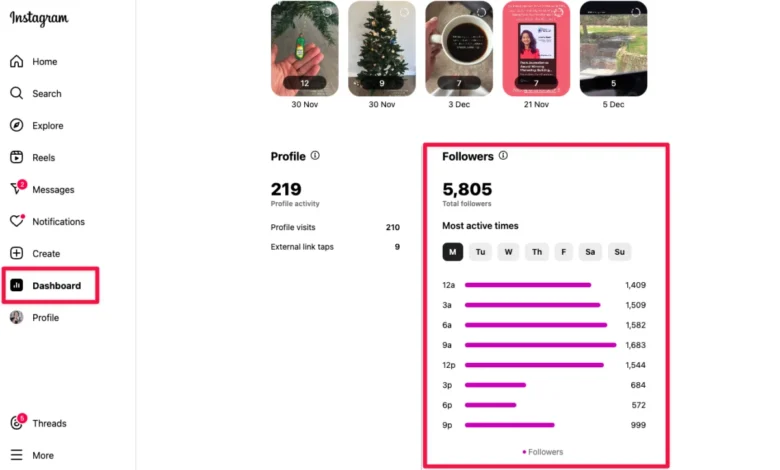
While global data provides invaluable benchmarks, the most effective strategy integrates these insights with personalized audience data. Instagram Insights, available to professional (Creator or Business) accounts, offers bespoke analytics on when a specific follower base is most active. This in-app tool can be accessed via the mobile app or web version, providing graphs that detail follower activity levels by day and hour.
![Best Time to Post on Instagram: 2026 Data from 9.6M Posts [Updated July 2026]](https://storage.ghost.io/c/6d/21/6d217297-aa70-41fe-b68d-e29e411dd3ed/content/images/2026/05/image-7.png)
It is crucial to distinguish between when followers are active on Instagram and when they are most likely to engage with specific content. While Insights show activity, experimentation remains key to identifying the true engagement sweet spots for a unique audience. For instance, Buffer’s own Instagram audience exhibits peak activity between 3 p.m. and 6 p.m., differing from the overall platform averages. This highlights the importance of using global data as a starting point, then refining the strategy with proprietary audience metrics.
Strategic Implications for Brands and Creators
The findings from Buffer’s "State of Social Engagement 2026" report offer several strategic implications for anyone looking to maximize their Instagram presence:
- Prioritize Midweek Evenings: For general feed posts (photos, videos, carousels), focus on Wednesday and Thursday evenings, with Wednesday midday and Thursday mornings offering specific, high-potential windows.
- Rethink Weekend Strategies: Weekends, particularly Friday and Saturday, are generally low-engagement periods. Brands should consider if their content truly resonates during these times or if it’s better to save high-value posts for weekdays. Lighter, more informal content might be suitable for weekend evenings.
- Align Content with User Intent: Schedule Reels for evening entertainment, Carousels for periods allowing deeper consumption, and Stories for consistent, daily presence.
- Embrace Algorithmic Signals: Actively create content designed to encourage "sends per reach," comments, and shares. Timing posts to coincide with peak activity increases the likelihood of these interactions.
- Utilize Scheduling Tools: Platforms like Buffer offer automated scheduling features that can pre-populate optimal posting times based on aggregated data, streamlining content distribution and ensuring consistency. This frees up marketers to focus on content creation and strategy.
- Continuous Experimentation: The digital landscape is dynamic. What works today might shift tomorrow. Regularly review Instagram Insights, experiment with new posting times, and adapt strategies based on performance data.
Ultimately, mastering Instagram engagement is a multi-faceted endeavor. While precise timing, as revealed by Buffer’s extensive analysis, provides a significant advantage, it is one component of a holistic strategy. Content quality, audience understanding, consistent posting, and a keen awareness of algorithmic shifts collectively form the checklist for high-performing Instagram posts in 2026 and beyond. By blending data-driven insights with creative execution, brands and creators can navigate the competitive platform to achieve meaningful connections and measurable growth.