The Strategic Imperative of Simplification: How Jabil is Architecting a Unified Global Data Backbone to Drive Operational Resilience

As multinational corporations expand their global footprint, the rapid proliferation of disparate digital tools often transforms operational technology from a strategic asset into a significant liability. For Jabil, a global manufacturing powerhouse headquartered in St. Petersburg, Florida, the challenges of managing operations across 100-plus sites in over 30 countries necessitated a fundamental shift in philosophy. The company, which employs more than 140,000 people and serves over 400 of the world’s leading brands, recently embarked on an extensive digital transformation journey aimed at dismantling data silos, replacing manual workarounds, and establishing a cohesive, scalable technology foundation.
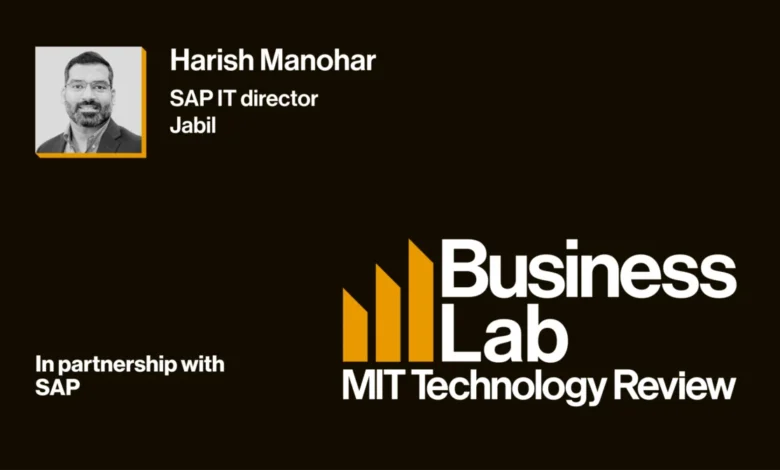
At the heart of this transformation is a “simplify-first, then-innovate” mindset. Guided by Harish Manohar, SAP IT Director at Jabil, the company is moving away from decades of accumulated technical debt—characterized by site-specific legacy systems and localized spreadsheet-based workflows—to a standardized, integrated enterprise architecture.
The Anatomy of Technical Debt and the Case for Integration
For six decades, Jabil has provided comprehensive engineering, supply chain, and manufacturing solutions. However, this growth came with an unintended consequence: extreme fragmentation. Because Jabil’s individual manufacturing sites have operated for varying lengths of time, they historically adopted independent software solutions to meet specific, localized needs. Over the past 25 years, this resulted in a patchwork of legacy applications that hindered the company’s ability to gain a global, real-time view of its operations.
When internal visibility is hampered by disconnected systems, the ability to identify supply chain disruptions early is compromised. The company recognized that without a single source of truth, teams were forced to spend excessive time on manual data reconciliation rather than strategic decision-making. This friction not only slowed down response times during market volatility but also created barriers to scaling new technologies, such as artificial intelligence and advanced automation.
The Chronology of Transformation: A Shift to Standardized Governance
The journey toward a unified digital backbone did not happen overnight; it required a rigorous, multi-year strategy focused on measurable business value. The timeline of this transformation reflects a phased approach:
- Initial Assessment (The Diagnostic Phase): Jabil’s leadership identified that its primary hurdle was the lack of process consistency. The audit revealed that disparate systems were preventing the organization from operating as a single, cohesive entity.
- The Integration Pivot: Jabil prioritized the implementation of SAP Integration Suite and the SAP Business Technology Platform (BTP). By focusing on an API-driven, event-based architecture, the IT team aimed to minimize point-to-point data movement, which is inherently inefficient and prone to error.
- Standardization and Clean-Core Adoption: Recognizing that heavy customization had previously inhibited agility, Jabil began adopting a “clean-core” strategy. By leveraging tools like SAP Signavio for business process management, the company is now working to standardize core operational workflows across its global network, significantly reducing the burden of maintenance and qualification for regulated business segments.
- Ongoing Deployment: Currently, the company is targeting the rollout of these shared, standardized processes across its most critical 40-plus sites, with the long-term goal of shifting from a site-by-site operational model to an enterprise-wide capability model.
Data as the Foundation for Future Innovation
Modernization is frequently misunderstood as a simple hardware or software upgrade, but at Jabil, the definition is strictly tied to business outcomes. According to Manohar, the backbone of any contemporary organization is data. Before an enterprise can successfully implement AI, machine learning, or predictive forecasting, it must ensure that data flows seamlessly across the organization.
The reliance on manual reconciliation—where different regions utilize local workbooks and spreadsheets—acts as a bottleneck for efficiency. By moving toward a unified system, Jabil is enabling its employees to transition from “chasing information” to “acting on insights.” This shift is particularly vital for inventory planners, finance analysts, and buyers, whose day-to-day productivity is now bolstered by shared visibility and consistent data pipelines.
Implications of Unified Workflows on Operational Resilience
The practical impact of this integration is most evident in the company’s ability to manage its supply chain. For a manufacturing firm, materials are the primary drivers of success. A unified workflow allows for the early identification of missing components, enabling managers to intervene before a production line is stalled.
Real-time analytics, once a localized luxury, are becoming a global standard for Jabil. By connecting end-to-end processes, the company can now execute scenario modeling that informs strategic adjustments. This capability is not merely about reporting past performance; it is about facilitating proactive decision-making that ensures business continuity in an era of frequent global supply chain disruptions.
The Role of Artificial Intelligence and Future Scaling
With a robust integration foundation now in place, Jabil is poised to accelerate its adoption of next-generation technologies. The company is actively exploring the integration of AI to solve complex operational puzzles. Key areas of focus include:
- Predictive Supply Chain Insights: Moving from reactive reporting to anticipating market shifts and material availability.
- Intelligent Exception Handling: Automating the resolution of routine disruptions, thereby allowing human operators to focus on high-value, complex problem-solving.
- AI-Driven Planning and Forecasting: Utilizing historical data and real-time inputs to optimize inventory levels and production scheduling.
The success of these AI initiatives is inherently dependent on the quality of the underlying data. Because Jabil has invested in an integration architecture that ensures "trusted data," the AI models it deploys are more likely to deliver accurate, actionable insights rather than experimental, anecdotal outcomes.
Professional Guidance for Scaling Enterprises
Jabil’s experience serves as a blueprint for other global enterprises grappling with the paradox of choice and tool sprawl. The lessons learned during this transformation suggest a clear path for IT leadership:
- Prioritize Integration as a Strategy, Not an Afterthought: Leaders should view integration as the foundational layer upon which all other digital capabilities are built.
- Standardize Before You Optimize: It is more effective to standardize processes across multiple sites than to attempt to optimize 100 different, fragmented versions of the same process.
- Focus on Long-term Architectural Scalability: When selecting integration patterns, organizations must look beyond the immediate 12-month requirements and ensure that the architecture remains viable for the next three to five years.
- Align IT with Business Value: Technology deployments should be governed by measurable business cases. When IT and business stakeholders act as true partners, the technology ceases to be an overhead and becomes a competitive advantage.
Conclusion: Simplicity as a Competitive Advantage
In the competitive landscape of global manufacturing, agility is paramount. Jabil’s commitment to simplifying its technology landscape underscores a broader industry truth: simplicity at scale is a profound competitive advantage. By dismantling the silos of the past and investing in a unified data backbone, the company is not only improving its current operational resilience but is also future-proofing its ability to leverage the next wave of industrial innovation. As the manufacturing sector continues to face unprecedented volatility, Jabil’s pivot toward integration demonstrates that true modernization is found in the ability to act with clarity, consistency, and speed across the entire global enterprise.