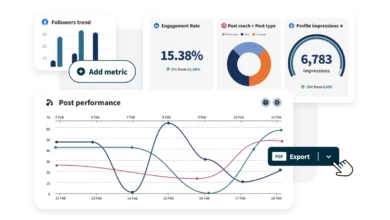
Unlocking the True Value of Social Media: A Comprehensive Guide to Calculating and Maximizing ROI


Calculating social media Return on Investment (ROI) is paramount for modern businesses, providing a tangible measure of the value generated from digital marketing efforts against the resources invested. This encompasses both quantifiable monetary gains and invaluable non-monetary benefits like brand equity and customer loyalty. While the traditional ROI formula—((value generated – costs) / costs) x 100—remains foundational, the evolving landscape of social media necessitates a more nuanced approach, one that assigns estimated values to less tangible outcomes to capture the full spectrum of impact. Despite its critical importance, proving social media ROI remains a significant concern for marketers, with a substantial 68% reporting anxiety over demonstrating the effectiveness of their social strategies to stakeholders. This apprehension underscores a widespread challenge in translating digital engagement into clear business metrics.
The Evolving Landscape of Social Media Measurement
The journey of social media ROI measurement has been marked by continuous evolution. In its nascent stages, social media success was often superficially gauged by vanity metrics such as follower counts and likes. As platforms matured and businesses recognized their immense potential beyond mere brand presence, the demand for concrete financial justification grew. Early models often relied on simplistic last-click attribution, inadvertently underestimating the complex, multi-touch nature of the customer journey where social media frequently plays an influential, albeit not always final, role.

Today, the understanding of social media’s contribution has shifted towards sophisticated multi-touch attribution models and assisted conversion tracking. This evolution reflects a growing acknowledgment that a customer’s path to purchase rarely follows a linear trajectory, often involving multiple interactions across various channels, including social media. The integration of advanced analytics tools and cross-platform data aggregation has become crucial for painting a comprehensive picture of social media’s impact, moving beyond surface-level engagement to reveal its deeper influence on sales funnels and long-term customer relationships.
Why Social Media ROI Matters More Than Ever
The sheer scale of social media engagement globally underscores its strategic importance. Projections indicate nearly 5.75 billion social media users worldwide by 2026, a colossal audience that businesses cannot afford to ignore. For enterprise-level teams, demonstrating social media ROI is not merely about optimizing campaigns; it is about safeguarding significant investments and justifying budgetary allocations in an increasingly competitive and data-driven corporate environment. Robust ROI figures provide the necessary evidence to maintain and even expand social media initiatives, preventing budget cuts when financial scrutiny intensifies.
Moreover, the commercial potential of social platforms is exploding. Statista’s social commerce market data reveals that purchases made directly through social media are expected to generate $908.5 billion in 2026, representing a robust 10.7% year-over-year growth. By 2028, this figure is projected to surpass the staggering $1 trillion mark. This phenomenal growth highlights social media’s transition from a branding tool to a powerful direct sales channel. Beyond direct sales, social media significantly influences broader business outcomes. Data indicates that 46% of marketers believe that leveraging social media directly improves sales, alongside its well-documented benefits in driving website traffic, increasing brand exposure, and generating high-quality leads that indirectly boost the bottom line. Accurate ROI tracking, therefore, is not just a reporting exercise but a strategic imperative that informs resource allocation, refines marketing strategies, and ultimately drives sustainable business growth.

Navigating the Hurdles: Common Roadblocks to Accurate Measurement
Measuring social media ROI is not without its complexities. Several inherent challenges often obscure the true value generated by social efforts:
- The Enigma of Multi-Touch Attribution: Social media rarely operates in isolation. A customer might discover a brand through an Instagram post, engage with an email campaign a week later, and ultimately convert via a paid search advertisement. In such multi-touch journeys, single-touch attribution models—which credit only the first or last interaction—often fail to give social media its rightful recognition. This can lead to an underestimation of social’s "assist" role throughout the customer journey, making it difficult to allocate credit accurately.
- Delayed Conversions and Extended Sales Cycles: The influence of social media can manifest weeks or even months after initial interaction, particularly in B2B and enterprise sales environments. A LinkedIn post, for instance, might plant a seed of interest that only culminates in a deal a quarter later. If ROI measurement focuses solely on immediate, same-day results, the long-tail impact of social media will be significantly undervalued, leading to skewed perceptions of its effectiveness.
- Quantifying Non-Monetary Value: Metrics such as brand awareness, customer sentiment, and share of voice are undeniably valuable assets, contributing significantly to a brand’s long-term health and market position. However, assigning a precise dollar figure to these intangible benefits presents a considerable challenge. Marketers often grapple with how to integrate these crucial non-monetary outcomes into a quantifiable ROI calculation, requiring creative methodologies to estimate their financial worth.
- Data Silos Across Disparate Platforms: Each social media platform typically offers its own proprietary analytics dashboard, creating a fragmented data landscape. Manually aggregating and correlating data from multiple sources is time-consuming, prone to errors, and distracts teams from deriving actionable insights. This challenge was highlighted in Nielsen’s 2025 Marketing Report as a top barrier to effective ROI calculation, emphasizing the need for unified analytics solutions to overcome data fragmentation and provide a holistic view of performance.
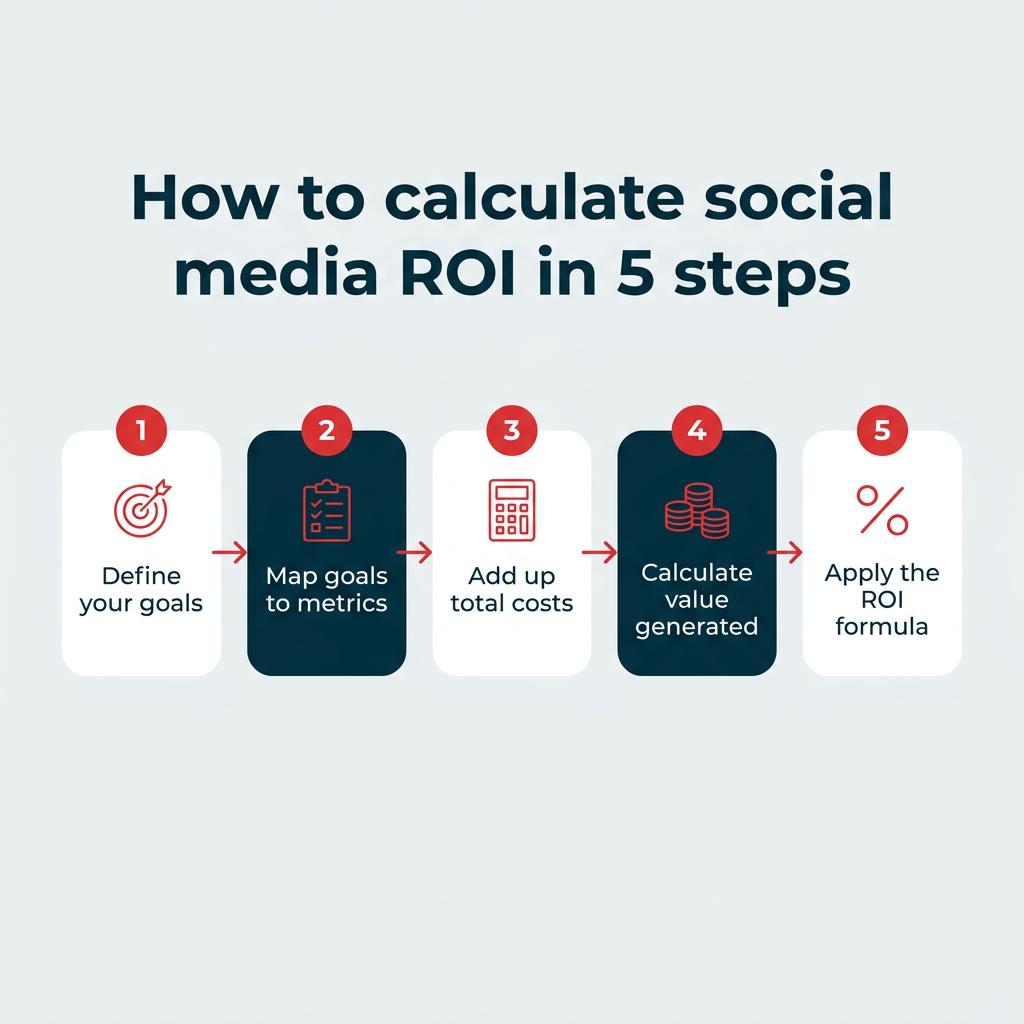
The Definitive Framework: Calculating Social Media ROI in Five Steps
To confidently calculate social media ROI, a structured approach is essential. The core formula serves as a starting point, but its effective application requires meticulous attention to defining goals, tracking costs, and accurately valuing outcomes.

Social media ROI = ((Value generated from social media – Costs of social media investment) / Costs) x 100
Here’s a five-step process to calculate social media ROI:
1. Define Your Social Media Goals: The first and most critical step is to establish clear, measurable social media goals that align directly with overarching business objectives. ROI will vary dramatically depending on whether the primary focus is on driving direct sales, generating leads, enhancing brand awareness, or improving customer service. While broad objectives are important, setting specific, campaign-level goals is crucial for accurate measurement. For example, campaign-specific goals might include increasing website traffic from Instagram by 20% in Q3, boosting lead generation via LinkedIn by 15%, or achieving a 10% increase in positive brand mentions on Twitter within a month. As Eileen Kwok, former Social & Influencer Marketing Strategist at Hootsuite, aptly advises, "The goals you have set for at the start of the year, could have already changed. Depending on the shifts your organization is making, or the changing social landscape, make sure you are revisiting your goals every quarter to see if any updates need to be made." Regular goal reassessment ensures relevance and accuracy.
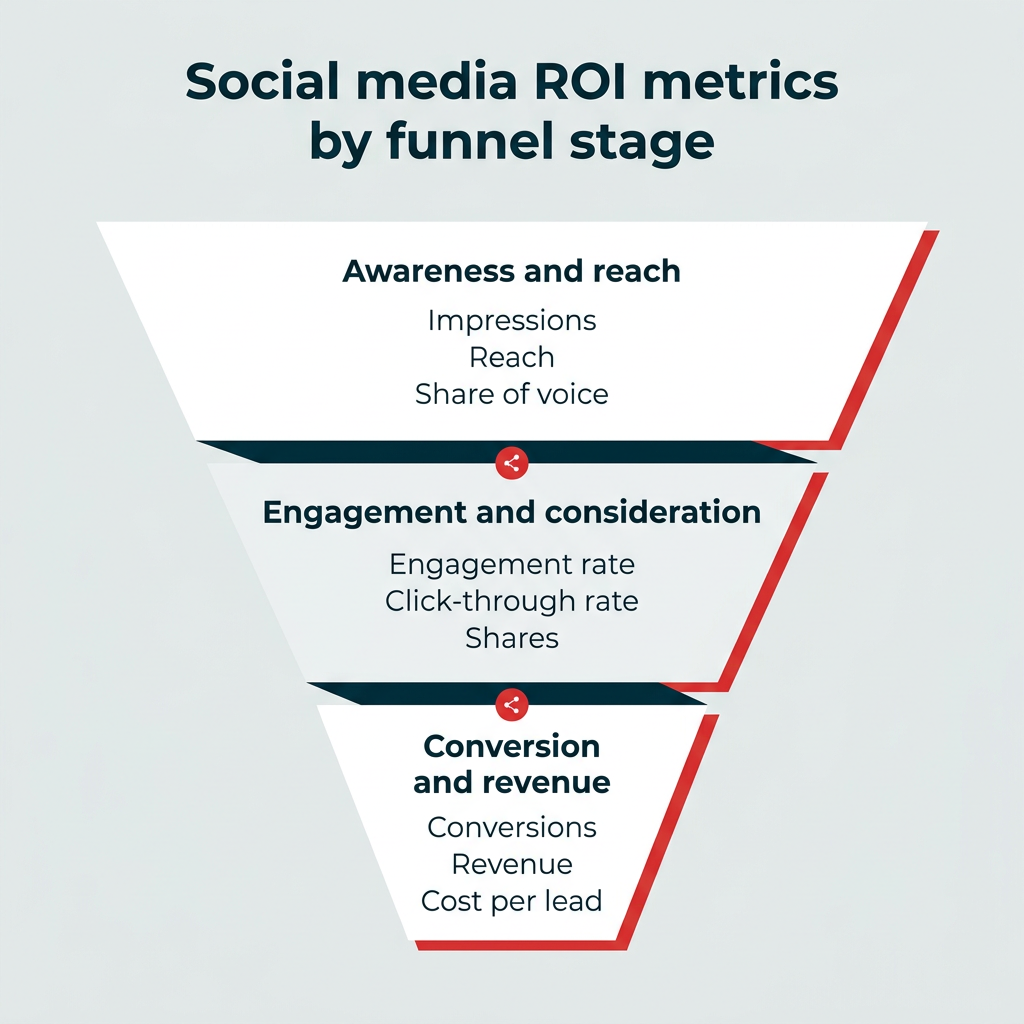
2. Map Goals to the Right Metrics: Once goals are defined, select the appropriate social media metrics that will demonstrate progress towards those objectives. Not all metrics are relevant for every goal. For instance:
- For Awareness Goals: Track impressions (total views), reach (unique viewers), brand mentions, share of voice, and follower growth rate. These indicate how widely your brand’s message is spreading.
- For Engagement and Consideration Goals: Monitor engagement rate (likes, comments, shares per post), click-through rate (CTR), content saves, shares, comments, and video views. These metrics reveal how much your audience interacts with and values your content.
- For Conversion and Revenue Goals: Focus on direct conversions (purchases, sign-ups), revenue directly attributed to social media, cost per lead (CPL), cost per acquisition (CPA), and return on ad spend (ROAS). These metrics directly link social activities to financial outcomes.
3. Add Up Your Total Social Media Costs: A comprehensive accounting of all social media investments over a specified period is essential. This includes both direct financial outlays and the imputed cost of resources. Common cost categories include:
- Personnel Costs: Salaries or hourly wages for social media managers, content creators, strategists, and community managers.
- Tool and Software Subscriptions: Costs for social media management platforms, analytics tools, design software, and scheduling applications.
- Content Creation Costs: Expenses for photography, videography, graphic design, copywriting, and licensing stock media.
- Advertising Spend: Budgets allocated to paid social media campaigns across various platforms.
- Agency Fees: Payments to external agencies for social media strategy, management, or content production.
- Training and Development: Costs associated with keeping the team updated on social media trends and best practices.
- Contest Prizes and Giveaways: Expenses for promotional activities designed to boost engagement.
A granular approach ensures all expenditures are factored into the ROI calculation.
4. Calculate the Value Generated: This step involves quantifying the total value derived from your social media efforts, encompassing both monetary and non-monetary returns.
- Monetary Value: This includes direct sales generated through social commerce, leads acquired and converted into customers, and measurable reductions in customer support costs due to social customer service.
- Non-Monetary Value: This category includes enhanced brand awareness, improved brand sentiment, increased customer loyalty and advocacy, and stronger community building. To incorporate these into the ROI formula, assign estimated dollar values. A practical approach is to use customer lifetime value (CLV) for new followers or an estimated value per lead, click, or engagement based on historical conversion rates and average customer value. While these estimations are not perfect, they provide a tangible number for leadership to assess the broader impact.
5. Apply the ROI Formula: With all necessary inputs gathered, plug the calculated value generated and total costs into the social media ROI formula. The result, typically expressed as a percentage, indicates the return on your investment. A positive ROI signifies that your social media efforts are generating more value than they cost, validating your strategy. Conversely, a negative ROI signals that expenditures outweigh returns, prompting a re-evaluation and adjustment of your social media strategy.
Illustrative Case Studies: ROI in Action
To demonstrate the practical application of this framework, consider these scenarios:
-
E-commerce Business Campaign: An online retailer launches a social media campaign to boost Q4 sales.
- Costs: $5,000 (ads, content creation, staff time).
- Value Generated: $14,000 in direct sales attributed to social, $500 in estimated value from new email subscribers, $1,500 in estimated brand awareness value. Total Value = $16,000.
- ROI Calculation: (($16,000 – $5,000) / $5,000) x 100 = 220%. This indicates a substantial return, generating 220% more value than invested.
-
B2B Lead Generation Initiative: A B2B software company focuses on generating qualified leads via LinkedIn.
- Costs: $8,000 (paid LinkedIn ads, content development, sales team follow-up time).
- Value Generated: 20 qualified leads, each with an estimated value of $500 (based on average deal size and conversion rates). Total Value = $10,000.
- ROI Calculation: (($10,000 – $8,000) / $8,000) x 100 = 25%. A positive return, indicating efficient lead acquisition.
-
Brand Awareness Campaign: A new consumer brand invests in a quarter-long campaign purely for awareness.
- Costs: $10,000 (influencer collaborations, video production, platform fees).
- Value Generated: 50,000 new unique users reached, 10,000 engagements. Using a proxy of $0.20 per engagement and $0.05 per unique reach, estimated value = (10,000 $0.20) + (50,000 $0.05) = $2,000 + $2,500 = $4,500.
- ROI Calculation: (($4,500 – $10,000) / $10,000) x 100 = -55%. This negative ROI indicates that while awareness might have increased, the estimated monetary value did not justify the investment, prompting a re-evaluation of the campaign’s approach or the value proxies used.
Defining "Good" Social Media ROI: Benchmarking and Context
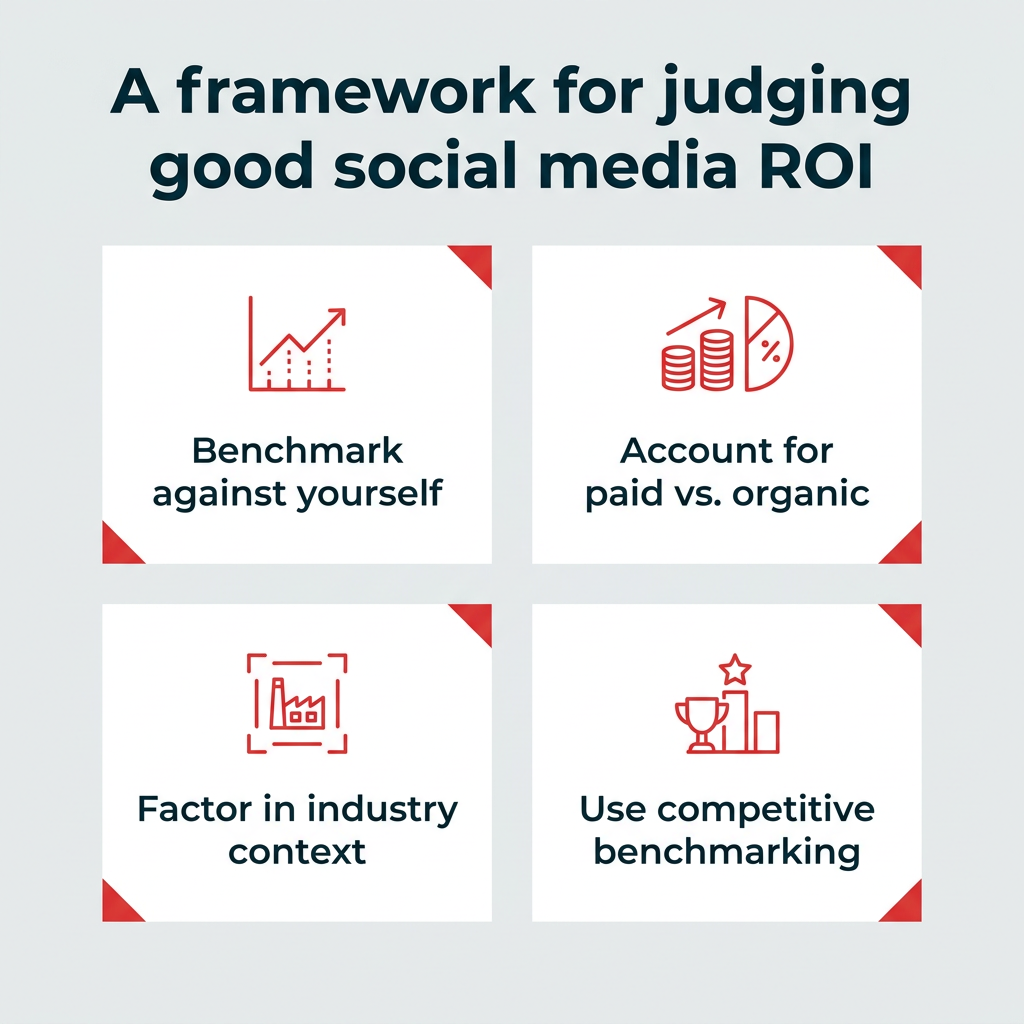
There is no universally accepted "good" social media ROI percentage, as it is highly dependent on various factors including industry, specific business goals, and whether the efforts are paid or organic. A positive ROI, however, is always the fundamental objective, indicating that the investment is generating more value than it costs. A useful framework for evaluating ROI involves:
- Historical Performance: Comparing current ROI to previous periods helps gauge improvement or decline in efficiency.
- Competitive Benchmarking: Analyzing competitor performance, where possible, provides context on industry standards and identifies areas for strategic advantage.
- Industry Averages: While broad, understanding typical ROI ranges within your sector can offer a general benchmark. For instance, many industries consider a 2-4x ROAS (Return on Ad Spend) for social media advertising to be a healthy return, though this varies significantly.
- Goal Alignment: The "goodness" of ROI should always be assessed in relation to the initial goals. A campaign focused on brand building might accept a lower direct monetary ROI than a direct-response sales campaign.
Ultimately, a positive and continually improving ROI that outpaces industry peers represents a strong and successful social media strategy.
Strategies for Elevating Your Social Media ROI

Continuous optimization is key to maximizing social media ROI. Implementing strategic adjustments based on data-driven insights can significantly enhance performance.
-
A/B Testing and Continuous Experimentation: Social media is a dynamic environment, making continuous testing vital. As Kwok emphasizes, "Social is a place where we are continuously testing new content, features, and learning what’s working/not working." Running A/B tests on content variables—such as headlines, calls to action, visual elements, ad copy, and posting times—allows marketers to identify optimal strategies. Hootsuite’s own experiments, like testing Instagram carousels against Reels, have provided valuable insights into format performance. By systematically testing and scaling successful content or ad variations, businesses can significantly improve their social media advertising ROI.
-
Competitive Intelligence: Analyzing competitor strategies provides invaluable insights. While public profiles offer basic visibility into competitor activity, advanced tools like Hootsuite Analytics enable deeper competitive analysis, tracking performance across channels and offering industry benchmarking data. This allows businesses to identify successful tactics employed by rivals and pinpoint opportunities for differentiation or improvement in their own strategies.
-
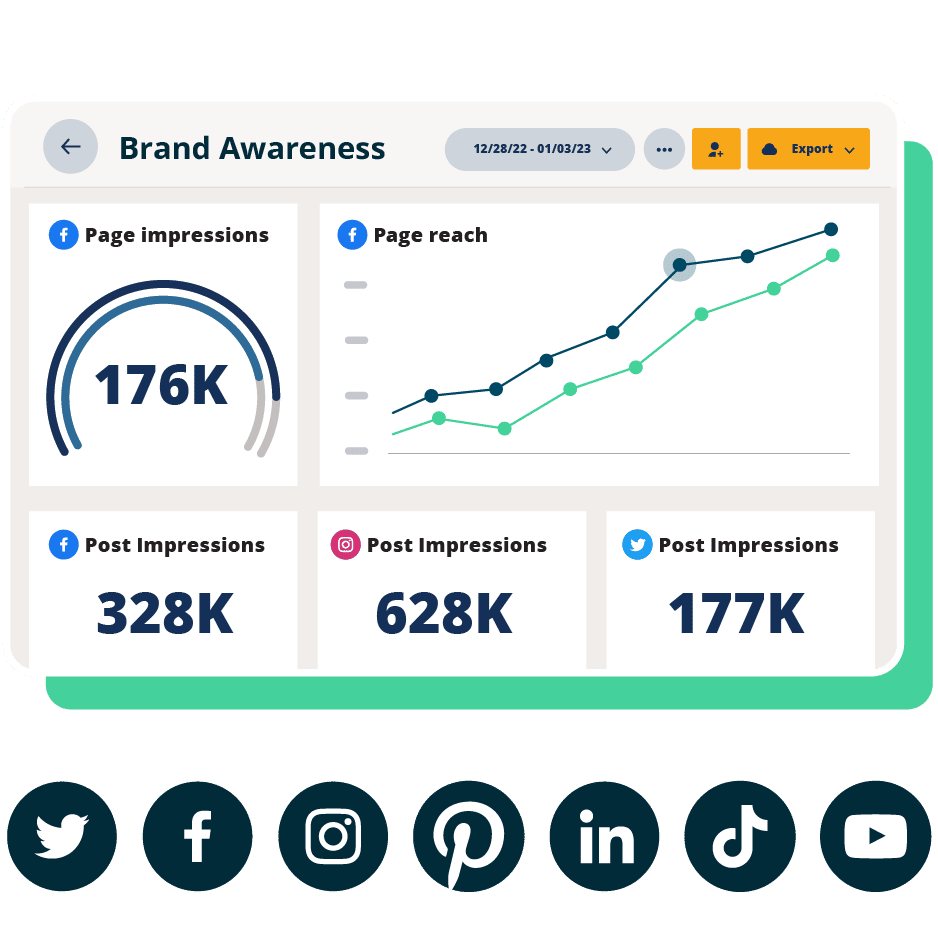
Leveraging UTM Parameters for Precision Tracking: Urchin Tracking Module (UTM) parameters are indispensable for attributing specific social media activities to website traffic and conversions. By appending unique tags to URLs shared on social media, marketers can precisely track the origin of website visitors, distinguishing traffic from different posts, campaigns, or platforms. This granular data enables accurate measurement of how individual social efforts contribute to direct conversions and revenue, transforming vague engagement metrics into tangible ROI figures.
-
Harnessing Social Commerce: With social commerce projected to exceed $1 trillion by 2028, integrating shoppable posts and in-app checkout features is a direct path to higher ROI. These features convert engagement into sales without users ever leaving the social platform, streamlining the customer journey. Measuring social commerce ROI involves tracking in-app purchases, product tag clicks, and checkout completions directly within platform commerce tools, offering cleaner, closed-loop attribution compared to traditional social campaigns.
-
Optimizing Content Formats: Not all content formats yield equal returns. Performance data should dictate content strategy. By analyzing which formats—such as short-form video, carousels, or static images—drive the best engagement and conversion rates on each platform, businesses can strategically allocate resources and double down on proven winners. Hootsuite’s carousel-versus-Reels experiment, which found carousels outperforming Reels in engagement and reach, exemplifies the importance of data-driven format optimization.
-
Refining Audience Targeting: For paid social campaigns, precise audience targeting is paramount for maximizing ROI. Leveraging retargeting campaigns to re-engage warm audiences, building lookalike audiences from high-value customers, and utilizing detailed social demographic and interest data to narrow targeting significantly reduces wasted ad spend. The more precisely an audience is defined, the higher the likelihood of conversions and, consequently, a stronger return on ad spend (ROAS).
The Technology Edge: Tools for Comprehensive ROI Measurement

Effective social media ROI tracking necessitates a robust ecosystem of tools. This typically involves a combination of native platform analytics for channel-specific data, web analytics platforms like Google Analytics for conversion tracking, CRM systems to link social interactions to customer lifecycles, and a centralized social media analytics platform to integrate and interpret all data.
The challenge of data silos, where insights remain fragmented across different tools, can be effectively addressed by unified platforms such as Hootsuite Analytics. Hootsuite consolidates social media data into a single dashboard, enabling marketers to connect social activity directly to broader business outcomes without the laborious task of juggling multiple interfaces.
Hootsuite’s analytics capabilities empower teams to fine-tune campaigns by examining content performance over time and across various platforms. This allows for the identification of high-performing content topics and formats, facilitating agile adjustments to content marketing strategies. With Hootsuite’s Advanced Analytics, businesses can easily highlight what’s working and what’s not, focusing on activities that drive the most significant impact on sales, sign-ups, and conversions.
Furthermore, Hootsuite offers powerful competitive analysis features, allowing users on Advanced and Enterprise plans to monitor up to 20 competitors per social network. This provides valuable insights into competitor strategies, including top-performing posts, trending hashtags, and favored content styles, enabling businesses to adapt their own approaches based on proven successes. Industry benchmarking is another critical feature, allowing brands to compare their profile impressions, reach, followers, and engagement rates against industry averages, identifying areas for improvement and growth.

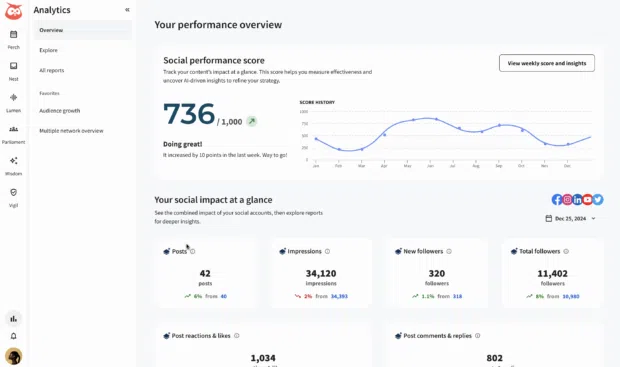
For transparent communication with stakeholders, Hootsuite’s reporting tool enables the creation of visually appealing and comprehensive reports for both paid and organic social channels. These customizable reports, built from scratch or using templates, clearly articulate the impact of social campaigns, translating complex data into actionable insights for executive decision-makers. Crucially, Hootsuite integrates with external platforms like Google Analytics and Adobe Analytics, extending ROI tracking beyond social metrics to encompass website conversions, purchases, and other critical business actions. This holistic view, combined with real-time analytics and advanced link tracking, ensures that every social media post’s contribution to the bottom line is accurately measured and understood.
Communicating Value: Reporting Social Media ROI to Stakeholders
Effectively reporting social media ROI to executive stakeholders requires tailoring the message to their priorities and consistently connecting metrics back to tangible business outcomes. A polished, concise report is the primary vehicle for proving social media’s value and justifying budgetary allocations.
Key best practices for stakeholder reporting include:
- Focus on Business Outcomes: Translate social metrics into language that resonates with executives, emphasizing revenue generation, lead acquisition, cost savings, and brand equity.
- Keep it Concise and Clear: Executives have limited time. Present key findings upfront, supported by clear data visualizations and actionable insights.
- Highlight Trends Over Time: Show progress or identify areas needing attention by presenting performance trends rather than isolated data points.
- Use Visuals: Charts, graphs, and infographics make complex data more digestible and impactful.
- Quantify Value: Assign monetary values to non-monetary outcomes wherever possible to provide a comprehensive financial picture.
- Be Transparent: Acknowledge challenges and discuss plans for improvement, fostering trust and demonstrating proactive management.
- Connect to Strategic Goals: Always link social media performance back to the overarching business strategy, demonstrating alignment and contribution.
As Eileen Kwok rightly states, "You don’t know what your ROI is until you’ve laid out the goals you are tracking towards." Defining clear objectives upfront is the bedrock of meaningful ROI reporting.
In conclusion, measuring social media ROI is no longer an optional endeavor but a strategic imperative for businesses navigating the digital age. By embracing a comprehensive framework that accounts for both monetary and non-monetary value, leveraging advanced analytics tools, and continuously optimizing strategies, organizations can unlock the full potential of their social media investments. The future of social media measurement will likely see further integration of artificial intelligence and predictive analytics, offering even more sophisticated insights into customer behavior and campaign effectiveness, solidifying social media’s role as a cornerstone of modern business success.