Neighborhood Intelligence Pivots Strategy, Proposes Restructured Deal with Fathom Holdings Highlighting Digital Assets Valued at $130 Million

Neighborhood Intelligence, the corporate entity formerly recognized worldwide as Bed Bath & Beyond Inc., is once again altering its strategic growth trajectory. The company has announced plans to explore a heavily restructured agreement with real estate platform Fathom Holdings, fundamentally shifting the mechanics of a partnership initially unveiled in June. Under the newly proposed terms, Neighborhood Intelligence intends to deploy substantially all of its high-value digital assets—including a nearly 40% direct and indirect ownership stake in tZero Group, multiple Medici-related fund assets, and direct investments in GrainChain—into a newly redefined transaction structure.
This revised arrangement marks a stark departure from the original all-stock merger agreement valued at approximately $53 million that was announced three months prior. Rather than a straightforward acquisition of Fathom by Neighborhood Intelligence, the updated framework attributes an estimated valuation of at least $130 million explicitly to the digital asset portfolio being contributed by Neighborhood Intelligence. In exchange, Fathom will issue a new tranche of common shares to Neighborhood Intelligence. While the definitive final share counts and ultimate ownership percentages remain subject to adjustment as the formal terms are ironed out, current projections indicate that Neighborhood Intelligence will maintain a controlling interest in Fathom Holdings upon the transaction’s completion.
The strategic pivot comes amid a broader corporate evolution for Neighborhood Intelligence, which has spent the past several years shedding its legacy retail skin and attempting to rebrand itself as a diversified holding company spanning home retail, digital finance, and real estate services. However, the path has been turbulent, marked by shifting merger agreements, canceled acquisitions, and volatile public market valuations that have forced leadership to continuously recalibrate.
The Evolution of the Fathom Deal and Market Realities
The genesis of the relationship between Neighborhood Intelligence and Fathom Holdings dates back to June, when the two organizations announced an all-stock transaction intended to integrate Fathom’s residential brokerage and title operations into Neighborhood Intelligence’s expanding portfolio. At that juncture, the deal was pegged at roughly $53 million, with both parties anticipating a formal close during the second half of the year.
However, three months of macroeconomic shifts and stock price fluctuations necessitated a second look. According to Marcus Lemonis, Executive Chairman and CEO of Neighborhood Intelligence, the valuation of the reworked deal is deliberately untethered from Fathom’s current public market capitalization. Lemonis noted that Fathom’s share price has experienced a downward drift since the initial announcement in June.
Despite the compressed equity valuation of the real estate platform, Lemonis and his executive team expressed renewed confidence in the underlying operational fundamentals of Fathom’s core business units. In a joint press release issued on Thursday, Lemonis emphasized that Fathom’s brokerage and title segments have made substantial, measurable progress over the preceding quarter. Consequently, the newly proposed corporate structure is explicitly designed to balance that operational advancement against the significant intrinsic value embedded within Neighborhood Intelligence’s digital asset portfolio.
Furthermore, the updated framework explicitly grants Fathom Holdings the operational flexibility to pursue targeted, strategic acquisitions that could further fortify its market standing within the competitive real estate brokerage landscape.
Unlocking the Value of Digital Assets in Real Estate
At the heart of the reworked transaction is a bold thesis: that decentralized digital assets, blockchain infrastructure, and tokenization can fundamentally transform the legacy real estate sector.
The digital portfolio being contributed by Neighborhood Intelligence is anchored by tZERO Group, a prominent innovator in the digital securities and blockchain-based trading infrastructure space. Under the vision outlined by both companies, the inherent capabilities of tZERO represent a natural, synergistic fit for the real estate industry. Specifically, leadership teams from both organizations believe the partnership can unlock innovative mechanisms such as the tokenization of commercial real estate holdings and single-family rental portfolios.
Beyond fractional ownership and asset tokenization, the integration of tZERO’s technology stack is expected to introduce more flexible corporate capital structures and open entirely new pathways to liquidity for real estate investors and property owners. As the integration deepens over time, Neighborhood Intelligence and Fathom also plan to expand their technological applications into adjacent operational domains, including title services and individual homeownership lifecycle management.
While the strategic rationale appears robust on paper, external observers and market analysts have noted that realizing these technological synergies will require flawless execution—a challenge compounded by the ambitious and sometimes erratic deal-making history of Neighborhood Intelligence over recent years. As of press time, representatives for neither Neighborhood Intelligence nor Fathom Holdings had responded to immediate inquiries regarding a definitive closing timeline or the final regulatory hurdles the transaction might face.

A Timeline of Transformation: From Bed Bath & Beyond to Neighborhood Intelligence
To understand the weight of the Fathom restructuring, it is essential to contextualize it within the broader chronology of the company formerly known as Bed Bath & Beyond. Once a titan of brick-and-mortar home goods retail, the enterprise filed for Chapter 11 bankruptcy protection in the spring of 2023, liquidating its sprawling fleet of physical stores and selling off its iconic brand name and intellectual property to online retailer Overstock (which subsequently rebranded itself as Beyond Inc., before further strategic evolutions).
Left with a publicly traded shell company and significant tax attributes, leadership—spearheaded by Lemonis and associated entities—pivoted the corporate vehicle toward an aggressive consolidation strategy spanning diverse sectors.
The timeline of recent strategic maneuvers underscores this volatile period of transition:
- June 2026: Neighborhood Intelligence announces an all-stock agreement to acquire real estate platform Fathom Holdings in a deal valued at approximately $53 million, projecting a second-half closing date.
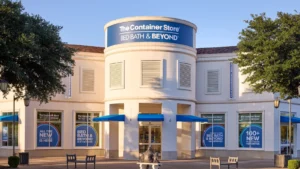
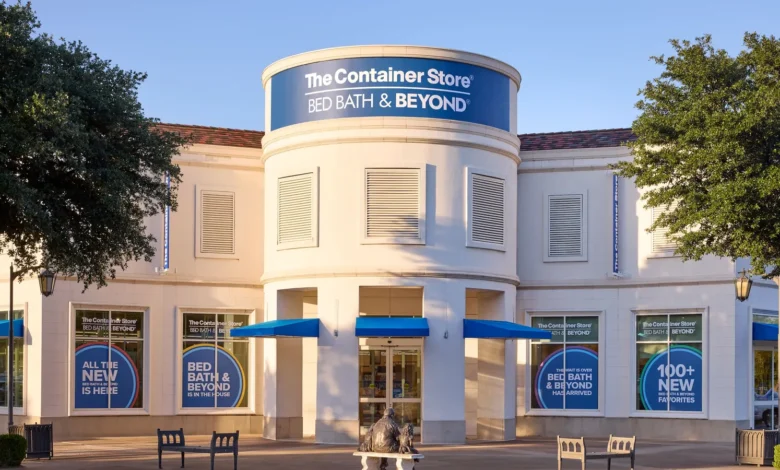
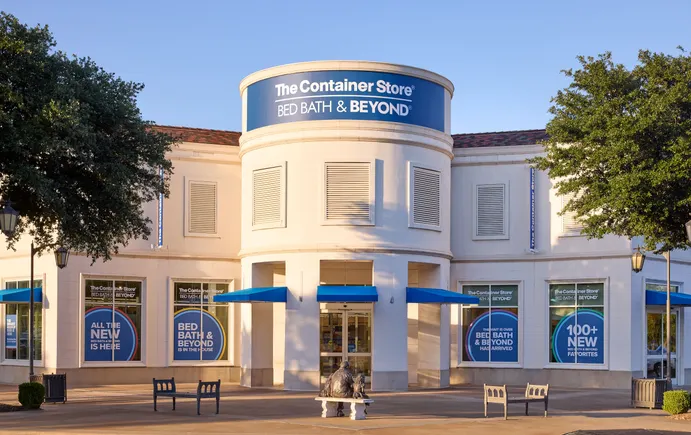
- August 2026: The company continues its aggressive push into physical and digital home ecosystems, securing partnerships and operational alignments, including high-profile co-branded store concepts with The Container Store (such as a flagship opening in Fort Worth, Texas) and investments tied to The Brand House Collective.
- Early September 2026: Neighborhood Intelligence officially cancels a high-profile, $150 million acquisition deal to purchase F9 Brands—the parent company of Cabinets to Go and Lumber Liquidators. Leadership cites F9’s inability to satisfy necessary closing requirements and contractual conditions within the mandated timeframe.
- Late September 2026: Reverting from the original June merger agreement, Neighborhood Intelligence and Fathom Holdings jointly announce a heavily revised transaction structure. The new arrangement values Neighborhood Intelligence’s digital asset portfolio—including tZERO, Medici-related funds, and GrainChain—at a minimum of $130 million, utilizing newly issued Fathom shares while allowing Neighborhood Intelligence to retain a controlling interest.
The Shadow of Canceled Deals and Retail Diversification
The decision to restructure the Fathom agreement arrives hot on the heels of a major corporate setback. Just weeks prior to the Fathom announcement, Neighborhood Intelligence was forced to pull the plug on its ambitious $150 million acquisition of F9 Brands. That transaction was intended to anchor the company’s physical expansion into cabinetry, flooring, and home improvement supplies through retail brands like Cabinets to Go and Lumber Liquidators.
When that deal collapsed, Neighborhood Intelligence issued a blunt public statement noting that F9 Brands had failed to meet critical closing requirements within the stipulated timeframe. The unraveling of the F9 transaction highlighted the inherent risks of the company’s broader turnaround playbook: a high-velocity strategy designed to transcend traditional home retail and establish a dominant footprint across the entire continuum of home services, ownership, and finance.

Despite the cancellation of the F9 acquisition, Neighborhood Intelligence has continued to forge alternative pathways toward diversification. The company has pursued extensive cross-brand collaborations, most notably its partnership with organizational retailer The Container Store, which yielded a heavily publicized co-branded retail concept store in Fort Worth, Texas. These moves demonstrate an ongoing corporate identity crisis and reinvention, shifting away from the pure-play home goods model of the past toward a multifaceted holding structure that blends traditional retail concepts with high-tech financial assets.
Implications for Shareholders and the Broader Market
The financial and operational implications of the reworked Fathom transaction are multifaceted, carrying distinct risks and potential rewards for equity holders and market participants alike.
From a valuation perspective, the establishment of a $130 million baseline for the digital asset portfolio injects a new metric into the equity story of Neighborhood Intelligence. By monetizing or leveraging assets like tZERO, Medici, and GrainChain through a publicly traded operating vehicle like Fathom, leadership is attempting to unlock hidden value that has historically been obscured by the company’s complex corporate transition.
However, minority shareholders and market analysts have raised questions regarding dilution and governance control. Because the transaction involves newly issued Fathom shares designed to grant Neighborhood Intelligence a controlling interest, the ultimate distribution of equity will heavily influence post-merger trading dynamics. Furthermore, the success of the combined entity hinges entirely on whether Fathom’s core real estate brokerage can successfully integrate blockchain-based tokenization tools without alienating traditional home buyers, sellers, and real estate agents.
As the regulatory review process unfolds and the definitive legal agreements are drafted, the market will be watching closely to see if Neighborhood Intelligence can successfully execute this digital asset pivot. If successful, the deal could establish a novel precedent for how distressed or transitioning retail shells can repurpose esoteric financial holdings to build modern, tech-enabled operating conglomerates. If mismanaged, however, the complex web of restructured agreements and canceled mergers may serve as a cautionary tale of overextension in the pursuit of corporate reinvention.
Related posts: