Radaris.com Domain Seizure Marks a Watershed Moment in the Battle Over Data Broker Privacy Compliance


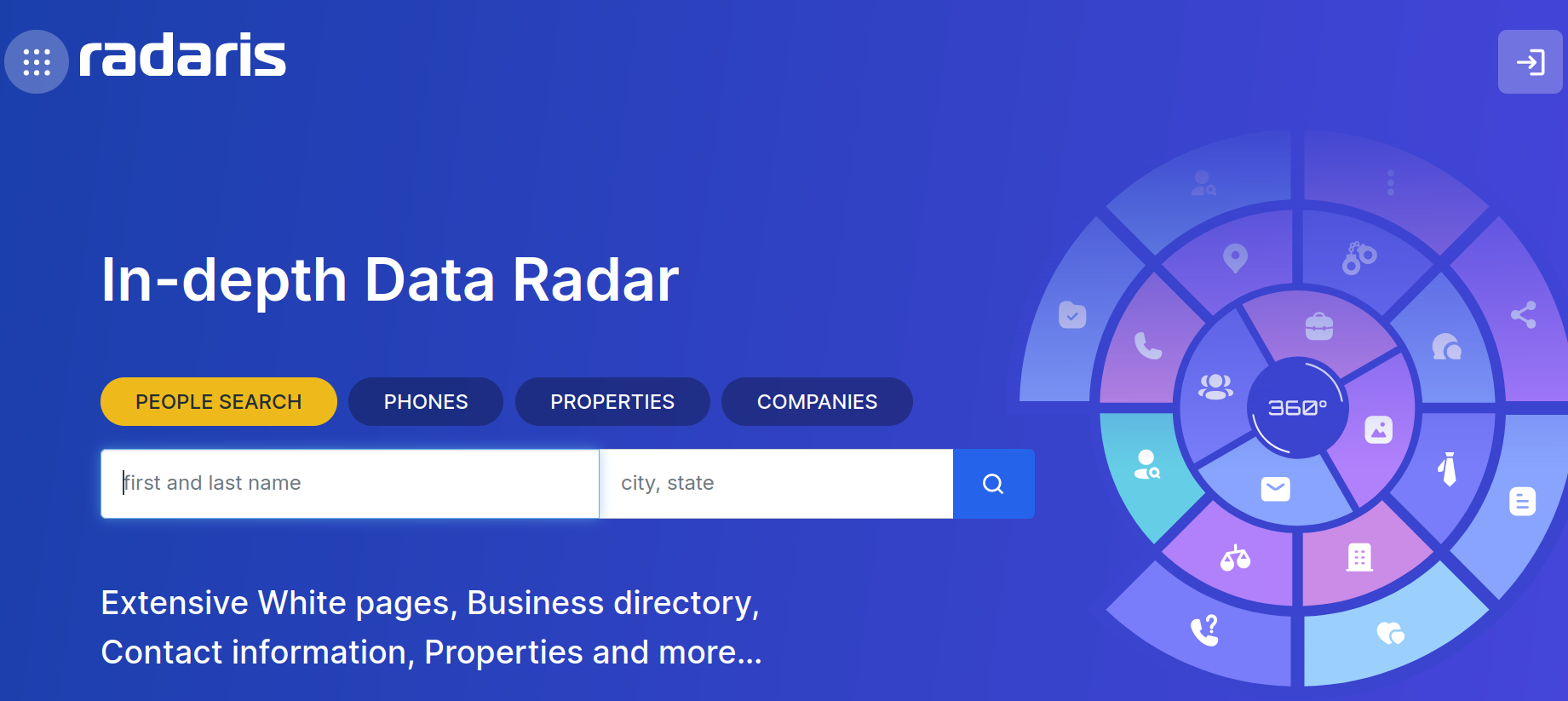
For years, the consumer data broker Radaris.com operated with a reputation for systemic defiance, frequently ignoring requests to remove sensitive personal information from its expansive network of people-search services. This period of perceived impunity has come to a decisive end following a landmark legal development in New Jersey. A court-ordered transfer of the radaris.com domain, alongside more than a dozen associated web properties, to the plaintiff Atlas Data Privacy Corp serves as a stinging rebuke to a company that had long utilized complex corporate shell games and procedural obfuscation to evade regulatory accountability. The litigation centered on the company’s alleged failure to comply with Daniel’s Law, a New Jersey statute designed to protect the privacy of law enforcement officials, judicial personnel, and their families by mandating the removal of their personal data from commercial search platforms.
A History of Evasion and Corporate Shell Games
The origins of this legal confrontation trace back to February 2024, when Atlas Data Privacy Corp initiated a lawsuit against Radaris. The core of the complaint alleged that the broker repeatedly violated Daniel’s Law, which stipulates a fine of $1,000 for each failure to remove protected information upon request. As the litigation progressed, the defense strategy employed by Radaris became a focal point of the proceedings.
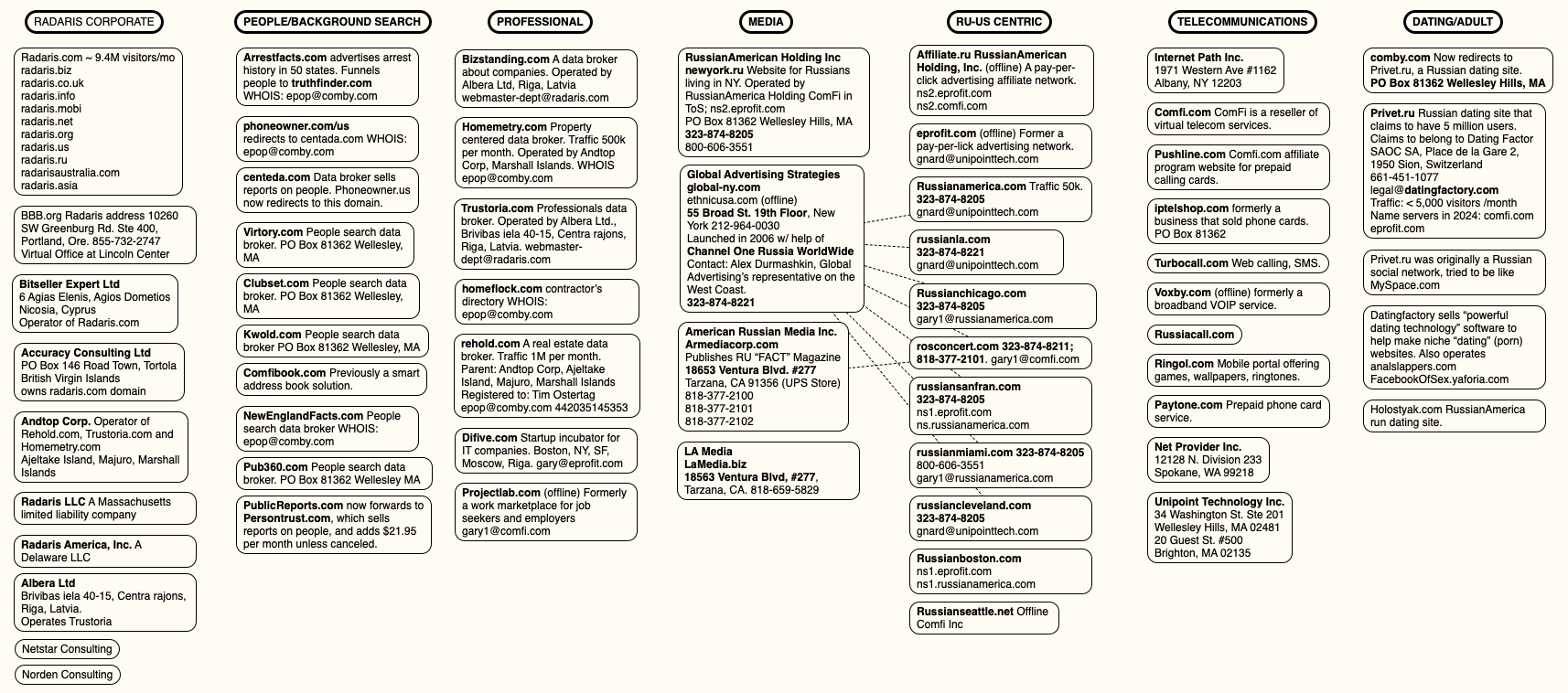
Legal representatives for the company, including the Boston Law Group’s Val Gurvits, initially attempted to deflect the lawsuit by questioning the service of process and challenging the identity of the true owners of the Radaris network. Investigative reporting conducted by KrebsOnSecurity eventually exposed the individuals behind the operation: Russian-born brothers Igor and Dmitry (also known as "Dan") Lubarsky. These brothers, residing in Massachusetts, were revealed to be the architects of a vast ecosystem of people-search sites, dating platforms, and affiliate programs, often managed under the guise of fictitious leadership.
One of the most revealing aspects of the case was the revelation that Radaris had long utilized a fabricated CEO, a persona dubbed "Gary Norden," to conduct business and solicit investments. The subsequent admission by the company’s legal counsel that this figurehead was entirely invented underscored the clandestine nature of the enterprise. This "shell game" extended beyond the leadership structure to the corporate entity level, with the company frequently shifting management and registration to jurisdictions such as the Marshall Islands, the Seychelles, and the British Virgin Islands.
Chronology of the Legal Escalation
The trajectory of the litigation against Radaris highlights a decade-long pattern of attrition and procedural stalling.
- 2017: Radaris faced a class-action lawsuit where it suffered a temporary loss due to a failure to respond. While the court initially ordered a $7.5 million judgment and the transfer of the radaris.com domain, the order was eventually stayed after defense attorneys argued that the suit had failed to identify the proper legal entity, then-owner Bitseller Expert Limited.
- February 2024: Atlas Data Privacy Corp filed its initial complaint under Daniel’s Law, alleging continued violations.
- March 2024: Following a series of reports exposing the Lubarsky brothers’ involvement, Radaris attorneys threatened legal action for defamation, a move that failed to stifle the inquiry into the company’s operational structure.
- June 2025: Atlas refiled and expanded its lawsuit, incorporating a wider array of related domains and entities into the litigation.
- August 2026: A New Jersey court issued a definitive ruling, finding that the defendants had repeatedly failed to mount a substantive defense despite multiple opportunities. The court ordered the transfer of the domain assets to the plaintiffs.
The Financial Engine of Data Aggregation
Evidence uncovered during the discovery phase—which included over 10,000 emails and internal documents—revealed the lucrative nature of the people-search industry. Atlas Data Privacy Corp’s findings demonstrated that numerous corporate entities, such as Radaris America, Inc., Virtura Corp, and Veripages Inc., were, in reality, a single, integrated operation managed from a unified set of administrative and financial accounts.
The data suggests that the Radaris network of websites generated substantial monthly revenue. Radaris.com alone was estimated to bring in approximately $42,000 per month, while sister sites like Veripages.com generated upwards of $45,000 monthly, largely through partnerships with marketing and advertising firms such as the Lifetime Value Company. Furthermore, the documents confirmed an ironic revenue stream: the Radaris family of sites allegedly earned up to $25,000 monthly through partnerships with companies like Onerep, a service that charges consumers to perform the very "opt-out" requests that the data brokers are legally obligated to provide for free.

Official Responses and Legal Challenges
In the wake of the domain transfer, legal representatives for the Radaris operation have signaled their intent to continue the fight. Victor Worms, the attorney now handling the matter, has filed a motion to vacate the default judgment. Worms maintains that the judgment is legally void, arguing that "radaris.com" is not a legal entity capable of being sued. He further contends that the domain transfer constitutes a violation of constitutional principles regarding property forfeiture.
Conversely, the plaintiffs view the transfer as a necessary outcome of years of obstructionism. Raj Parikh of PEM Law, who represents Atlas in these matters, noted that the defendants had historically relied on exhausting the resources of plaintiffs through procedural delays. The decision by Atlas to pursue the case to its conclusion represents a significant shift in the enforcement of Daniel’s Law, signaling that the "attrition model" favored by data brokers may no longer be an effective defense.
Broader Implications for U.S. Privacy Law
The Radaris case serves as a microcosm of the larger, unresolved debate regarding data privacy in the United States. While the New Jersey statute has provided a template for at least 14 other states, the industry has launched a robust counter-offensive. Currently, dozens of lawsuits filed by Atlas are being challenged in federal court, with brokers arguing that these state-level privacy mandates violate the First Amendment.
The legislative landscape remains fragmented. As Justin Sherman, a prominent privacy expert, notes, the lack of comprehensive federal legislation leaves a vacuum that allows data brokers to operate with minimal oversight. Most state laws contain broad exemptions for "public" or "government" records—such as voting registries, marriage certificates, and motor vehicle records—which form the bedrock of the data broker business model.
The recent breach at IDScan.net, which exposed the driver’s license information of over 153 million Americans, further highlights the fragility of current privacy protections. Without a federal standard governing how companies collect, store, and monetize sensitive identity documents, consumers remain at risk of identity theft on a massive scale. As cases like the Radaris seizure move toward potential Supreme Court review, the pressure on Congress to enact meaningful, 21st-century privacy protections continues to mount. Until such laws are passed, the "wake-up calls" provided by data breaches and legal battles are likely to persist, leaving the burden of privacy enforcement on the shoulders of private litigants and state-level actors rather than a cohesive national policy.