Microsoft Named a Leader in the 2026 Gartner Magic Quadrant for Container Management

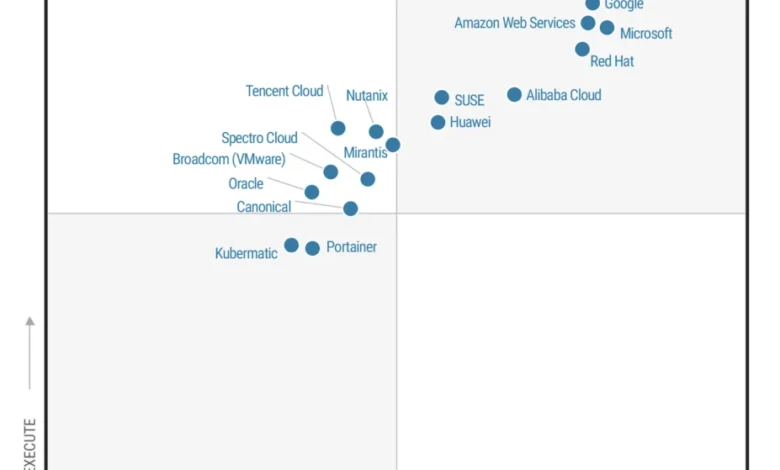
Microsoft has officially been recognized as a Leader in the 2026 Gartner Magic Quadrant for Container Management, achieving the furthest position to the right on the “Completeness of Vision” axis. This designation marks a significant milestone in the evolution of enterprise cloud infrastructure, reflecting the company’s strategic pivot toward integrating artificial intelligence (AI) workloads into traditional containerized environments. As organizations grapple with the increasing complexity of distributed systems, Microsoft’s container portfolio—anchored by Azure Kubernetes Service (AKS), Azure Container Apps, Azure Arc, and Azure Kubernetes Fleet Manager—has emerged as a central pillar in the industry’s shift toward hybrid, multi-cloud, and AI-centric operations.
The Evolution of Container Orchestration: A Decade in Review
To understand the weight of this recognition, one must consider the trajectory of container management over the past decade. When Kubernetes was first introduced to the public via open-source channels, the primary objective was the democratization of distributed systems. The goal was to build a scheduler that abstracted the underlying hardware, allowing developers to describe workload requirements without needing to manage the specific physical infrastructure.
This approach proved prescient. By remaining agnostic toward the specific nature of the workloads it managed, Kubernetes provided the modular foundation necessary for the subsequent explosion in cloud-native application development. However, the emergence of generative AI and large-scale machine learning models has fundamentally altered the requirements for these platforms. Today, applications are no longer restricted to centralized cloud data centers. They must now operate closer to the data source and the end-user, often within strict sovereign and regulatory boundaries. This shift has transitioned container management from a simple orchestration task into a complex requirement for a consistent operating model that spans across public clouds, on-premises edge devices, and hybrid environments.
Strategic Implications of the Gartner Recognition
The Gartner Magic Quadrant for Container Management serves as a critical benchmark for enterprise IT leaders tasked with selecting infrastructure vendors. Being positioned as a Leader in “Completeness of Vision” suggests that Microsoft has not only captured current market demand but has also successfully anticipated the future needs of its clients.
Analysts often evaluate these platforms based on their ability to minimize operational friction. As enterprises move toward AI-integrated architectures, the burden of managing GPU lifecycles, model serving, and compliance frameworks becomes a significant bottleneck. Microsoft’s strategy, as reflected in its portfolio, is to absorb this complexity into the platform layer. By offering a unified interface across cloud and edge, the company enables teams to transition between high-control, persistent AI infrastructure—such as that managed via AKS—and high-elasticity, serverless environments like Azure Container Apps, without necessitating a total architectural redesign.
Architectural Models: Balancing Control and Elasticity
Microsoft’s container strategy currently addresses two distinct, yet complementary, architectural models that have become standard in modern enterprise development.
The first model is characterized by platform-centric governance. In this scenario, dedicated platform teams maintain control over the persistent serving layer, GPU scheduling, and model lifecycle management. This approach is favored by organizations requiring high predictability and rigorous compliance. To support this, Microsoft has leveraged open-source tooling, such as the AI toolchain operator, and maintained CNCF AI Conformance certification. This ensures that the ecosystem remains compatible with upstream Kubernetes, preventing vendor lock-in and allowing for seamless interoperability.
The second model prioritizes elasticity and developer speed. Here, applications or AI agents trigger inference processes on an as-needed basis, releasing capacity immediately upon completion. This model is essential for unpredictable workloads where costs must be tightly coupled to consumption. Azure Container Apps was specifically engineered for this requirement, providing serverless GPUs and hardware-isolated sandboxes that allow for agent hosting without the overhead of manual cluster management. The primary engineering challenge, which Microsoft is currently attempting to solve, is ensuring that the transition between these two models is seamless—utilizing identical identity, networking, and security policies regardless of the chosen execution environment.

Managing Cluster Sprawl and Sovereign Requirements
One of the most persistent challenges in modern enterprise IT is "cluster sprawl"—the uncontrolled proliferation of container clusters across disparate geographic locations. As AI models follow the data, organizations find themselves managing infrastructure in regions where connectivity is intermittent or where strict data sovereignty laws apply.
Microsoft’s response to this fragmentation involves a layered approach. "AKS Everywhere" extends the Azure-managed Kubernetes experience to edge environments, while Azure Arc provides a unified control plane that allows for the management of Kubernetes clusters regardless of whether they reside in Azure, on-premises, or within competing cloud providers. For larger, more complex estates, Azure Kubernetes Fleet Manager provides a mechanism to synchronize upgrades, workload placement, and security policies across hundreds of clusters simultaneously. By treating these challenges as platform-level coordination issues rather than individual cluster problems, Microsoft aims to provide the operational stability that large enterprises require.
The Rise of Agentic Operations
Looking toward the future, Microsoft is heavily investing in what it terms “agentic operations.” As the number of clusters within a single organization continues to outpace the growth of operations teams, manual intervention becomes unsustainable. The introduction of tools like the Azure SRE (Site Reliability Engineering) Agent and the AKS MCP (Model Context Protocol) Server represents a shift toward automated diagnostics and remediation.
These tools are designed to assist human operators in navigating the increasingly complex surface area of cloud-native platforms. By automating routine investigations and providing AI-assisted guidance, Microsoft aims to shift the role of the operator from a reactive, alert-based function to a more proactive, strategic oversight role. This reflects a broader industry trend where the "platform" itself becomes an intelligent entity, capable of self-healing and predictive maintenance.
Industry Data and Competitive Context
The competitive landscape for container management remains intense, with vendors like Amazon Web Services (AWS), Google Cloud Platform (GCP), and Red Hat (IBM) competing for dominance. Microsoft’s advantage, as noted in recent market assessments, stems from its significant contributions to the Cloud Native Computing Foundation (CNCF). As the second-largest contributor to CNCF projects globally and the leading contributor among cloud providers over the last three years, Microsoft has successfully positioned itself as a steward of open-source standards.
This commitment to the upstream Kubernetes ecosystem is not merely altruistic; it is a defensive and offensive business strategy. By ensuring that the APIs developers build against remain consistent regardless of the deployment target, Microsoft reduces the "migration tax" that often prevents companies from moving between environments. This interoperability is a core component of the "Completeness of Vision" criteria that Gartner utilizes to evaluate industry leaders.
Conclusion and Future Outlook
The 2026 Gartner Magic Quadrant for Container Management acknowledges a pivotal shift in how enterprises conceptualize their infrastructure. The days of treating containers as simple compute wrappers are over; the focus has moved to intelligent, policy-driven platforms that can handle AI workloads at scale.
For Microsoft, the path forward remains clear: continue to abstract infrastructure complexity while maintaining the flexibility of the open-source Kubernetes API. As Brian Sutliffe, Vice President of Engineering at CallRevu, noted in a recent assessment of the platform, the ability to scale GPU resources based on call volume and iterate on models without disrupting production environments is a critical business differentiator.
As Microsoft continues to refine its container portfolio, the company must maintain the delicate balance between adding advanced, AI-driven features and preserving the stability of the underlying platform. The goal, as articulated by the company’s leadership, is not to dictate where a workload belongs, but to ensure that when the business decides to move or evolve its applications, the underlying platform does not become the barrier to that change. With this latest recognition, Microsoft has set a high bar for itself, signaling that its future investments will likely continue to prioritize the convergence of AI, edge computing, and standardized, hybrid cloud operations.