Microsoft Sets Unprecedented Record with 570 Security Fixes in July Patch Tuesday as AI Accelerates Vulnerability Discovery

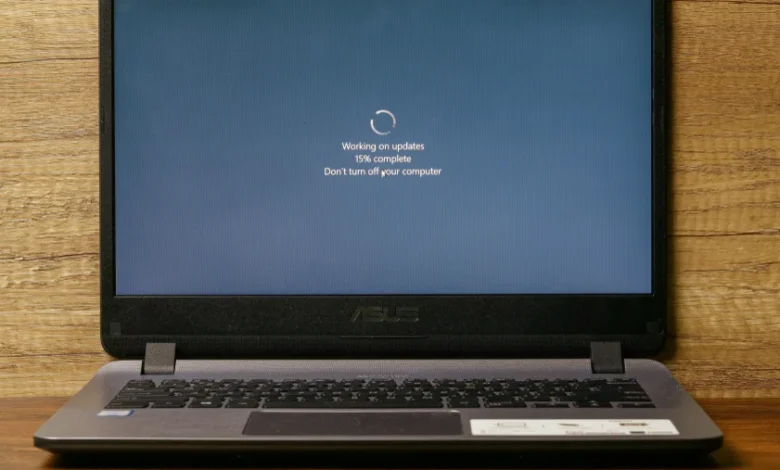
Microsoft Corp. released a staggering array of software updates today to address at least 570 security vulnerabilities across its Windows operating systems and associated software suite, marking a historic milestone in the company’s decades-long history of security maintenance. This massive release nearly triples the previous record-shattering volume observed just last month, signaling a fundamental shift in the cybersecurity landscape. Microsoft executives and industry analysts have attributed this exponential surge in bug identification to the integration of artificial intelligence in the vulnerability discovery process, a development that is simultaneously empowering defenders and providing new tools for potential adversaries.
The July Patch Tuesday release represents more than just a routine update; it is a manifestation of the "machine speed" at which modern cybersecurity now operates. Of the 570 vulnerabilities addressed, nearly 60 were classified with a "critical" severity rating. This designation indicates that the flaws could be exploited by malicious actors or automated malware to gain full remote control over a target system, often requiring little to no interaction from the end user. Furthermore, the update includes fixes for three "zero-day" vulnerabilities—flaws that were known to the public or already being exploited before a formal patch was available.
The AI Catalyst: Redefining Vulnerability Research
The primary driver behind this unprecedented volume of patches is the rapid advancement of generative artificial intelligence and machine learning models in the realm of software auditing. Pavan Davuluri, Microsoft’s Executive Vice President of Windows and Devices, detailed this evolution in a formal communication on July 9. According to Davuluri, Windows users should prepare for a sustained "higher volume of security updates" as AI tools enable researchers to scan vast codebases with a level of speed and granularity that was previously impossible for human teams alone.
"The pace of vulnerability discovery is changing with advances in AI making it possible to find more issues, faster, across more code, with new mechanisms that can accelerate both discovery and analysis," Davuluri stated. By utilizing AI to automate the discovery of memory corruption issues, logic errors, and configuration weaknesses, Microsoft is effectively "cleaning house" on legacy code while simultaneously hardening newer features. However, this acceleration is a double-edged sword, as the same technology used by Microsoft’s "Blue Teams" to find and fix bugs is also available to "Red Teams" and independent researchers who may have different motivations.
Analysis of Zero-Day Threats and Critical Flaws
The July update addresses three high-priority zero-day vulnerabilities that demand immediate attention from IT administrators. Two of these flaws are specifically categorized as elevation of privilege (EoP) weaknesses, which allow an attacker who has gained a foothold on a system to escalate their permissions to an administrative or "SYSTEM" level.
The first, CVE-2026-56155, involves a vulnerability in Active Directory Federation Services (ADFS). Given that ADFS is a critical component for identity management and single sign-on (SSO) in enterprise environments, an exploit here could allow an attacker to bypass authentication protocols across an entire corporate network. The second zero-day, CVE-2026-56164, targets Microsoft SharePoint, a ubiquitous collaboration platform. This vulnerability has already been added to the Cybersecurity and Infrastructure Security Agency’s (CISA) Known Exploited Vulnerabilities (KEV) catalog, indicating that active exploitation has been observed in the wild.
The third zero-day, CVE-2026-50661, is a security feature bypass affecting Windows BitLocker. This flaw is particularly concerning for mobile users and organizations with strict data-at-rest policies. If an attacker gains physical access to a device, they could potentially bypass BitLocker encryption to access sensitive data. While Microsoft noted that this bug has been publicly detailed, they maintained that they are not yet aware of active exploitation in the wild, though the public disclosure significantly increases the risk of near-term attacks.
The Copilot Vulnerability: AI Securing AI
In a notable intersection of emerging technologies, one of the most critical patches in this month’s release concerns Microsoft Copilot, the company’s flagship AI assistant. CVE-2026-48561 is a remote code execution (RCE) flaw within Microsoft Copilot that carries a nearly perfect Common Vulnerability Scoring System (CVSS) score of 9.6.
Jack Bicer, Director of Vulnerability Research at Action1, highlighted the unique nature of this threat. According to Bicer, the vulnerability allows an unauthorized attacker to execute malicious code over a network. The attack vector is deceptively simple: an attacker could host a specially crafted website that, when visited by a user via Microsoft Edge for Android, triggers the browser to automatically send malicious prompts to the Copilot interface. This could lead to the unauthorized execution of commands within the user’s context, effectively turning the AI assistant into a gateway for system compromise.
A Growing Industry Trend: The "Machine Speed" of Patching
Microsoft is not the only software giant struggling to keep pace with the AI-driven discovery boom. The July update cycle revealed a broader industry-wide shift in how security patches are managed. Adobe, for instance, announced a significant change to its security bulletin schedule, moving to a twice-monthly cadence (occurring on the second and fourth Tuesday of each month). Like Microsoft, Adobe explicitly cited AI-accelerated discovery as the catalyst for this change.
Chris Goettl, Vice President of Security Product Management at Ivanti, observed that other major players including Cisco, Mozilla, and Oracle are also increasing their patch frequency. Google’s recent update batches for June 2026 reportedly exceeded 900 security fixes, further illustrating that the "hundreds-of-patches" release is becoming the new industry standard rather than an anomaly.
The "Exploitability Index" Controversy
As the volume of vulnerabilities grows, the methods used to prioritize them are coming under intense scrutiny. Satnam Narang, a Senior Staff Research Engineer at Tenable, has raised concerns regarding Microsoft’s "Exploitability Index." This index is a predictive rating provided by Microsoft to help defenders understand how likely it is that a specific vulnerability will be weaponized.
Narang argues that Microsoft’s current assessment model is "centered around humans" and fails to account for the capabilities of modern AI tools. A poignant example is the SharePoint zero-day (CVE-2026-56164), which Microsoft originally rated as "Exploitation Less Likely," only for it to be confirmed as exploited in the wild and added to CISA’s KEV list shortly thereafter.
Further complicating the matter are findings from Anthropic’s Red Team. Using their "Mythos Preview" AI model, researchers were able to produce functional proof-of-concept exploits for 13 out of 14 vulnerabilities that Microsoft had officially rated as "Exploitation Less Likely" or "Exploitation Unlikely." This suggests a significant gap between traditional human-centric risk assessment and the reality of AI-augmented offensive capabilities. "Defense needs to improve alongside the tools," Narang noted, suggesting that static risk scores may no longer be sufficient in a landscape where AI can automate the creation of exploits.
Chronology of the 2026 Security Escalation
To understand the magnitude of the 570-fix release, one must look at the progression of Patch Tuesday over the last several months:
- January – March 2026: Microsoft maintains a steady average of 70 to 90 fixes per month, consistent with 2025 averages.
- April 2026: The first significant "AI-aided" jump occurs, with fixes surpassing 150 for the first time in a single month.
- June 2026: Microsoft breaks previous records with nearly 200 security fixes, prompting the first official statements regarding AI’s role in the discovery process.
- July 1, 2026: CISA issues an alert regarding the SharePoint vulnerability (CVE-2026-56164), signaling that the July release will be high-stakes.
- July 9, 2026: Microsoft releases the 570-fix update, shattering all previous internal records and fundamentally altering expectations for IT maintenance.
Recommendations for IT Administrators and End Users
The sheer volume of the July update presents a significant logistical challenge for IT departments. While the urgency to patch critical zero-day flaws is high, the risk of "patch fatigue" and system instability is equally prevalent. Historically, large-scale updates have occasionally resulted in "BOD" (Blue Screen of Death) errors, driver conflicts, or broken enterprise applications.
Cybersecurity experts recommend a tiered approach to this month’s updates:
- Prioritize the Zero-Days: Immediate attention should be given to CVE-2026-56155 (ADFS), CVE-2026-56164 (SharePoint), and the Copilot RCE (CVE-2026-48561).
- Backup and Snapshot: Before deploying updates to critical servers or workstations, comprehensive backups and system snapshots are essential.
- Staged Deployment: Rather than a global "push" of all 570 fixes, organizations should deploy to a pilot group of diverse hardware and software configurations to monitor for stability issues over a 48-hour period.
- Physical Security Audit: In light of the BitLocker bypass (CVE-2026-50661), organizations should reinforce physical security protocols for laptops and portable storage devices.
Broader Impact and the Future of Cybersecurity
The release of 570 patches in a single day marks the end of the "slow-and-steady" era of software maintenance. As AI continues to mature, the window between the discovery of a vulnerability and the creation of an exploit is shrinking from weeks to hours. This "n-day" window is becoming the primary battleground for cybersecurity.
For Microsoft, this record-breaking release is a demonstration of their commitment to the Secure Future Initiative (SFI), a company-wide effort to prioritize security above all else. However, for the global IT community, it is a wake-up call. The infrastructure of the digital world is being scanned by machines that do not tire, and the defense must now adapt to a reality where "record-breaking" patch counts may soon become the monthly norm. The July 2026 Patch Tuesday will likely be remembered as the moment the industry fully entered the age of AI-driven cyber warfare, where the speed of the patch is just as important as the code itself.
Related posts: