Microsoft Azure Databricks Delivers 331 Percent Return on Investment and Six Month Payback Period According to Independent Economic Impact Study

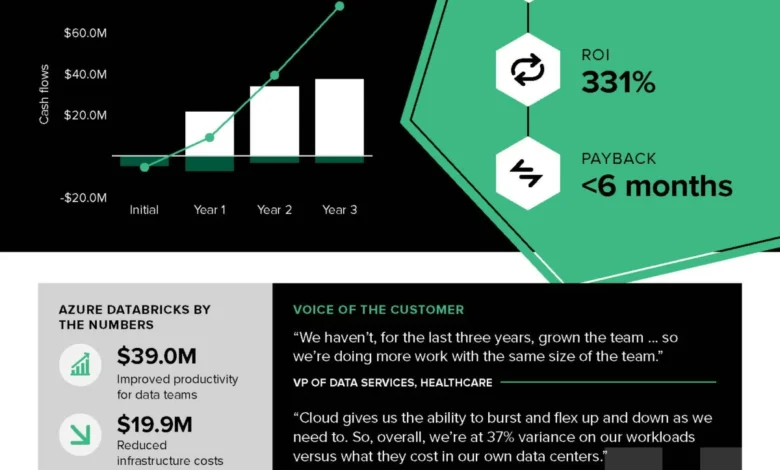
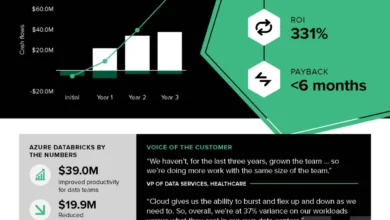
The strategic alliance between Microsoft and Databricks has reached a new milestone with the release of a comprehensive Total Economic Impact (TEI) study, revealing that the co-engineered platform provides a 331 percent return on investment (ROI) over a three-year period. Conducted by Forrester Consulting on behalf of Microsoft, the study quantifies the fiscal and operational advantages of Azure Databricks, a first-party service that integrates the Databricks Lakehouse architecture directly into the Microsoft Azure ecosystem. For enterprise decision-makers, the findings provide a data-driven justification for migrating fragmented data estates to a unified, cloud-native environment, showing a net present value (NPV) of $58.1 million and a payback period of less than six months.
The Evolution of a Strategic Partnership
To understand the significance of these financial figures, one must look at the unique nature of the Microsoft and Databricks relationship. Unlike many cloud partnerships where a third-party software is simply hosted on a cloud provider’s infrastructure, Azure Databricks is a "first-party" service. This means it is co-engineered by both Microsoft and Databricks teams, sharing a single integration roadmap and a unified support structure.
Since its inception, the goal of this partnership has been to eliminate the friction typically associated with big data analytics. Traditionally, organizations had to manage separate contracts, separate billing cycles, and disparate support paths for their data platforms and their cloud infrastructure. By making Azure Databricks a native service, Microsoft has allowed it to fit naturally into existing identity management systems like Microsoft Entra ID (formerly Azure Active Directory) and governance frameworks. This "built-in, not bolted-on" approach is what the Forrester study identifies as a primary driver of the massive ROI, as it significantly reduces the overhead costs of integration and security.
Methodology: Modeling the Composite Organization
The Forrester TEI study utilized a rigorous methodology, interviewing various current Azure Databricks customers to synthesize a "composite organization" for the purpose of financial modeling. This representative entity is characterized as a $6 billion global corporation operating within a highly regulated industry—such as finance, healthcare, or energy—and managing a massive data estate of approximately 10 petabytes.
Prior to adopting Azure Databricks, the composite organization faced common enterprise challenges: a fragmented data landscape, high maintenance costs for legacy on-premises systems, and difficulty in scaling data operations to meet the demands of modern artificial intelligence (AI) and machine learning (ML). The lack of a unified governance model meant that data was often siloed, leading to inconsistent insights and increased regulatory risk.
The study’s three-year financial analysis found that the transition to Azure Databricks resulted in $75.6 million in total benefits. When weighed against the $17.5 million in associated costs—which include licensing, migration, and internal training—the result is a staggering $58.1 million in net present value.
Quantifying the Four Pillars of Value
The Forrester report categorizes the measurable value of Azure Databricks into four distinct areas, which collectively contribute to the 331 percent ROI.
First, the platform drives significant infrastructure cost savings. By moving from legacy, often redundant, data processing systems to the optimized Spark-based environment of Azure Databricks, organizations can decommission expensive on-premises hardware and reduce their cloud compute spend through more efficient resource utilization. The "serverless" options within Azure Databricks further refine this by ensuring that companies only pay for the exact amount of compute power used during a query or a job run.
Second, there is a marked increase in the productivity of data teams. Data scientists, engineers, and analysts often spend up to 80 percent of their time on "data plumbing"—the tedious work of cleaning, moving, and preparing data. The native integration with Azure Data Factory and Azure Data Lake Storage (ADLS) Gen2 streamlines these pipelines. Forrester found that the unified workspace allows for better collaboration, reducing the time required to develop and deploy new data models.
Third, the study highlights the value of accelerated time-to-market. In a competitive business environment, the ability to turn raw data into actionable insights faster than a competitor is a major strategic advantage. The co-engineered roadmap ensures that new features—such as generative AI capabilities—are available immediately, allowing businesses to pivot their strategies in real-time.
Fourth, risk mitigation and governance represent a critical, albeit sometimes overlooked, financial benefit. Through the Unity Catalog, Azure Databricks provides a single governance layer for all data and AI assets. In a regulated industry, the cost of a data breach or a compliance failure can be astronomical. By centralizing permissions and audit logs, the platform reduces the likelihood of these costly events.
Technical Performance and Independent Benchmarks
Beyond the financial modeling provided by Forrester, the value of Azure Databricks is further supported by technical performance data. Speed is a direct contributor to cost-efficiency in the cloud; the faster a query runs, the less the organization pays in compute costs.
Principled Technologies, an independent benchmarking firm, recently conducted an industry-standard TPC-DS-like decision-support benchmark on a 10-terabyte dataset. The test compared Azure Databricks against Databricks running on Amazon Web Services (AWS). The results showed that Azure Databricks completed a single query stream in up to 21.1 percent less time than the AWS counterpart when autoscale was disabled. Furthermore, when running four concurrent query streams, the Azure-native service was more than nine minutes faster.
These performance gains are attributed to the deep-level optimizations made at the kernel level by Microsoft and Databricks engineers. Because the service is native to the Azure backbone, it benefits from optimized networking and storage access that third-party installations cannot always match.
The Role of AI: Genie and Copilot Cowork
A significant portion of the "unpriced" benefits mentioned in the Forrester report—those that contribute to the ROI but are harder to assign a specific dollar value to—revolve around the democratization of data through AI.
A prime example is the integration of Azure Databricks Genie with Microsoft Copilot Cowork. Genie allows non-technical business users to query the data lakehouse using natural language. Instead of waiting for a data analyst to write a SQL query and generate a report, a marketing manager or a sales executive can ask questions like, "What were our top-performing regions in Q3 compared to last year?" directly within Microsoft Teams or Microsoft 365 Copilot.
This intelligence is grounded in "Genie Ontology," which ensures the AI understands the specific business context of the data. Crucially, this access is governed by the Unity Catalog. A user can only receive answers based on the data they are specifically permitted to see. This ensures that the "flow of work" is enhanced by AI without compromising the organization’s security posture.
Market Implications and Industry Reaction
The findings of the Forrester study come at a time when enterprise spending on AI and data infrastructure is under intense scrutiny. Chief Information Officers (CIOs) are increasingly being asked to prove the value of their cloud investments.
Industry analysts suggest that the high ROI of Azure Databricks may influence the broader "cloud wars" between Microsoft, Amazon, and Google. By offering a co-engineered, first-party solution, Microsoft is positioning Azure as the most cost-effective destination for Databricks users. "The integration isn’t just a technical convenience; it’s a financial strategy," says one market analyst. "When you reduce the number of vendors and the complexity of the stack, you naturally see these kinds of ROI numbers."
While individual results will vary based on the size and complexity of a company’s data, the "composite organization" model provides a blueprint for what is possible. For a company managing 10 petabytes of data, the prospect of recovering a multimillion-dollar investment in less than half a year is a compelling argument for modernization.
Conclusion: A Foundation for the Future
As organizations look toward 2026 and beyond, the reliance on data as a foundational asset for artificial intelligence will only grow. The Forrester Total Economic Impact study serves as a validation of the Microsoft-Databricks strategy: that a unified, governed, and high-performance data estate is not just a technical requirement, but a massive driver of corporate profitability.
The 331 percent ROI and $58.1 million net present value are more than just impressive statistics; they represent the removal of the "data tax" that has plagued large enterprises for decades. By eliminating fragmented systems and embracing a first-party cloud integration, businesses are finally able to realize the full economic potential of their data. For the technical teams, this means better performance and less maintenance. For the business at large, it means a faster, more agile, and significantly more profitable path to the future of AI.