Abbott Laboratories Investigates Dual Cybersecurity Incidents Amid Claims of Massive Data Theft and Portal Breaches


Abbott Laboratories, a global leader in medical diagnostics and healthcare technology, is currently managing the fallout from two separate cybersecurity incidents involving unauthorized access to its internal systems and customer-facing portals. The healthcare giant confirmed it is investigating a breach within its Cancer Diagnostics business, specifically involving legacy systems associated with Exact Sciences, while simultaneously addressing claims from a separate threat actor regarding a breach of its LabCentral customer portal. These developments come at a time of heightened sensitivity for the medical technology (medtech) sector, which has become a primary target for sophisticated extortion groups seeking to exploit high-value patient data and intellectual property.
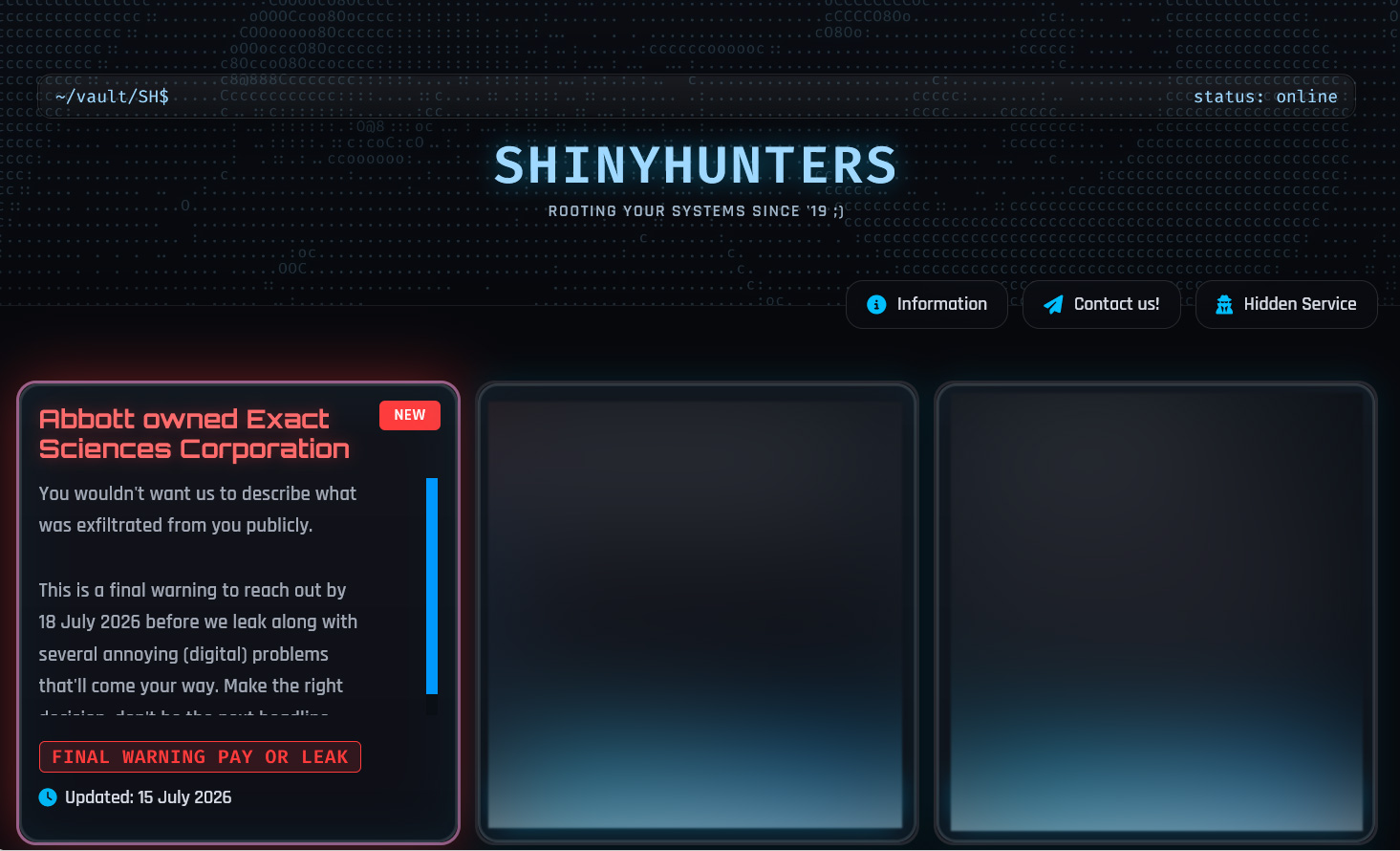
The first and more significant incident involves the notorious extortion group known as ShinyHunters. The group recently added Abbott to its public data leak site, initially setting a deadline of July 18 for the company to enter negotiations to prevent the release of stolen information. That deadline was subsequently extended to July 21, 2026. According to the threat actors, the breach was facilitated through a sophisticated "vishing" (voice phishing) campaign conducted in mid-June. This social engineering attack successfully targeted several Abbott employees, allowing the attackers to compromise a Microsoft Entra single sign-on (SSO) account. Once inside, the group allegedly navigated through Abbott’s internal network to exfiltrate a massive cache of sensitive data.
Detailed Breakdown of the ShinyHunters Allegations
ShinyHunters has established a reputation for targeting large-scale corporate entities by exploiting the centralized nature of SSO environments. By gaining access to a single corporate credential, the group can often bypass traditional perimeter defenses and access a wide array of integrated Software-as-a-Service (SaaS) applications. In the case of Abbott, the group claims to have exfiltrated data from a variety of platforms, including Microsoft Entra, ServiceNow, SharePoint, Databricks, and Coupa.
The scope of the alleged data theft is staggering. The threat actors claim to have exfiltrated over 30 million rows of customer personally identifiable information (PII). This dataset reportedly includes full names, email addresses, phone numbers, physical home addresses, and dates of birth. Most critically, the group asserts that the haul includes more than one million Social Security numbers. Beyond standard PII, ShinyHunters claims to possess over 22 million client notes detailing sensitive doctor-patient conversations, along with 20 million medical orders and various corporate documents, including non-disclosure agreements (NDAs) and customer contracts. While BleepingComputer and other independent analysts have not yet verified the full extent of these claims, the sheer volume of the purported theft has sent ripples through the healthcare and data privacy communities.

Abbott’s official response to the ShinyHunters incident has been measured. In a statement published on its website, the company confirmed unauthorized access to a "limited number of internal systems" specifically within its Cancer Diagnostics business. Abbott emphasized that the affected systems are legacy Exact Sciences systems that remain separate from the core Abbott infrastructure. The company further clarified that the incident has not impacted business operations, product availability, or its ability to serve patients. Despite the threat actor’s claims of a massive breach, Abbott stated it does not expect the event to have a material impact on its financial results or overall business operations.
The LabCentral Breach and the ShadowByt3$ Claims
While the ShinyHunters investigation was unfolding, a second threat actor, operating under the moniker ShadowByt3$, contacted security researchers claiming a separate intrusion into Abbott’s Core Laboratory diagnostics business. This breach allegedly targeted the LabCentral customer portal, an externally facing platform used by laboratory professionals to access technical documentation and product support.
ShadowByt3$ claims to have gained access to the portal on July 4, 2026, after identifying a "weak point" in the environment. The attacker reportedly used compromised customer credentials to enter the system and then slowly exfiltrated files by targeting specific API endpoints. The data allegedly stolen in this second incident includes technical specifications, calibrator value assignments, assay files, CE manufacturing certificates, and regulatory documentation.
In this instance, Abbott has disputed the severity of the data loss. A spokesperson for the company confirmed they are aware of a "potential" incident involving LabCentral but clarified that the portal is a third-party hosted environment designed to house publicly available information. According to Abbott, the documents stored on LabCentral—such as operating manuals and troubleshooting checklists—are not proprietary or sensitive. The company maintains that no customer PII or sensitive business IP was compromised in this specific event. However, the breach of an API-driven portal still highlights potential vulnerabilities in how the company manages third-party hosting and credential security for its external tools.
Chronology of the 2026 Cybersecurity Events
To understand the scope of these challenges, a timeline of the reported activities is essential:
- Mid-June 2026: ShinyHunters launches a vishing campaign targeting Abbott employees. Through social engineering, they successfully compromise a Microsoft Entra SSO account.
- July 4, 2026: ShadowByt3$ allegedly gains access to the LabCentral portal via compromised credentials and begins exfiltrating technical documentation via API endpoints.
- Mid-July 2026: ShinyHunters lists Abbott’s Cancer Diagnostics business (Exact Sciences) on its extortion site.
- July 18, 2026: The initial deadline set by ShinyHunters for negotiations passes.
- July 19-20, 2026: Abbott issues public statements acknowledging the Cancer Diagnostics incident and the investigation into the LabCentral claims.
- July 21, 2026: The extended deadline for the ShinyHunters extortion demand arrives.
Context: The Growing Threat to the MedTech Sector
The incidents at Abbott are not isolated events but rather part of a broader trend of cybercriminals targeting the medical technology and healthcare industries. In recent years, groups like ShinyHunters have pivoted their focus toward medtech companies, recognizing that the combination of sensitive patient health information (PHI) and valuable intellectual property creates significant leverage for extortion.
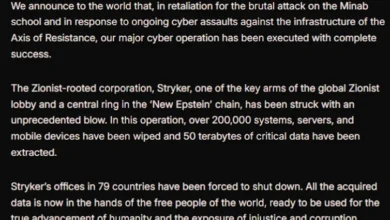
Abbott is the latest in a string of industry giants to face such threats. Earlier reports indicated that ShinyHunters was involved in data breaches at Medtronic, OneMedical, and AdaptHealth. Furthermore, the group was linked to the iRhythm data breach and a targeted campaign against Stryker, which occurred shortly after that company had recovered from a separate, destructive data-wiping attack attributed to Iranian state-sponsored actors.
The value of medical data on the black market far exceeds that of standard financial data. While a credit card number can be cancelled and replaced, a patient’s medical history, Social Security number, and genetic data are permanent. This "evergreen" data allows for long-term identity theft, insurance fraud, and targeted phishing attacks. For a company like Abbott, which operates in over 160 countries and holds a massive repository of diagnostic data, the stakes of a data breach are exceptionally high.
Technical Analysis of the Attack Vectors
The two incidents at Abbott highlight two different but equally dangerous attack vectors: social engineering and the exploitation of externally facing portals.
The ShinyHunters attack relies on the human element. Vishing remains a highly effective tool for bypassing sophisticated technical defenses. By posing as IT support or corporate security, attackers can trick employees into revealing passwords or, more commonly, approving Multi-Factor Authentication (MFA) prompts. Once the Microsoft Entra SSO is compromised, the attacker essentially has the "keys to the kingdom," as many modern corporations use SSO to streamline access to dozens of cloud-based applications. The ability of the attackers to move from an SSO account into Databricks and SharePoint suggests a lack of granular internal segmentation, a common issue in large-scale legacy environments.

Conversely, the ShadowByt3$ incident underscores the risks associated with third-party hosted portals and API security. Even if the data on LabCentral is public, the ability of an unauthorized user to exfiltrate files through API endpoints suggests that the portal’s security architecture did not adequately monitor or rate-limit data requests. In many cases, attackers use "public" portals as a staging ground to test credentials that might be reused on more sensitive internal systems.
Broader Implications and Regulatory Scrutiny
As Abbott continues its investigation alongside cybersecurity experts and law enforcement, the company may face significant regulatory scrutiny. Under the Health Insurance Portability and Accountability Act (HIPAA) in the United States and the General Data Protection Regulation (GDPR) in Europe, healthcare entities are required to maintain stringent protections for patient data. If the claims of 30 million rows of PII and 22 million client notes are proven true, Abbott could face substantial fines and years of litigation.
Furthermore, the incident raises questions about the security of "legacy" systems. Large corporations often acquire smaller companies (like Exact Sciences’ business units) and integrate their systems. These legacy environments frequently lack the modern security protocols of the parent company, making them "soft targets" for attackers.
For now, Abbott remains focused on containment and recovery. The company has activated its incident response procedures and is working to ensure that its core operations remain insulated from the breach. However, the dual nature of these attacks serves as a stark reminder that even the world’s largest healthcare providers are not immune to the evolving tactics of global extortion gangs. The coming weeks will be critical as security researchers monitor whether ShinyHunters follows through on its threat to publish the allegedly stolen data, which would provide the first concrete evidence of the breach’s true magnitude.
Related posts: