AWS Unveils Elastic Beanstalk Cluster Mode to Revolutionize Application Management with Amazon EKS Integration

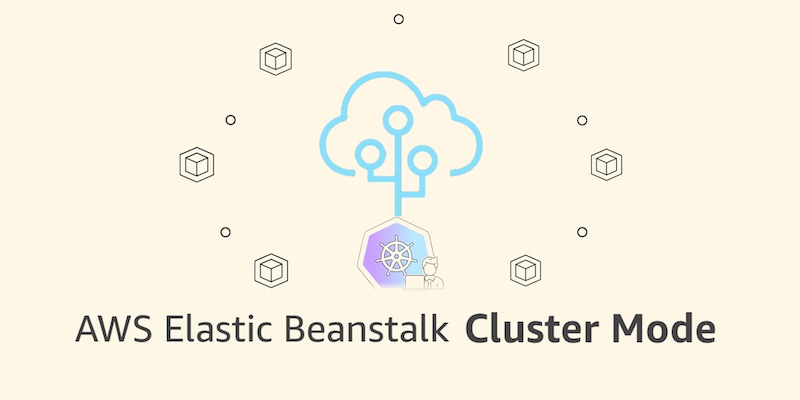
Fifteen years after its initial debut in 2011, Amazon Web Services (AWS) has announced a major evolution for its foundational application management platform. AWS Elastic Beanstalk has officially introduced a fully managed Cluster Mode, marking a transformative shift in how developers and engineering organizations deploy, scale, and maintain modern workloads. Designed to harness the robust infrastructure of Amazon Elastic Kubernetes Service (Amazon EKS), the new capability allows development teams to run multiple microservices and applications on a shared operational baseline. This release represents a pivotal milestone in the lifecycle of Elastic Beanstalk, blending the service’s renowned simplicity with the enterprise-grade scalability, flexibility, and orchestration power of Kubernetes.
The Evolution of Application Management on AWS
When AWS first launched Elastic Beanstalk over a decade ago, its primary value proposition was clear: abstract away the undifferentiated heavy lifting of infrastructure provisioning and management so that developers could focus entirely on writing business logic. Over the years, engineers across industries relied on the service to orchestrate full-stack applications built in mainstream languages such as Java, .NET, Python, Node.js, PHP, Ruby, and Go.
As software architecture evolved from monolithic structures to distributed microservices, the expectations placed on cloud deployment tools shifted dramatically. Modern development teams frequently manage portfolios spanning dozens or even hundreds of discrete services. Operating each application in complete isolation can introduce significant operational overhead, architectural fragmentation, and inflated resource costs. Recognizing these shifting paradigms, AWS systematically re-engineered the underlying operational engine of Elastic Beanstalk over recent years, integrating advanced capabilities such as AI-powered environment analysis for automated health diagnostics, official GitHub Action support for streamlined CI/CD pipelines, OpenTelemetry-based observability, traffic-splitting deployments with automatic rollback mechanisms, event-driven autoscaling, and HTTPS enforcement via AWS Certificate Manager and AWS Secrets Manager.
The introduction of Cluster Mode is the culmination of this multi-year modernization effort. By bridging the gap between traditional platform-as-a-service (PaaS) simplicity and container orchestration, AWS aims to solve the complex trade-off between operational overhead and infrastructure efficiency.
Core Architecture and Technical Implementation of Cluster Mode
At its technical core, Elastic Beanstalk Cluster Mode is architected to optimize resource utilization across a portfolio of workloads. Instead of provisioning dedicated compute infrastructure for every single application environment, teams can now deploy multiple applications that share an underlying pool of resources powered by Amazon EKS.

This shared-resource model directly addresses a common economic and operational challenge in cloud computing: as a software portfolio expands, per-application infrastructure costs tend to drop while management complexity spikes. Cluster Mode mitigates this complexity by providing a single, unified operational experience and standardized baseline guarantees across every integrated stack. Whether an enterprise operates ten microservices or a hundred, management remains centralized through the familiar Elastic Beanstalk console, AWS Command Line Interface (CLI), EB CLI, or standard AWS SDKs.
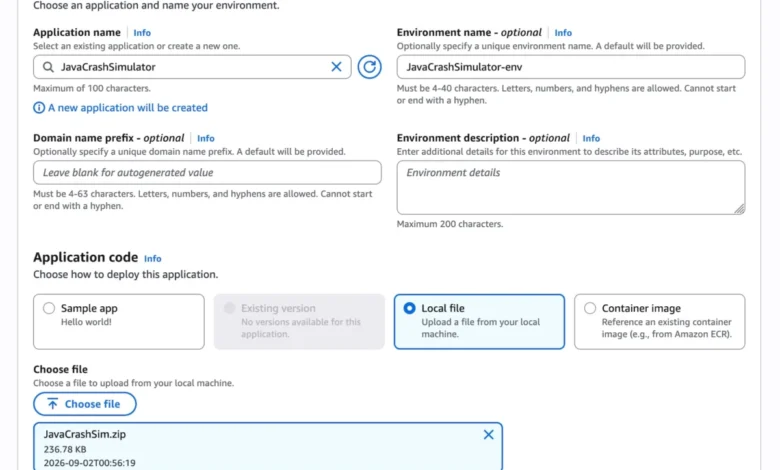
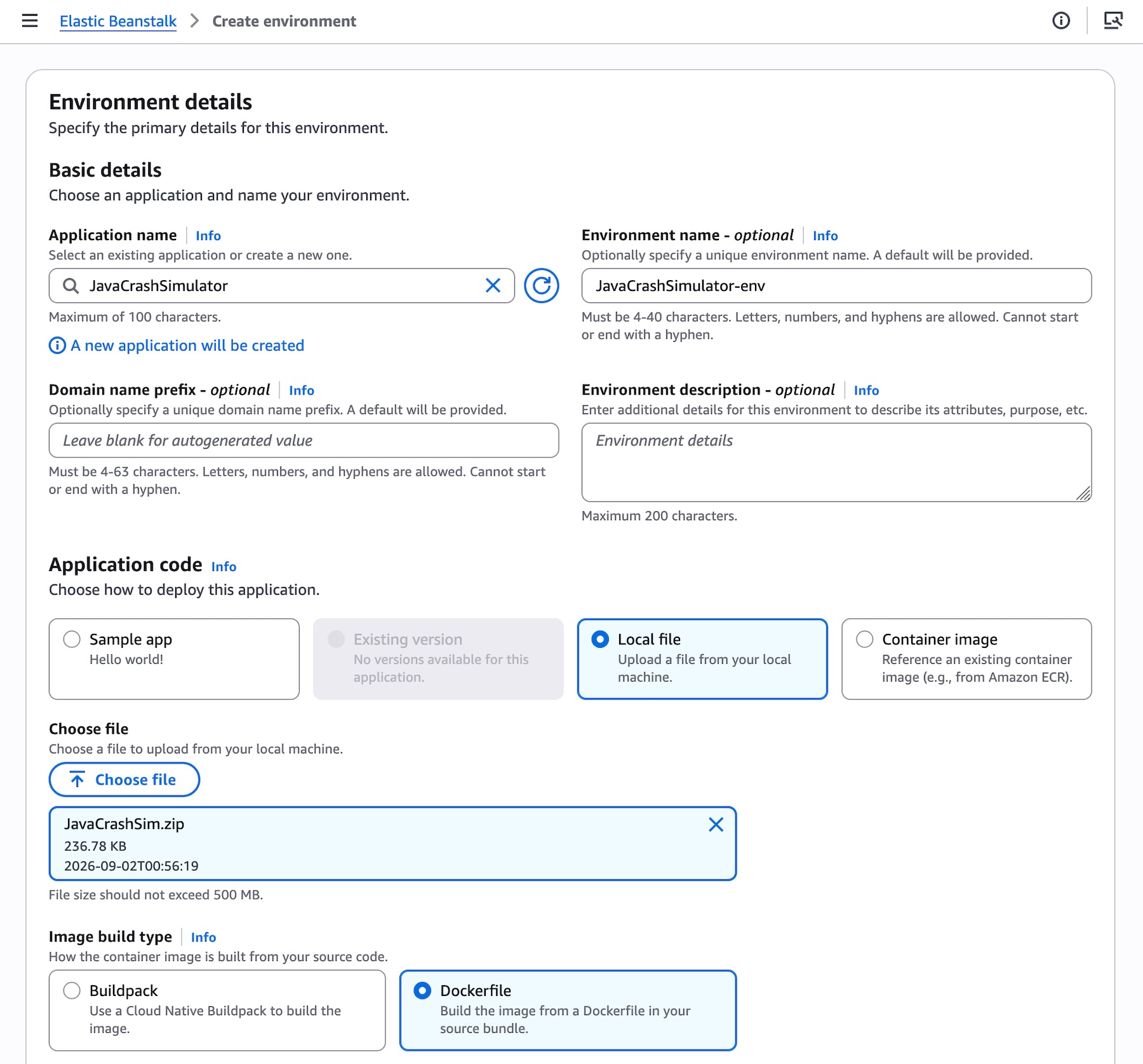
The deployment workflow has been tailored to minimize friction while accommodating modern containerized architectures. Developers can initiate a deployment by navigating to the Elastic Beanstalk console and selecting the "Cluster" option under the deployment type configuration. The platform accepts source code, Dockerfiles, or pre-built container images. When deploying via the AWS CLI or SDKs, users can register container images stored in Amazon Elastic Container Registry (Amazon ECR) as application versions and define granular service options through JSON configuration files.
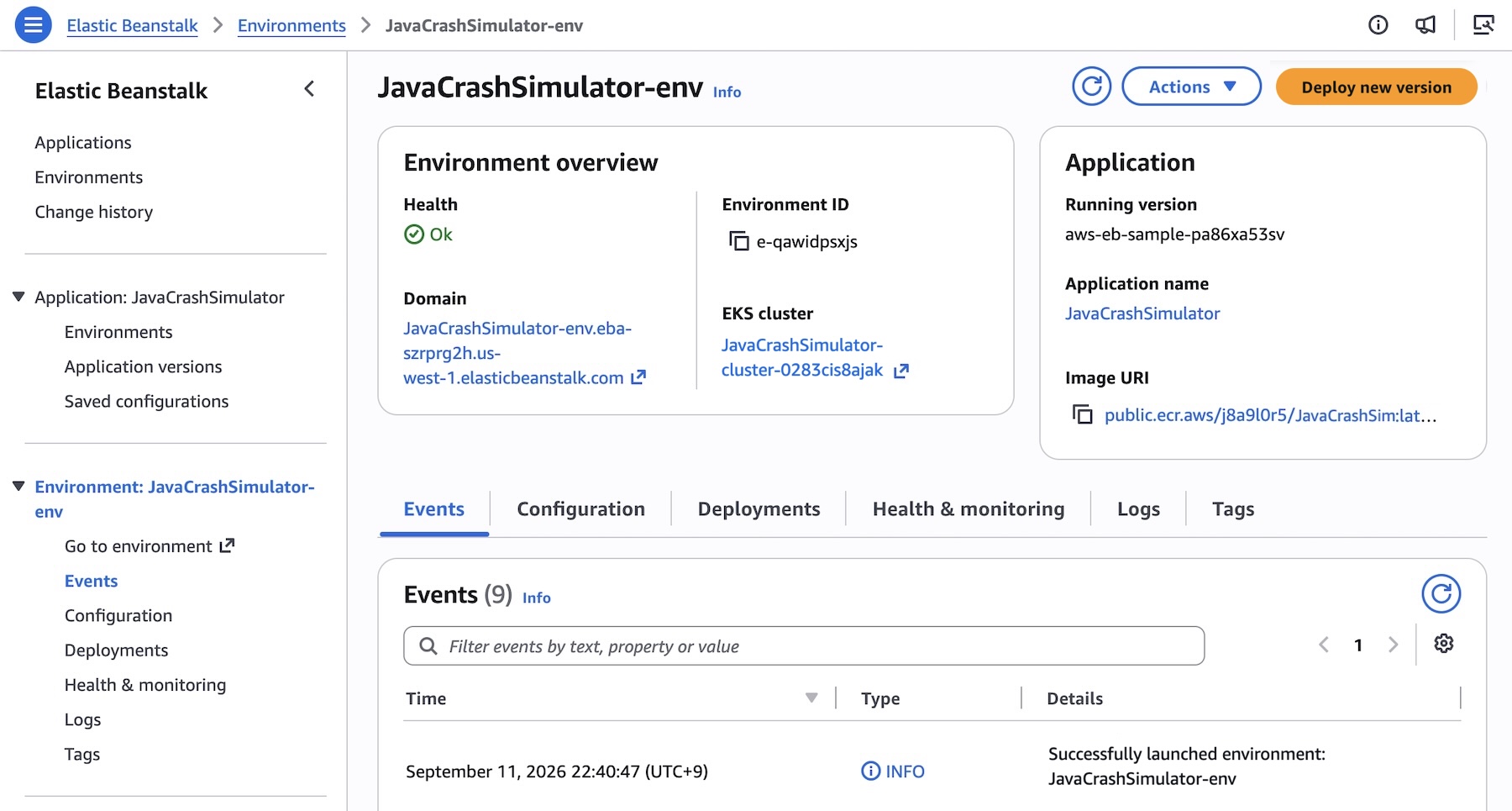
For instance, multi-service architectures can be orchestrated by defining distinct configurations for front-end and back-end components. While a front-end service might require an internet-facing Application Load Balancer (ALB) and specific health-check paths, internal microservices can remain safely isolated within the cluster network. The initial creation of an underlying EKS cluster typically completes within approximately ten minutes for a given set of subnets, whereas subsequent application deployments execute at a significantly accelerated pace by leveraging the pre-existing cluster framework.
Coexistence with Standard Mode and Migration Pathways
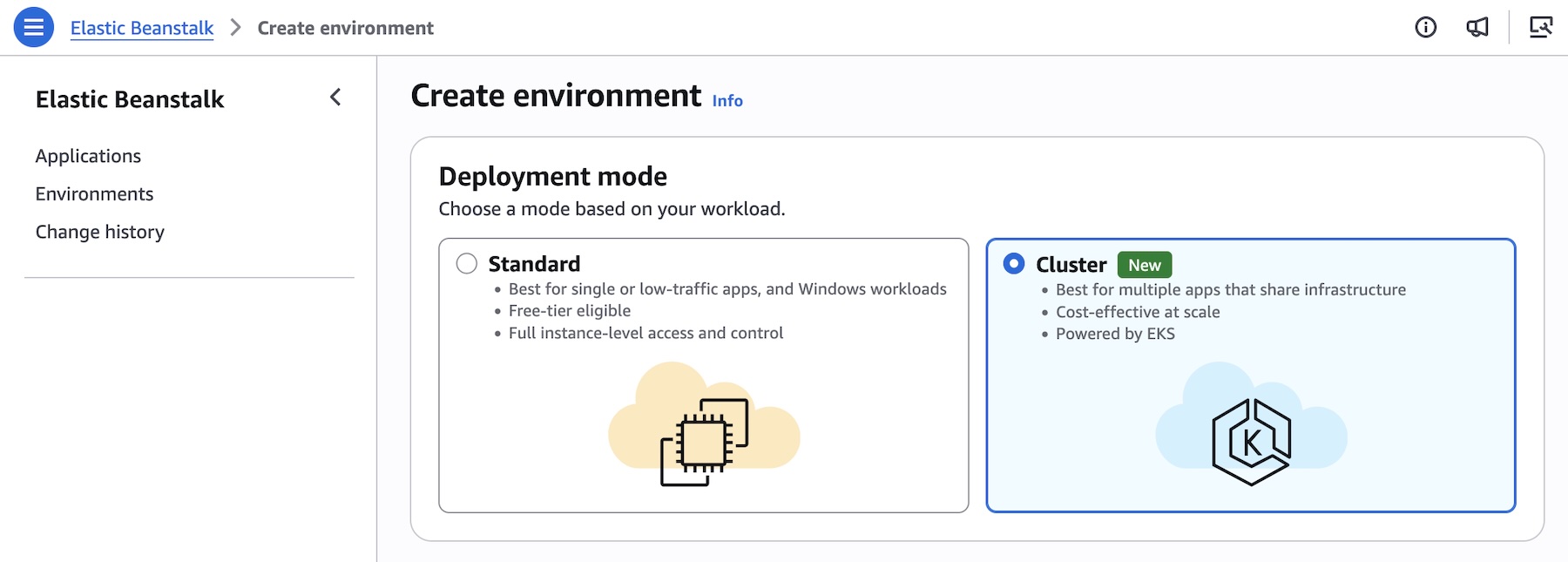
To ensure business continuity and prevent disruption for existing users, AWS has confirmed that Elastic Beanstalk Standard Mode—powered by Amazon Elastic Compute Cloud (EC2)—will remain fully supported. Standard Mode and the newly introduced Cluster Mode are designed to run side by side within the same Elastic Beanstalk application structure.
This side-by-side capability is a strategic inclusion for engineering teams managing legacy workloads. It allows organizations to execute phased, incremental migrations at their own pace rather than being forced into a disruptive, all-at-once platform overhaul. Comprehensive compatibility and validation checks are integrated into the deployment pipeline to evaluate configurations before changes are applied, safeguarding production environments against accidental misconfigurations.
Industry analysts note that Standard Mode will likely remain the ideal deployment target for traditional monolithic applications, simple web apps, or workloads requiring direct, granular control over individual EC2 instances. Conversely, Cluster Mode is positioned as the definitive choice for modern, containerized microservice architectures seeking the density, scalability, and automated governance of Kubernetes without the steep learning curve traditionally associated with raw Kubernetes management.
Pricing Structure and Regional Availability
From a financial perspective, AWS has structured Elastic Beanstalk Cluster Mode to eliminate software licensing surcharges. There is no additional cost levied directly by Elastic Beanstalk for utilizing Cluster Mode. Instead, customers pay strictly for the underlying AWS resources consumed by their applications.
This consumption-based billing model encompasses standard fees associated with the EKS control plane, EKS Auto Mode compute resources, Amazon ECR storage and data transfer, and Amazon CloudWatch monitoring logs. Prospective users should note that Cluster Mode environments are not eligible for the AWS Free Tier. Detailed regional pricing breakdowns and cost-optimization guidance are documented on the official AWS Elastic Beanstalk Pricing page.
At launch, Cluster Mode is generally available across all AWS commercial regions where Elastic Beanstalk is currently supported. For organizations navigating complex regional compliance boundaries or planning long-term infrastructure roadmaps, AWS maintains an up-to-date regional capabilities registry. Additionally, developers can interact with technical documentation, search API references, and troubleshoot deployment hurdles by integrating the AWS MCP Server and associated plugins directly into their preferred artificial intelligence and developer toolchains.
Broader Industry Implications and Expert Analysis
The release of Elastic Beanstalk Cluster Mode reflects a broader, ongoing industry trend: the abstraction and democratization of Kubernetes. While Kubernetes has long been established as the industry standard for container orchestration, its initial configuration and day-two operational maintenance have historically demanded specialized expertise, creating a barrier to entry for smaller development teams or enterprises focused strictly on product delivery.
By packaging the power of Amazon EKS inside the streamlined, opinionated interface of Elastic Beanstalk, AWS is effectively bridging the divide between developer velocity and platform engineering rigor. Industry observers suggest this move will accelerate container adoption among organizations that previously found native Kubernetes management too resource-intensive. By offloading critical operational responsibilities—such as continuous patching, cluster scaling, automated monitoring, and infrastructure upgrades—onto AWS for the entire lifecycle of the workload, enterprises can redirect engineering hours toward core product innovation.
Initial feedback from early adopters highlights the reduction in boilerplate configuration files and the ease of managing multi-service deployments through automated pipelines. As organizations continue to evaluate their cloud strategies in an increasingly cost-conscious macroeconomic climate, tools that promise higher resource density through shared infrastructure without sacrificing security or observability are expected to see rapid enterprise uptake.
Developers and engineering leaders looking to explore the new functionality can access the Elastic Beanstalk console immediately to configure their first Cluster Mode environment. Community discussions, peer troubleshooting, and official feedback channels are actively monitored by AWS engineering teams via AWS re:Post and traditional support pathways, ensuring that user experiences will directly inform the ongoing evolution of the platform.