OmniVoice Studio Emerges as a Privacy-Focused Open-Source Alternative to ElevenLabs for Local Voice AI Processing

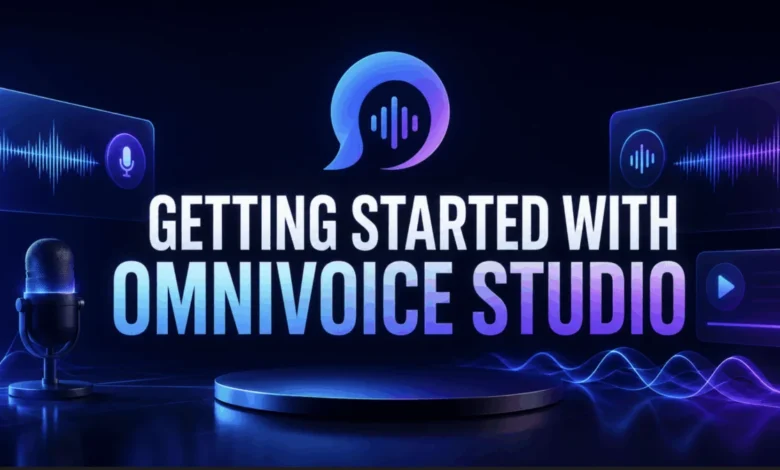
The landscape of generative artificial intelligence has shifted rapidly from experimental cloud-based APIs to sophisticated local deployments, and OmniVoice Studio represents a significant milestone in this transition. As commercial platforms like ElevenLabs continue to dominate the market with subscription-based models and character-limited tiers, a growing segment of developers and creators has sought alternatives that prioritize data sovereignty and cost-efficiency. OmniVoice Studio, an open-source desktop application, has positioned itself as a comprehensive solution for voice cloning, video dubbing, and real-time dictation, all operating entirely on the user’s local hardware. By removing the requirement for cloud-based inference, the project addresses the primary concerns of the modern AI user: privacy, recurring costs, and the need for offline functionality.
The Shift Toward Local Audio Intelligence
The development of OmniVoice Studio comes at a time when the "Local First" movement in AI is gaining momentum. For years, high-quality text-to-speech (TTS) and voice cloning were the exclusive domain of companies with massive server farms. Users were forced to upload sensitive scripts and personal voice recordings to remote servers, often granting platforms broad usage rights in exchange for access. OmniVoice Studio disrupts this model by utilizing the Tauri framework—a Rust-based architecture—to wrap a high-performance Python backend. This allows the application to run natively on Windows, macOS, and Linux without ever "phoning home."
The project’s rise in popularity is reflected in its GitHub metrics, where it has secured over 7,100 stars and 1,100 forks. This level of community engagement suggests a robust demand for tools that bypass the traditional SaaS (Software as a Service) gatekeeping. While ElevenLabs offers high-fidelity voices across 32 languages, OmniVoice Studio leverages a diffusion-based model that supports a staggering 646 languages and dialects, making it a more versatile tool for global localization and linguistic research.
Technical Architecture and Core Components
At its core, OmniVoice Studio is more than a simple wrapper; it is an integrated pipeline of several industry-leading open-source models. The application utilizes a FastAPI backend with nearly 100 API endpoints to coordinate complex tasks. The intelligence of the system is distributed across four primary pillars:
- WhisperX: An optimized version of OpenAI’s Whisper model, used for high-accuracy speech-to-text and timestamping.
- Pyannote: A speaker diarization engine that identifies and separates different voices within a single audio stream.
- OmniVoice Model: A zero-shot diffusion-based TTS system that can clone a voice from as little as three seconds of reference audio.
- Demucs: A source separation model used to peel speech away from background music or noise, which is essential for professional-grade video dubbing.
The integration of these components allows for a seamless workflow. For instance, when a user initiates a video dubbing task, the system automatically detects the speakers, translates their dialogue, clones their specific vocal characteristics, and re-integrates the new audio with the original background track. This entire process is handled by the local GPU or CPU, ensuring that proprietary content remains secure on the user’s disk.
Comparative Analysis: OmniVoice vs. Cloud Competitors
To understand the market impact of OmniVoice Studio, one must look at the economic and functional differences between local and cloud-based solutions. Commercial providers typically charge between $5 and $330 per month, with pricing tiers often tied to the number of characters generated. For high-volume creators or developers building automated pipelines, these costs can become prohibitive.
Functionally, OmniVoice Studio offers features that are often locked behind "Enterprise" tiers in cloud platforms. Voice design—the ability to create a unique voice by adjusting gender, age, pitch, and accent—is fully accessible without additional fees. Furthermore, while cloud platforms are limited by their API’s latency and internet stability, OmniVoice provides a consistent experience regardless of connectivity.
One of the most significant advantages of the local model is GPU versatility. OmniVoice Studio is engineered to autodetect hardware, routing workloads to NVIDIA’s CUDA, Apple’s Metal Performance Shaders (MPS), or AMD’s ROCm. For users without high-end graphics cards, the software includes an intelligent offloading mechanism that shifts the most demanding tasks to the CPU, ensuring accessibility across a wide range of hardware specifications.
Installation Chronology and System Requirements
The deployment of OmniVoice Studio involves a sophisticated setup process that reflects its professional-grade capabilities. Unlike simple executable files, the application requires a curated environment to manage its 2.4 GB of model weights and various Python dependencies.
The recommended installation path involves cloning the repository and utilizing the Bun runtime for frontend dependencies, while uv manages the Python virtual environment. This ensures that the complex web of AI libraries remains isolated from the user’s global system settings. On macOS, the software leverages Homebrew and Xcode Command Line Tools to optimize for Apple Silicon, where it can achieve near-real-time synthesis using the Apple Neural Engine.
Windows users face a slightly more complex path due to the way certain TTS engines interact with CUDA kernels. Developers have noted that on machines with less than 16 GB of VRAM, the "torch.compile" feature can lead to out-of-memory errors. To combat this, the application includes performance toggles that allow the system to fall back to "eager-mode" kernels, sacrificing a small amount of speed for the sake of stability on consumer-grade hardware.
Advanced Features: From Video Dubbing to the MCP Server
The most impressive feat of OmniVoice Studio is its end-to-end video dubbing pipeline. By combining transcription, translation, and cloning, the software allows users to localize video content without professional voice actors. This has profound implications for independent educators, YouTubers, and corporate training departments who need to reach international audiences on a limited budget.
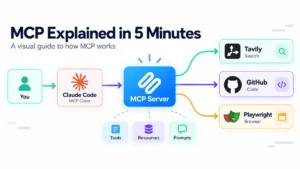
Beyond traditional desktop use, the software includes a Model Context Protocol (MCP) server. This is a forward-looking feature that allows the AI to communicate with other tools like Claude Desktop or Cursor. By exposing its capabilities through a standardized protocol, OmniVoice Studio can be "hired" by an LLM to perform tasks. A developer could, for example, ask an AI assistant to "Read back this code documentation in a calm, professional voice," and the LLM would trigger OmniVoice’s local API to generate the audio.
The system-wide dictation widget further extends its utility. By using global hotkeys, users can trigger a floating transcription window that auto-pastes text into any active application. This bypasses the need for the cloud-based dictation services built into modern operating systems, providing a more private and often more accurate alternative thanks to the underlying WhisperX engine.
Implications for Data Privacy and Corporate Security
The emergence of local voice AI tools is not merely a matter of convenience; it is a response to the growing legal and ethical complexities of data handling. In corporate environments, the use of cloud-based AI can often conflict with non-disclosure agreements (NDAs) or data protection regulations like GDPR. When a user uploads a script containing trade secrets to a cloud TTS provider, they are essentially handing that data to a third party.
OmniVoice Studio provides a "Zero-Trust" environment for audio production. Because the inference happens locally, the risk of data leaks or unauthorized model training on user data is eliminated. This makes it an ideal tool for legal professionals, medical researchers, and government contractors who require the efficiency of AI without the risks associated with external data transmission.
Future Outlook and Development Roadmap
As of the latest v0.2.7 release in May 2026, OmniVoice Studio remains in an active beta phase. The development team has signaled that future updates will focus on streamlining the installation process further, particularly by automating the "Gatekeeper" and "Quarantine" attribute handling on macOS and Windows.
The community-driven nature of the project ensures a rapid iteration cycle. With over 600 languages already supported, the next frontier for OmniVoice is likely "emotional intelligence"—the ability to fine-tune the prosody and emotional inflection of synthesized speech to match the context of the text more accurately.
The success of OmniVoice Studio underscores a broader trend in the tech industry: the democratization of high-end AI. As hardware continues to improve and models become more efficient, the reliance on centralized cloud providers is likely to diminish. For the voice AI sector, OmniVoice Studio is not just a tool; it is a proof of concept that the future of speech is local, private, and open to everyone.