The landscape of web development for Python developers has undergone a significant transformation with the introduction of FastAPI Cloud, a managed platform designed to streamline the transition from local development to production-ready deployment. FastAPI, originally released in 2018 by Sebastián Ramírez, has rapidly ascended to become one of the most popular web frameworks in the Python ecosystem, particularly favored for its high performance, asynchronous capabilities, and automatic documentation. As the framework matures, the demand for a specialized, developer-centric hosting environment has led to the creation of FastAPI Cloud, a platform that promises to do for Python developers what Vercel did for the JavaScript ecosystem.
The Strategic Shift Toward Managed Infrastructure
For years, Python developers building APIs for machine learning, data science, and general web applications faced a steep learning curve when it came to deployment. While frameworks like Flask and Django offered robust tools for building applications, the "last mile" of making those applications accessible to the public often required extensive knowledge of Linux server administration, Docker containerization, and cloud infrastructure management on platforms like Amazon Web Services (AWS) or Google Cloud Platform (GCP).
FastAPI Cloud represents a strategic response to this friction. By offering a command-line interface (CLI) that handles the complexities of server configuration, environment variables, and deployment pipelines, the platform allows developers to focus exclusively on their code. This shift is particularly relevant in the current technological climate, where the proliferation of Artificial Intelligence (AI) and Large Language Models (LLMs) has created a surge in Python-based API development. Developers in these fields often prioritize speed and iteration over infrastructure maintenance.
The Technical Foundation: Project Initialization and Modern Tooling
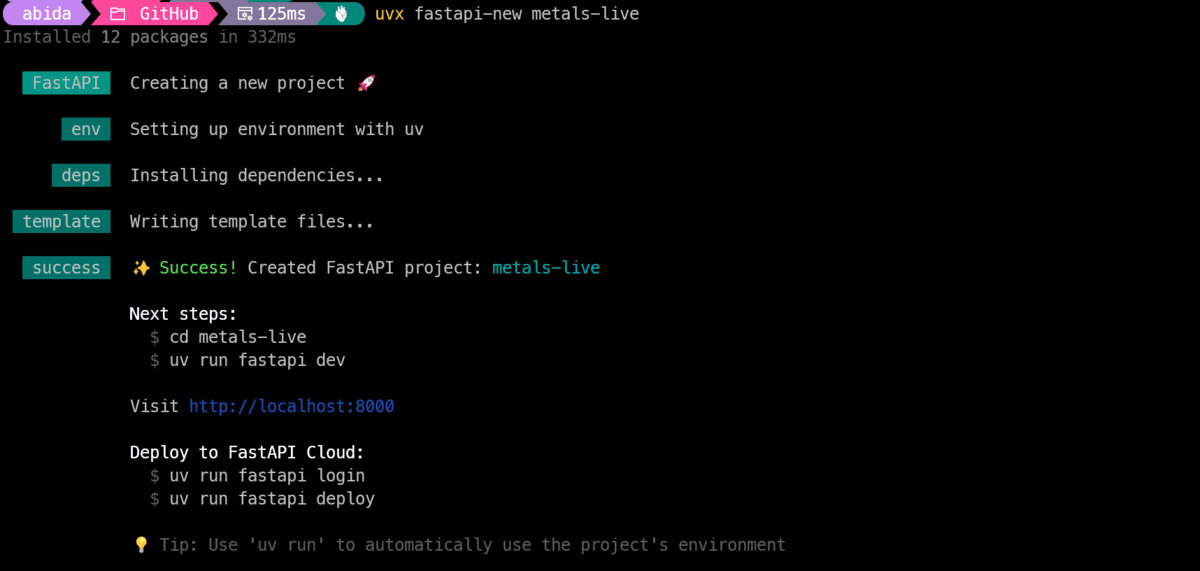
The deployment journey on FastAPI Cloud typically begins with a modernized project structure. Unlike older methodologies that relied on manual virtual environment management, the current FastAPI ecosystem increasingly utilizes "uv," an extremely fast Python package and project manager written in Rust. This toolchain is central to the FastAPI Cloud experience, ensuring that dependencies are resolved quickly and environments remain consistent across local and cloud instances.
To initiate a project destined for the cloud, developers utilize the uvx fastapi-new command. This scaffolding tool generates a standardized directory structure that includes pre-configured virtual environments and essential boilerplate code. This standardization is critical for the cloud platform, as it allows the deployment engine to automatically detect entry points and dependency requirements without manual intervention from the user.
For a practical application, such as a real-time financial dashboard, the requirements extend beyond the core framework. Modern FastAPI applications frequently employ httpx, a fully featured HTTP client for Python 3 that provides sync and async APIs. In an asynchronous framework like FastAPI, using an async-capable client like httpx is vital to prevent blocking the event loop during external API calls—such as fetching live gold and silver prices from a third-party provider.
Case Study: Architecture of a Live Metals Dashboard
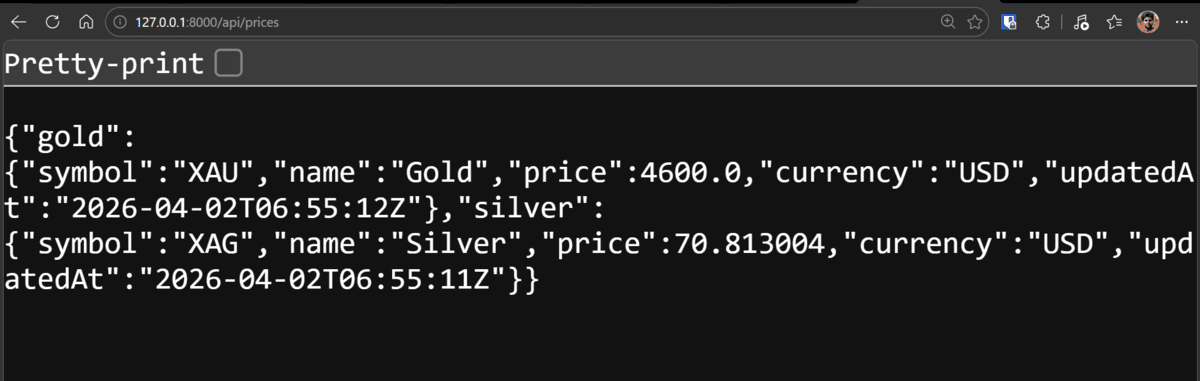
A typical introductory application for FastAPI Cloud involves the integration of external data sources and a responsive frontend. In a "Metals Live" dashboard scenario, the application serves two primary functions: acting as a proxy for financial data and serving a lightweight user interface.
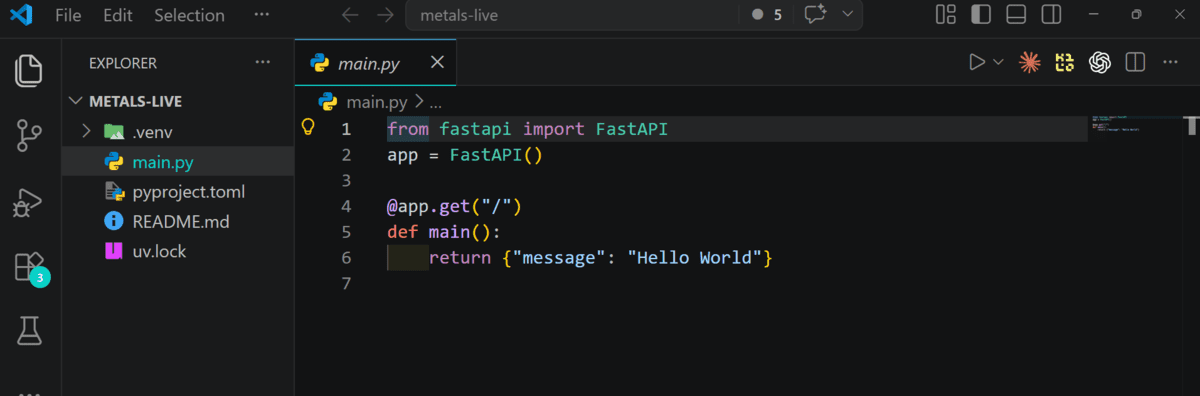
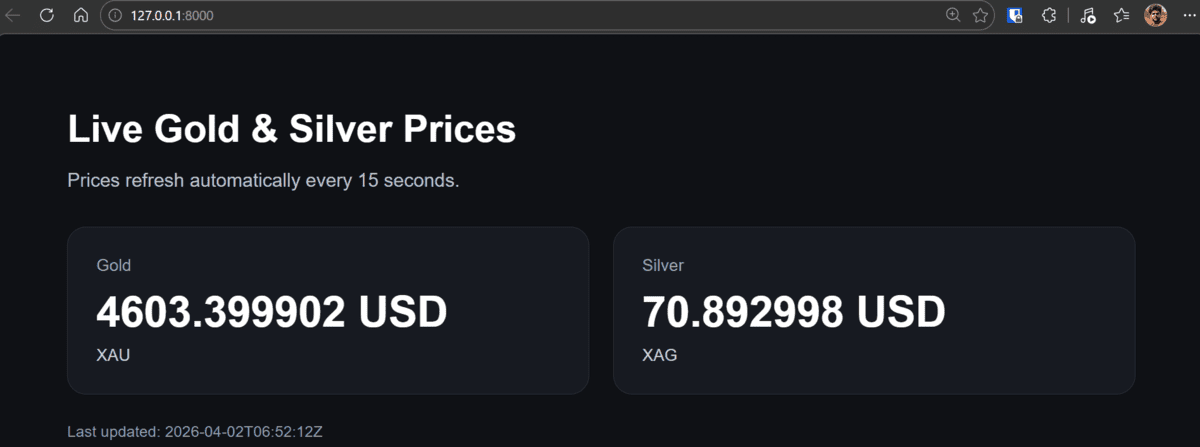
The backend logic leverages FastAPI’s dependency injection and asynchronous route handlers. By defining an asynchronous function to fetch prices from an external API, the application can handle multiple concurrent requests without performance degradation. The integration of HTMLResponse allows the same Python script to serve a sophisticated frontend, eliminating the need for a separate React or Vue.js build process for simple utility tools.
This architectural pattern highlights the "Full-stack Python" trend. By embedding HTML and JavaScript directly within the FastAPI application, developers can create interactive dashboards that refresh data every 15 seconds using standard browser APIs like fetch() and setInterval(). This approach reduces the complexity of the deployment, as the entire stack exists within a single repository and a single service.
Local Validation and the "Fastapi Dev" Workflow
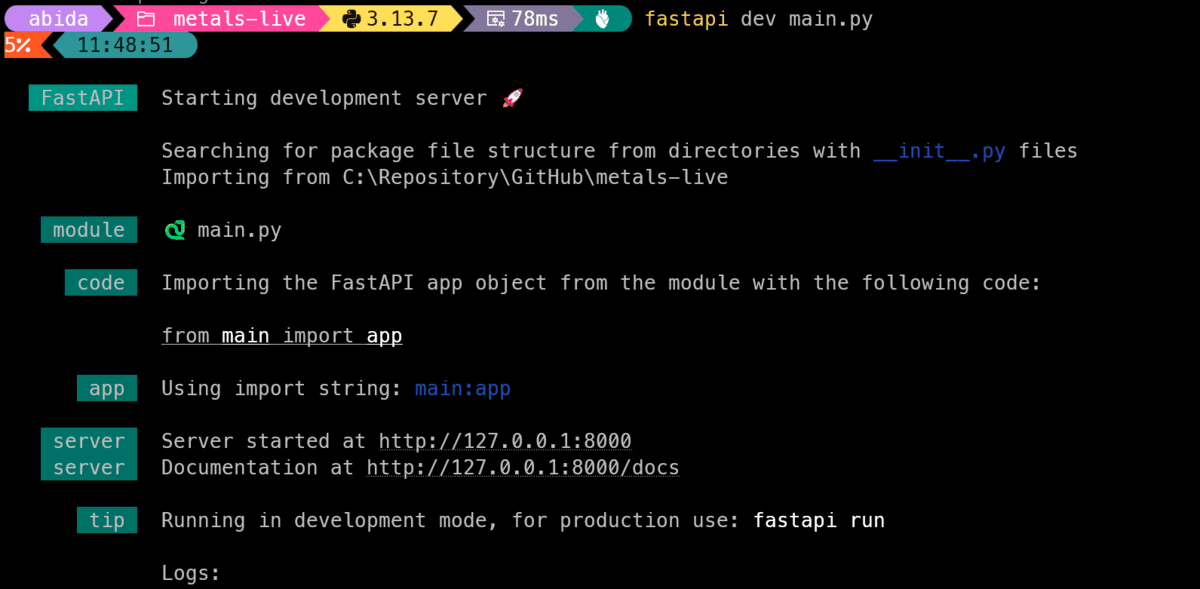
Before committing to a cloud deployment, the FastAPI ecosystem provides a robust local development environment. The fastapi dev command represents a significant improvement over traditional server starts. It provides hot-reloading capabilities, meaning any change to the source code is immediately reflected in the running server.
During this phase, the framework’s automatic documentation feature—accessible via the /docs endpoint—becomes a primary testing tool. Powered by Swagger UI, this interface allows developers to interact with their API endpoints, inspect JSON responses, and validate data schemas in real-time. For a metals dashboard, this means verifying that the external price API is returning the correct data types for gold (XAU) and silver (XAG) before the application is exposed to the public internet.
The Deployment Chronology: From CLI to Live URL
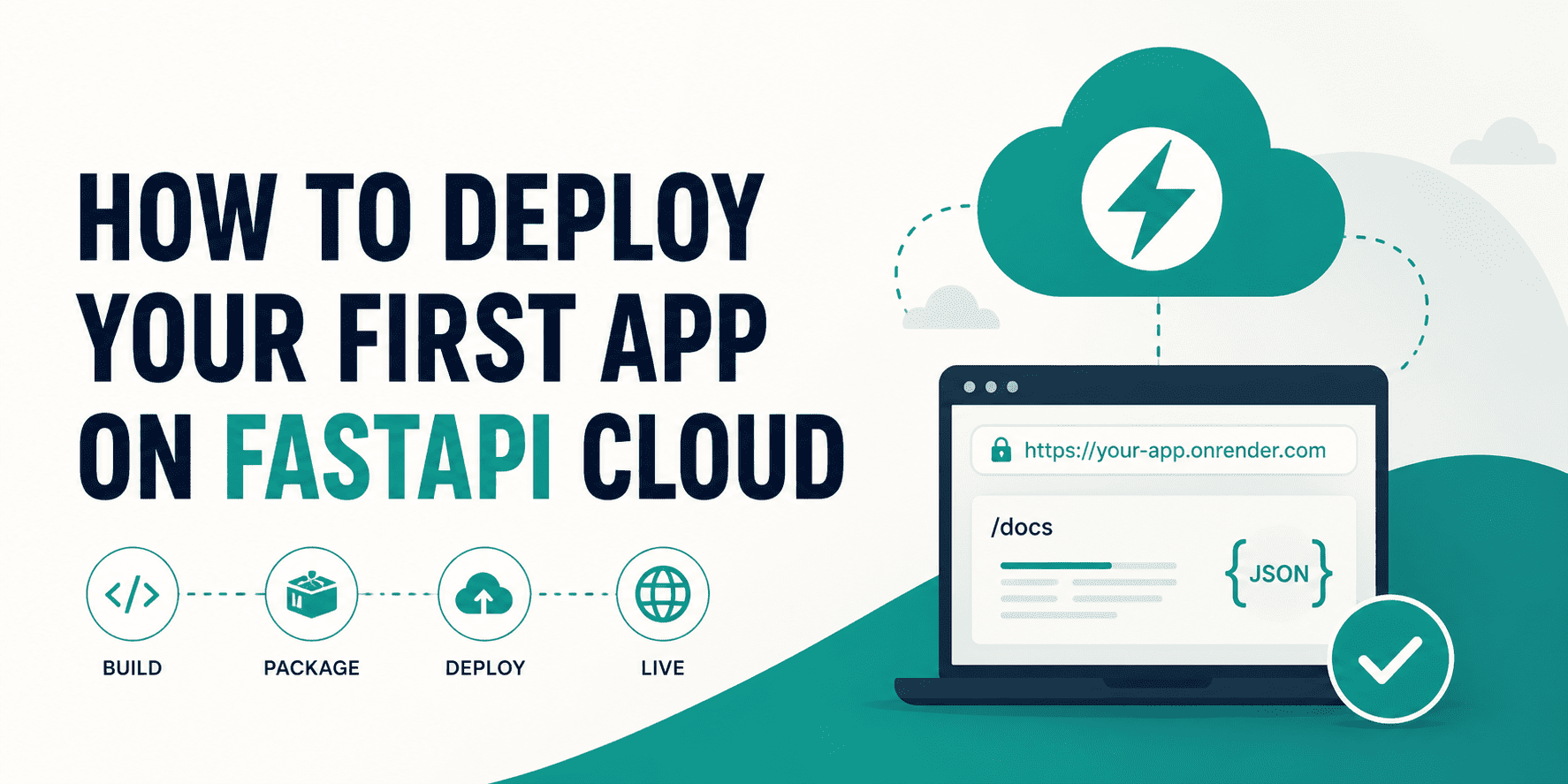
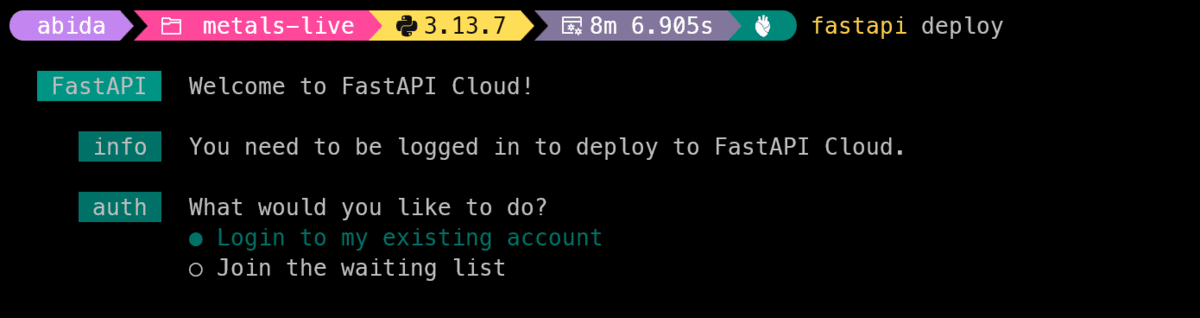
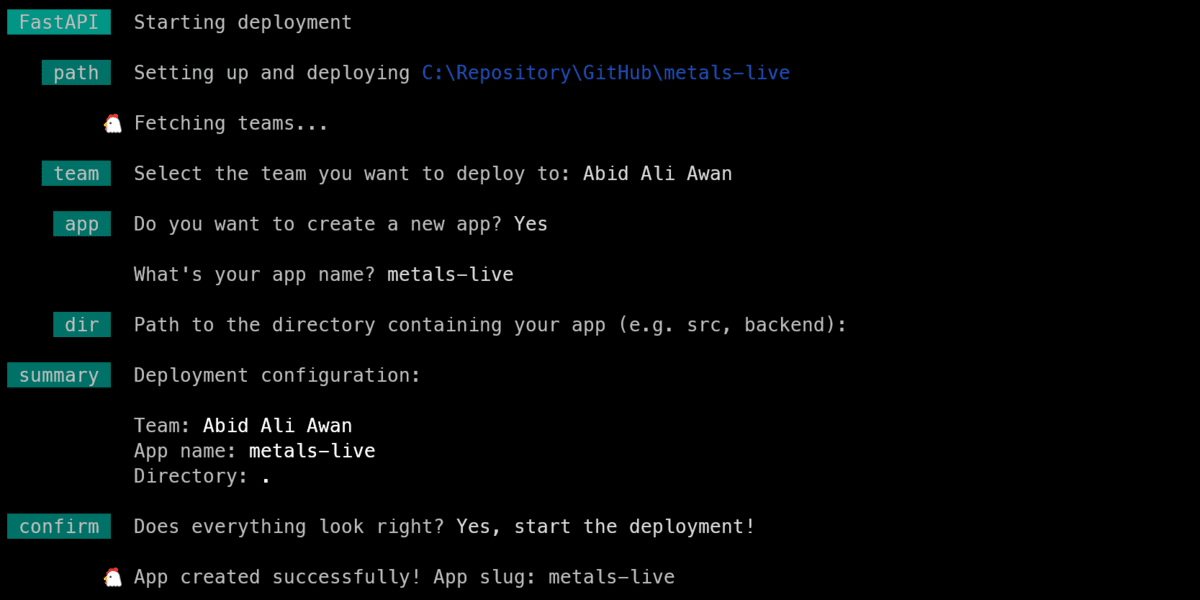
The transition to FastAPI Cloud is initiated through the fastapi deploy command. This triggers a specific sequence of events designed to mirror the "Git-push-to-deploy" workflow popularized by modern Platform-as-a-Service (PaaS) providers.
- Authentication and Onboarding: The CLI prompts the user to authenticate with their FastAPI Cloud account. For new users, this involves a brief onboarding process where team names and application identifiers are established.
- Environment Analysis: The platform analyzes the project’s
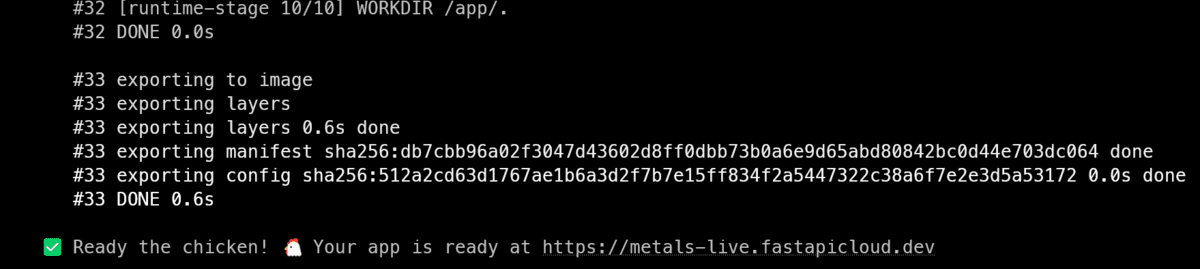
pyproject.tomlorrequirements.txtfiles to determine the necessary runtime environment. - Build Phase: The application is packaged into a containerized format. During this stage, the platform installs all necessary dependencies, including specialized extras like
fastapi[standard]. - Deployment and Scaling: The platform assigns a unique, SSL-secured URL (e.g.,
https://app-name.fastapicloud.dev/) and provisions the necessary compute resources to host the application. - Health Checks: Once live, the platform performs automated health checks to ensure the API is responding correctly to requests.
This streamlined chronology reduces the time-to-deployment from hours to seconds, a metric that is increasingly becoming a competitive advantage for development teams.
Post-Deployment: Monitoring, Logs, and Integrations
Once an application is live on FastAPI Cloud, the focus shifts to observability and maintenance. The platform provides a centralized dashboard where developers can monitor application health through real-time logs. For applications relying on external APIs—such as the metals dashboard fetching data from api.gold-api.com—these logs are essential for debugging upstream failures or timeout issues.
Furthermore, FastAPI Cloud is positioning itself as a hub for broader integrations. Similar to platforms like Supabase, it offers managed hooks into databases, authentication services, and storage solutions. This extensibility ensures that while the initial deployment might be a simple dashboard, the infrastructure can grow to support complex, data-driven enterprise applications.
Analysis of Industry Implications
The emergence of FastAPI Cloud signifies a broader trend in the software industry: the "abstraction of the infrastructure layer." As software development becomes more specialized, the value proposition of cloud providers is moving away from raw compute power toward developer experience (DX).
For the Python community, this platform addresses a long-standing gap. While Python is the undisputed leader in data science and AI, its web deployment story has historically been more fragmented than that of JavaScript or Go. By providing a "golden path" for FastAPI applications, the platform likely increases the framework’s adoption among enterprise teams who previously might have been deterred by the complexities of Python deployment at scale.
Moreover, the managed nature of FastAPI Cloud provides built-in security benefits. By handling SSL certificates, managing secrets, and providing a standardized runtime, the platform mitigates common configuration errors that lead to data breaches. In an era where API security is a top priority for CTOs, the move toward managed, opinionated deployment platforms is both a productivity booster and a risk management strategy.
Conclusion and Future Outlook
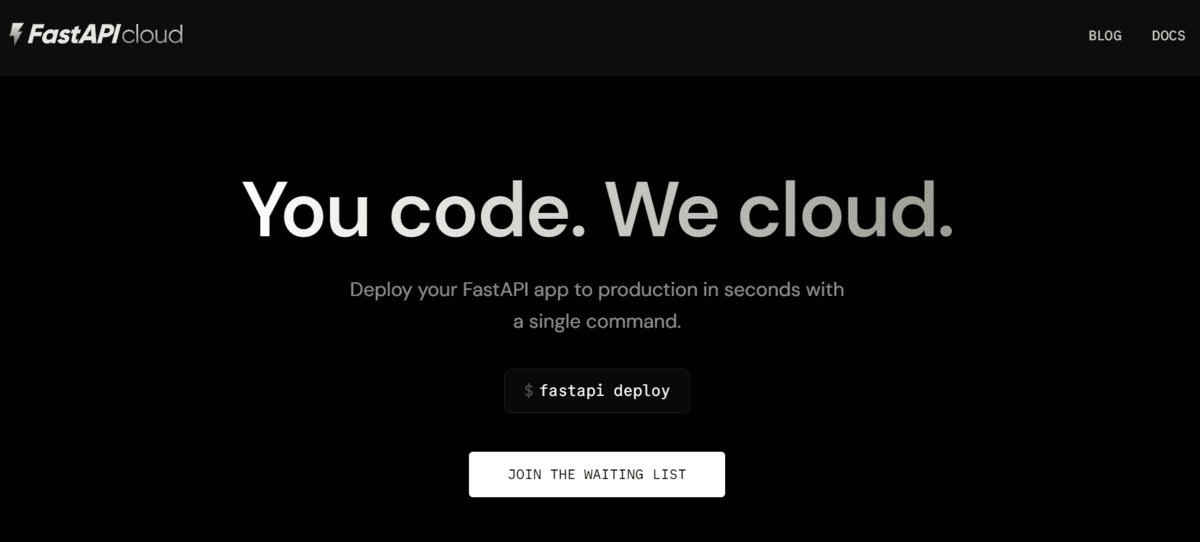
FastAPI Cloud is currently in a rollout phase, utilizing a waitlist system to manage growth and ensure platform stability. Early feedback from the developer community suggests that the platform’s simplicity and alignment with the FastAPI philosophy are its strongest assets. As the platform moves toward general availability, it is expected to introduce more advanced features such as automated scaling, custom domain support, and deeper CI/CD integrations.
The success of this initiative will likely depend on its ability to balance simplicity with the needs of power users. However, for developers looking to take their first steps into the cloud, the path has never been clearer. By combining the high-performance capabilities of the FastAPI framework with a streamlined, CLI-driven deployment process, FastAPI Cloud is setting a new standard for how Python applications are built and delivered to the world. The era of the "Full-stack Python" developer, capable of moving from idea to live API in a single afternoon, has officially arrived.
Related posts: