Demystifying the Model Context Protocol: How MCP is Standardizing AI Agent Integration and Tool Use

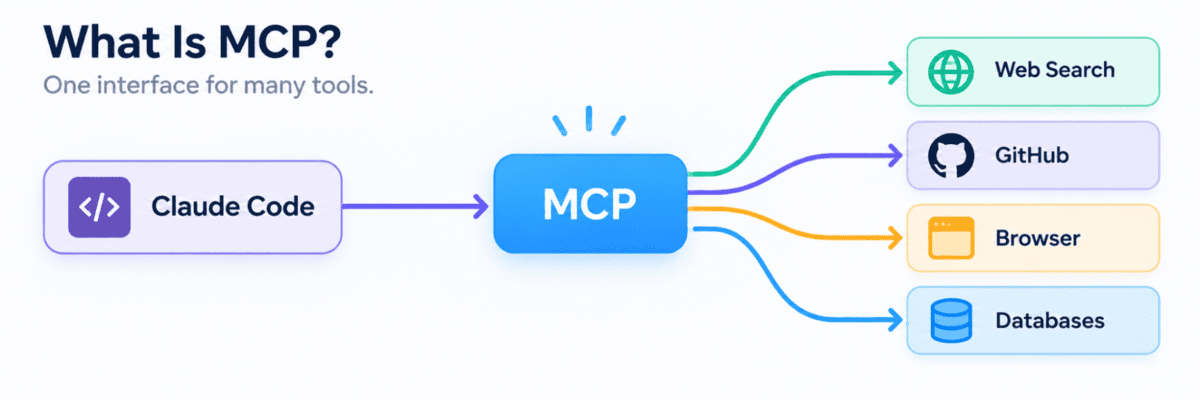
The rapid expansion of artificial intelligence applications has fundamentally transformed the software development landscape, shifting the paradigm from static text generation to dynamic, autonomous AI agents capable of executing complex workflows. Central to this evolution is the Model Context Protocol (MCP), an emerging open standard designed to streamline how large language models (LLMs) connect with external data sources, enterprise databases, development repositories, and third-party tools. Despite its widespread adoption across modern coding assistants and enterprise environments, the underlying architecture and practical implementation of MCP remain opaque to many developers. By establishing a universal framework for capability discovery and execution, MCP addresses a critical bottleneck in modern software engineering: the proliferation of custom, fragmented application programming interfaces (APIs) that previously required bespoke integrations for every new AI model or framework.
Background Context and the Integration Crisis
For years, the integration of external tools into AI ecosystems suffered from severe fragmentation. When developers sought to equip an LLM with real-time web search capabilities, database access, or automated browser testing, they were forced to write custom middleware. Each combination of model and data source demanded a specialized integration layer, resulting in high maintenance overhead, inconsistent security protocols, and poor scalability. Furthermore, as AI applications evolved from conversational chatbots into autonomous agents capable of independent reasoning and task execution, the demand for standardized external connectivity escalated exponentially.
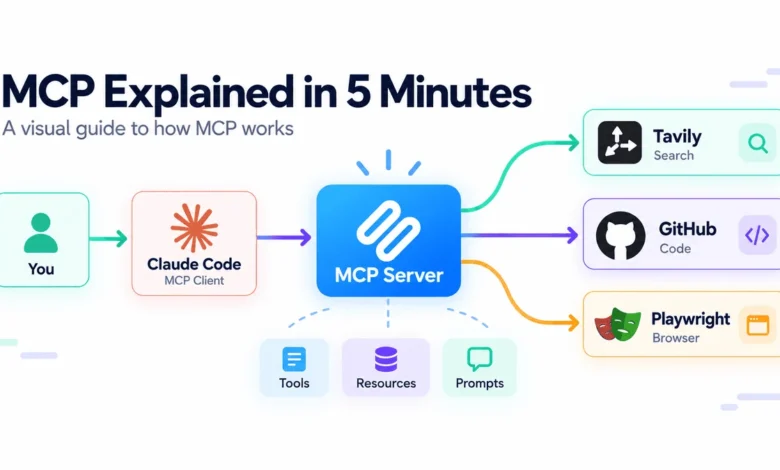
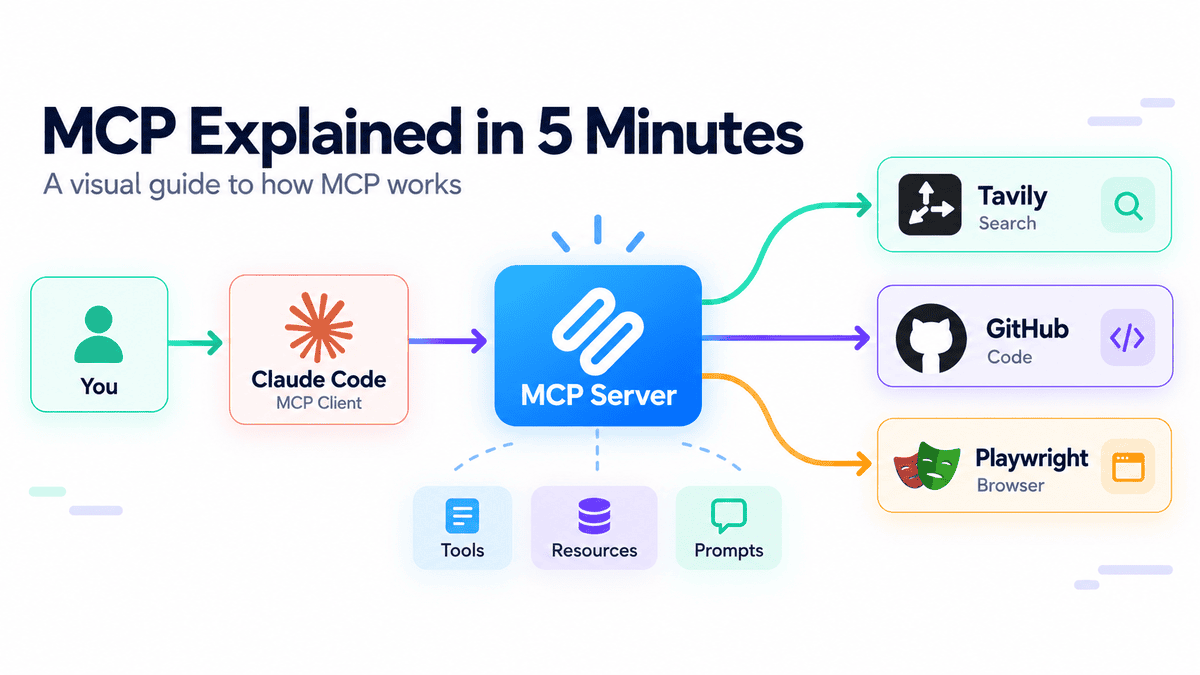
The introduction of the Model Context Protocol sought to resolve this friction by decoupling the reasoning capabilities of the AI model from the mechanics of tool execution. Rather than functioning as a replacement for existing APIs, MCP acts as an intermediary communication standard. An MCP server wraps an underlying API, database, or software service, translating its native capabilities into a standardized schema that an MCP client—embedded within an AI host application—can automatically discover, understand, and invoke. This architectural separation ensures that developers can build modular tools once and deploy them across any compatible AI host, significantly reducing engineering complexity and accelerating the deployment of production-ready AI agents.
Core Architecture and Operational Chronology
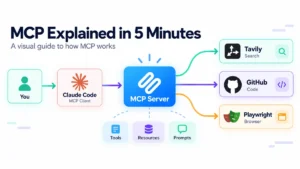
Understanding MCP requires examining its distinct client-server architecture, which separates the host environment, the client interface, the server abstraction, and the target capabilities. The host represents the primary AI application, such as Claude Code, which provides the user interface and the underlying language model. Within this host, the MCP client manages connections to one or more MCP servers. These servers expose specific capabilities categorized primarily into tools (executable functions that modify state or fetch dynamic data), resources (readable data streams or documents), and prompts (pre-defined templates designed to guide user or model interactions).
The operational workflow follows a precise, deterministic sequence:
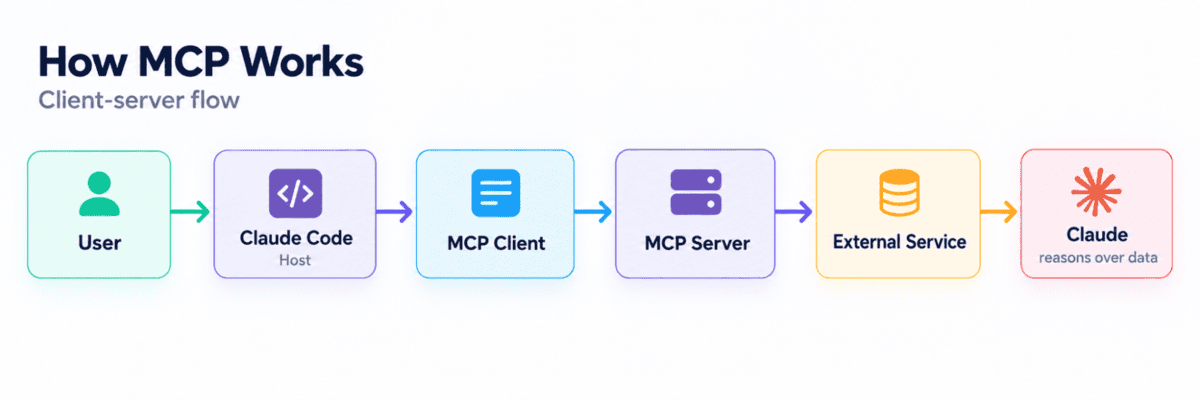
- User Prompt Submission: A user submits a complex request requiring external data or action, such as reviewing a software repository or searching for current software releases.
- Capability Discovery: The host model evaluates the prompt, recognizes a deficiency in its internal static knowledge, and queries the connected MCP client to discover available tools.
- Tool Selection and Execution: The model autonomously selects the most appropriate tool exposed by an MCP server, generating a structured request.
- Server Intermediation: The MCP server receives the request, communicates with the underlying third-party service or API, and retrieves the necessary response.
- Synthesis and Response: The MCP server returns the raw data to the model, which subsequently synthesizes the information into a coherent, actionable final response for the user.
Crucially, this architecture ensures that the protocol itself does not handle cognitive reasoning. The language model retains full autonomy over when to invoke a tool, how to interpret the results, and how to proceed if an error occurs.
Practical Implementation: Integrating Tavily, GitHub, and Playwright
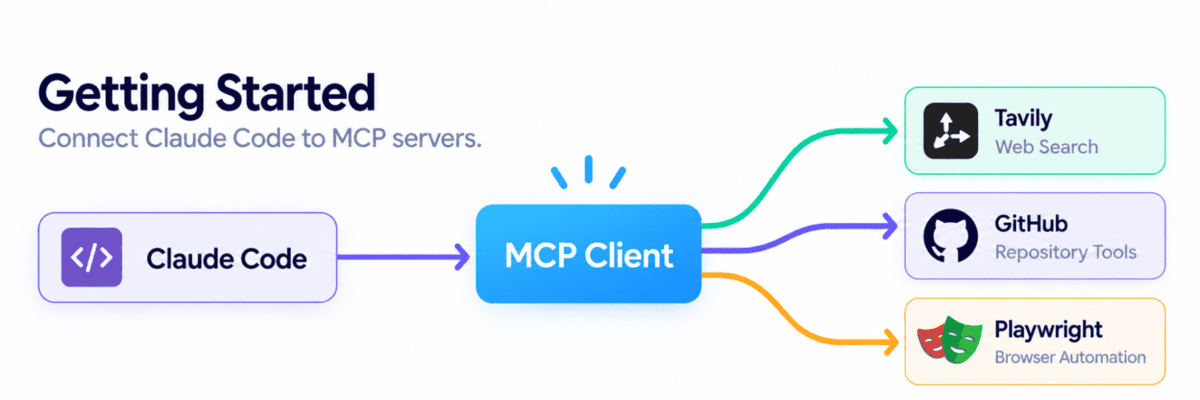
To evaluate the real-world utility of MCP, developers frequently deploy specialized servers that target common operational domains, including live web search, version control management, and browser automation.
Web Search Integration via Tavily
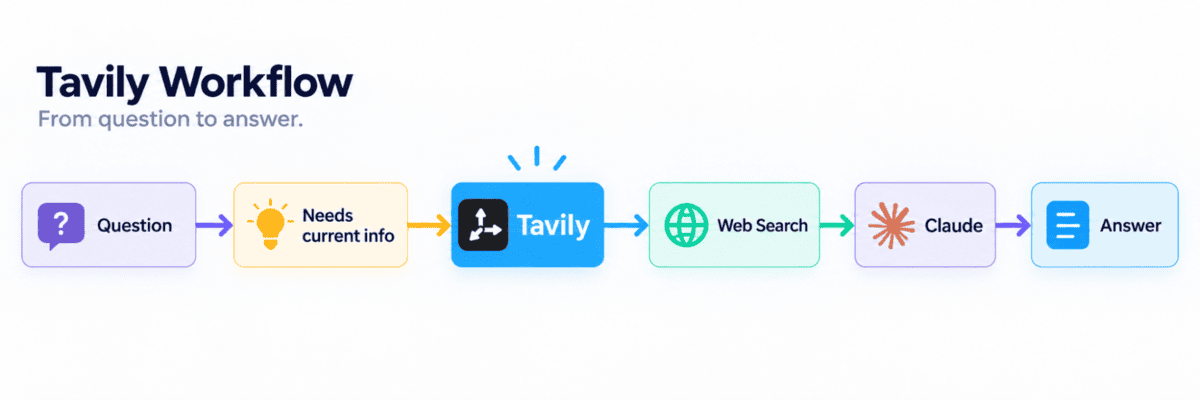
Standard language models are constrained by the static cutoff dates of their training corpora, leaving them unable to process real-time developments without external assistance. By integrating the Tavily MCP server, AI hosts gain programmatic access to live web search, content extraction, and deep research mapping.
Configuring this capability involves registering the remote server with the host environment using a standardized HTTP transport layer. Once authenticated, the model can dynamically query live indices for emerging software releases, documentation updates, or market data without requiring custom wrapper code. The underlying Tavily API handles the complexities of web crawling and ranking, while the MCP interface standardizes how the resulting structured data is delivered to the language model.
Repository Workflows via GitHub
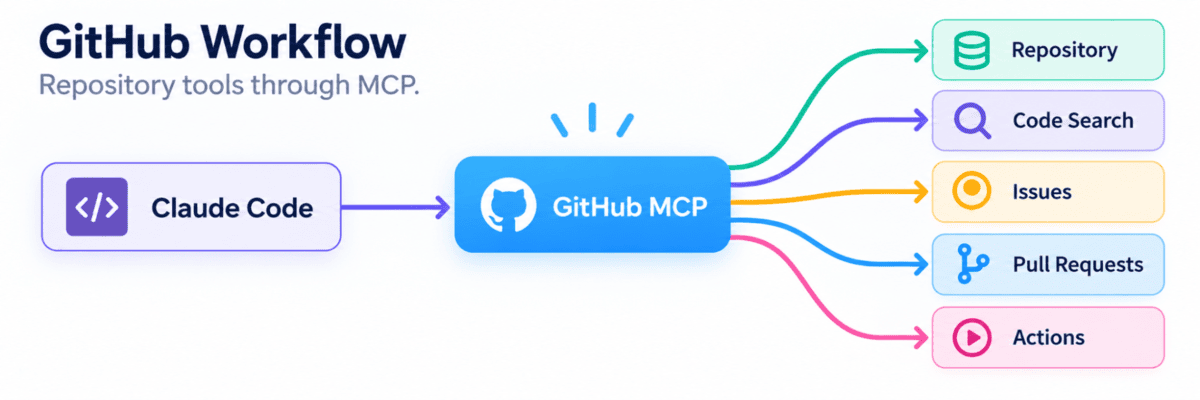
Version control operations traditionally require manual navigation of web interfaces or command-line utilities. The official GitHub MCP server transforms repositories into programmable tools accessible directly through conversational interfaces. By authenticating via a scoped Personal Access Token (PAT), developers can grant AI hosts permission to read repositories, search source code, analyze commit histories, triage issues, and review pull requests.
In a typical workflow, a developer can instruct an AI assistant to review a specific pull request for potential concurrency bugs or missing test coverage. The AI queries the GitHub MCP server, retrieves the relevant diffs and commit messages, analyzes the code structure within its context window, and posts constructive feedback directly to the repository interface. This seamless interaction minimizes context-switching and automates routine code review bottlenecks.
Browser Automation via Playwright
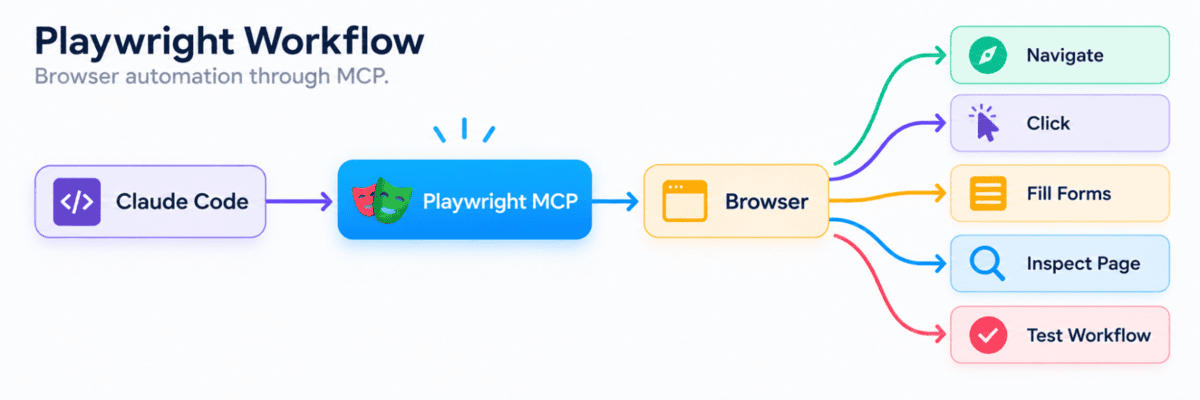
While APIs cover a vast majority of programmatic use cases, certain diagnostic and testing tasks require direct interaction with graphical user interfaces. Microsoft’s Playwright MCP server equips AI agents with the ability to control real browser instances, execute navigation commands, complete form fields, click interface elements, and run end-to-end integration tests.
Rather than processing raw, unstructured pixel data, the Playwright MCP server relies on structured accessibility snapshots of the Document Object Model (DOM). This semantic representation provides the language model with a clean, hierarchical map of interactive elements, enabling highly reliable automated testing and user interface validation workflows.
Architectural Evolution and the Stateless Paradigm
The continued maturation of the Model Context Protocol has been marked by significant architectural refinements designed to enhance security, scalability, and performance in enterprise environments. The formalization of recent protocol specifications introduced a pivotal shift toward a stateless core architecture.
In earlier iterations, maintaining persistent sessions between clients and servers imposed substantial infrastructure overhead, particularly when scaling distributed AI applications across cloud clusters. The updated specification resolves this limitation by ensuring that individual requests encapsulate all necessary context and metadata, eliminating the dependency on sticky server sessions. This stateless design aligns modern MCP infrastructure with standard cloud-native microservices architectures, facilitating effortless horizontal scaling, improved load balancing, and simplified container orchestration.
Furthermore, recent protocol enhancements have introduced advanced security boundaries, granular permission controls, and standardized authentication mechanisms. These updates empower organizations to enforce strict access governance over enterprise databases and internal APIs, ensuring that AI agents can only execute tools and access resources authorized by explicit administrative policies.
Broader Economic and Industrial Implications
The standardization introduced by the Model Context Protocol carries profound implications for the artificial intelligence industry and software development ecosystems. By decoupling AI model development from tool integration, MCP fosters a vibrant, interoperable ecosystem where third-party developers can build specialized servers that instantly become compatible with any compliant AI host.
For enterprises, this standardization drastically reduces the Total Cost of Ownership (TCO) associated with custom AI deployments. Organizations can securely expose legacy internal databases, proprietary documentation repositories, and internal CI/CD pipelines through standardized MCP servers, allowing multiple different AI models or applications to leverage corporate assets without requiring redundant engineering efforts. As the protocol continues to evolve toward broader multi-agent coordination and decentralized execution, MCP is positioned to serve foundational infrastructure for the next generation of autonomous enterprise software.