The Shift Toward Intent-Driven Design and the Obsolescence of the Graphical User Interface

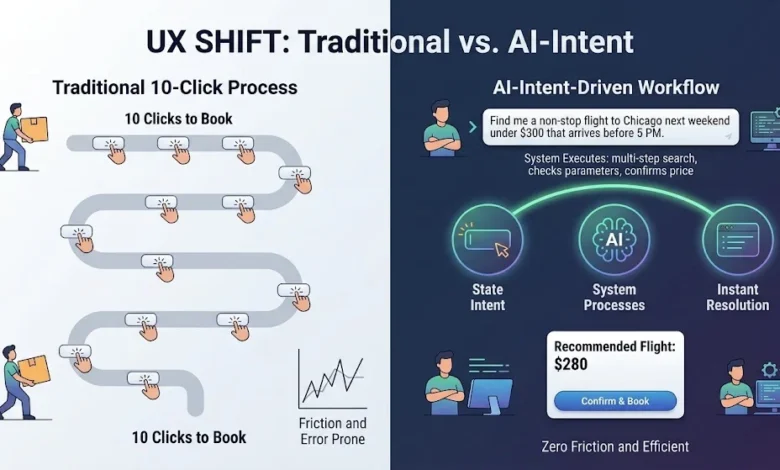
The web is undergoing a structural transformation that marks the most significant evolution in human-computer interaction (HCI) since the introduction of the Graphical User Interface (GUI) in the 1970s. For decades, the digital experience has been defined by the "click"—a series of manual inputs through menus, forms, and navigation bars that force users to act as the primary processor for software. However, the rise of Large Language Models (LLMs) and advanced autonomous agents is effectively ending the reign of the "10-click process." This transition, often described as the move toward intent-driven design, signals a shift where software no longer demands that users navigate its architecture; instead, the software adapts its interface to the user’s specific objective.
Historical Context: The Evolution of the GUI
To understand the current pivot toward intent-driven systems, one must look at the historical trajectory of software design. The commercialization of the GUI, pioneered by the Xerox Star and brought to the mainstream by the Apple Macintosh in 1984, was revolutionary for its time. It replaced the cold, syntax-heavy command-line interface with visual metaphors—folders, desktops, and trash cans—that allowed non-technical users to operate complex machinery.

However, the GUI established a rigid contract between the machine and the human. The user was required to learn the "grammar" of the software: where the settings were, how to navigate the nested menus, and how to format inputs to meet the software’s expectations. This paradigm has persisted for forty years, creating a landscape where digital literacy is synonymous with the ability to navigate increasingly complex digital labyrinths. According to industry analysis from the Nielsen Norman Group, this model has reached its saturation point. As tasks have become more multifaceted—ranging from complex travel planning to financial management—the cognitive load placed on the user to manage software, rather than achieve goals, has become a significant barrier to productivity.
The Chronology of the No-Interface Movement
The philosophical foundation for the current shift was established well before the recent explosion in generative AI. In 2015, UX designer Golden Krishna published "The Best Interface Is No Interface," a seminal work that challenged the industry’s obsession with "prettier buttons" and "flashier animations." Krishna argued that the ideal digital product is one that anticipates needs and executes tasks without requiring the user to open an application or interact with a screen at all.
This concept remained largely aspirational for nearly a decade due to the limitations of natural language processing and machine learning. The following timeline illustrates the acceleration of this shift:
1984–2010: The Golden Age of GUI, defined by mouse-driven navigation and static web pages.
2010–2020: The mobile transition, which introduced touch-based interactions but maintained the rigid, menu-driven structure of desktop software.
2022–2023: The emergence of generative AI, where models moved beyond simple pattern recognition to high-level reasoning.
2024–Present: The rise of Agentic UI, where software platforms begin to prioritize "intent-capture" over "menu-navigation."
Examples of Intent-Driven Platforms
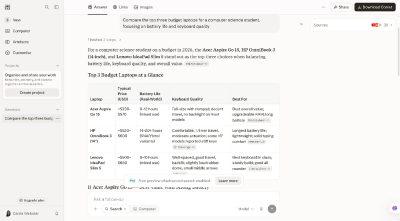
The shift is currently being demonstrated by platforms that prioritize the output over the process. Perplexity AI, for instance, has fundamentally disrupted the traditional search engine model. Whereas Google was designed as a directory—forcing users to click through links, analyze landing pages, and synthesize information themselves—Perplexity uses generative AI to provide a singular, context-aware answer. By eliminating the "10-click" cycle of research, the platform treats the user’s query as an intent that requires resolution rather than a keyword search that requires a list of options.
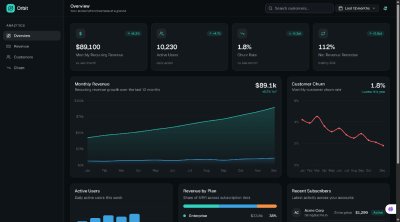
Similarly, Vercel v0 has changed the paradigm of web development. In traditional design, creating a digital asset required hours of manual labor in platforms like Figma or code editors. Vercel v0 allows users to express a high-level goal, such as "create a dashboard for a subscription-based SaaS product," and the interface renders the functional code and layout in real-time. This is not merely a tool; it is a fundamental shift in the role of the designer from a manual builder to an orchestrator of generative components.
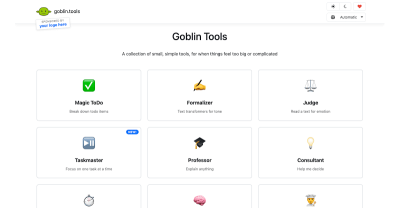
Furthermore, tools like Goblin.tools have demonstrated the power of intent-driven design for accessibility. By providing a single-page, task-based AI suite, the platform removes the complexity of traditional project management software, allowing users to focus on task completion rather than the overhead of managing a Kanban board or a project schedule.
Data and Industry Implications
Recent industry data underscores why this shift is inevitable. Studies in cognitive ergonomics suggest that the average user experiences "decision fatigue" after just 20 minutes of navigating complex digital interfaces. By automating the steps between intent and execution, platforms can reduce user churn and increase task completion rates by as much as 40%.
The economic implications are equally significant. Companies that fail to transition to intent-driven workflows risk losing market share to leaner, AI-native competitors. For UX designers, this necessitates a complete re-evaluation of their craft. The future of design is not found in creating better icons or more intuitive menus; it is found in the ability to design "Generative UI"—layouts that appear when needed, provide a solution, and then recede.
The Risks of Invisible Interfaces
While the move toward intent-driven design offers unprecedented convenience, it introduces complex ethical and technical risks. The primary concern among HCI researchers is the "Black Box" problem. When an AI agent executes a task in the background, the user often loses the ability to verify the process. If a system makes an incorrect assumption about a user’s intent, the lack of a visible, step-by-step process can make it difficult to diagnose and correct the error.
To mitigate this, the Google PAIR (People + AI Research) Guidebook emphasizes the necessity of transparent feedback loops. For an intent-driven interface to be successful, it must communicate its "understanding" of the user’s goal before executing an action. This requires a new design pattern: the "intent-check." Before the system automates a high-stakes action, it must provide a brief, clear confirmation of its interpretation, ensuring that the user maintains ultimate agency.
The Role of the Modern UX Designer
The profession of the UX designer is evolving from a visual-centric role to an architectural one. Designers are no longer just building walls and buttons; they are designing the logic that governs how agents interact with users. This requires a deeper understanding of:
- Ambient Design: Systems that read environmental metadata (device state, location, and past behavior) to proactively suggest solutions.
- Reversibility: Since autonomous agents may occasionally err, designers must prioritize "frictionless rollback" mechanisms, such as clear undo functions and transparent audit logs.
- Trust Calibration: Designers must determine when a system should act autonomously and when it must pause for human confirmation, particularly in financial or high-stakes contexts.
The Future: Seamless Completion
The ultimate metric of success in the digital age is changing. For decades, the industry prioritized "engagement"—measured in time spent on a page or number of clicks. This was, in many ways, an adversarial model; the software benefited from keeping the user engaged in the process of navigation.
The intent-driven model flips this incentive. The success of a tool is now measured by its ability to facilitate "seamless, invisible completion." A successful application is one that solves the problem so efficiently that the user spends as little time as possible interacting with the interface itself.
As we look toward the next decade of web design, it is clear that the screen will become a secondary element. The most powerful interfaces will be those that feel less like a machine and more like an extension of human intent. The era of the "10-click" process is effectively over, and with its passing comes a new, more efficient, and potentially more humane relationship between humanity and the digital tools we build. The future of the web is not a better button; it is the absence of one.