Google and Kaggle Launch Comprehensive 5-Day Agentic AI Course to Address Growing Global Demand for Specialized AI Development Skills

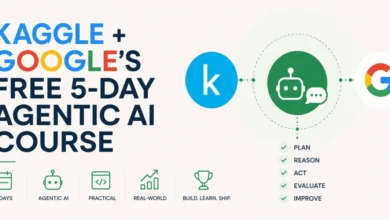
The landscape of artificial intelligence education reached a significant milestone in late 2025 as Google and Kaggle transitioned their record-breaking 5-Day AI Agents Intensive into a permanent, self-paced learning resource. Originally launched as a live cohort event in November 2025, the program saw an unprecedented 1.5 million participants register to learn the intricacies of building autonomous AI agents. This massive engagement underscores a pivotal shift in the technology sector, moving beyond simple generative chat interfaces toward complex, goal-oriented agentic systems.
The program’s success is not merely measured by registration numbers. According to data released by Google, the cohort produced more than 11,000 verified capstone project submissions, a remarkably high conversion rate for a technical course of this scale. Following the initial live run and a subsequent "vibe coding" themed refresh in June 2026, the entire curriculum has been integrated into the Kaggle Learn Guide ecosystem. This move ensures that the specialized knowledge required to build, evaluate, and deploy AI agents remains accessible to the global developer community free of charge.
The Evolution of AI Education: From Generative to Agentic
The 2025 Agentic AI course represents the next logical step in Google’s educational roadmap. It follows the 2024 GenAI Intensive, which attracted over 140,000 developers and set a Guinness World Record for the largest virtual AI conference. While the 2024 curriculum focused on the foundational capabilities of Large Language Models (LLMs), the 2025 iteration addresses the "agentic" frontier—where AI systems are designed not just to predict text, but to use tools, maintain memory, and execute multi-step reasoning tasks with minimal human intervention.
Industry analysts suggest that the shift toward agentic AI is driven by a corporate need for ROI. While basic chatbots provided novelty, agents offer utility by interacting with APIs, managing databases, and performing autonomous workflows. The Google-Kaggle partnership aims to bridge the "skills gap" that has emerged as companies struggle to find engineers capable of moving AI models from experimental notebooks into robust production environments.
A Chronology of the 5-Day Intensive Program
The curriculum is structured as a high-intensity, five-part progression. Each stage combines theoretical frameworks—often delivered via technical whitepapers—with hands-on codelabs utilizing Google’s Gemini models and the Agent Development Kit (ADK).
Day 1: Foundations of Agentic Architecture
The opening day focuses on the fundamental shift from linear workflows to autonomous agents. Participants are taught to distinguish between tasks that require a simple LLM call and those that necessitate an agentic loop. The technical focus includes building initial multi-agent systems where different "personas" collaborate to solve complex problems, establishing the groundwork for decentralized AI operations.
Day 2: Tool Integration and the Model Context Protocol (MCP)
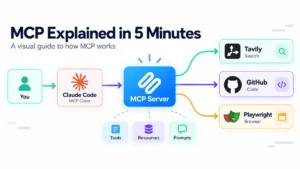
A critical hurdle in AI development is the "walled garden" effect, where models cannot interact with external software. Day 2 introduces the Model Context Protocol (MCP), an emerging standard that allows agents to communicate with third-party systems and external data repositories. This segment also emphasizes "human-in-the-loop" (HITL) architectures, teaching developers how to build safety checkpoints where agents must seek human approval before executing high-stakes operations, such as financial transactions or data deletions.
Day 3: Statefulness and Long-Term Memory
One of the primary reasons homemade AI agents fail in production is a lack of persistence. Day 3 addresses context engineering, focusing on how agents can maintain state across multiple sessions. By implementing sophisticated memory architectures, developers learn to create agents that "remember" user preferences and previous interactions, a necessity for enterprise-grade customer service and personal assistant applications.
Day 4: Quality Assurance and Evaluation Metrics
As AI systems become more autonomous, testing them becomes exponentially more difficult. Day 4 introduces the rigorous discipline of agent evaluation. Unlike traditional software testing, agentic testing requires logging and tracing non-deterministic outputs. Participants learn to use specific metrics to judge not just the final answer an agent provides, but the efficiency and accuracy of the "reasoning steps" and "tool calls" the agent made to get there.
Day 5: Deployment and Productionization
The final day bridges the gap between a local prototype and a scalable product. The focus shifts to the "agent-to-agent" protocol and deployment via managed runtimes like the Vertex AI Agent Engine. This stage is crucial for ensuring that the agents developed during the course can handle real-world traffic, security requirements, and latency constraints.
Supporting Data and Participant Demographics
The scale of the 1.5 million-person cohort provides a unique window into the current state of the global developer market. Internal metrics from Kaggle indicate that the majority of participants were mid-level software engineers with existing Python proficiency but little prior experience in agentic orchestration.
Geographically, the enrollment showed significant clusters in North America, India, and Southeast Asia, highlighting a global race to acquire AI specialization. The 11,000 capstone submissions covered a diverse range of industries, including automated legal document review, personalized education tutors, and autonomous cybersecurity threat hunters. The high volume of project completions suggests that the "learn-by-doing" model, which pairs whitepapers with immediate coding exercises, is highly effective for complex technical subjects.
Industry Reactions and Strategic Implications
The release of this course as a free resource has drawn praise from across the tech industry. Independent developers have noted that the inclusion of "Day 4: Agent Quality" is particularly valuable, as performance evaluation remains one of the most significant bottlenecks in AI development.
"Most tutorials show you how to build something that looks impressive for five minutes," noted one lead developer in a public forum regarding the course. "Google and Kaggle are focusing on why these systems break in the sixth minute. That is the difference between a toy and a tool."
From a strategic perspective, the course serves to solidify Google’s Vertex AI and Gemini ecosystem as the preferred environment for agent development. By training 1.5 million developers on their specific Agent Development Kit and MCP implementations, Google is effectively setting the industry standards for how agents are built and deployed. This move challenges competitors like OpenAI and Microsoft by democratizing the high-level orchestration layer of the AI stack.
Fact-Based Analysis: The Long-Term Impact on the Job Market
The transition of the 5-Day AI Agents Intensive into a permanent Kaggle Learn Guide is likely to have several long-term effects on the technology labor market:
- Standardization of "Agentic Engineering": As more developers complete this specific curriculum, the terminology and architectural patterns taught (such as MCP and specific memory persistence layers) are likely to become industry standards, making it easier for companies to hire and onboard AI talent.
- Shift from Prompting to Orchestration: The course signals the end of "prompt engineering" as a standalone discipline. The focus has clearly shifted toward "system engineering," where the prompt is merely one component of a larger, stateful, tool-using machine.
- Lowering the Barrier to Entry for Startups: By providing the blueprints for production-ready agents for free, Google is lowering the R&D costs for startups. Small teams can now implement sophisticated multi-agent systems that previously would have required a massive budget and a specialized research team.
- Emphasis on AI Safety and Reliability: By making "Human-in-the-Loop" and rigorous evaluation metrics core parts of the curriculum, the course promotes a more responsible approach to AI deployment. This focus on "quality" over "hype" is essential for the long-term viability of the AI industry.
Conclusion
The Google and Kaggle 5-Day Agentic AI Course has set a new benchmark for technical education in the age of artificial intelligence. By moving beyond the initial hype of generative models and focusing on the practical, unglamorous work of memory, tool use, and evaluation, the program provides a roadmap for the next generation of software development. As the 1.5 million participants—and the millions more who will follow via the self-paced guide—begin to apply these skills, the transition from static AI to truly autonomous agentic systems is expected to accelerate, fundamentally changing how humans interact with digital systems.