Anthropic’s latest model is deliberately less powerful than Mythos (and that’s the point)

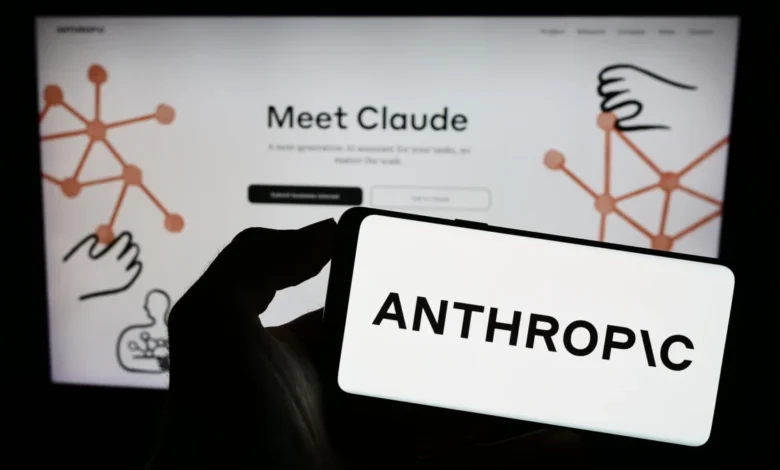
This strategic "dialing down" marks a pivotal moment in the artificial intelligence industry, signaling a shift toward defensive development and controlled capability. Anthropic’s messaging emphasizes that while Opus 4.7 is a "notable improvement" in software engineering, vision, and financial analysis, it is fundamentally designed to be a more stable, predictable "workhorse" rather than the "frontier-pushing" powerhouse that Mythos is expected to be.
The Technical Evolution of the Opus Series
The release of Claude Opus 4.7 comes a mere two months after the introduction of Opus 4.6, highlighting the breakneck speed of the current AI development cycle. Despite being positioned as a "practical frontier" model, Opus 4.7 introduces several high-impact upgrades designed for enterprise-grade automation and complex problem-solving.
One of the most significant improvements lies in the model’s vision capabilities. Opus 4.7 now supports vision processing at three times the capacity of previous versions, accepting high-resolution images of up to 2,576 pixels. This enhancement is specifically aimed at "computer-use agents"—AI systems capable of navigating desktop environments, interpreting dense screenshots, and extracting data from intricate technical diagrams. For industries relying on visual data, such as architecture, engineering, and medical imaging, this represents a substantial step forward in multimodal utility.
Furthermore, Anthropic has addressed long-standing user demands for better "instruction-following" and memory. The model demonstrates a refined ability to handle complex, multi-stage tasks without losing track of original constraints. Its memory architecture has been overhauled to retain notes across long, multi-session workflows. This allows users to hand off difficult coding projects or research initiatives and return to them later without having to provide extensive context or re-upload foundational documents.
Performance Benchmarks and the "Mythos" Shadow
Despite these gains, Anthropic has taken the unusual step of comparing Opus 4.7 unfavorably to its own upcoming model, Claude Mythos. Currently in a limited "Preview" phase, Mythos was inadvertently leaked earlier this year and is widely regarded as Anthropic’s true competitor to the most advanced models from OpenAI and Google.
In its official release documentation, Anthropic revealed that the Mythos Preview outperformed Opus 4.7 on several critical benchmarks, sometimes by more than ten percentage points. These benchmarks include:
- SWE-Bench Pro and Verified: Used to measure "agentic coding," or the ability of an AI to autonomously fix software bugs and write functional code.
- Humanity’s Last Exam: A rigorous multidisciplinary reasoning test designed to push AI to the limits of human knowledge.
- BrowseComp: A measure of "agentic search," where the AI must navigate the web to find and synthesize information.
While Opus 4.7 remains competitive in graduate-level reasoning and visual reasoning, the data suggests that Anthropic is reserving its most "intelligent" breakthroughs for Mythos. This tiered approach suggests a strategy where Opus 4.7 serves as the stable, reliable "copilot" for knowledge workers, while Mythos is being groomed for high-stakes, specialized roles in cybersecurity and advanced research.
Safety First: A Calculated Compromise
The decision to limit Opus 4.7’s capabilities is rooted in Anthropic’s "safety-first" philosophy. The company noted that during the training phase, it experimented with "differentially reducing" the model’s cyber capabilities. This was done to ensure that the AI could not be easily weaponized for malicious activities, such as automated hacking or the creation of sophisticated malware.
However, this focus on safety has led to some nuanced trade-offs. Anthropic admitted that while Opus 4.7 shows lower rates of deception and sycophancy, it is "modestly weaker" than Opus 4.6 in specific safety scenarios, such as resisting certain types of harmful prompts. The company described the model’s behavior as "not fully ideal" in these edge cases, an admission that technology analyst Carmi Levy describes as a "marketing message focused more on what it does not do than on what it does."
Levy notes that this transparency is rare in the tech world. "Anthropic’s messaging makes it clear that Opus 4.7 is a safer model with capabilities that are deliberately dialed down compared to Mythos. It is a admission of sorts that the new model is somewhat intentionally dumber than its higher-end stablemate, all in an attempt to reinforce its cyber risk detection."
Project Glasswing and the Defensive AI Strategy
The launch of Opus 4.7 is inextricably linked to Project Glasswing, a defensive security initiative Anthropic announced last week. Glasswing utilizes the more powerful Mythos Preview model to identify and remediate cybersecurity vulnerabilities in real-time. The initiative is currently being tested in collaboration with major cloud providers like Amazon Web Services (AWS) and Google Cloud, along with over 30 cybersecurity organizations.
Anthropic claims that Project Glasswing has already identified "thousands" of high-severity vulnerabilities across major operating systems and web browsers. By keeping Opus 4.7 "less capable" in cyber-sensitive areas, Anthropic is effectively using the model as a controlled environment to test new safeguards before they are applied to the more powerful Mythos.
Yaz Palanichamy, a senior advisory analyst at Info-Tech Research Group, suggests that Opus 4.7 is essentially a "public-facing guinea pig." The data gathered from Opus 4.7’s interactions will be used to fine-tune the automated cybersecurity safeguards that will eventually become mandatory for a broader release of Mythos-class models.
Competitive Positioning and Market Impact
The AI market is currently characterized by intense competition between Anthropic, OpenAI, and Google. Just as Google recently updated its Gemini series to version 3.1 Pro, Anthropic’s rapid-fire release of Opus 4.6 and 4.7 indicates a "brutally competitive" landscape.
While Google Gemini 3.1 Pro boasts a larger context window of 2 million tokens compared to Claude’s 1 million, Opus 4.7 is being marketed as the superior tool for "applied engineering." Analysts suggest that while raw reasoning scores among top-tier models are beginning to converge, Anthropic’s lead in coding and technical workflows remains its primary differentiator.
From an enterprise perspective, the pricing for Opus 4.7 remains unchanged from the 4.6 version: $5 per million input tokens and $25 per million output tokens. This stability, combined with the model’s availability on Amazon Bedrock, Google Cloud’s Vertex AI, and Microsoft Foundry, makes it an attractive option for companies that require a "practical frontier" model without the unpredictability of a more experimental system.
Analysis: The Future of the Claude Ecosystem
The release of Opus 4.7 suggests a three-tier future for the Claude ecosystem:
- Claude Haiku/Sonnet: Optimized for speed and cost-efficiency in high-volume, low-complexity tasks.
- Claude Opus (The Workhorse): A balanced, "safe" model designed for complex technical roles, financial analysis, and software engineering.
- Claude Mythos (The Frontier): A highly specialized, high-capability model reserved for high-stakes defensive security and advanced multidisciplinary reasoning.
By positioning Opus 4.7 as the "ideal compromise," Anthropic is effectively managing expectations. If Mythos is never released to the general public due to safety concerns, Opus 4.7 stands ready as the pinnacle of "safe AI." Conversely, if Mythos is released, Opus 4.7 has already paved the way by testing the necessary guardrails.
As the industry moves toward "agentic" AI—models that can take action rather than just generate text—the need for these guardrails becomes paramount. Opus 4.7’s improved vision and memory make it a potent tool for automation, but its "dialed down" intelligence serves as a reminder that the path to Artificial General Intelligence (AGI) is being paved with caution.
In conclusion, Claude Opus 4.7 is a sophisticated update that enhances the model’s utility as a "copilot for complex roles" while serving as a strategic buffer for the more powerful Mythos. For the enterprise world, it offers a refined, safer alternative in an increasingly "overheated" market, proving that in the race for AI dominance, sometimes the most significant move is knowing when to pull back.