Microsoft Sovereign Cloud Expands Control and Resilience for Global Organizations Amidst the Rapid Acceleration of AI

The intersection of national security, regulatory compliance, and cloud computing has become the primary theater of operation for government leaders and the operators of critical infrastructure. As public sector entities and highly regulated industries—such as healthcare, finance, and energy—increasingly integrate artificial intelligence into their core workflows, the demand for "digital sovereignty" has shifted from a peripheral concern to a central strategic pillar. Organizations are no longer merely asking where their data resides; they are demanding granular control over who accesses their systems, how digital assets are encrypted, and whether essential services can persist through geopolitical or network instability.
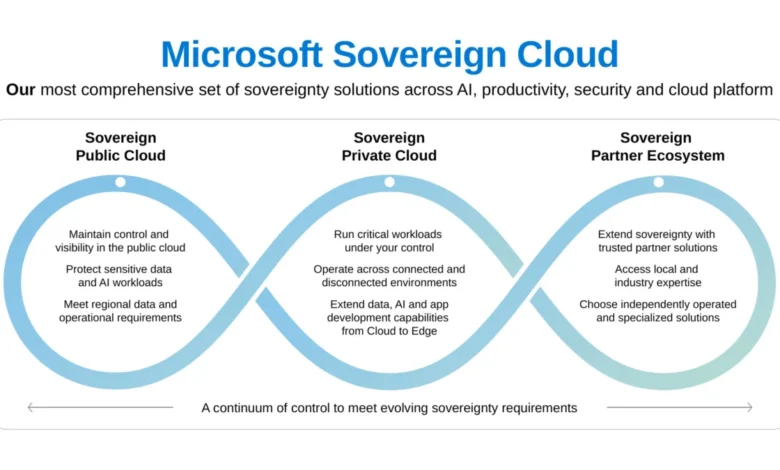
To address these escalating requirements, Microsoft has announced a significant evolution of its Microsoft Sovereign Cloud strategy. By creating a continuum of control that spans public cloud, customer-operated private environments, and a robust partner ecosystem, the company aims to decouple the benefits of cloud-scale innovation from the risks of centralized dependency. This shift represents a fundamental change in how enterprise-grade cloud providers address the unique sovereignty requirements of the global public sector.
A Chronology of Sovereignty: From Compliance to Control
The concept of the Microsoft Sovereign Cloud was formalized last year as a direct response to the fragmented regulatory landscape, particularly within the European Union and the broader international community. Following the Schrems II ruling and the subsequent scrutiny of transatlantic data transfers, organizations faced immense pressure to prove that their data remained protected from extraterritorial legal reach.
Over the past twelve months, the initiative has matured from a conceptual framework into a comprehensive technical stack. The initial phase focused on policy and data residency, ensuring that metadata and customer content remained within specified geographic boundaries. The current expansion, unveiled in anticipation of the Microsoft Ignite conference, marks the transition into operational sovereignty. This includes the ability to maintain "disconnected" operations, the deployment of local AI inference models, and the integration of hardware-level security that operates independently of the provider’s primary infrastructure.
The Workload-Centric Architecture
The core of the updated strategy is a "workload-based" approach. Rather than forcing every application into a single, monolithic deployment model, Microsoft’s architecture allows organizations to segment their digital estate based on risk profiles.
A public-facing citizen portal might utilize the elastic scale and rapid iteration cycles of the Sovereign Public Cloud. Conversely, a sensitive national database or a critical power grid controller might necessitate a Sovereign Private Cloud deployment—running on Azure Local infrastructure—which can operate entirely disconnected from the public internet. This design acknowledges that resilience is not a one-size-fits-all metric; it is a variable that must be tuned to the specific legal, security, and operational requirements of each individual system.

Enhancing Transparency and Technical Governance
A critical component of this expansion is the new Sovereign Control Panel, which serves as a centralized "cockpit" for compliance. By aggregating telemetry across diverse environments, the panel allows administrators to visualize their sovereignty posture in real-time. It identifies potential gaps in security—such as misconfigured access controls or unauthorized cross-border data flows—before they become compliance liabilities.
Technical governance has also been bolstered through the introduction of the Production Touch Ledger and Data Guardian services. These tools are specifically engineered for the EU and EFTA regions, where regulatory scrutiny regarding "operator access" is at its peak. By providing tamper-evident records of every action taken by a Microsoft engineer on production systems, and by introducing an EU-resident third party to oversee remote access, Microsoft is attempting to provide a "trust-but-verify" mechanism that satisfies stringent local data protection mandates.
Furthermore, the general availability of external key management via Azure Managed HSM allows organizations to retain the root of their encryption hierarchy on physical hardware they own. By keeping the "keys to the kingdom" outside of the cloud provider’s infrastructure, organizations can ensure that their data remains encrypted and inaccessible, even in the event of a broad systemic compromise.
Operational Independence and the AI Frontier
The integration of artificial intelligence into the sovereign stack, branded as Foundry Local, represents the most significant technical leap in this release. Traditionally, AI models required massive, centralized GPU clusters, often forcing data to be sent to public cloud regions for processing.
With Foundry Local, organizations can now run AI models directly within their own sovereign environments. By supporting Microsoft, partner, open-weight, and open-source models, the platform allows for local inference and agentic retrieval. This ensures that sensitive enterprise data remains local while still benefiting from the power of large language models. For government agencies, this means they can query classified databases using natural language without the information ever leaving their secure, on-premises perimeter.
This move is backed by the maturation of confidential virtual machines on Azure Local, which utilize hardware-based isolation to protect data while it is in use. By verifying the integrity of the code being executed at the hardware level, these virtual machines provide a secure enclave that prevents even the host operating system from accessing the sensitive data residing in memory.
The Role of the Sovereign Partner Ecosystem
No single vendor can address the entirety of the world’s regulatory nuances. Microsoft’s strategy relies heavily on a "Sovereign Partner Ecosystem" to fill the gaps in local expertise and infrastructure. This ecosystem includes specialized entities like Bleu Cloud in France and Delos Cloud in Germany, which provide "National Partner Clouds." These entities offer a sovereign buffer, providing an operating model where the cloud platform is managed by a local partner, thereby insulating the end customer from the primary provider’s global operations.

Industry analysts note that this partner-led approach is essential for scaling. As governments demand higher levels of "sovereign intent," the reliance on local hardware vendors (such as Dell, HPE, and Lenovo) and local consulting firms becomes a strategic necessity rather than an optional service. These partners provide the localized implementation, regulatory navigation, and physical infrastructure management that global hyperscalers cannot provide at scale.
Broader Implications and Strategic Analysis
The move toward a sovereign-first cloud architecture has profound implications for the global technology market. Firstly, it effectively creates a "multi-speed" internet, where the standard public cloud continues to favor speed and innovation, while the sovereign cloud prioritizes stability, regulatory adherence, and operational control.
From a macroeconomic perspective, this shift signals an end to the "blind trust" era of cloud computing. Governments are increasingly asserting their authority over the digital infrastructure that underpins their societies. This trend toward "digital protectionism" is not necessarily a rejection of cloud technology, but rather a maturation of it. By providing the tools to keep data local, Microsoft is ensuring that the digital transformation of the public sector does not stall due to fears of surveillance or dependency.
However, the complexity of this model remains a hurdle. Maintaining hybrid environments—some public, some private, and some partner-operated—requires a sophisticated level of technical expertise. The success of this strategy will ultimately depend on whether Microsoft can simplify the operational burden of managing this "continuum."
Looking Ahead
As AI agents begin to play a more active role in the automation of government services, the stakes for digital sovereignty will only rise. If an AI agent has the authority to process welfare payments, adjust traffic grids, or manage healthcare resources, the control over that agent’s underlying data and logic becomes a matter of national stability.
The ongoing expansion of the Microsoft Sovereign Cloud is a defensive and proactive maneuver. By positioning itself as the vendor that provides the most control, Microsoft is distancing itself from the "black box" criticism that has historically dogged cloud providers. As the company moves toward full integration of its productivity suite—including SharePoint and Exchange—into local, disconnected environments, it is clear that the goal is to make the sovereign cloud not just a niche product for high-security agencies, but a foundational standard for any organization that prioritizes autonomy in the digital age.
For the foreseeable future, the competitive advantage in the cloud market will likely be defined by who can provide the most robust, verifiable, and flexible sovereign solutions, effectively turning the "cloud" into a local utility that can be controlled, audited, and managed from within one’s own borders.
Related posts: