Stack Overflow expands Stack Internal to give AI agents ‘trusted’ enterprise knowledge

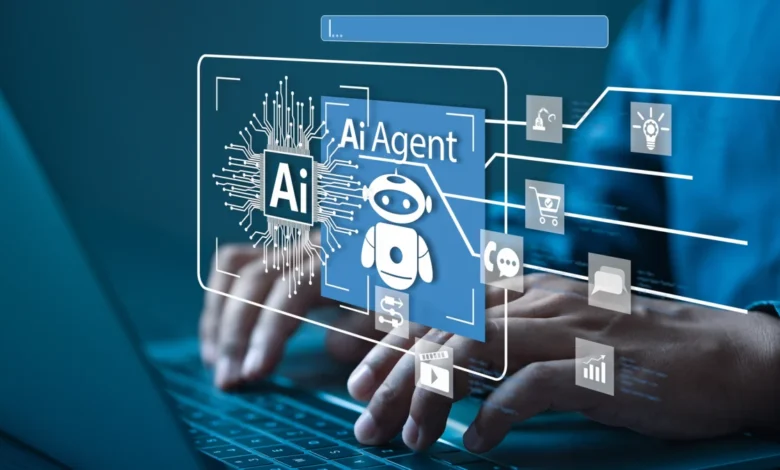
As global enterprises accelerate their transition toward agentic AI—systems capable of performing complex, multi-step tasks without constant human intervention—the demand for reliable, proprietary technical data has reached a critical inflection point. Stack Overflow, long the standard-bearer for developer knowledge exchange, is positioning its enterprise platform, Stack Internal, as the connective tissue between chaotic internal documentation and the rigorous requirements of AI agents. The latest suite of features, which includes AI-readable trust scores and Model Context Protocol (MCP) support, represents a significant evolution in how companies manage "tribal knowledge."
The Evolution of Enterprise Knowledge Management
For years, large-scale software development has been plagued by the "information silo" problem. Technical documentation is often scattered across disparate tools like Microsoft Teams, Slack, Google Docs, and Jira. When developers build applications, they frequently rely on outdated wiki pages or undocumented tribal knowledge passed through transient chat messages.
The integration of LLM-based coding agents has exacerbated this issue. These agents are inherently "hallucination-prone" if fed unverified or conflicting data. Stack Overflow’s strategy is to transform the enterprise knowledge base from a static library into a dynamic, machine-readable truth source. By introducing an ingestion API and specialized connectors, the platform now pulls information directly from collaboration tools, centralizing it into a unified, version-controlled repository.
Chronology of the Shift
The move toward agent-ready knowledge management did not happen in a vacuum. The timeline of this transformation tracks closely with the broader adoption of generative AI in the enterprise:
- 2023: Organizations begin widespread experimentation with LLM-based coding assistants. The primary challenge is identified: AI models lack "context awareness" regarding proprietary internal coding standards.
- Early 2024: Stack Overflow launches initial iterations of its enterprise-focused knowledge platform, focusing on internal Q&A.
- Late 2024: The industry shifts toward "agentic workflows," where AI is expected to write, test, and deploy code. The failure rate of these agents due to poor context becomes a major bottleneck for CIOs.
- Q1 2025: Stack Overflow unveils its "Trust Score" architecture and MCP server support, effectively bridging the gap between raw internal documentation and the APIs used by modern IDEs and agentic frameworks.
Trust Scores: A New Metric for AI Reliability
The most innovative aspect of the update is the introduction of the "trust score." Rather than treating all internal documentation as equal, Stack Internal now assigns a quantitative value to data based on a multi-factor analysis:
- Provenance: Tracking the original author and the department of origin.
- Recency: Ensuring that technical guidance reflects current stack versions and security patches.
- Human Validation: Incorporating "blessings" from designated subject matter experts (SMEs).
- Corroboration: Identifying if the information aligns with other verified data points in the system.
By feeding these scores to AI agents, companies can implement "guardrails." For instance, an agent could be instructed to ignore any internal documentation with a trust score below 80, or to automatically trigger a Slack notification to an engineer if a conflict arises during code generation. This reduces the "token burn" associated with agents attempting to reconcile contradictory information, effectively shortening development cycles by reducing the need for human-in-the-loop verification at every step of the coding process.
Broadening the Ecosystem with MCP
The inclusion of a Model Context Protocol (MCP) server is a strategic move to ensure compatibility with the rapidly fragmenting AI landscape. By adhering to the MCP standard, Stack Internal can plug directly into tools such as Claude Code, GitHub Copilot, and Google’s Gemini CLI.
For a lead developer at a large firm, this means the difference between context-switching—manually searching for documentation—and having the IDE automatically query the internal "source of truth" while writing a function. Advait Patel, a senior site reliability engineer at Broadcom, has noted that this integration significantly lowers the friction of the developer experience (DX), as the context is served directly within the terminal or IDE environment.
Governance and the CIO’s Balancing Act
While the productivity gains are tangible, the transition to agent-centric knowledge management introduces significant administrative overhead. CIOs are now tasked with managing not just the data, but the "knowledge lifecycle."
"We are moving from a world where we manage documents to a world where we manage the provenance of the information that builds our software," says Ashish Chaturvedi, executive research leader at HFS Research. This change requires robust governance. The new Stack Internal update provides exportable audit trails and granular role-based access controls, allowing IT leadership to monitor which information the AI is utilizing.
However, analysts warn that these features do not replace the need for human oversight. "If an agent produces a security-critical bug because it relied on a high-scoring but fundamentally incorrect piece of internal documentation, the responsibility ultimately rests with the organization, not the software," notes Stephanie Walter, practice lead of the AI stack at HyperFrame Research.
The Emerging Risks: Data Privacy and Expert Burnout
Despite the promise of automation, experts point to two critical risks that enterprises must mitigate:
1. The "Expert Bottleneck":
The validation workflow relies on SMEs to verify data. In a large enterprise, the most knowledgeable engineers are also the most overburdened. If the agentic system begins flagging hundreds of pieces of information for validation, the SME becomes a bottleneck, potentially slowing down development to a crawl. Companies must consider gamification or dedicated capacity for SME validation to ensure the system remains sustainable.
2. Security Exposure via Aggregation:
Integrating Slack, Teams, and Google Docs creates a centralized repository of sensitive, high-value data. If an agent is granted broad access, there is a risk of "information leakage," where a junior developer’s AI assistant might inadvertently surface proprietary secrets or restricted documentation that the user is not authorized to see. Organizations must implement strict "permission mapping" to ensure that the AI respects the same security boundaries as human employees.
Future Implications for Enterprise Software
The integration of trust signals into AI workflows signals a shift in the role of the knowledge manager. This position, once viewed as administrative, is becoming a technical requirement. Enterprises that succeed in the age of agentic AI will be those that effectively curate their knowledge bases, treating them with the same rigor they apply to their codebases.
As Stack Overflow and other platform providers continue to refine these tools, the industry is likely to see a convergence of DevOps and Knowledge Management. The goal is no longer just to store information, but to make that information "actionable and defensive." For organizations, the next twelve months will be a trial period to determine whether the efficiency gains promised by these agents—measured in reduced reworks and faster deployment cycles—outweigh the costs of managing the underlying data infrastructure.
In conclusion, while Stack Internal’s new capabilities provide a robust framework for scaling AI-driven development, they are not a "set-and-forget" solution. The technology requires a disciplined approach to data governance and a clear understanding of the risks inherent in delegating technical reasoning to automated systems. For the modern CIO, the challenge is clear: build the trust, verify the sources, and ensure that the humans in the loop remain as sharp as the agents they supervise.